Bar Pipa
We pay for a post of 10$
Tom Maffin

Silicon Revolt: How 48,000 Samsung Workers Are Bringing a Tech Giant to Its Knees

Silicon Revolt: How 48,000 Samsung Workers Are Bringing a Tech Giant to Its Knees

The news that came out of South Korea on Wednesday hit global technology markets with the force of a finely tuned industrial press. The largest labor union at Samsung Electronics — a company whose name has become synonymous with South Korea’s economic miracle — announced the start of a full-scale strike. Eighteen days, forty-eight thousand workers, and the complete collapse of negotiations mediated by the government. This is not merely a labor dispute; it is an event capable of redrawing the global semiconductor landscape and leaving a deep scar on South Korea’s export-driven economy. And what terrifies investors most is that this is happening not on the periphery, but at the very heart of global memory chip manufacturing, where Samsung has maintained an iron grip for decades.

Breakdown of Negotiations: Why the Government Failed to Save the Situation

When a government steps into a labor dispute, it is always a sign of extreme concern. South Korea’s labor authorities, usually operating behind the scenes, moved center stage this time and sat down at the negotiating table alongside Samsung management and union representatives. It was a desperate move driven by the understanding of what was at stake. Yet even state mediation failed to bridge the gap dividing the two sides.

The union submitted a proposal whose full details remain undisclosed, but the core issues are known: performance bonuses and compensation. It sounds like a standard list of demands, but behind those words lies a deeper shift in the relationship between Korean chaebols and their workers. For decades, Samsung cultivated a culture of loyalty in which employees identified themselves with the corporation, while the corporation provided stability and generous bonuses during prosperous years. But now, as the semiconductor industry undergoes tectonic shifts driven by the AI boom, trade wars, and supply-chain restructuring, that...


Continue reading...
0
0

Gold in a Trap: Caught Between the Iranian Crisis and Suffocating Interest Rates

Gold in a Trap: Caught Between the Iranian Crisis and Suffocating Interest Rates

Gold has frozen. It’s a strange, almost unnatural state for an asset that for centuries symbolized movement — either a panicked flight to safety or a violent collapse driven by profit-taking. But Wednesday’s Asian session showed a market that seemed paralyzed. Spot gold hovered around $4,488 per ounce, futures near $4,490 — neither rising nor falling, but holding its breath. Gold, which by all logic should be soaring amid a war disrupting oil supplies and fueling geopolitical chaos, instead lingers near its lowest levels since early April. And within this paradox lies perhaps the most important story of today’s financial world — the story of how timeless truths stop working when monetary policy and inflation fears enter a deadly collision.

Why War Hasn’t Sent Gold Prices Soaring

To understand the drama surrounding the yellow metal, one must rewind the tape and remember how gold behaved during previous geopolitical crises. Escalation in the Middle East, the closure of the Strait of Hormuz, warships facing each other at close range — any one of these headlines would once have triggered a massive gold rally. Investors would have rushed into bars and coins, driving prices toward historic highs. But now, when President Trump and Vice President Vance report progress in peace negotiations and gold barely reacts, it becomes clear: the market no longer dances to the tune of geopolitics the way it once did.

The reason is that the current conflict with Iran is not just a war — it is a war that generates inflation. And inflation, once an old friend of gold, has returned wearing a more dangerous face. Traditionally, rising prices benefited gold because people bought it to protect themselves against the erosion of paper currencies. But today’s inflation is not the result of loose monetary policy. It is a...

Continue reading...
0
0

Calm After the Storm: Oil Takes a Breather, but the Fire Isn’t Out

Calm After the Storm: Oil Takes a Breather, but the Fire Isn’t Out

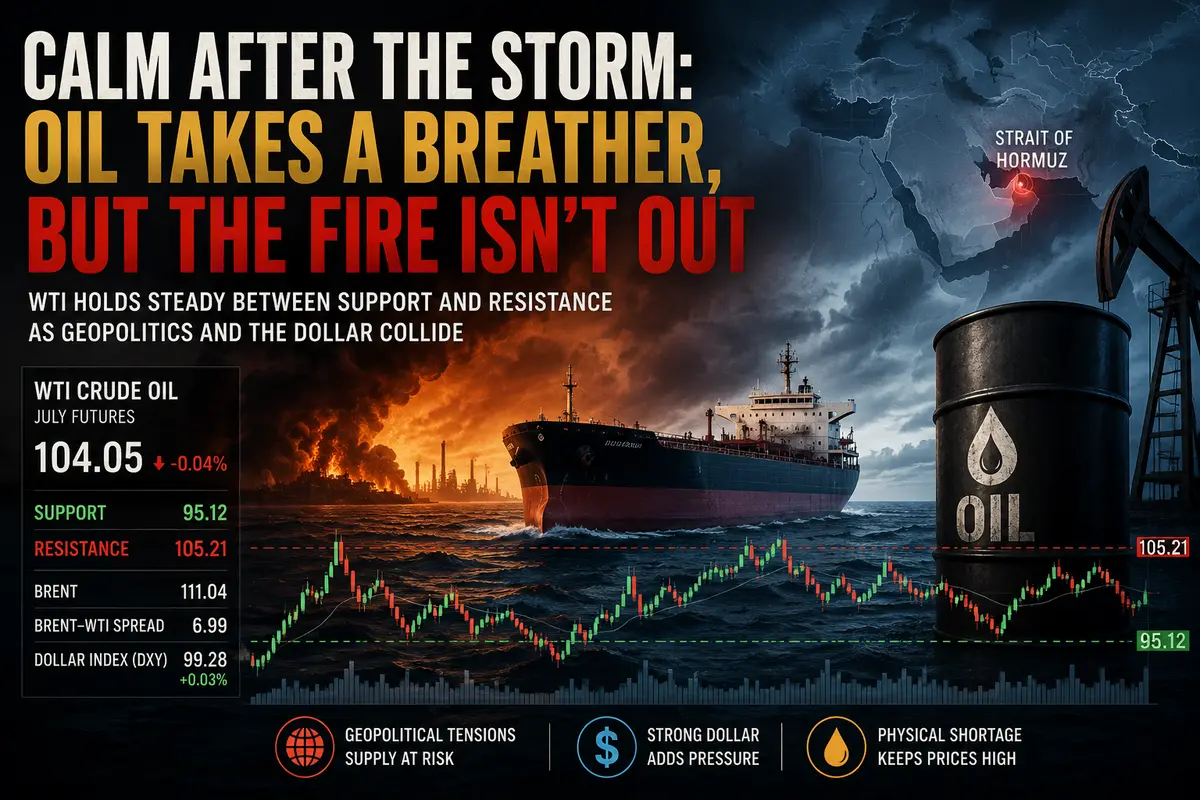
Wednesday’s Asian trading session brought something the oil market has rarely felt in recent weeks — near stillness. July WTI crude futures slipped only marginally, settling at $104.05 per barrel. A decline of four hundredths of a percent is hardly a pullback; it is statistical noise, the faint breathing of a market trying to recover after a marathon. Yet it is precisely during these moments of deceptive calm, when prices hover between support at $95.12 and resistance at $105.21, that the real drama unfolds. Behind this sideways movement lies a battle of fears, expectations, and calculations that will determine where oil heads next — upward toward new highs, or downward, offering relief to the exhausted global economy.

The Thin Line Between Support and Resistance

To understand what is happening in oil right now, one must look beyond fractions of a percentage point and focus on the levels trapping the price. Support at $95.12 is the threshold below which the market refuses to let gravity take over. Whenever oil approached this level in previous sessions, buyers immediately stepped in. This suggests that the fundamental backdrop — supply disruptions, geopolitical tensions, and shrinking inventories — remains so strong that even aggressive sellers hesitate to assault this fortress.

On the other side, resistance at $105.21 acts like an invisible ceiling. Every time prices near this boundary, automated sell orders trigger, profit-taking intensifies, and perhaps traders’ secret hopes emerge that the madness may soon end.

This oscillation between two poles perfectly illustrates the market’s schizophrenia. On one hand, everyone sees the physical shortage of crude. Tankers are avoiding the Strait of Hormuz, insurance premiums have soared, and alternative routes simply cannot compensate for the loss of Iranian and broader Middle Eastern supply. On the other hand, diplomatic efforts remain on the horizon, and every...

Continue reading...
0
0

Calm Before the Storm: Asian Currencies Freeze in the Shadow of War and Looming Rate Hikes

Calm Before the Storm: Asian Currencies Freeze in the Shadow of War and Looming Rate Hikes

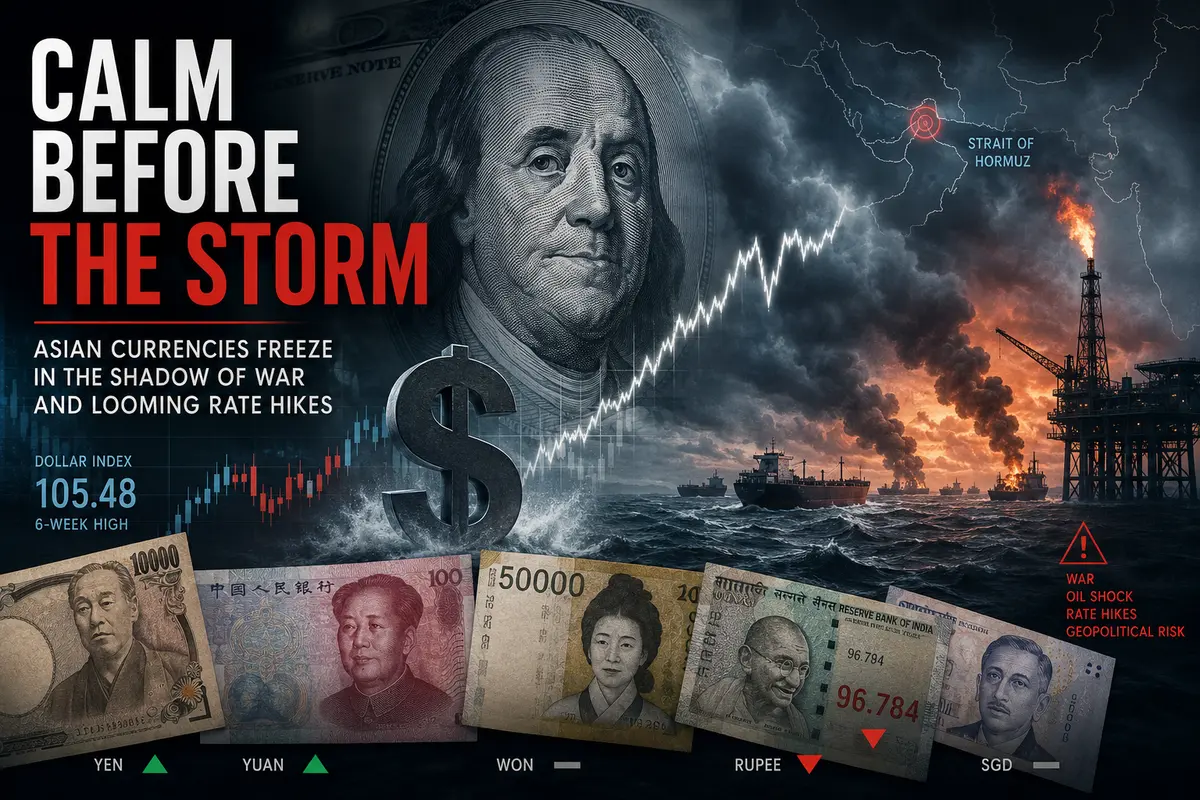
At first glance, Asian currency markets looked almost sleepy on Wednesday. Most pairs drifted within narrow ranges, traders seemed to hit pause, and price action resembled the heartbeat monitor of a patient under heavy sedation. But this silence is deceptive. Beneath the surface calm of sideways trading lies enormous tension ready to erupt at any moment. When three forces converge at once — a war disrupting one-fifth of global oil supplies, renewed fears of Federal Reserve rate hikes, and deepening geopolitical fractures among major powers — markets do not calm down; they become paralyzed, trying to calculate where the first blow will come from.

The Heavyweight Dollar and the Ghost of Tightening

The dollar index hovering near six-week highs is the perfect barometer of global anxiety. Whenever the world starts shaking, money inevitably rushes into the dollar, and the current situation is no exception. But what makes this moment unique is that the dollar is rising not only as a safe haven, but also as a currency that could become even more profitable. Markets have once again started talking about something they tried to forget over recent months — another Fed rate hike.

This narrative did not emerge out of nowhere. Remarks by Philadelphia Federal Reserve Bank President Anna Paulson, made almost casually on Tuesday evening, became the detonator. When a senior Fed official says it is reasonable for markets to speculate about possible rate increases, it is not just rhetoric — it is a signal. Central bankers rarely speak carelessly. Behind such comments lies growing concern within the Fed over energy-driven inflation, which has begun accelerating again after the conflict with Iran disrupted supplies through the Strait of Hormuz.

Inflation caused by a supply shock is the most unpleasant type of inflation for central banks. It cannot be fought...

Continue reading...
0
0
Lin Brings

The Rupee on the Edge: Why India Is Facing a Currency Storm

The Rupee on the Edge: Why India Is Facing a Currency Storm

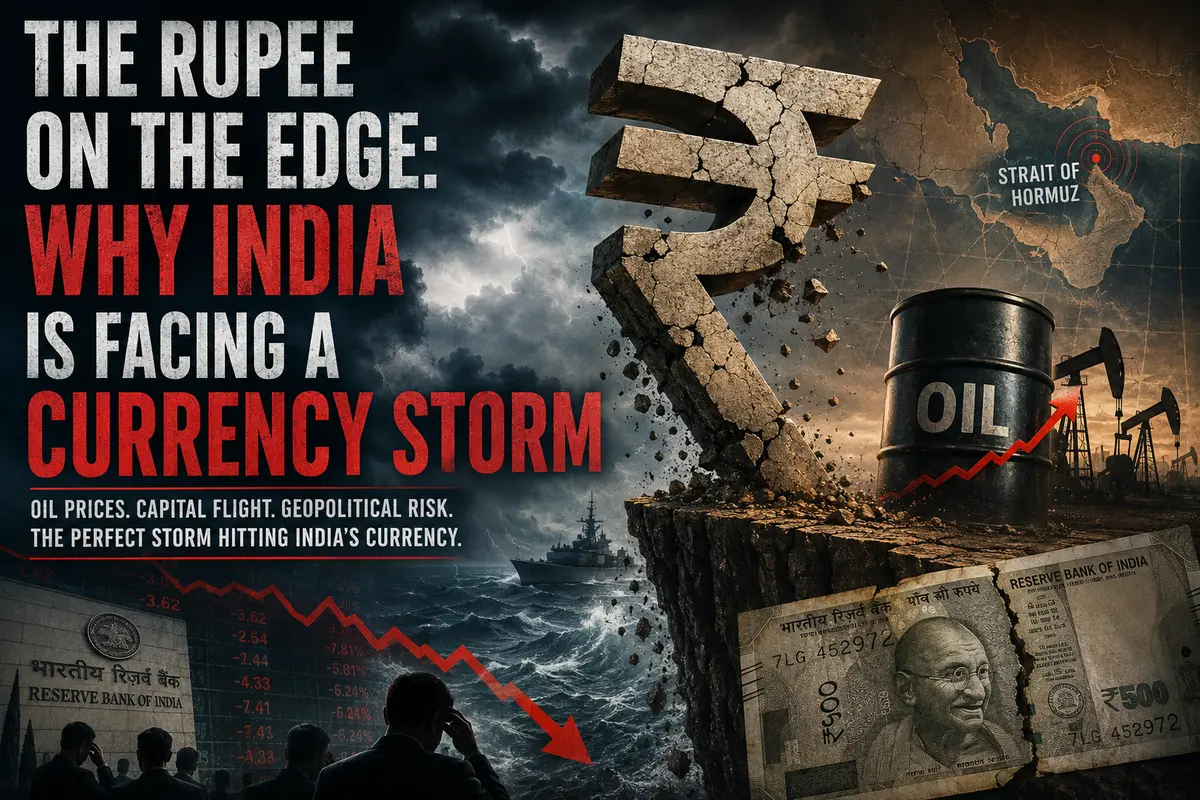
The 96.8650 level that USD/INR pierced this week is not just another number flashing across traders’ screens. It is a diagnosis. Seven consecutive all-time highs are not how healthy markets behave during temporary stress — this is how a system behaves when some fundamental safeguard has broken down. The rupee has fallen before; there have been crashes and speculative panics. But the current situation stands out for its relentless, almost hopeless consistency. The currency is not merely weakening — it is losing the ability to find a bottom. And while the world watches the standoff in the Strait of Hormuz with fascination, the real drama is unfolding not on the decks of destroyers, but in the corridors of the Reserve Bank of India and on the balance sheets of Indian importers staring in horror at their dollar-denominated invoices.

The Oil Trap: Anatomy of a Curse

The entire structure of the Indian economy resembles a building erected on barrels of crude oil. This is neither exaggeration nor literary metaphor. India is the world’s third-largest oil consumer, yet unlike the other members of this uneasy top three, it possesses very little domestic production. More than 80% of the oil the country consumes is imported, sending foreign currency flowing to Saudi Arabia, Iraq, and — in less tense times — Iran.

When oil trades around seventy dollars a barrel, this structure can still maintain balance. But when prices surge by more than fifty percent in just a few months, as they have since late February, the current account begins to crack under the pressure.

The mechanics of this destruction are simple and ruthless. Indian refiners now require far more dollars to pay for the same physical volume of imports. They enter the foreign exchange market and aggressively sell rupees to buy U.S. currency....

Continue reading...
0
0
NorthRay

MetaTrader 4: The First Shock, Breaking It Down, and How to Stop Feeling Lost

MetaTrader 4: The First Shock, Breaking It Down, and How to Stop Feeling Lost

Hey, this is NorthRay.🙌

Remember my very first post? The one where I sat staring at the terminal, afraid to click anything?

Well, that terminal was MetaTrader 4.

When I opened it for the first time, I had a complete culture shock.

— A bunch of confusing windows.
— A chart full of red and green candles.
— Panels with numbers changing every second.
— Buttons with names that sounded like magic spells: Market Watch, Navigator, Terminal, Buy, Sell.

I felt like an astronaut dropped onto an alien planet without instructions.

A few weeks passed. I kept clicking the wrong things, mixing up windows, accidentally closing charts and having no idea how to get them back.

But eventually, I figured it out.

And now I’m going to walk you through every corner of MT4 the way I wish someone had explained it to me in the beginning.

What MetaTrader 4 Is and Why Everyone Uses It

MetaTrader 4 (or just MT4) is the most popular trading platform in the world.

It’s been around for years, but brokers love it and traders are used to it. It’s simple (once you understand it), stable, and has everything you need to get started.

There’s also MT5 — the “older sister.” But for beginners, MT4 is perfect.

The main thing you need to understand: MT4 is just a tool. Like a hammer. It doesn’t make money for you. You simply use it to open and close trades.🛡️

The First Things You See When You Open MT4

Let’s break down all the main windows. I’ll call them the same way I remembered them myself.

1. Market Watch

— Usually on the left side.
— Shows a list of currency pairs, gold, oil, stocks (if your broker offers them).
— Prices update in real time.
—...

Continue reading...
0
0

The Quantum Threat to Bitcoin: Why the World’s Largest Banks Are Warning About the End of the Cryptographic Era

The Quantum Threat to Bitcoin: Why the World’s Largest Banks Are Warning About the End of the Cryptographic Era

When financial giants like Citigroup publish alarming analytical reports, they rarely do so with sensational headlines or emotional rhetoric. Their language is usually dry, calculated, and clinically precise. That is exactly why such reports carry so much weight. Behind the carefully chosen wording lies not speculation, but a cold assessment of systemic risk.

And when an institution managing trillions of dollars begins warning about “shrinking time horizons” and a “growing threat” to the very foundation of cryptocurrencies, it is no longer science fiction. It is a signal that a fundamental problem has moved from theory into strategic reality.

This is not about another Bitcoin price correction, a temporary bear market, or the collapse of a crypto exchange. The issue runs much deeper: can the cryptographic foundation of digital assets survive the coming age of quantum computing?

Cryptography Is the Real Foundation of Bitcoin

Most people think about Bitcoin in terms of price movements, mining, ETFs, or halving cycles. But the true backbone of the network lies much deeper — in mathematics.

Bitcoin’s security is built on public-key cryptography, specifically the Elliptic Curve Digital Signature Algorithm, or ECDSA. This system allows users to prove ownership of funds without exposing their private keys.

In simplified terms, a Bitcoin address is like a lock that anyone can see and send money to. The private key is the unique key capable of opening that lock and moving the funds.

The entire architecture depends on one critical assumption: deriving a private key from a public key must be computationally impossible within any practical timeframe. Even with the combined power of modern supercomputers, the task remains effectively unattainable.

For years, this mathematical barrier was considered absolute.

Why Quantum Computers Change the Rules Entirely

The danger of quantum computing is not merely that quantum machines are “faster.”...

Continue reading...
0
0
Tom Maffin

Money That Feeds: How the Card Works

Money That Feeds: How the Card Works

The nonprofit organization WYDE, which has already attracted attention with its Impact Exchange concept, is preparing to launch a new financial tool. In partnership with the fintech platform Crowded, it is introducing a debit card called EAT that runs on the Visa infrastructure. At first glance, it sounds like a standard business card, but embedded within it is a mechanism that could reshape how businesses participate in charitable giving.

The concept is simple and elegant. Every time a cardholder — whether an entrepreneur, company, or organization — makes a purchase, a small portion of the transaction is automatically directed to hunger-relief organizations. No separate donations, no additional actions, no checkboxes or “donate” buttons. The money goes to charity automatically, simply because the business continues operating and spending on its everyday needs.

That is the core innovation. Charity stops being a separate act that requires a conscious decision and instead becomes integrated into daily financial activity. A company buys office supplies, pays for lunch with clients, or covers software subscriptions — and with each transaction, a few cents or dollars are sent to those fighting hunger. Over the course of a year, those contributions can add up to thousands of meals.

Crowded: Fintech Infrastructure for Good

WYDE’s partner in launching the card is Crowded — a fintech company specializing in services for nonprofit organizations. This is an important detail because the charitable sector has historically suffered from a lack of modern financial infrastructure. Banks are often reluctant to open accounts for nonprofits, payment systems are rarely tailored to their specific needs, and donation accounting is frequently handled through semi-manual processes.

Crowded manages the entire technical side: payment processing, fraud protection, and integrated card management. This means cardholders receive the same level of convenience and security as with any other Visa business...

Continue reading...
0
0

A Quarter That Shocked the Skeptics

A Quarter That Shocked the Skeptics

Japan has spent so many years being described as a stagnant economy that even modest growth now feels like a surprise. For decades the country was treated as the textbook example of what happens when demographics deteriorate, consumers stop spending, and deflation becomes embedded in national psychology. Economists built entire careers around explaining why Japan could no longer grow the way it once did.

And then the first-quarter GDP numbers arrived.

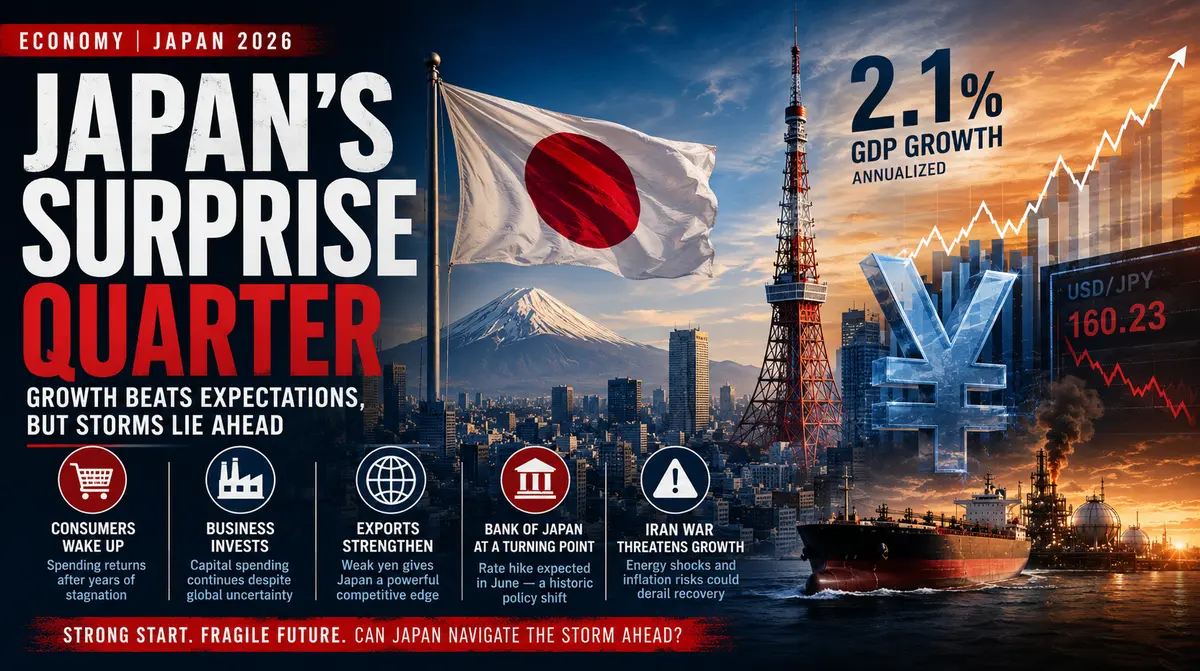
On paper, the figures may not look explosive by the standards of fast-growing emerging markets. But for Japan, they were remarkable. Annualized GDP growth accelerated to 2.1 percent, significantly above expectations and far stronger than the previous quarter’s revised 0.8 percent. Quarterly growth came in at 0.5 percent, also beating forecasts. Those are not numbers associated with an economy supposedly trapped in permanent paralysis.

What makes these results important is not just the headline growth itself. It is the composition of that growth. Japan is not being carried by a single temporary factor. Consumption improved. Investment remained positive. Exports strengthened. Inflation stayed elevated. In other words, several engines of the economy started moving at the same time.

That combination matters because Japan has spent years trying to escape a vicious cycle in which weak demand led to falling prices, falling prices encouraged consumers to delay purchases, and delayed spending weakened growth even further. Breaking that cycle was the central mission of the Bank of Japan for more than a decade.

Now, for the first time in years, there are signs that the psychology of the country may actually be changing.

The Most Important Story: Consumers Are Spending Again

The biggest development inside the GDP report was private consumption. It rose by 0.3 percent after stagnating in the previous quarter. In many economies, that would barely attract attention. In Japan,...

Continue reading...
0
0

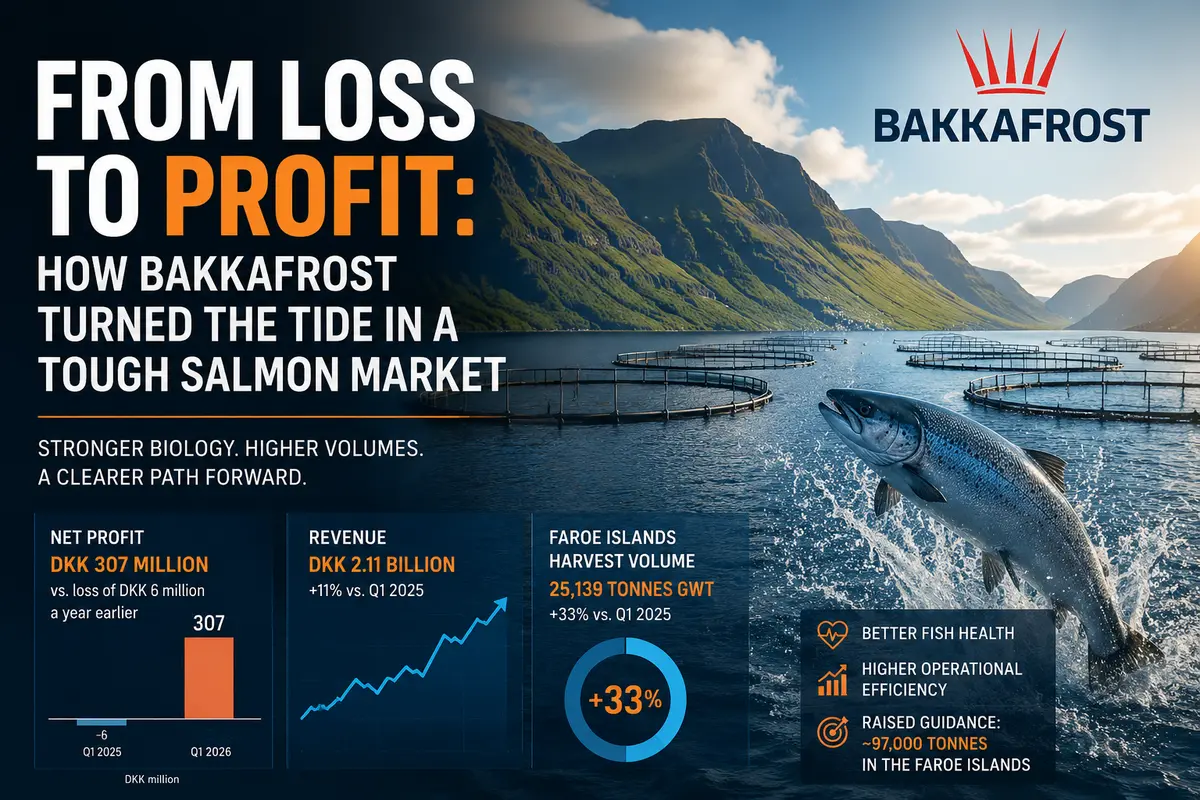
From Loss to Profit: How Bakkafrost Turned the Tide in a Tough Salmon Market

From Loss to Profit: How Bakkafrost Turned the Tide in a Tough Salmon Market
A Quarter That Changed the Narrative

When Bakkafrost published its first-quarter results, the numbers immediately caught the market’s attention. A year ago, the company reported a small net loss. This year, it delivered a net profit of DKK 307 million. On paper, it looks like a sharp turnaround. In reality, the story behind those figures is much deeper than a simple rebound in earnings. What happened over the past twelve months reveals how modern salmon farming has become a battle not only of prices and production volumes, but also of biology, geography, and operational discipline.

At first glance, the broader market environment did not look particularly favorable. Global salmon prices in the quarter were lower than a year earlier. Supply from major producing countries increased significantly, putting pressure on benchmark prices across Europe and Asia. In industries tied to commodities, lower prices usually translate directly into weaker profits. Yet Bakkafrost managed to move in the opposite direction.

That alone says a great deal about the company’s underlying condition.

Why Efficiency Matters More Than Salmon Prices

The key to understanding this quarter lies in one word: efficiency. Not the empty corporate kind of efficiency often repeated in investor presentations, but the real, measurable kind that determines whether a fish farmer makes money or loses it. In salmon farming, efficiency starts with biology. Healthy fish grow faster, require less treatment, consume feed more effectively, and survive in greater numbers until harvest. Sick fish do the opposite. Every biological problem eventually becomes a financial problem.

This is where Bakkafrost’s Faroese operations stood out.

The Faroe Islands are not just another production region on the map. For salmon farming, they are close to ideal. Cold Atlantic waters, strong ocean currents, stable temperatures, and relatively isolated fjords create natural conditions that reduce many of the...

Continue reading...
0
0
Navigation menu
instaforex banner