Bar Pipa
We pay for a post of 10$

Japan

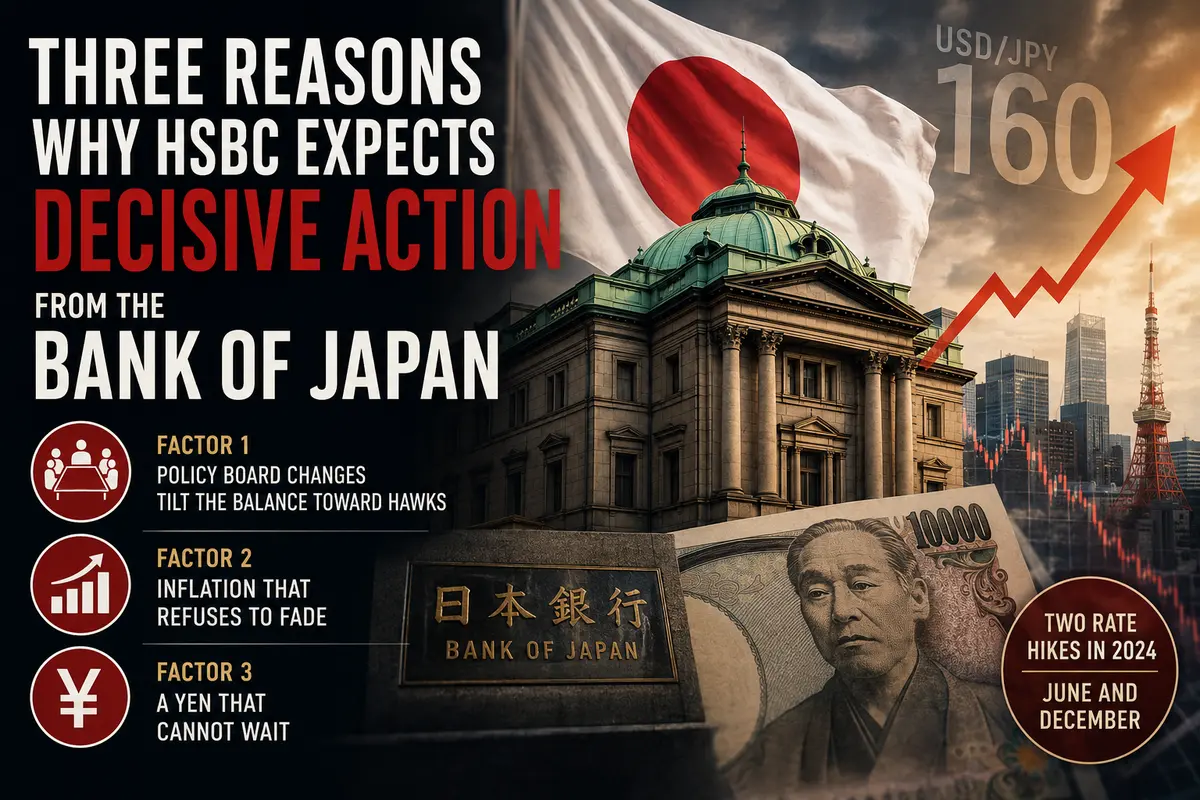
Three Reasons Why HSBC Expects Decisive Action from the Bank of Japan

Three Reasons Why HSBC Expects Decisive Action from the Bank of Japan

For decades, the Bank of Japan has been synonymous with monetary easing. While the Federal Reserve, the European Central Bank, and the Bank of England raised interest rates, fought inflation, and adopted more hawkish rhetoric, Tokyo remained an island of cheap money in a world of expensive capital. But that island now appears to be sinking.

HSBC has revised its forecast and now expects the Japanese central bank to raise rates twice this year. The first hike is projected for June rather than July, as previously anticipated. The second is expected in December. By year-end, the policy rate is forecast to reach 1.25%.

For a country that has spent decades with zero or even negative interest rates, this is close to a revolution. HSBC economist Frederik Neumann outlined three factors behind the revised outlook, and each deserves close attention.

Factor One: Changes on the Policy Board

Central banks are not abstract institutions run by algorithms. They are run by people—specific men and women who sit around a table, debate, vote, and make decisions. The fate of entire economies can depend on who occupies those seats. At the Bank of Japan, a changing of the guard is underway that could shift the balance of power toward the hawks.

Junko Nakagawa, a member of the Policy Board, will leave her post on June 29. Her final meeting will take place on June 16—the very meeting at which HSBC believes a rate hike could be approved. Nakagawa was one of three dissenting members who voted in favor of a rate increase at the previous meeting. In other words, she was already part of the hawkish camp. Yet her departure could paradoxically strengthen that camp’s influence.

Her likely successor is Ayano Sato, whom HSBC characterizes as more inclined toward accommodative monetary policy. This means...

Continue reading...
0
0

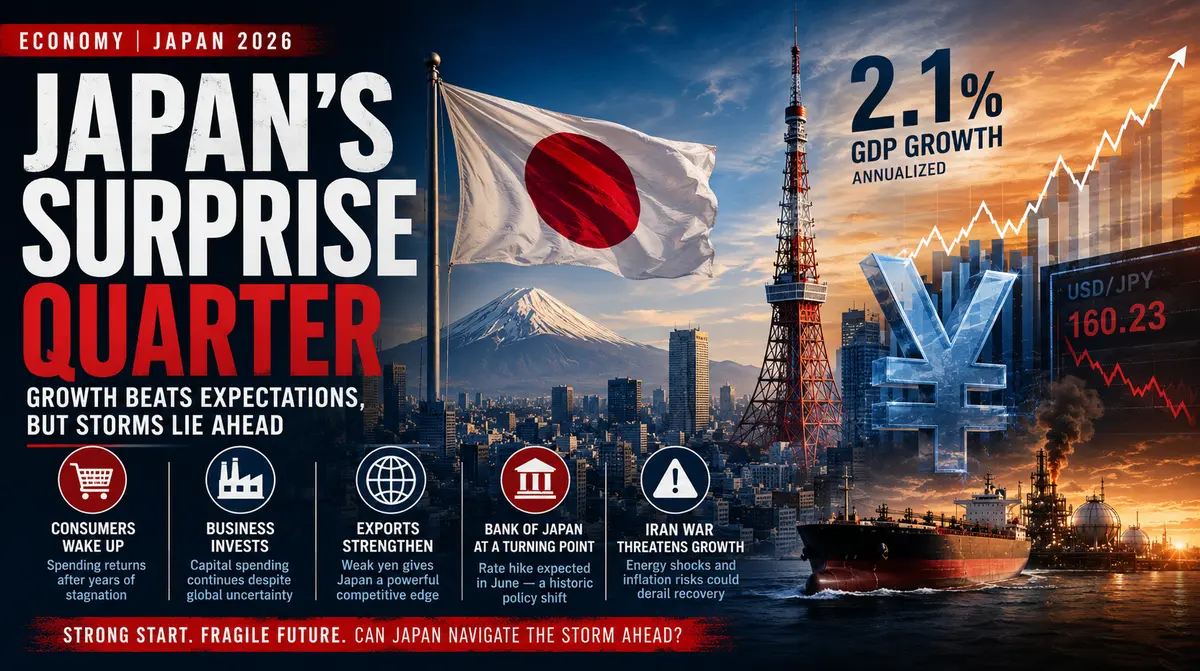
A Quarter That Shocked the Skeptics

A Quarter That Shocked the Skeptics

Japan has spent so many years being described as a stagnant economy that even modest growth now feels like a surprise. For decades the country was treated as the textbook example of what happens when demographics deteriorate, consumers stop spending, and deflation becomes embedded in national psychology. Economists built entire careers around explaining why Japan could no longer grow the way it once did.

And then the first-quarter GDP numbers arrived.

On paper, the figures may not look explosive by the standards of fast-growing emerging markets. But for Japan, they were remarkable. Annualized GDP growth accelerated to 2.1 percent, significantly above expectations and far stronger than the previous quarter’s revised 0.8 percent. Quarterly growth came in at 0.5 percent, also beating forecasts. Those are not numbers associated with an economy supposedly trapped in permanent paralysis.

What makes these results important is not just the headline growth itself. It is the composition of that growth. Japan is not being carried by a single temporary factor. Consumption improved. Investment remained positive. Exports strengthened. Inflation stayed elevated. In other words, several engines of the economy started moving at the same time.

That combination matters because Japan has spent years trying to escape a vicious cycle in which weak demand led to falling prices, falling prices encouraged consumers to delay purchases, and delayed spending weakened growth even further. Breaking that cycle was the central mission of the Bank of Japan for more than a decade.

Now, for the first time in years, there are signs that the psychology of the country may actually be changing.

The Most Important Story: Consumers Are Spending Again

The biggest development inside the GDP report was private consumption. It rose by 0.3 percent after stagnating in the previous quarter. In many economies, that would barely attract attention. In Japan,...

Continue reading...
0
0

The Silent Battle for the Yen

The Silent Battle for the Yen

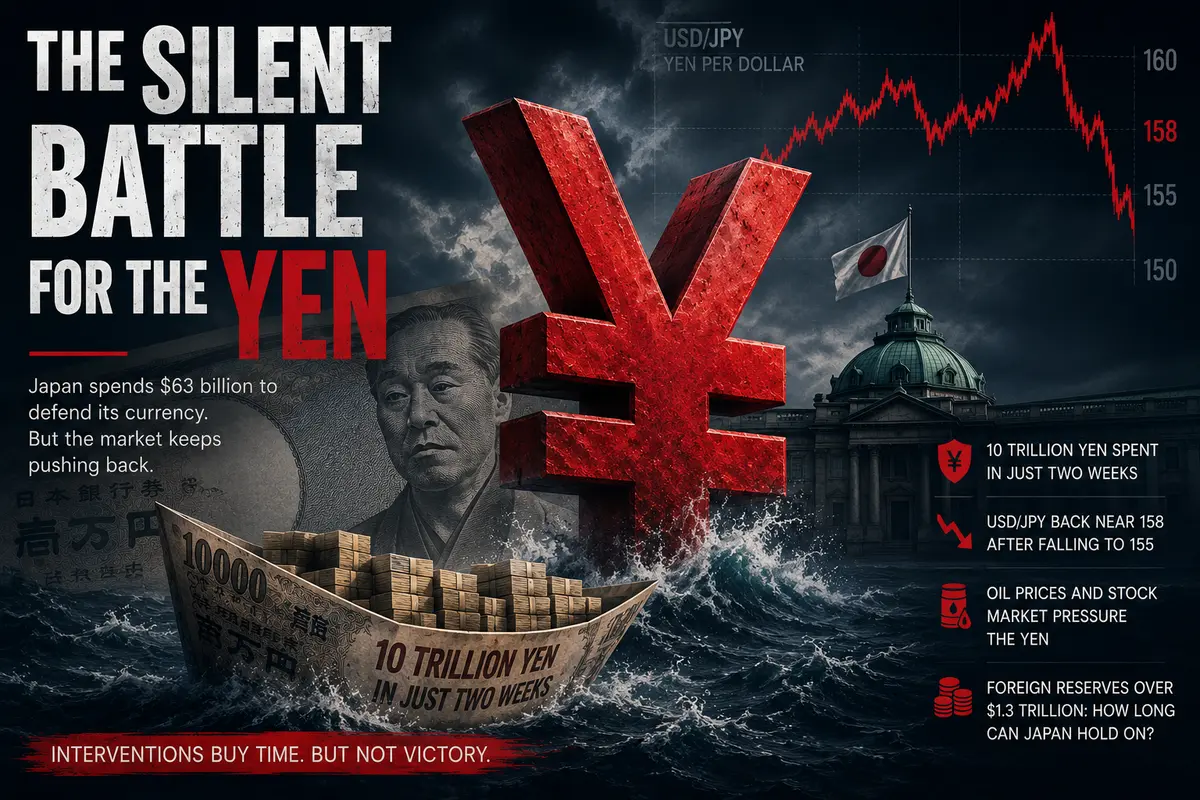
Japan is once again fighting for its currency. This time quietly — without loud ministerial statements or dramatic press conferences. But the numbers emerging from banking analytics speak for themselves. According to estimates by Citi, the Japanese government has already spent around 10 trillion yen over the past few weeks buying its national currency. In dollar terms, that is roughly $63 billion. Sixty-three billion dollars disappearing into the foreign exchange market within days — a scale that is hard to comprehend, yet that is the price Tokyo is paying to convince the world that the yen should not be cheap.

The data on current deposits at the Bank of Japan are the breadcrumbs analysts use to trace invisible interventions. The central bank does not loudly announce its actions, but statistics do not lie. On April 30, about 5 trillion yen disappeared from deposits, and between May 1 and May 6 another 5 trillion vanished. Ten trillion in two weeks. These are not random liquidity fluctuations — they are the footprints of the currency regulator’s heavy boots on the sands of the money market.

Why now: the specter of 160 yen per dollar

The trigger for the intervention, as in previous episodes, was the psychological level of 160 yen per dollar. This appears to be the red line Japanese financial authorities cannot tolerate. Once USD/JPY crosses it, alarm bells go off in Tokyo and the intervention machinery swings into action.

After the intervention, the pair obediently fell toward 155 yen. A temporary reprieve bought with billions of dollars. But by the beginning of the current week, the exchange rate had sharply rebounded and climbed back toward 158 yen per dollar. The market, like a stubborn beast, lay down for a moment, caught its breath, and began rising again. This is the...

Continue reading...
0
0
Navigation menu