Bar Pipa
We pay for a post of 10$

Dollar

Tom Maffin

Asia Defends Its Currencies Amid a Strong Dollar and Expensive Oil

Asia Defends Its Currencies Amid a Strong Dollar and Expensive Oil
A Storm That Won’t Let Up

Asia wakes up on Thursday, and the first thing traders see on their screens is red once again. Regional currencies have fallen for a fourth consecutive day. Bloomberg’s Asian currency index—a barometer of the financial health of hundreds of millions of people across the region—continues its relentless slide. The biggest losers are the South Korean won and the Indonesian rupiah, but few others are faring much better.

Behind these numbers lies a simple and uncomfortable story. The dollar is strong. Oil is expensive. Capital is flowing out of Asia and into the United States. Meanwhile, local central banks are trying to preserve what they can. Interventions, warnings, interest-rate hikes—every tool is being deployed. So far, however, the results have been limited.

Asian countries have found themselves in a perfect storm. Two powerful forces are putting simultaneous pressure on their currencies. The first is the policy stance of the U.S. Federal Reserve. The American economy has remained stronger than expected, inflation remains stubborn, and the Fed is not only delaying rate cuts but is even considering further hikes. The second factor is the Middle East. Rising tensions between the United States and Iran are pushing oil prices higher. For Asia, which imports most of the oil it consumes, expensive oil delivers a triple blow: higher inflation, worsening trade balances, and weaker currencies.

Regional authorities are fighting back. Some are intervening directly, selling dollars from their reserves and buying local currencies. Others are raising interest rates to make their currencies more attractive to investors. Some are imposing administrative measures to limit capital outflows. Yet the U.S. dollar remains a formidable opponent. It is difficult to fight when domestic economies are slowing and inflation is rising.

South Korea: Words and Actions

South Korea, Asia’s fourth-largest economy and...

Continue reading...
0
0

WTI Crude Oil Futures Fall During Asian Trading

WTI Crude Oil Futures Fall During Asian Trading
A Morning That Started in the Red

Thursday’s Asian trading session delivered a cold shower for oil bulls. Futures on West Texas Intermediate (WTI) crude oil, the benchmark for the U.S. market, moved into negative territory. And not just slightly—at the time of writing, WTI was down 1.21%, trading at $94.86 per barrel.

For traders accustomed to volatility, a one-percent move is hardly dramatic. But context matters. Just a day earlier, oil had posted its third consecutive session of gains. Market participants were beginning to embrace the idea that crude was back in favor, with geopolitics and tightening inventories providing strong support. Then came the pullback—not a crash, but sharp enough to make investors pause.

The decline coincided with a stronger U.S. dollar. The U.S. Dollar Index futures, which track the greenback against a basket of six major currencies, rose 0.04% to 99.47. It may seem insignificant, but in currency markets even small moves matter. When the dollar strengthens, oil—priced in dollars—typically becomes more expensive for foreign buyers, putting downward pressure on prices. The inverse correlation remains intact even on days when geopolitical headlines suggest higher oil prices.

Brent crude, the European benchmark, also came under pressure. August Brent futures fell 1.25% to $96.59 per barrel. The price spread between Brent and WTI narrowed to $1.73 in favor of Brent. Just a week ago, the spread was above $2. A narrowing spread suggests that U.S. crude is appreciating relative to its European counterpart, reflecting shifts in global supply flows.

The technical picture also offers food for thought. WTI has established support at $86.35 per barrel—a level sellers failed to break during previous sessions. Resistance stands at $96.98. With the current price at $94.86, the market sits roughly in the middle of that range. Traders looking at the charts see upside...

Continue reading...
0
0

Gold Rises After Lebanon Ceasefire; U.S. Labor Market Data in Focus

Gold Rises After Lebanon Ceasefire; U.S. Labor Market Data in Focus
The Yellow Metal Finds a Reason to Climb

Thursday began with cautious optimism for gold. Spot gold gained just over half a percent, rising to $4,460 per ounce. Futures followed the same path, up 0.5% to $4,486. These are not record highs, but they are welcome gains—especially after Wednesday, when gold lost more than 1% under pressure from a stronger U.S. dollar.

What changed overnight? First, geopolitics. Second, expectations. Both factors worked in favor of the yellow metal.

The geopolitical backdrop remains complicated, but the first signs have emerged that the worst may be behind us. Late Wednesday, Washington announced a ceasefire agreement between Israel and Lebanon. The wording was cautious—the deal depends on Hezbollah halting hostilities—but the fact that diplomats managed to reach an agreement after talks appeared stalled only a day earlier is a meaningful signal.

Investors took notice. Oil, which had been rising this week on fears of supply disruptions, moved lower on Thursday morning. Crude prices fell after three consecutive days of gains. Lower oil prices mean lower inflation expectations. Lower inflation expectations ease pressure on central banks, reducing the need for aggressive anti-inflation measures.

Still, it is too early to relax. The Middle East conflict has not disappeared—it has merely cooled somewhat. Reports of Iranian missile strikes on Kuwait and Bahrain from Wednesday remain relevant, as do U.S. strikes on Iran’s Qeshm Island in the Strait of Hormuz. Israeli military operations in southern Lebanon also continue.

The ceasefire between Israel and Lebanon is important, but it is only one piece of a much larger puzzle. Iran remains the primary source of concern, while Hezbollah remains an unpredictable player. As a result, gold is moving higher, but without euphoria—cautiously and with one eye on the risks.

U.S. Economic Data: Two Sides of the Same...
Continue reading...
0
0

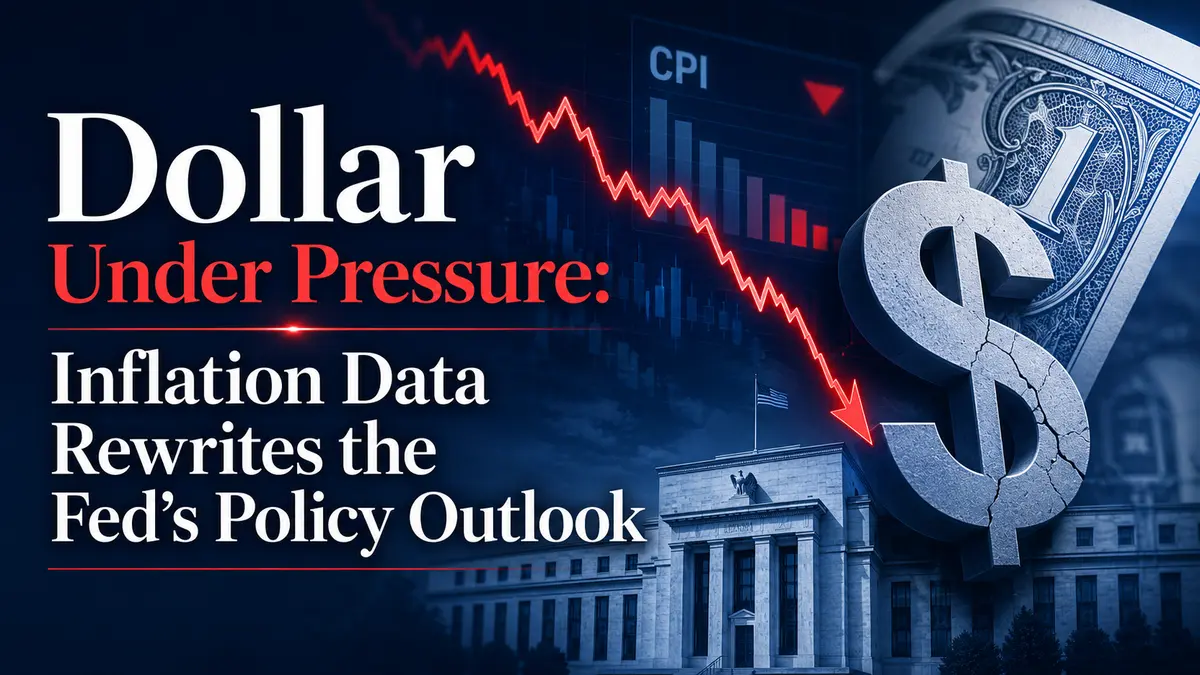
HSBC Expects a Weaker Dollar as Markets Change Their Reaction to Data

HSBC Expects a Weaker Dollar as Markets Change Their Reaction to Data
When Good News Stops Being Good News for a Currency

There is an old, almost cliché truth in finance: a strong U.S. economy means a strong dollar. It seems logical enough. GDP rises, and investors bring money into America. Strong employment data strengthens the dollar. Geopolitical tensions drive investors into the dollar as a safe haven. This relationship worked for decades. It was an axiom that required no proof.

But, as it turns out, even axioms can become outdated.

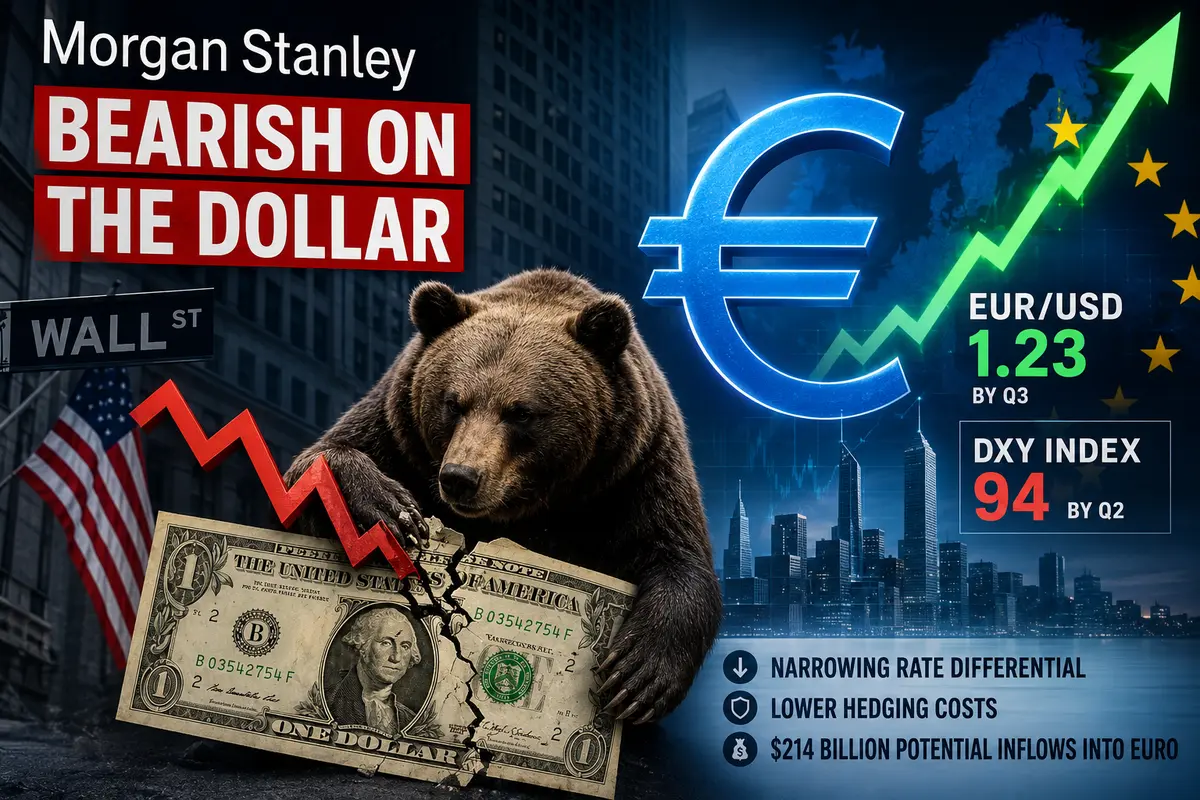
HSBC Asset Management, which oversees $863 billion in assets, has made a rather provocative claim. According to the firm's strategists, the dollar is headed for weakness. Not merely a temporary correction or a short-term pullback, but a structural downward trend. Their key argument sounds almost paradoxical: the dollar no longer responds to good news the way it once did.

Joe Little, Global Chief Strategist at HSBC Asset Management, articulated the idea with remarkable precision. Historically, the combination of strong domestic growth and geopolitical tension created a powerful and sustained uptrend for the U.S. currency. Investors from around the world flocked to the dollar because America was both a haven of stability and an engine of growth. Today, that dynamic appears to be fading. The dollar still rises at times, but reluctantly, sluggishly, and with frequent reversals. Little sees this as a symptom of a deeper problem.

Something has changed. The question is: what exactly?

The Dollar That Doesn't Want to Rise

Let's look at the numbers. The Bloomberg Dollar Spot Index gained just 0.6% over the past month. In currency markets, six-tenths of a percent is barely a move. It's a tremor rather than a trend.

And this happened despite the U.S. economy continuing to surprise on the upside. Job openings exceeded expectations. Consumer spending remains resilient. Industrial production is expanding....

Continue reading...
0
0

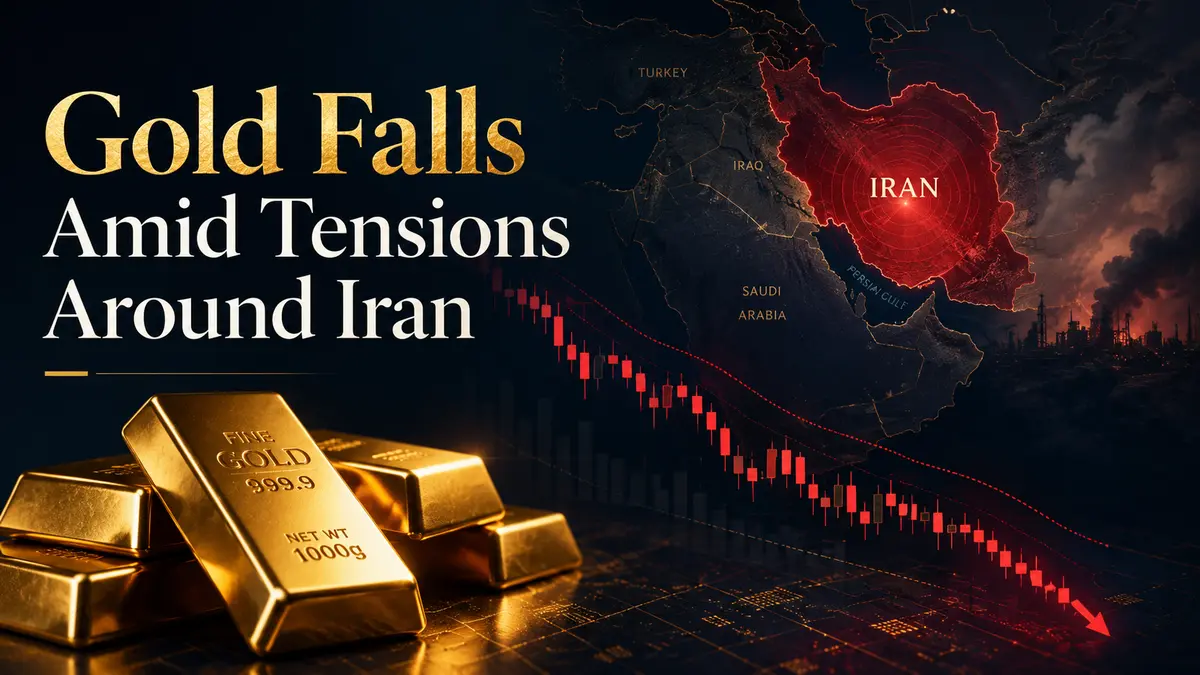
Gold Under Crossfire: Why Bombing Raids on Iran Are Sinking the Precious Metal Again

Gold Under Crossfire: Why Bombing Raids on Iran Are Sinking the Precious Metal Again

Monday began with headlines that have become an alarming routine in recent weeks. U.S. forces launched new strikes against Iranian targets—this time focusing on air defense positions and drone infrastructure. Iran responded with an attack on an airbase used by U.S. forces. Meanwhile, Israel pushed troops deeper into southern Lebanon, where fighting with Hezbollah has intensified once again. The Middle East is burning, and gold, which in the past would have been the first asset to rally on such news, is now falling.

Spot gold dropped 0.8% to $4,501 per ounce, while futures plunged an even steeper 1.3%. At first glance, this seems to defy all logic. Yet within this contradiction lies the most important story in today’s precious metals market.

The War Paradox: Why Bombs Are Hurting Gold

Traditional finance textbooks teach that when guns fire, investors rush into gold. This defensive reflex worked for decades. Vietnam, Iraq, Afghanistan, Crimea—every major military crisis sent the yellow metal higher.

But the current conflict involving Iran has rewritten the rules.

The reason is simple: the market has learned to focus not on the war itself, but on its economic consequences. And those consequences are proving devastating for gold.

The chain reaction looks like this:

Strikes on Iran and retaliatory attacks suggest a prolonged conflict. A prolonged conflict increases the likelihood that the Strait of Hormuz will remain closed or partially restricted. A restricted strait means disruptions to global oil supplies. Supply disruptions keep energy prices elevated. Higher energy prices fuel inflation. Inflation forces the Federal Reserve to keep interest rates higher for longer—or even consider raising them further.

And high interest rates are toxic for gold, an asset that generates no yield.

That is precisely the logic that pushed gold lower on Monday. The market saw fresh bombings and concluded that...

Continue reading...
0
0

Oil Back in the Fire: WTI Surges 3% After New Strikes on Iran

Oil Back in the Fire: WTI Surges 3% After New Strikes on Iran

Thursday’s Asian session opened with a powerful rally in oil prices. July WTI futures jumped 3.34%, reaching $91.64 per barrel. Brent crude followed closely behind, gaining 3.26% to settle at $95.26. This is not just another price increase — it is a strong, confident move driven by a very specific catalyst. The reason has a name: new U.S. strikes on Iranian targets, the second round in a single week. A market that was still hoping for peace earlier this week is once again pricing in a geopolitical risk premium.

Three Percent Higher: Anatomy of the Spike

A 3.3% move in a single session is not ordinary volatility — it is a major event. To understand the scale, imagine the oil market repricing the global supply-demand balance within hours by an amount comparable to what would normally take months in calmer conditions. So what happened?

In the early hours of Thursday, U.S. forces carried out strikes against targets in southern Iran. This was already the second such operation in a week, following the first strike on Monday. Washington officially describes the actions as defensive, but the market is not interested in legal wording. What matters is that bombs are still falling, which means the conflict is far from over.

Moreover, President Trump personally dismissed reports on Wednesday about the imminent reopening of the Strait of Hormuz, stating that there is no thirty-day agreement and that neither Iran nor Oman will control the passage. That statement shattered fragile hopes for de-escalation and forced traders to reassess their positions.

Oil reacted instantly. WTI, which had tested support around $87.80 earlier in the week, exploded higher. Brent broke above $95 and, judging by the momentum, does not appear ready to stop. The market is once again pricing in the risk of prolonged supply disruptions...

Continue reading...
0
0

Silence Before the Data: The Dollar Freezes as the World Watches Iran and U.S. Inflation

Silence Before the Data: The Dollar Freezes as the World Watches Iran and U.S. Inflation

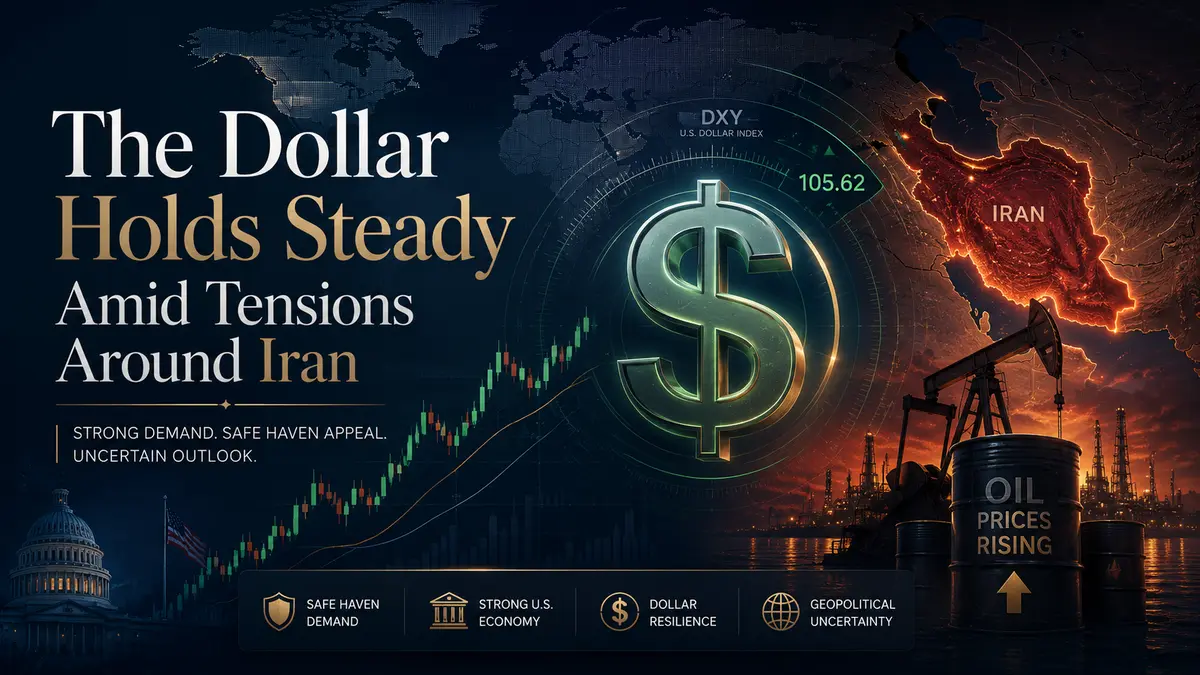
Wednesday on the currency markets was defined by anticipation. The dollar stood still, like a predator before the leap, making no sharp moves either upward or downward. The U.S. dollar index and its futures were virtually unchanged during Asian trading, stabilizing after a brief surge earlier in the week.

But this stillness is deceptive. Beneath it lies enormous tension — traders are frozen ahead of two events capable of turning the market upside down. One is geopolitical, the other macroeconomic. And both sit at a point of maximum uncertainty.

Iran Talks: Diplomacy Through a Crosshair

The main factor preventing the dollar from falling — and at the same time keeping it from rallying — is Iran.

Negotiations between the United States and Iran over de-escalating the conflict are continuing, but no one seems to fully understand their real condition. According to media reports, indirect contacts are still ongoing even after U.S. forces struck targets in southern Iran.

It is a strange, almost surreal picture: bombs are falling while diplomats continue talking. War and peace exist simultaneously, in parallel realities.

As recently as the weekend, U.S. officials sounded optimistic. Trump spoke of a memorandum that was “largely agreed upon.” Markets celebrated, oil prices fell, and the dollar weakened.

But this week Washington’s tone has become more restrained. The strikes on Iranian facilities were presented as defensive, yet the very fact they occurred suggests the negotiating process is stalling. The sides remain stuck on key issues — the fate of Iran’s enriched uranium, the timeline for reopening the Strait of Hormuz, and security guarantees.

Until those issues are resolved, the dollar will continue to receive support as a safe-haven asset.

The mechanics here are simple and ruthless. As long as there is a risk of escalation, there is a risk of disruptions...

Continue reading...
0
0

Gold Under Fire: How New Bombings in Iran Crushed the Precious Metals Rally

Gold Under Fire: How New Bombings in Iran Crushed the Precious Metals Rally

Tuesday’s Asian trading session delivered a brutal reality check to gold traders. Just yesterday, spot gold prices were confidently climbing higher amid hopes for peace with Iran, while futures painted bullish charts suggesting the rally would continue. Today, everything reversed.

Spot gold plunged 0.8% to $4,535 per ounce. Futures followed, falling by the same margin. Silver collapsed by more than 2%, while platinum lost 0.6%. Precious metals, which had celebrated a return to life on Monday, came under attack on Tuesday — both literally and figuratively. And the reason for this reversal was the very bombs the United States dropped on southern Iran.

The Paradox of War and Gold: Why Bombs Are Sinking Prices

At first glance, this seems backward. Gold is the classic safe-haven asset. When guns fire, investors usually run into gold. This rule has worked for decades and entire investment strategies are built around it.

But the current conflict with Iran has rewritten those rules. To understand why, we need to look at how this war affects gold — not directly, but through a complex chain of macroeconomic consequences.

The conflict with Iran triggered an energy crisis. The closure of the Strait of Hormuz sent oil prices soaring. Rising energy prices fueled inflation worldwide. And accelerating inflation forced the Federal Reserve and other central banks to start talking about higher interest rates.

This is where the mechanism becomes deadly for gold.

Gold generates no yield. When rates rise — or even when there is merely a threat of higher rates — holding gold becomes an expensive luxury. Investors look at a gold bar sitting idle in a vault, then compare it with Treasury bonds offering guaranteed dollar returns, and make the rational choice in favor of bonds.

That is why gold fell during the hottest phases of...

Continue reading...
0
0

Diplomacy in Ruins: How a New Strike on Iran Restored the Dollar’s Strength and Brought Fear Back to Markets

Diplomacy in Ruins: How a New Strike on Iran Restored the Dollar’s Strength and Brought Fear Back to Markets

Monday ended with explosions. By Tuesday, markets woke up in a different world — one where hopes for imminent peace, which had lifted Asian stocks and currencies just a day earlier, were shattered by the harsh reality of military force. The United States carried out strikes on targets in southern Iran. Although details remain scarce and official statements cautious, that alone was enough for the markets. The dollar resumed its climb. Oil surged alongside it. Asian currencies, which had celebrated gains on Monday morning, came under pressure by Tuesday. The geopolitical pendulum swung back — and this time, those who had rushed to believe in peace were the ones falling.

Strikes on Southern Iran: What We Know and Why It Matters

Reports of new U.S. strikes on Iranian facilities emerged on Monday. The targets were located in the south of the country — a region strategically important both for Iran’s military infrastructure and for control over the Persian Gulf coastline. Details of the operation remain classified, but the mere resumption of military action after several days of intense negotiations suggests either that diplomacy has hit a dead end or that talks are being used as cover for continued military pressure.

Iranian officials reacted immediately. Their warning was blunt and unequivocal: any attacks on the country’s military facilities would trigger retaliation. This was not rhetoric — it was a promise of escalation. Markets interpreted it exactly that way: as a signal that the conflict is far from over and that the risks of a new spiral of violence are growing by the hour.

The contrast with the mood over the weekend could not be sharper. As recently as Saturday and Sunday, Trump had spoken about a memorandum that was “mostly agreed upon,” about reopening shipping routes through the Strait of Hormuz,...

Continue reading...
0
0
Lin Brings

Hawks in Washington, Calm in Asia: The Dollar Holds Firm While the Aussie Loses Ground

Hawks in Washington, Calm in Asia: The Dollar Holds Firm While the Aussie Loses Ground

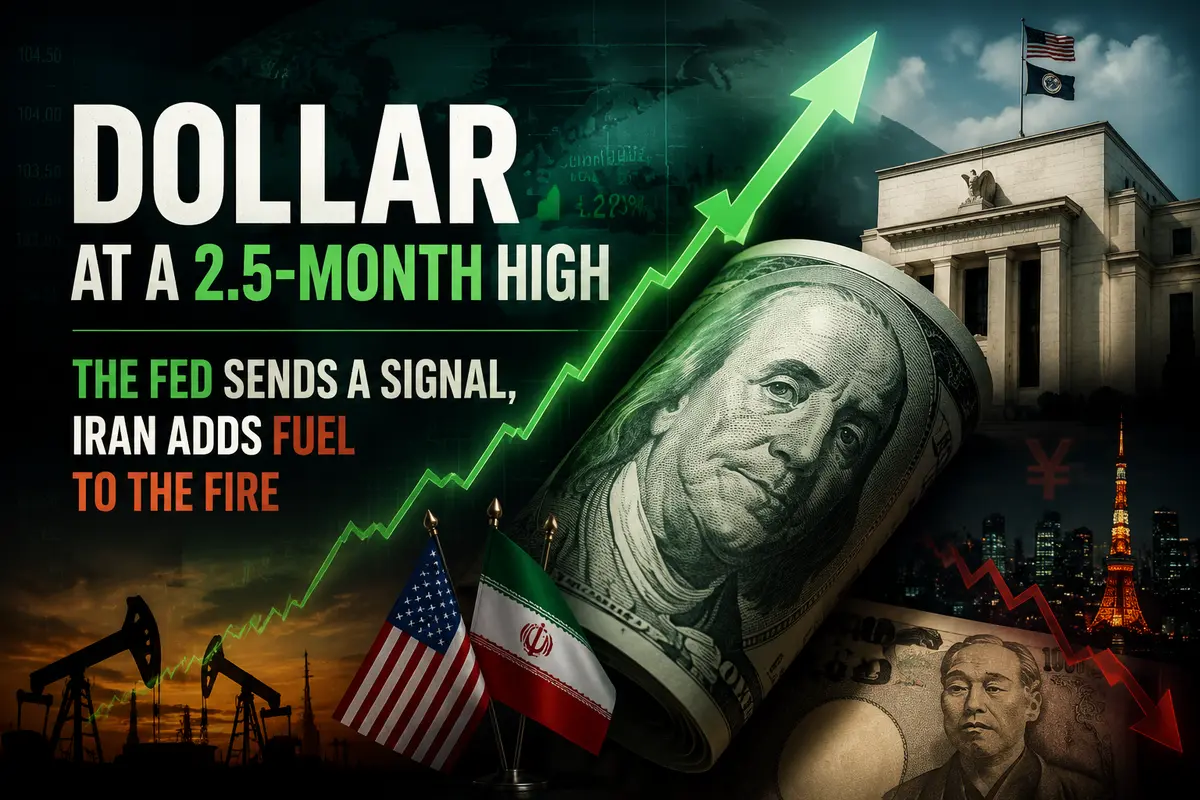
Thursday’s Asian trading session unfolded under the shadow of what the Federal Reserve released the previous evening. The minutes from April’s Fed meeting — anticipated with a level of tension rivaling that of Big Tech earnings reports — did not disappoint those betting on a hawkish turn. The document confirmed what markets had been whispering about for weeks: the hawks inside the Fed are spreading their wings, and the idea of further rate hikes is no longer fringe speculation. The dollar, sensing renewed strength, stabilized near six-week highs, while Asian currencies — with the exception of the yen — retreated into defensive mode. The Australian dollar, meanwhile, suffered a particularly sharp blow from an unexpected source: its own labor market.

Fed Minutes: The Hawks Step Out of the Shadows

Reading Fed minutes is always an exercise in decoding. Dry language conceals dramatic clashes of opinion, cautious hints, and diplomatically softened disagreements. But the April document was surprisingly candid. More and more officials on the Federal Open Market Committee now acknowledge the possibility of raising interest rates. This is not merely a shift in tone — it is a tectonic change in the monetary landscape, one that would have seemed unthinkable just a few months ago.

The reason behind this shift is simple and ominous: inflation. The very inflation the Fed vowed to keep near two percent refuses to cool. On the contrary, it has accelerated sharply over the past two months. The chief culprit is oil. Supply disruptions caused by the war against Iran have driven energy prices to levels that ripple through the cost of everything — from gasoline and airfare to grocery baskets. This is supply-side inflation, the most troublesome kind for central banks because it cannot be fought effectively through traditional demand cooling. Yet judging by the...

Continue reading...
0
0
Navigation menu