Bar Pipa
We pay for a post of 10$

Brent

Rose Gramit

WTI Crude Oil Futures Rise in Asian Trading

WTI Crude Oil Futures Rise in Asian Trading
A Morning That Began with Hope

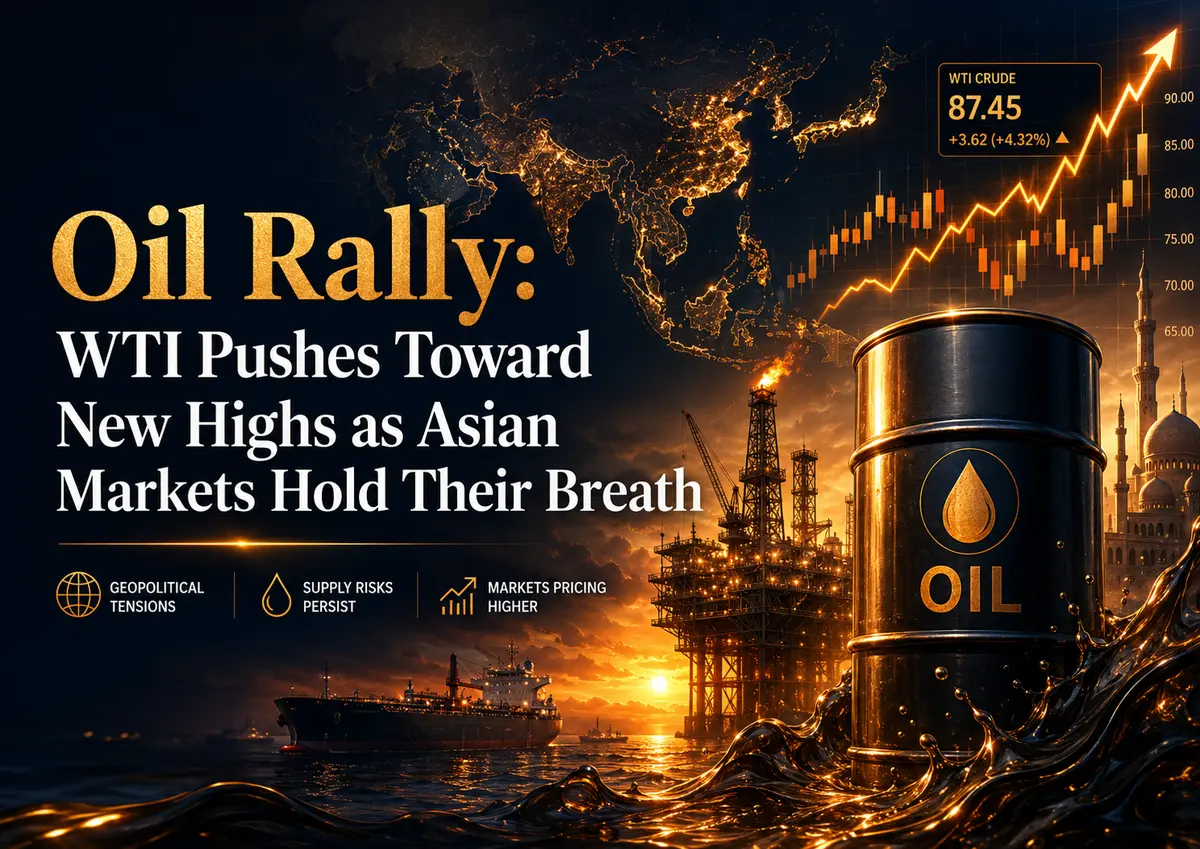
Friday’s Asian oil markets opened with cautious but steady gains. Futures for West Texas Intermediate (WTI) crude oil, the primary benchmark for the U.S. market and beyond, rose 0.17% to $93.20 per barrel. It is hardly a spectacular rally—just seventeen hundredths of a percent, more of a tremor than a surge. But after several days of volatile price swings, traders are willing to welcome any green number on their screens.

The European benchmark, Brent crude, appeared somewhat stronger. The August Brent contract gained 0.42%, climbing to $95.43 per barrel. The price spread between Brent and WTI widened to $2.23 per barrel in Brent’s favor. A week ago, the spread was narrower, below $2. The widening gap suggests that geopolitical risks concentrated around key Brent supply routes continue to weigh more heavily on Brent than on WTI, which is produced in the relatively secure environment of Texas.

The U.S. dollar, which has pressured commodity markets in recent days, weakened slightly on Friday morning. The U.S. Dollar Index futures slipped 0.01% to 99.39. The decline is tiny and almost imperceptible, but even such a modest move gives oil prices some breathing room.

The technical picture remains tense. WTI support stands at $88.45, a level sellers failed to break in recent sessions. Resistance is located at $97.00. With WTI trading at $93.20, prices sit roughly in the middle of that range, leaving traders with room for maneuver.

The key question is what will trigger the next move. Geopolitics? U.S. inventory data? Or perhaps long-awaited news regarding negotiations between Iran and the United States? As usual, Asian traders were the first to react and have already begun positioning themselves ahead of developments.

Middle East: The Calm Before the Storm

The geopolitical backdrop remains the...

Continue reading...
0
0

WTI Crude Oil Futures Rise in Asian Trading

WTI Crude Oil Futures Rise in Asian Trading
Green Light in the East

Oil traders came into Wednesday with more questions than answers. The previous few weeks had been anything but straightforward. Prices jumped on geopolitical headlines, slipped on weak economic data, then bounced back again when supply concerns resurfaced. Every trading session seemed to bring a new narrative.

But when Asian markets opened on Wednesday, the message was surprisingly clear.

WTI crude futures moved higher almost from the start of trading. The gains were not spectacular, but they were steady and broad-based. By the middle of the session, prices had climbed close to 1%, reaching $94.62 per barrel. In a market that has spent much of the year struggling to find direction, that kind of move attracts attention.

What matters most isn't the size of the gain. It's the fact that buyers are once again willing to step in.

Markets rarely move in a straight line. Oil, perhaps more than any other major commodity, is driven by a constant tug-of-war between fear and optimism. On one side are concerns about economic growth, consumer demand, and industrial activity. On the other are supply disruptions, geopolitical risks, and tightening inventories.

This week, the balance appears to be shifting in favor of the bulls.

Adding support was a slightly weaker U.S. dollar. The Dollar Index slipped to around 99.21, a modest decline that would barely register in many markets. For oil, however, currency moves matter. Crude is priced globally in dollars, so when the dollar weakens, oil becomes cheaper for buyers using euros, yen, yuan, or other currencies. That often encourages demand and provides a tailwind for prices.

Brent crude followed the same path. The global benchmark rose to $96.78 per barrel, outperforming WTI by a small margin. The spread between the two contracts widened to roughly ...

Continue reading...
0
0

Oil Between Peace and War: WTI Stalls as the Market Awaits the Outcome of the Iranian Drama

Oil Between Peace and War: WTI Stalls as the Market Awaits the Outcome of the Iranian Drama

Tuesday’s Asian trading session brought another pause to the oil market. July WTI crude futures slipped by a modest 0.5% to $91.65 per barrel. Brent followed its American counterpart, falling 0.47% to $94.53 per barrel. The moves were minimal—almost statistical noise. Yet beneath this apparent calm lies a market holding its breath. Too many unresolved questions remain in the air. Too much depends on what happens in the coming days. And traders, having learned hard lessons over recent months, are reluctant to make any aggressive moves.

Between Support and Resistance: Oil Searches for Equilibrium

The technical picture for WTI resembles a classic trading range. Support at $86.35 has proven resilient during recent declines. Each time prices approached this level, buyers stepped in, preventing bears from pushing the market lower. This suggests that the underlying supply deficit in the oil market remains intact. The Strait of Hormuz is still operating under restrictions, supply chains remain disrupted, and prices have been unable to fall significantly.

Resistance at $94.74 has become the ceiling that recent rallies have failed to break. Every attempt to move higher has been met with heavy selling pressure. This indicates that the market does not believe in an unchecked upward move. Hopes for a ceasefire with Iran, however fragile, continue to cap prices from above. Few traders want to be caught in long positions if a ceasefire is announced tomorrow and the Strait reopens.

As a result, oil remains trapped in a corridor between roughly $86 and $95 per barrel for WTI. It has traded within this range for several weeks, and neither bulls nor bears have been able to force a breakout.

Brent-WTI Spread: Three Dollars of Geopolitical Premium

The price difference between Brent and WTI currently stands at $2.88 per barrel. This moderate spread reflects the remaining...

Continue reading...
0
0

Oil Calm Before the Storm: WTI Pulls Back, but Tensions Remain High

Oil Calm Before the Storm: WTI Pulls Back, but Tensions Remain High

Friday’s Asian trading session brought a brief respite to the oil market. July WTI futures fell by 1.5%, dropping to $87.56 per barrel. Brent followed its U.S. counterpart lower, losing just over 1% and settling at $91.73 per barrel. At first glance, this looks like a routine correction after the sharp rally triggered by the latest strikes on Iran. But a closer look at the numbers suggests otherwise: this is not merely a pullback—it is a market holding its breath before the next move. Too much explosive risk has accumulated beneath the surface, too many unresolved questions remain, and too much depends on what unfolds over the weekend.

Down 1.5%: Profit-Taking or a Trend Reversal?

Friday’s decline in WTI fits a classic pattern. After Thursday’s surge of more than 3%, fueled by reports of strikes on Bandar Abbas and a retaliatory attack by Iran’s Islamic Revolutionary Guard Corps (IRGC), traders chose to lock in profits ahead of the weekend. Few are willing to hold long positions through Saturday and Sunday when anything could happen—from fresh military strikes to an unexpected diplomatic breakthrough. This fear of the “geopolitical weekend” is a familiar feature of every major Middle Eastern crisis.

Support at $87.27 remains intact. Prices bounced from that level, preventing bears from gaining momentum. This suggests that the underlying fundamentals have not changed: the Strait of Hormuz remains effectively disrupted, supply chains are impaired, and the global oil market remains undersupplied. A decline of 1.5% is not a trend reversal—it is simply a pause after a short sprint.

Resistance at $99.43 looms overhead, separating the current range from the triple-digit prices seen during the hottest phase of the conflict. If tensions continue to escalate, that level could be tested as early as next week. If, against all expectations, there...

Continue reading...
0
0
Lin Brings

Oil Reflex: WTI Climbs Again as the World Digests the Iranian Strikes

Oil Reflex: WTI Climbs Again as the World Digests the Iranian Strikes

Tuesday’s Asian session painted oil prices firmly green. July WTI futures rose 1.3%, reaching $91.48 per barrel. The move was not explosive, but the direction was unmistakable. After Sunday’s hopes for peace and Monday’s collapse in oil below $100, the market has once again switched into “buy the fear” mode. The reason is obvious: renewed U.S. strikes on Iran on Monday forced traders to reassess their recent optimism and restore the geopolitical premium they had so eagerly removed from the price of a barrel.

Between $89 and $103: Oil Searches for Balance

The technical picture drawn by Tuesday’s WTI quotes resembles a classic rebound from support. The $89.43 level became the point where sellers ran out of momentum. Oil, which had plunged on Monday amid hopes for a peace agreement, hit that floor and bounced higher. Resistance near $102.66 looms overhead, separating the current range from the territory oil occupied during the hottest days of the conflict. This corridor — between $89 and $103 — is the zone of uncertainty in which the market will remain until the situation around Iran becomes clearer.

A 1.3% rise during the session is not panic buying. It is more a cautious digestion of the news. Traders are not rushing to buy barrels at any price as they did in the first days of the war. Instead, they are methodically pricing in higher risk. The strikes on southern Iran reported on Monday are not the beginning of a full-scale ground operation. They are targeted actions that, despite their seriousness, still leave room for diplomacy. But they also serve as a reminder that diplomacy is not a substitute for war — it is often its continuation by other means. And as long as bombs are falling, even while negotiations continue in parallel, the oil market...

Continue reading...
0
0

Oil Crash: How a Single Trump Statement Wiped 5% Off the Price of a Barrel

Oil Crash: How a Single Trump Statement Wiped 5% Off the Price of a Barrel

Monday morning on the oil markets began with a thunderclap out of a clear sky. But not the kind the world has grown used to over recent months — not explosions in the Strait of Hormuz, not missile strikes on tankers, not Trump’s threats to wipe Iran off the map. Quite the opposite. The thunder came from the prospect of peace. And that thunder hit oil prices with a force that neither diplomatic efforts nor market interventions had managed to achieve. Brent crude plunged below $100 per barrel, WTI broke through the $92 mark, and all of it happened within a single trading session. A five-percent drop — the kind of move usually associated with the start of a recession or the collapse of a cartel. But this time, the reason was different: hopes for the end of the most destructive oil crisis in decades.

The Psychological Threshold: $100 Falls

The $100-per-barrel mark for Brent is not just a round number. It is a psychological barrier separating “expensive but manageable oil” from “oil that kills economic growth.” The entire global infrastructure — from airlines to chemical plants, from farmers to taxi drivers — is built on the assumption that oil costs far less than $100. Once crude breaks above that level and stays there, business models begin to crack, inflation spirals accelerate, and central banks reach for loaded weapons.

Brent’s drop below $100 on Monday was not just another move on a chart. It was a signal to the market that the worst may be over. That the insane days when oil stormed past $110, $120, even $130 per barrel could be behind us. That the Strait of Hormuz, blocked by war, might reopen. That tankers stranded off the Iranian coast may finally begin moving again. That peace — fragile,...

Continue reading...
0
0

Oil Raises Its Head: WTI Climbs Back Toward $100 as the World Speculates About War

Oil Raises Its Head: WTI Climbs Back Toward $100 as the World Speculates About War

Thursday’s Asian trading session brought a cautious but steady revival to oil markets. July WTI crude futures rose to $99.19 per barrel, gaining a modest 0.19%. In ordinary times, such a move would barely make headlines. But now, when every cent of price movement translates into billions of dollars in budget fluctuations for entire nations, even this small green candle on the chart tells a much larger story. It is the story of oil trying to find a bottom after the collapse triggered by hopes for peace — and of that bottom potentially settling far higher than consumers from Tokyo to London would like.

Between Support and Resistance: Oil Searches for Balance

The technical picture painted by WTI quotes resembles a boxing match in which both opponents are exhausted, yet neither is willing to give ground. The support level at $96.97 marks the line below which the market refuses to let sellers pass. Every time prices approach this level, buyers step in, as though an invisible hand is catching the market before it falls further. Resistance at $105.21 serves the opposite role — a ceiling that has crushed every rally attempt over recent weeks.

This range between $97 and $105 is no accident. It contains all the conflicting information the market is digesting right now. On one hand, hopes for peace with Iran — repeatedly promoted throughout the week by Donald Trump — are pushing prices lower. If the conflict truly is in its “final stage,” as the U.S. president claims, then sooner or later the Strait of Hormuz will reopen, supplies will normalize, and oil prices will return to pre-crisis levels. On the other hand, reality stubbornly resists optimism. The strait remains largely blocked, tankers are forced to seek alternative routes or wait for passage, insurance premiums for shipping...

Continue reading...
0
0

Calm After the Storm: Oil Takes a Breather, but the Fire Isn’t Out

Calm After the Storm: Oil Takes a Breather, but the Fire Isn’t Out

Wednesday’s Asian trading session brought something the oil market has rarely felt in recent weeks — near stillness. July WTI crude futures slipped only marginally, settling at $104.05 per barrel. A decline of four hundredths of a percent is hardly a pullback; it is statistical noise, the faint breathing of a market trying to recover after a marathon. Yet it is precisely during these moments of deceptive calm, when prices hover between support at $95.12 and resistance at $105.21, that the real drama unfolds. Behind this sideways movement lies a battle of fears, expectations, and calculations that will determine where oil heads next — upward toward new highs, or downward, offering relief to the exhausted global economy.

The Thin Line Between Support and Resistance

To understand what is happening in oil right now, one must look beyond fractions of a percentage point and focus on the levels trapping the price. Support at $95.12 is the threshold below which the market refuses to let gravity take over. Whenever oil approached this level in previous sessions, buyers immediately stepped in. This suggests that the fundamental backdrop — supply disruptions, geopolitical tensions, and shrinking inventories — remains so strong that even aggressive sellers hesitate to assault this fortress.

On the other side, resistance at $105.21 acts like an invisible ceiling. Every time prices near this boundary, automated sell orders trigger, profit-taking intensifies, and perhaps traders’ secret hopes emerge that the madness may soon end.

This oscillation between two poles perfectly illustrates the market’s schizophrenia. On one hand, everyone sees the physical shortage of crude. Tankers are avoiding the Strait of Hormuz, insurance premiums have soared, and alternative routes simply cannot compensate for the loss of Iranian and broader Middle Eastern supply. On the other hand, diplomatic efforts remain on the horizon, and every...

Continue reading...
0
0

Morning Momentum in Asian Trading

Morning Momentum in Asian Trading

Tuesday began with a confident rise in the oil market. On the New York Mercantile Exchange, July WTI crude oil futures climbed by one and a half percent, settling near $102.80 per barrel. This is not an explosive surge or a panic-driven rally, but rather a steady, methodical move higher that suggests bullish sentiment in the oil market has not disappeared. It merely paused briefly the day before and is now returning with renewed strength.

The session high moved above $103 — territory where oil has not traded since early May. Intraday support formed around $95, a level where buyers appear willing to enter the market without waiting for a deeper pullback. On the upside, resistance is located near $105, a key zone whose breakout could open the path to new highs.

But before examining why oil is rising today specifically, it is worth paying attention to one critically important detail: oil is gaining alongside the U.S. dollar. This is an unusual combination under normal market conditions and deserves separate analysis.

The Dollar and Oil: An Unusual Duo

The U.S. Dollar Index, which measures the strength of the American currency against a basket of six major peers, gained 0.12% and is trading near 98.99. Normally, a stronger dollar puts pressure on oil prices: when the U.S. currency appreciates, dollar-denominated commodities become more expensive for foreign buyers, reducing demand. This inverse relationship is a classic principle taught in introductory finance courses.

But today, that relationship is not working. Oil and the dollar are rising simultaneously, which says a great deal about the nature of the current move. When commodities rally despite a strengthening dollar, it means a powerful market-specific factor is outweighing the currency effect. And that factor is well known — geopolitical tensions surrounding Iran and ongoing supply concerns in...

Continue reading...
0
0
Big Pip

Performance, Ecosystem, and Market Pulse

Performance, Ecosystem, and Market Pulse

Hi everyone! Pip here.

I’ve been spending long nights under the hood of our portal, and today I have some exciting updates. My main goal right now is to turn this platform into a high-performance tool that matches international standards — not just in terms of features, but in how it feels to the touch.

Faster, Cleaner, Better

I’ve put a lot of work into the UI/UX and backend optimization. Our goal is to align with global best practices:

Speed: Pages now load faster, so you don’t miss a beat when the market is moving.

Aesthetics: The visual interface has been refined to be more intuitive and pleasant for long reading sessions (we know how eyes get tired from the charts!). A clean workspace leads to a clean mind — and better trades.

Join the Ecosystem: Telegram is Live!

Trading shouldn't be a lonely game. To make our communication more instant, I’ve launched our official Telegram Channel and Community Chat.

Channel: For quick alerts and the most important portal updates.

Chat: For real-time "order book" talk, sharing setups, and just hanging out with fellow bulls and bears.

Telegram Channel

Telegram Chat

Upcoming Feature: Live Quote Stream

The portal is about to get a lot more informative. I’m currently working on integrating a Live Quote Stream directly into the site. Soon, you’ll be able to track price action in real-time without leaving the platform. Stay tuned!

🛢 What’s Next for Oil?

The charts are looking spicy.

The big question is: Where do we go from here?

Are we looking at a breakout towards higher levels due to supply constraints, or is the global economic slowdown going to push prices back into the "bear cave"?

What do you think about the oil price action for the coming month?

Are you long,...

Continue reading...
0
0
Navigation menu