Bar Pipa
We pay for a post of 10$

China

Lin Brings

Asia’s Red Screen: How a Samsung Strike, the Oil Crisis, and Rate Fears Crushed Markets

Asia’s Red Screen: How a Samsung Strike, the Oil Crisis, and Rate Fears Crushed Markets

Asian markets were painted deep red on Wednesday — and this was no mild correction. It was a full-scale selloff, triggered by a wave from Wall Street and intensified by local disasters. Three consecutive sessions of declines in U.S. indexes, a collapsing tech sector dragging everything else down with it, and South Korea’s KOSPI plunging more than two and a half percent to lead regional losses. This is what happens when several storms converge at one point: geopolitics pushes oil higher, oil fuels inflation, inflation drives interest rates up, and higher rates crush technology stocks. And in the middle of all this sits Samsung’s own drama, adding another canister of fuel to an already raging fire.

KOSPI and Samsung: When a Labor Dispute Becomes a Systemic Risk

South Korea’s KOSPI didn’t just fall — it collapsed, and the main culprit was the company that for decades symbolized national pride. Shares of Samsung Electronics, which erased early gains and plunged more than four percent, dragged the entire index down with them. The breakdown of negotiations with the labor union, reported by Yonhap, became exactly the trigger the market feared but hoped until the last moment to avoid.

The strike scheduled for Thursday, May 21, now looks almost inevitable. Forty-eight thousand workers, eighteen days of potential shutdowns, and no sign that the two sides will reach an agreement in time. For investors, this means an immediate repricing of risk. Samsung is not just another stock in the index — it is the pillar supporting a substantial portion of the Korean market’s capitalization. When that pillar shakes, the whole building trembles. The KOSPI’s drop of more than two and a half percent reflects growing recognition that Samsung’s problems may not be a short-term incident, but the beginning of a prolonged conflict with unpredictable...

Continue reading...
0
0

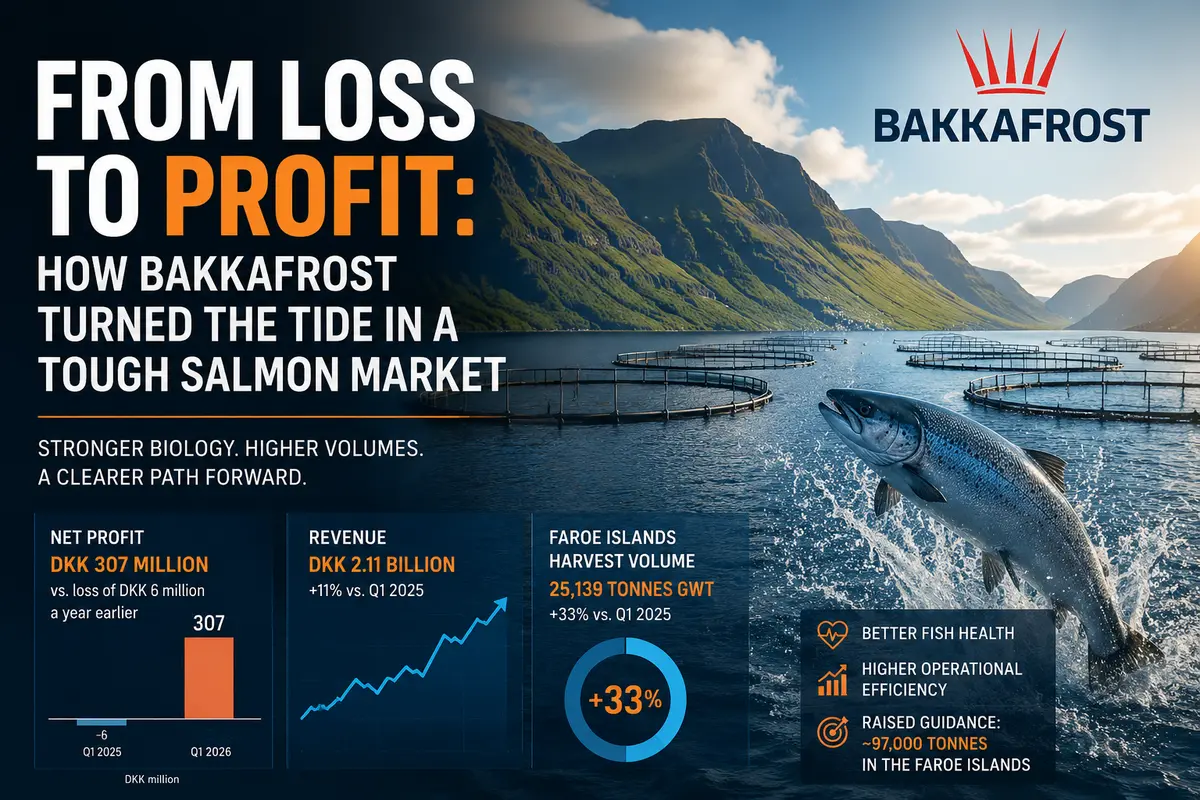
From Loss to Profit: How Bakkafrost Turned the Tide in a Tough Salmon Market

From Loss to Profit: How Bakkafrost Turned the Tide in a Tough Salmon Market
A Quarter That Changed the Narrative

When Bakkafrost published its first-quarter results, the numbers immediately caught the market’s attention. A year ago, the company reported a small net loss. This year, it delivered a net profit of DKK 307 million. On paper, it looks like a sharp turnaround. In reality, the story behind those figures is much deeper than a simple rebound in earnings. What happened over the past twelve months reveals how modern salmon farming has become a battle not only of prices and production volumes, but also of biology, geography, and operational discipline.

At first glance, the broader market environment did not look particularly favorable. Global salmon prices in the quarter were lower than a year earlier. Supply from major producing countries increased significantly, putting pressure on benchmark prices across Europe and Asia. In industries tied to commodities, lower prices usually translate directly into weaker profits. Yet Bakkafrost managed to move in the opposite direction.

That alone says a great deal about the company’s underlying condition.

Why Efficiency Matters More Than Salmon Prices

The key to understanding this quarter lies in one word: efficiency. Not the empty corporate kind of efficiency often repeated in investor presentations, but the real, measurable kind that determines whether a fish farmer makes money or loses it. In salmon farming, efficiency starts with biology. Healthy fish grow faster, require less treatment, consume feed more effectively, and survive in greater numbers until harvest. Sick fish do the opposite. Every biological problem eventually becomes a financial problem.

This is where Bakkafrost’s Faroese operations stood out.

The Faroe Islands are not just another production region on the map. For salmon farming, they are close to ideal. Cold Atlantic waters, strong ocean currents, stable temperatures, and relatively isolated fjords create natural conditions that reduce many of the...

Continue reading...
0
0
Navigation menu