Bar Pipa
We pay for a post of 10$

Rupee

Tom Maffin

Asia Defends Its Currencies Amid a Strong Dollar and Expensive Oil
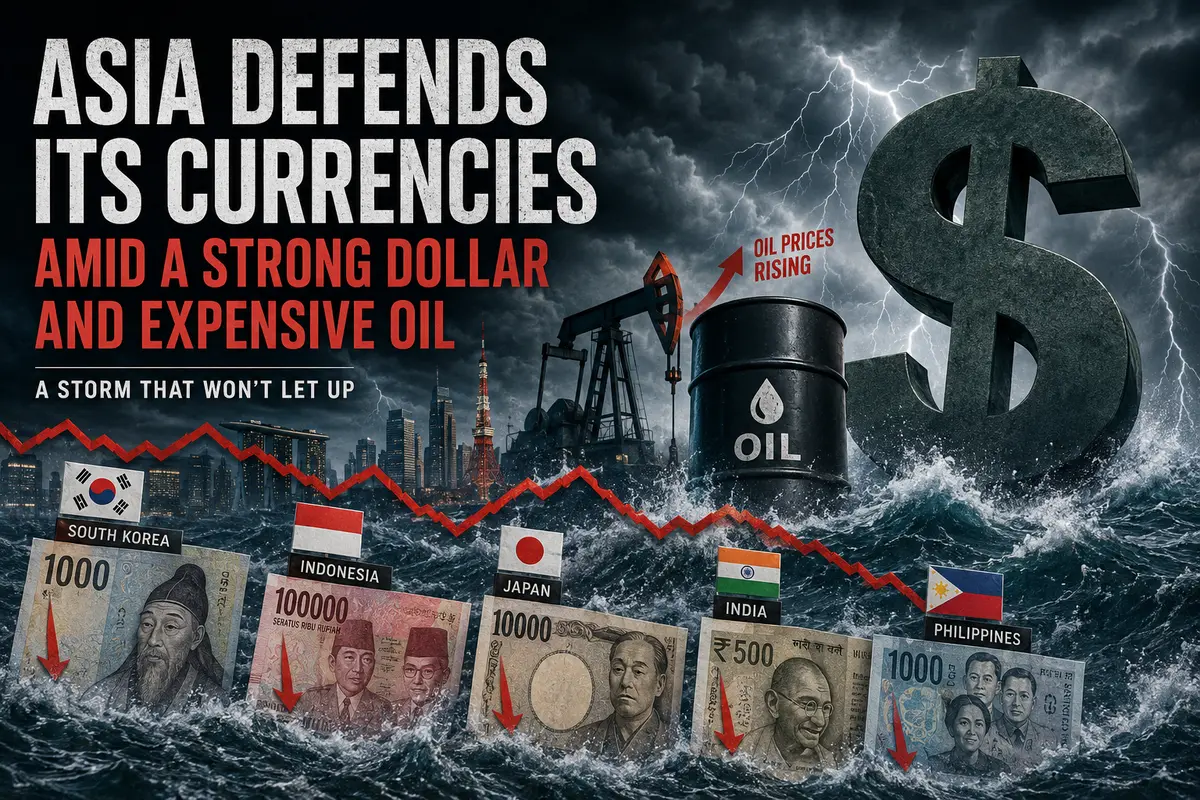
Asia Defends Its Currencies Amid a Strong Dollar and Expensive Oil
A Storm That Won’t Let Up

Asia wakes up on Thursday, and the first thing traders see on their screens is red once again. Regional currencies have fallen for a fourth consecutive day. Bloomberg’s Asian currency index—a barometer of the financial health of hundreds of millions of people across the region—continues its relentless slide. The biggest losers are the South Korean won and the Indonesian rupiah, but few others are faring much better.

Behind these numbers lies a simple and uncomfortable story. The dollar is strong. Oil is expensive. Capital is flowing out of Asia and into the United States. Meanwhile, local central banks are trying to preserve what they can. Interventions, warnings, interest-rate hikes—every tool is being deployed. So far, however, the results have been limited.

Asian countries have found themselves in a perfect storm. Two powerful forces are putting simultaneous pressure on their currencies. The first is the policy stance of the U.S. Federal Reserve. The American economy has remained stronger than expected, inflation remains stubborn, and the Fed is not only delaying rate cuts but is even considering further hikes. The second factor is the Middle East. Rising tensions between the United States and Iran are pushing oil prices higher. For Asia, which imports most of the oil it consumes, expensive oil delivers a triple blow: higher inflation, worsening trade balances, and weaker currencies.

Regional authorities are fighting back. Some are intervening directly, selling dollars from their reserves and buying local currencies. Others are raising interest rates to make their currencies more attractive to investors. Some are imposing administrative measures to limit capital outflows. Yet the U.S. dollar remains a formidable opponent. It is difficult to fight when domestic economies are slowing and inflation is rising.

South Korea: Words and Actions

South Korea, Asia’s fourth-largest economy and...

Continue reading...
0
0

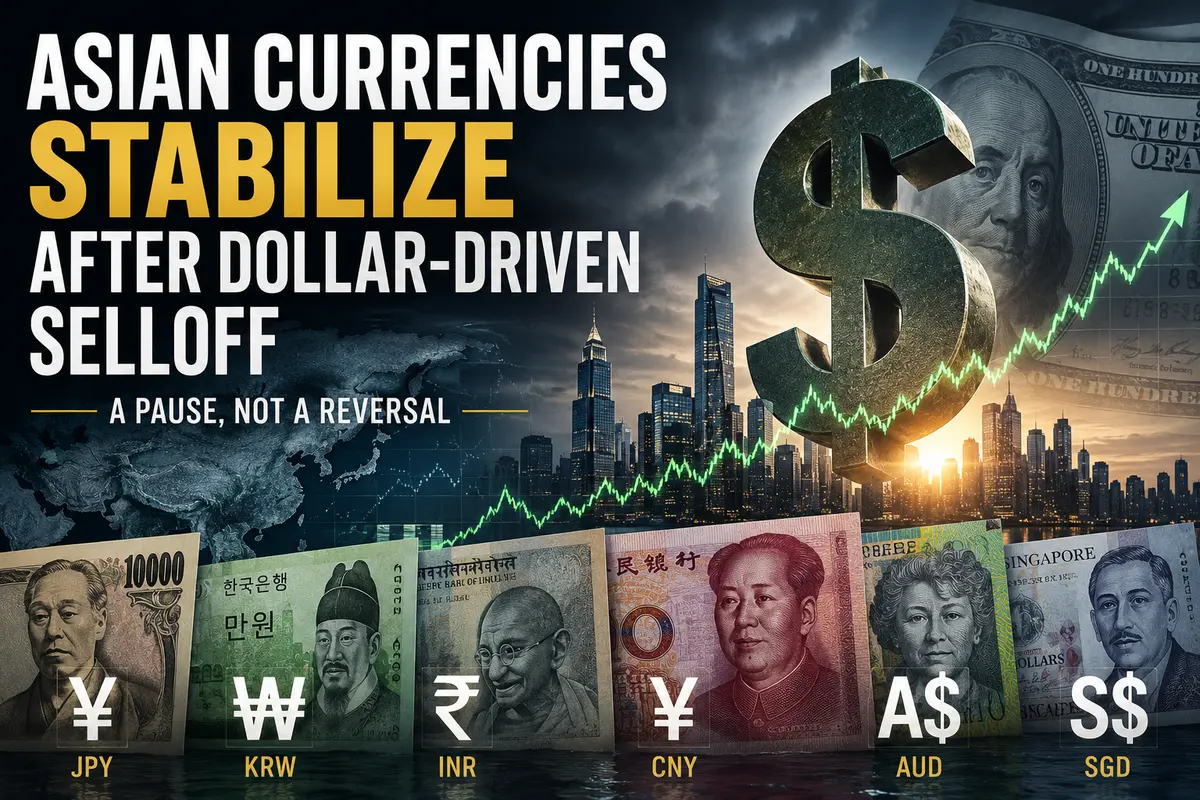
Asian Currencies Stabilize After a Dollar-Driven Selloff

Asian Currencies Stabilize After a Dollar-Driven Selloff
A Chance to Catch Their Breath

Thursday brought a welcome pause to Asia’s currency markets. After several days of relentless pressure from the U.S. dollar—rolling through markets like a tank—things finally calmed down. Asian currencies, which had been losing ground day after day, stopped falling. They are not rising yet, but they are no longer sliding either. For now, they have dug in and are waiting.

The U.S. Dollar Index (DXY), the main gauge of the dollar’s strength against a basket of six major currencies, also held steady. Just a day earlier, it had climbed to a two-month high. Two months may not sound like much, but in the currency market, that is a meaningful stretch. The dollar has not been this strong since the spring, when markets were gripped by another round of anxiety over the Federal Reserve and inflation.

Now comes a pause. Traders are taking a breath, reassessing positions, and scanning economic calendars for the next major catalyst. And there are plenty of them ahead. Any one of them could tip the balance further in favor of the dollar—or spark a recovery in battered Asian currencies.

So what happened over the past few days? Why has the dollar suddenly become so strong? And why do Asian currencies remain under pressure despite this temporary stabilization?

There are several reasons, all tightly intertwined in a knot that analysts around the world are trying to untangle.

The Middle East: A Ceasefire That Solves Little

The first and most obvious driver of dollar strength is geopolitics.

The Middle East has been on edge all week. Iran and the United States exchanged airstrikes. Missiles were launched toward Kuwait and Bahrain. U.S. forces struck Iran’s Qeshm Island—the strategic outpost guarding the Strait of Hormuz, through which roughly one-fifth of the world’s oil supply...

Continue reading...
0
0
Tom Maffin

Word Against the Market: How the RBI Governor Challenged the Bearish Assault on the Rupee

Word Against the Market: How the RBI Governor Challenged the Bearish Assault on the Rupee

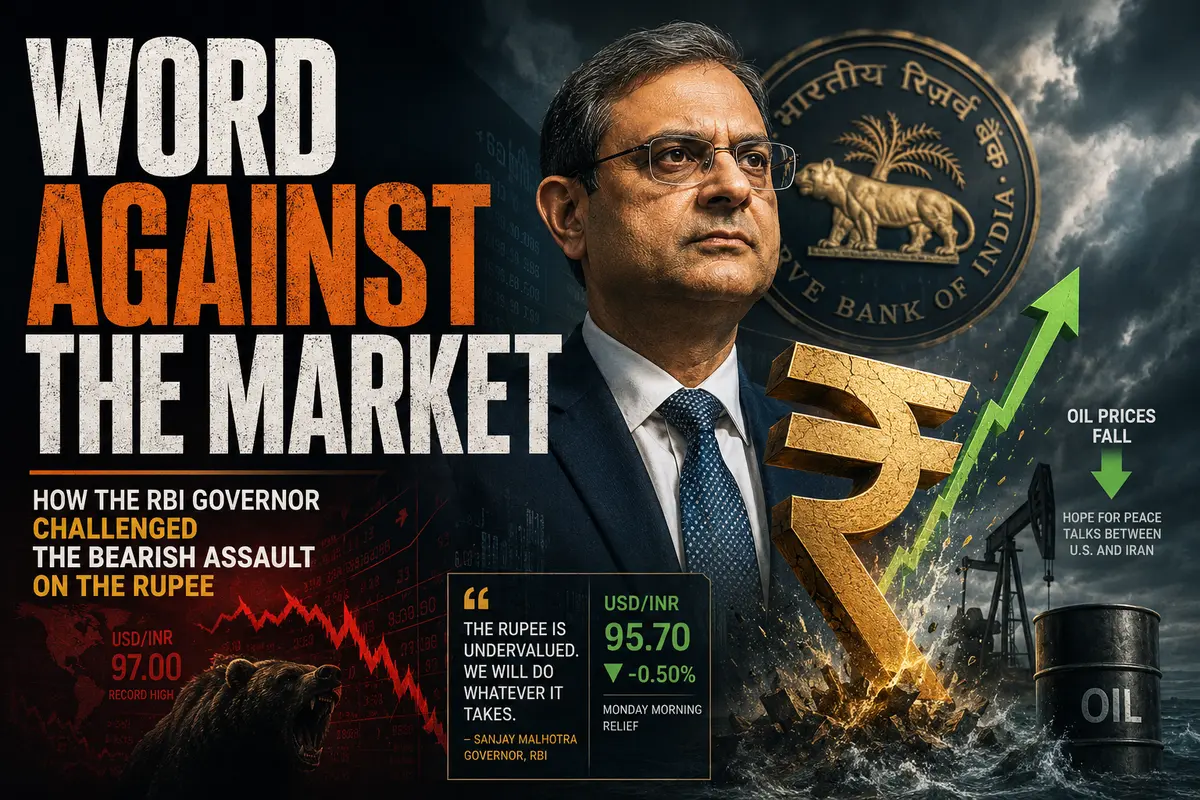
Monday morning on India’s currency market began with the very thing everyone — from oil importers to owners of street stalls selling imported goods — had been desperately waiting for. The rupee, which only on Friday had been staring into the abyss near the 97-per-dollar mark, suddenly reversed course and began to climb. The USD/INR pair fell by half a percent to 95.70 — a move that may seem modest after weeks of relentless decline, yet one whose psychological significance can be compared to the first breath of air for a drowning man. And the reason for this reversal was neither market forces nor global macroeconomic shifts. The reason was a man. One man who uttered a few sentences in an interview with the newspaper Mint.

Malhotra Steps Into the Ring: “The Rupee Is Undervalued, and We Will Do Whatever It Takes”

Sanjay Malhotra, governor of the Reserve Bank of India, is not known for making blunt public statements. Central bankers usually speak in shades, hints, and carefully crafted phrases whose interpretation has become a profession of its own. But this time, Malhotra seemed to cast diplomacy aside. His statement rang out like a gong: the rupee is undervalued. The RBI will do whatever is necessary to prevent further weakening of the currency.

“Whatever is necessary” is not a phrase central bankers throw around lightly. It is a signal that traders call a verbal intervention. And when it comes from the man controlling the foreign exchange reserves of the world’s seventh-largest economy, the market has no choice but to listen. Because words may be followed by action. And judging by recent developments, they already have been — last week the RBI actively intervened, steering USD/INR away from record highs. Malhotra made it clear these interventions were not a one-off operation,...

Continue reading...
0
0

The Rupee on the Edge of the Abyss: Why India Is Facing a Currency Storm

The Rupee on the Edge of the Abyss: Why India Is Facing a Currency Storm

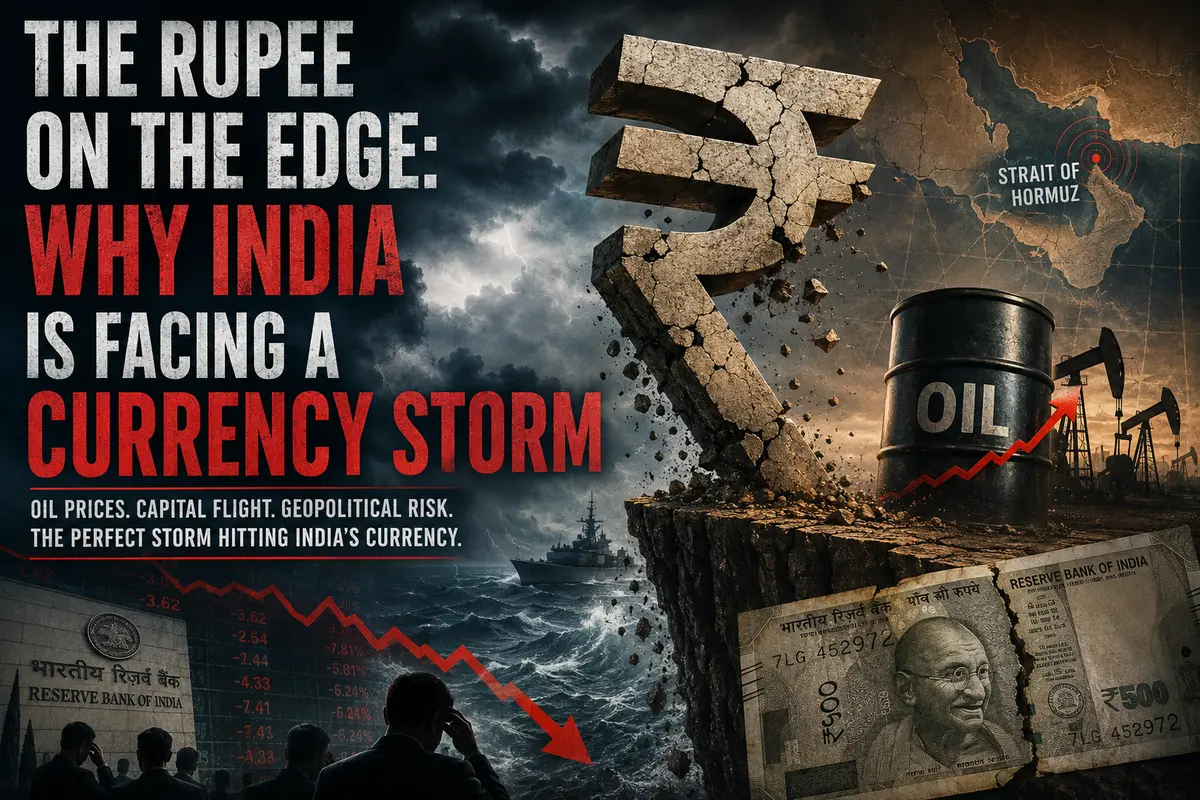
Seven consecutive record lows. This is no longer a simple decline — it is a free fall with eyes wide open, where every new step downward stops being a shock and becomes routine. The level of 96.8650 rupees per dollar, recorded on Wednesday, is not the bottom but merely another mark carved into the wall of shame. The psychological threshold of 100 rupees per dollar no longer feels like fantasy. It looms on the horizon as an inevitability — one that even the corridors of the Reserve Bank of India seem to have accepted. But the real drama of the rupee is unfolding not on trading charts, but within the deep structural cracks that have spread through the foundation of the Indian economy. Cracks that did not exist even six months ago.

The Oil Curse: Anatomy of Vulnerability

India is the world’s third-largest consumer of oil. The phrase sounds impressive, almost like the status of a superpower. But behind it hides a statistical nightmare: more than 80 percent of the crude oil consumed by the country is imported. Saudi Arabia, Iraq, and the United Arab Emirates effectively hold the Indian energy sector by the throat. And when oil prices surge by more than fifty percent, as they have since late February, India’s economy literally begins to suffocate.

The mechanism of destruction is simple and ruthless. Oil importers — India’s state-owned and private refining companies — must pay for every shipment in U.S. dollars. To obtain those dollars, they sell rupees. When the price of a barrel rises by one and a half times, the demand for dollars rises proportionally. An avalanche of rupees floods the currency market, wiping out every support level. A weaker rupee then makes every subsequent oil purchase even more expensive in local currency terms. The result...

Continue reading...
0
0
Lin Brings

The Rupee on the Edge: Why India Is Facing a Currency Storm

The Rupee on the Edge: Why India Is Facing a Currency Storm

The 96.8650 level that USD/INR pierced this week is not just another number flashing across traders’ screens. It is a diagnosis. Seven consecutive all-time highs are not how healthy markets behave during temporary stress — this is how a system behaves when some fundamental safeguard has broken down. The rupee has fallen before; there have been crashes and speculative panics. But the current situation stands out for its relentless, almost hopeless consistency. The currency is not merely weakening — it is losing the ability to find a bottom. And while the world watches the standoff in the Strait of Hormuz with fascination, the real drama is unfolding not on the decks of destroyers, but in the corridors of the Reserve Bank of India and on the balance sheets of Indian importers staring in horror at their dollar-denominated invoices.

The Oil Trap: Anatomy of a Curse

The entire structure of the Indian economy resembles a building erected on barrels of crude oil. This is neither exaggeration nor literary metaphor. India is the world’s third-largest oil consumer, yet unlike the other members of this uneasy top three, it possesses very little domestic production. More than 80% of the oil the country consumes is imported, sending foreign currency flowing to Saudi Arabia, Iraq, and — in less tense times — Iran.

When oil trades around seventy dollars a barrel, this structure can still maintain balance. But when prices surge by more than fifty percent in just a few months, as they have since late February, the current account begins to crack under the pressure.

The mechanics of this destruction are simple and ruthless. Indian refiners now require far more dollars to pay for the same physical volume of imports. They enter the foreign exchange market and aggressively sell rupees to buy U.S. currency....

Continue reading...
0
0

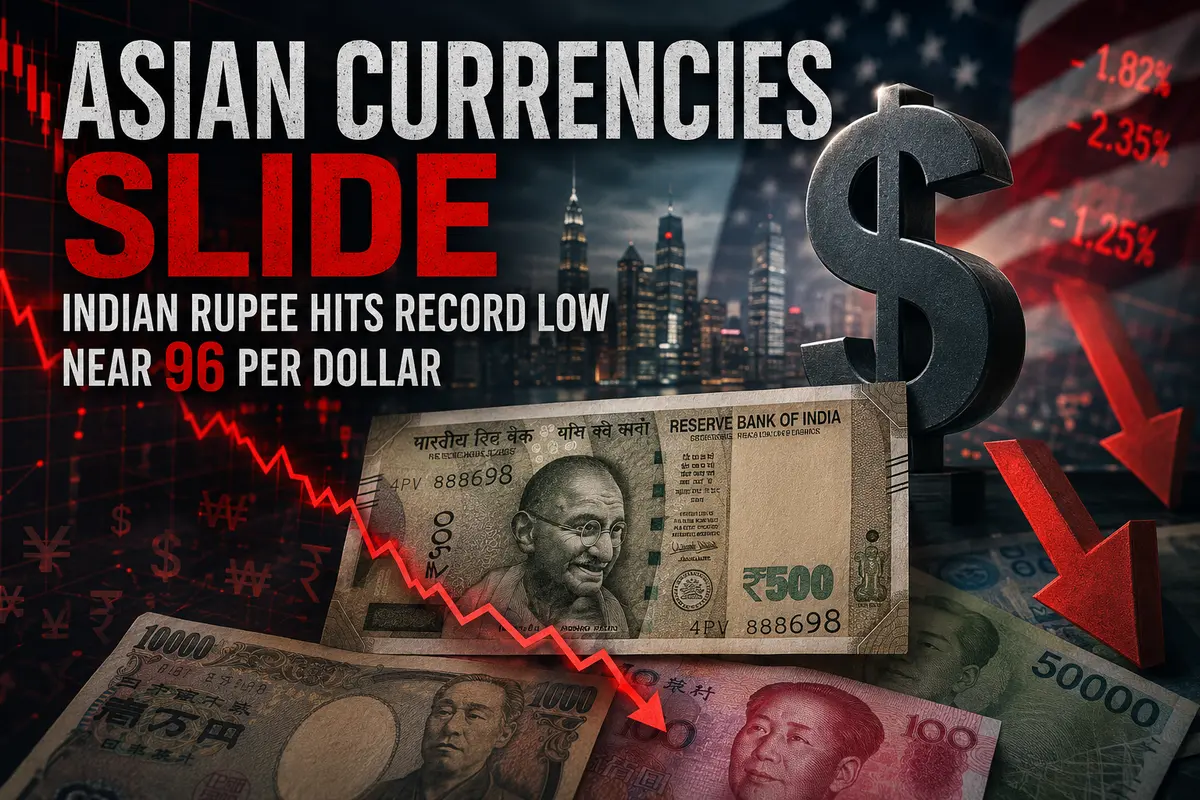
Asian Currencies Slide; Indian Rupee Hits Record Low

Asian Currencies Slide; Indian Rupee Hits Record Low
Asian currencies head for weekly losses

Asian currencies once again came under heavy pressure, and the current situation can no longer be described as an ordinary short-term correction. The market environment is developing in such a way that the U.S. dollar is receiving support from several directions at once: strong economic data from the United States, rising Treasury yields, expectations of a hawkish Federal Reserve stance, and growing nervousness across global markets. Against this backdrop, emerging Asian currencies are losing stability, while some — such as the Indian rupee — are falling to historic lows.

The rupee is especially symbolic in this situation. For India, an exchange rate approaching 96 rupees per dollar is not just an unpleasant figure on a currency screen. It reflects several deep structural problems at once: expensive oil, dependence on foreign capital, and growing pressure on the country’s trade balance. India imports enormous volumes of energy resources, and when oil prices surge, the economy begins burning through foreign exchange reserves much faster than usual. The higher oil climbs, the more dollars are needed for imports. And if foreign investors simultaneously begin pulling money out of Indian markets, pressure on the national currency intensifies dramatically.

That is exactly the combination now unfolding. Rising tensions in the Middle East have increased fears of disruptions in the Strait of Hormuz — one of the world’s most important energy transit routes. Any threat to supply immediately pushes oil prices higher. For exporting nations this can be beneficial, but for major importers such as India, South Korea, and Japan, it becomes a serious economic burden.

However, oil is only part of the story. The main driver behind the dollar’s strength is still the United States. The American economy continues to show remarkable resilience despite years of elevated interest rates. Markets...

Continue reading...
0
0
Navigation menu