Bar Pipa
We pay for a post of 10$

Samsung

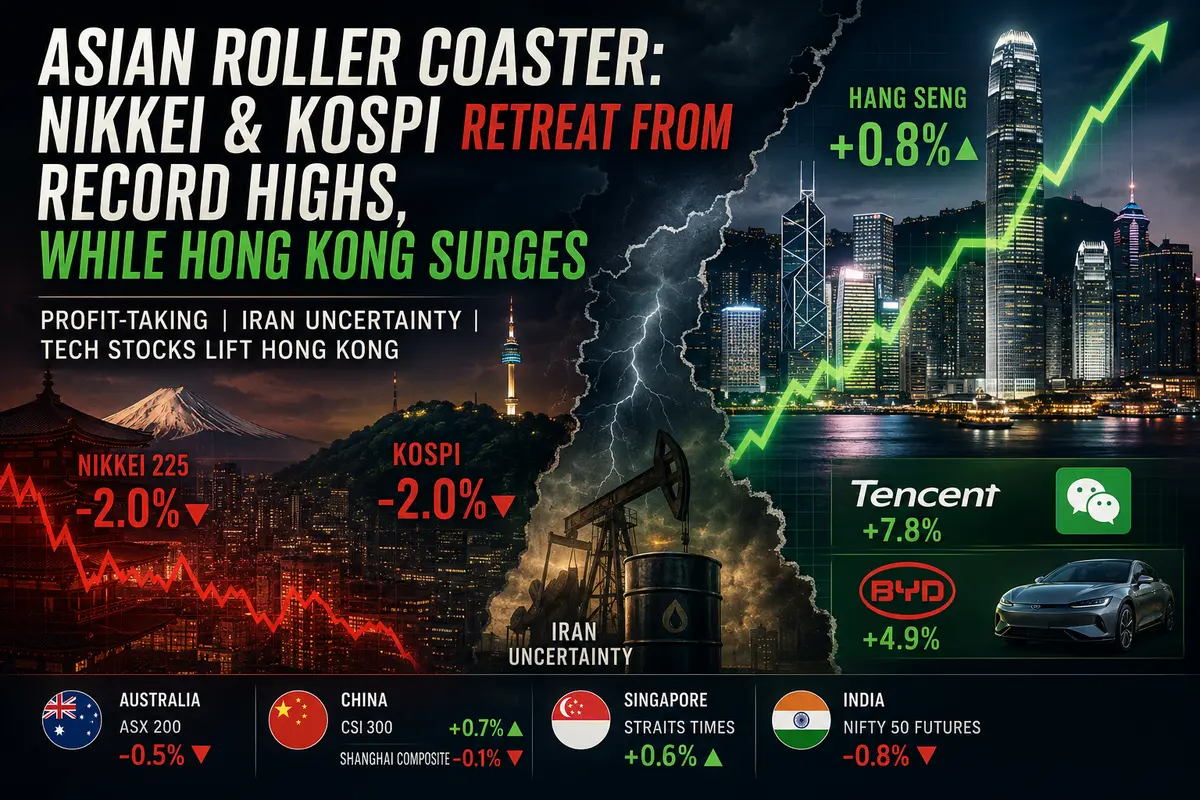
Asian Roller Coaster: Nikkei and KOSPI Retreat from Record Highs While Hong Kong Surges

Asian Roller Coaster: Nikkei and KOSPI Retreat from Record Highs While Hong Kong Surges

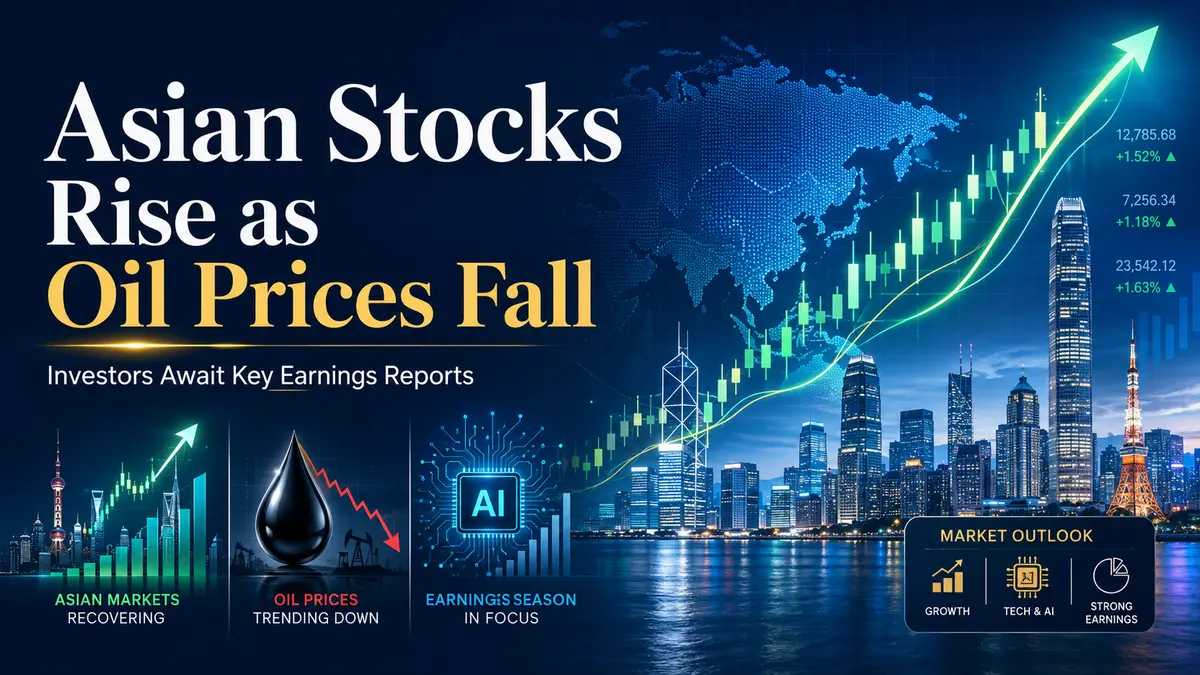
Asian markets on Tuesday resembled a patchwork quilt stitched together from conflicting signals. Japan’s Nikkei 225 and South Korea’s KOSPI, which had been celebrating record highs just a day earlier, pulled back by roughly 2%. Hong Kong’s Hang Seng, by contrast, gained 0.8%, lifted by heavyweight technology stocks. Chinese indexes moved in opposite directions, Australia’s market fell following hawkish comments from the central bank, and Indian futures pointed to further losses. All of this unfolded against a backdrop of uncertainty surrounding Iran and profit-taking in the semiconductor sector. Tuesday was a reminder that markets cannot rise forever.

Nikkei and KOSPI: Profit-Taking After the May Rally

Japanese and South Korean equities were among Tuesday’s biggest casualties. Both indexes retreated about 2% from the record levels reached in previous sessions. The reason was as old as the market itself: profit-taking. After an impressive May rally fueled by optimism around artificial intelligence, investors decided it was time to lock in gains.

May was a triumphant month for Asian chipmakers. SK Hynix joined the ranks of trillion-won companies, Samsung reached fresh all-time highs after resolving a labor dispute, while Renesas and Rohm posted double-digit gains. Nvidia added fuel to the rally on Monday by unveiling new AI-related products. But every rally, no matter how powerful, eventually runs out of steam. Tuesday was the day the bulls took a breather.

The decline in South Korea was particularly notable because it coincided with disappointing macroeconomic news. Consumer inflation in May reached a 26-month high, exceeding expectations. This immediately strengthened expectations that the Bank of Korea could raise interest rates again before year-end. Higher rates are generally unfavorable for equities, especially technology stocks, which are highly sensitive to borrowing costs. Korean investors responded to the inflation data by selling.

The Iran Factor: Tehran Suspends Communication Through Intermediaries

...

Continue reading...
0
0

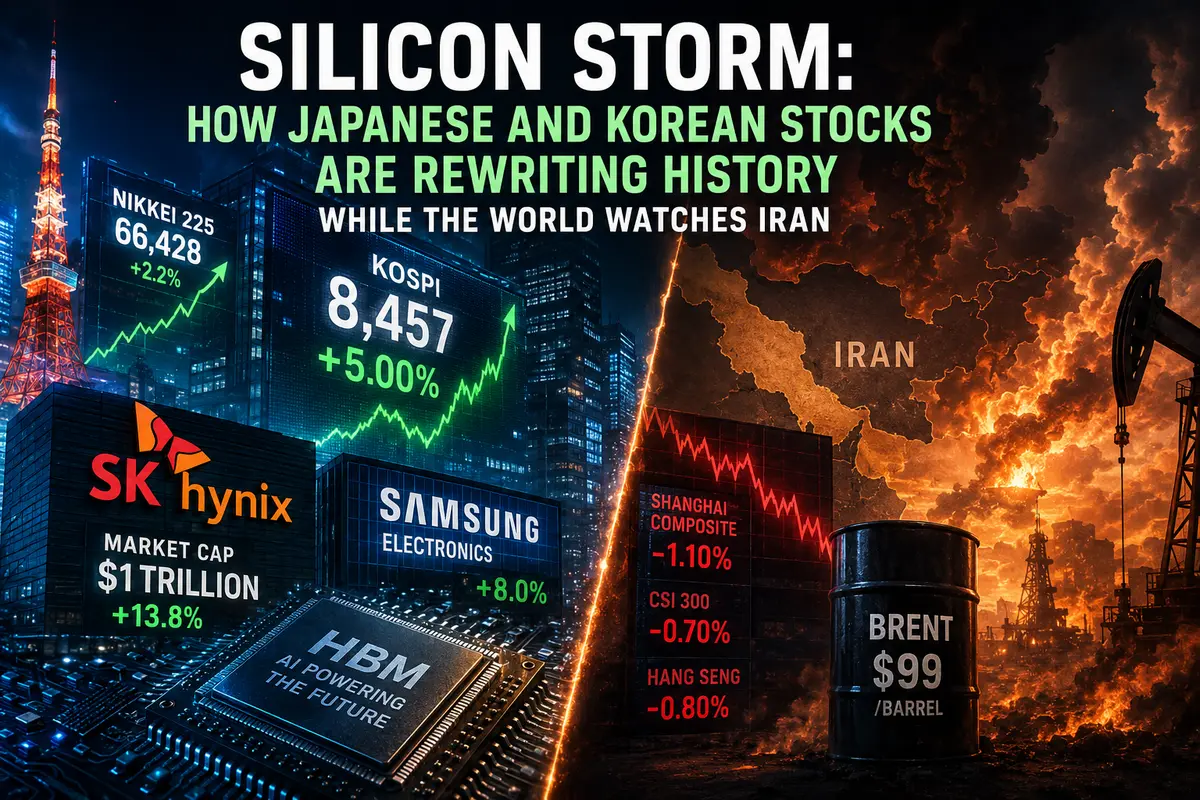
Silicon Storm: How Japanese and Korean Stocks Are Rewriting History While the World Watches Iran

Silicon Storm: How Japanese and Korean Stocks Are Rewriting History While the World Watches Iran

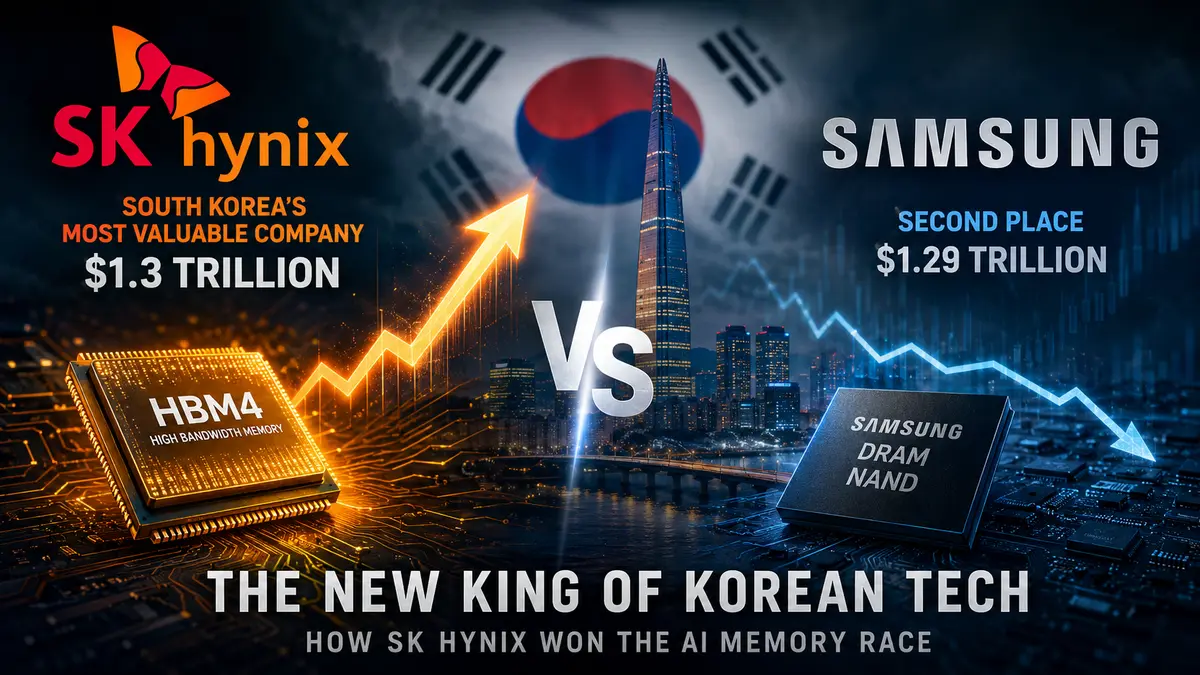
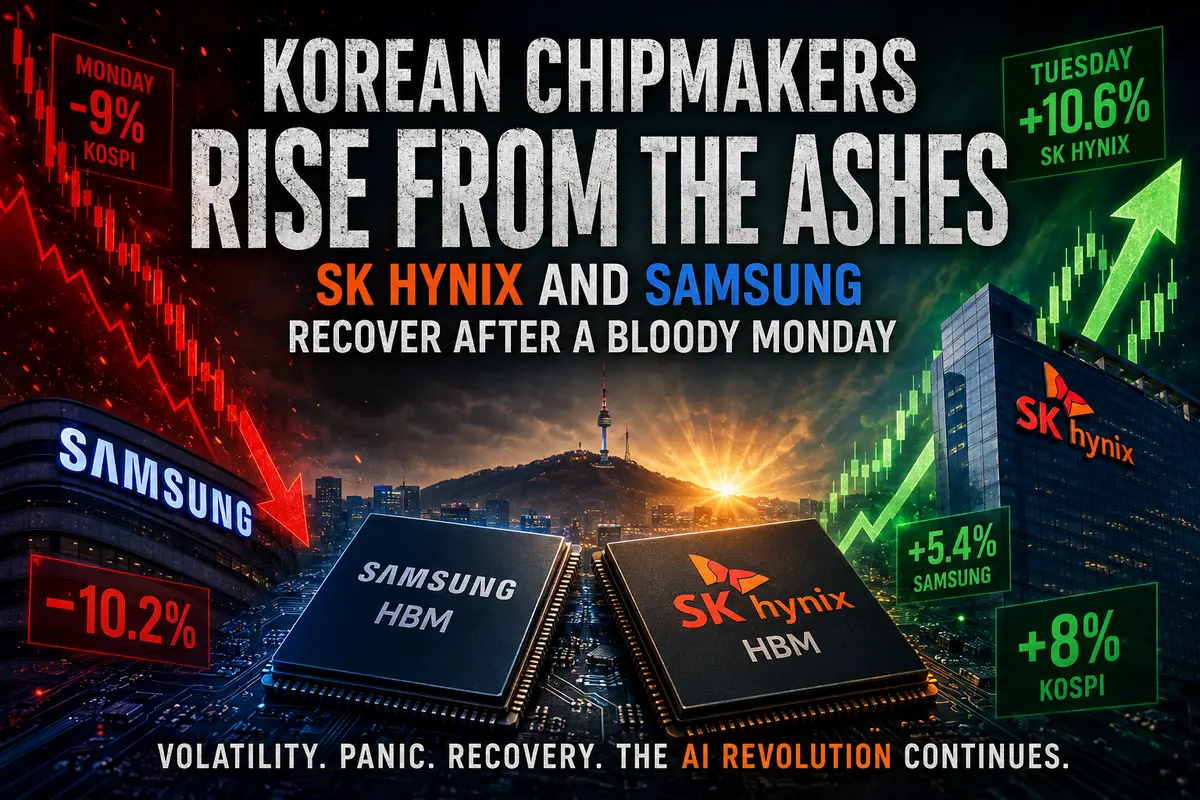
Asian markets on Wednesday looked like two parallel worlds existing within the same universe. In the first world — inhabited by memory chip makers and AI accelerator manufacturers — euphoria reigned. Japan’s Nikkei 225 surged to a new all-time high, climbing above 66,428 points. South Korea’s KOSPI delivered an even more dramatic move, soaring five percent in a single session to reach an unprecedented 8,457 points. Shares of SK Hynix jumped nearly fourteen percent, pushing the company’s market capitalization above one trillion dollars for the first time in history.

In the second world — the world of geopolitics, oil prices, and Middle Eastern negotiations — anxiety dominated. Brent crude hovered around ninety-nine dollars a barrel, Chinese indices declined, and investors nervously scanned the horizon for an answer to a single question: would there be peace with Iran, or more bombing campaigns ahead?

SK Hynix: Crossing the Trillion-Dollar Threshold

There are moments in corporate history that divide eras. For SK Hynix, Wednesday became such a moment. A near fourteen-percent rally in a single session pushed the company’s market capitalization beyond the psychological trillion-dollar mark.

This is more than just a symbolic number. It is an entry ticket into an exclusive club where only two other memory manufacturers reside alongside SK Hynix: Samsung Electronics and Micron Technology. Three companies, three pillars supporting the global memory industry.

The reason behind the rally is both simple and monumental. The world is entering an era in which artificial intelligence requires enormous volumes of high-speed memory. Every new data center, every large language model, every Nvidia accelerator devours gigabytes and terabytes of HBM memory — a segment where SK Hynix holds a leading position.

And as technology giants like Google and Amazon announce fresh investments in AI infrastructure, the Korean memory maker can calmly count its...

Continue reading...
0
0

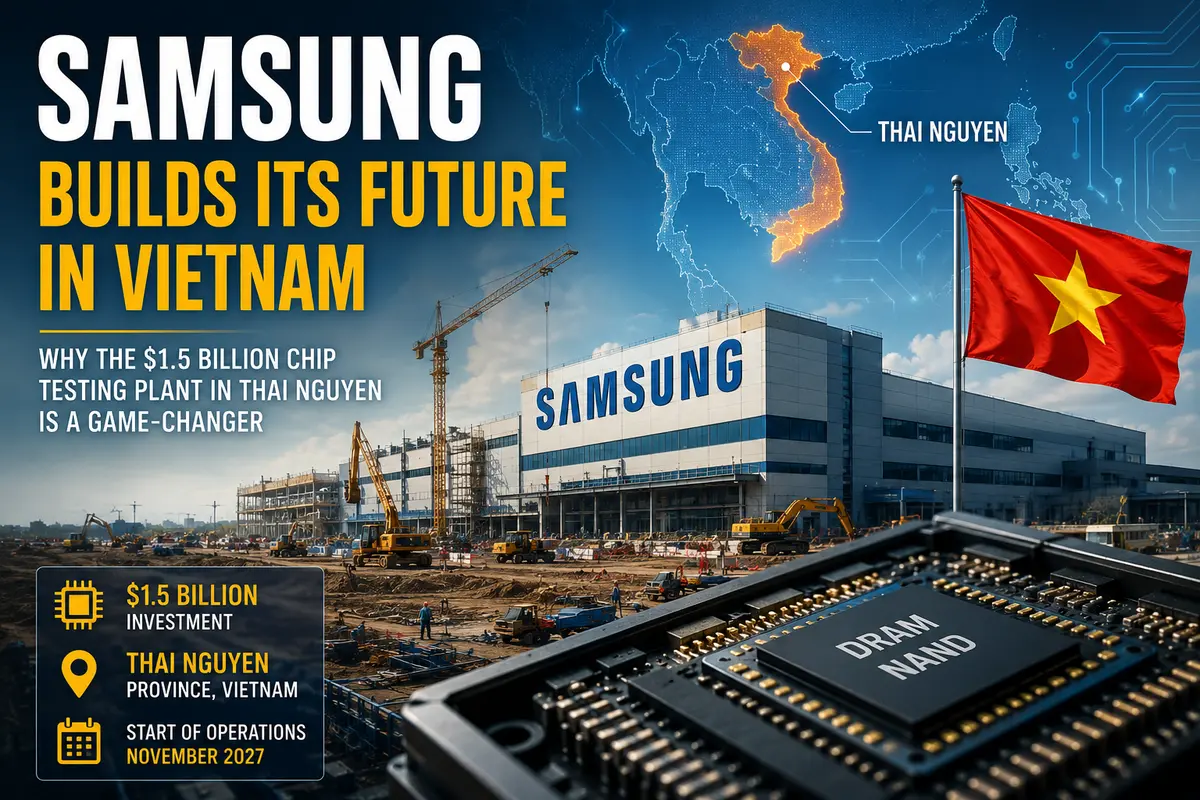
Vietnam Beachhead: Why Samsung Is Building a $1.5 Billion Factory

Vietnam Beachhead: Why Samsung Is Building a $1.5 Billion Factory

There is a certain irony in the fact that, at the height of a geopolitical crisis — while the world watches Iranian negotiations and anxiously awaits U.S. inflation data — Samsung is calmly and methodically laying the foundation for a new factory in Vietnam. No panic, no loud statements — just dust on a construction site in Thailand’s Thai Nguyen province and two hundred engineers who, since April, have been preparing the ground for another technological leap.

The investment totals 39 trillion Vietnamese dong, or roughly $1.5 billion. It will become Samsung’s first semiconductor testing plant ever built on Vietnamese soil. And its emergence says far more about the global restructuring of the chip industry than all the headlines about trade wars combined.

Traditional Chips: The Invisible Heroes of the Digital Age

When people talk about semiconductor shortages, they usually picture cutting-edge AI processors, high-performance HBM memory, and Nvidia accelerators. But reality is more complicated. Samsung’s new facility will focus on what industry insiders call “legacy” chips — mature, traditional technologies.

These are the previous generations of DRAM and NAND memory chips that never make headlines, yet without them no car starts, no router powers on, and no washing machine runs.

The paradox is that these chips are currently in severe shortage. While Samsung, SK Hynix, and Micron chase massive profits from supplying memory for AI data centers, traditional customers — smartphone makers, laptop manufacturers, and automakers — are left empty-handed. Manufacturing capacity is no longer enough for everyone.

Samsung’s new plant is an attempt to fill that gap. The facility is designed for annual output of 153 billion gigabits of DRAM and 255 billion gigabits of NAND — figures staggering even to veteran semiconductor engineers.

Why Vietnam — Not China, Korea, or the United States

The answer to “why...

Continue reading...
0
0
Lin Brings

Asia’s Red Screen: How a Samsung Strike, the Oil Crisis, and Rate Fears Crushed Markets

Asia’s Red Screen: How a Samsung Strike, the Oil Crisis, and Rate Fears Crushed Markets

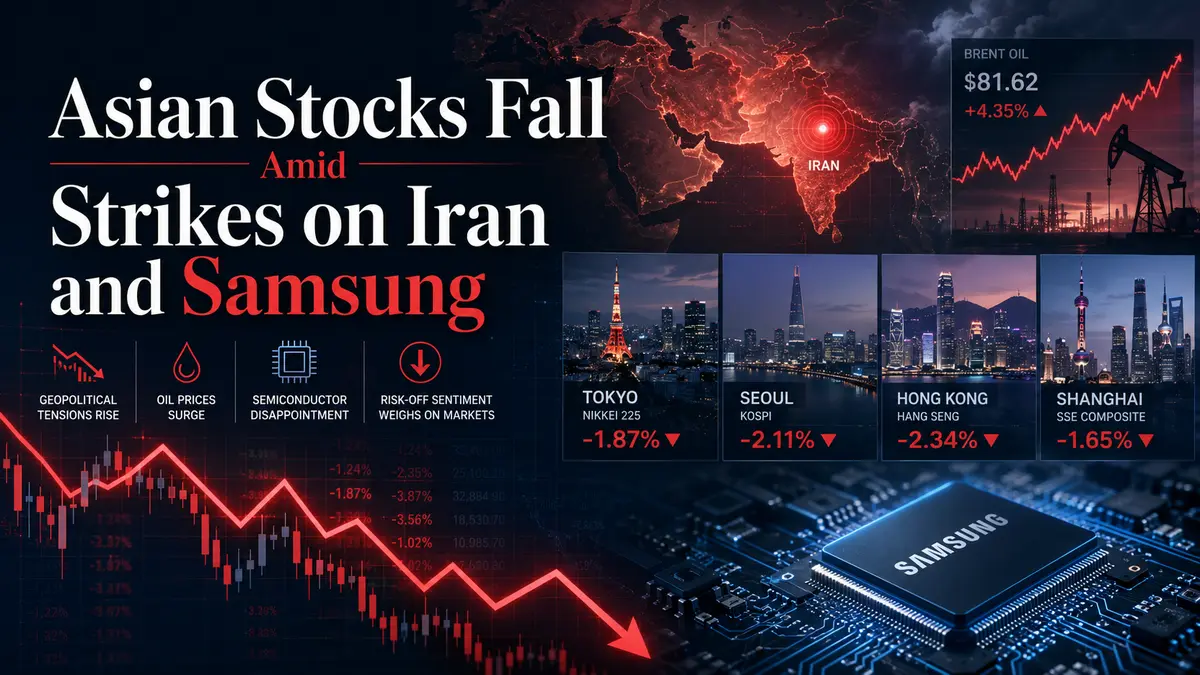
Asian markets were painted deep red on Wednesday — and this was no mild correction. It was a full-scale selloff, triggered by a wave from Wall Street and intensified by local disasters. Three consecutive sessions of declines in U.S. indexes, a collapsing tech sector dragging everything else down with it, and South Korea’s KOSPI plunging more than two and a half percent to lead regional losses. This is what happens when several storms converge at one point: geopolitics pushes oil higher, oil fuels inflation, inflation drives interest rates up, and higher rates crush technology stocks. And in the middle of all this sits Samsung’s own drama, adding another canister of fuel to an already raging fire.

KOSPI and Samsung: When a Labor Dispute Becomes a Systemic Risk

South Korea’s KOSPI didn’t just fall — it collapsed, and the main culprit was the company that for decades symbolized national pride. Shares of Samsung Electronics, which erased early gains and plunged more than four percent, dragged the entire index down with them. The breakdown of negotiations with the labor union, reported by Yonhap, became exactly the trigger the market feared but hoped until the last moment to avoid.

The strike scheduled for Thursday, May 21, now looks almost inevitable. Forty-eight thousand workers, eighteen days of potential shutdowns, and no sign that the two sides will reach an agreement in time. For investors, this means an immediate repricing of risk. Samsung is not just another stock in the index — it is the pillar supporting a substantial portion of the Korean market’s capitalization. When that pillar shakes, the whole building trembles. The KOSPI’s drop of more than two and a half percent reflects growing recognition that Samsung’s problems may not be a short-term incident, but the beginning of a prolonged conflict with unpredictable...

Continue reading...
0
0
Tom Maffin

Silicon Revolt: How 48,000 Samsung Workers Are Bringing a Tech Giant to Its Knees

Silicon Revolt: How 48,000 Samsung Workers Are Bringing a Tech Giant to Its Knees

The news that came out of South Korea on Wednesday hit global technology markets with the force of a finely tuned industrial press. The largest labor union at Samsung Electronics — a company whose name has become synonymous with South Korea’s economic miracle — announced the start of a full-scale strike. Eighteen days, forty-eight thousand workers, and the complete collapse of negotiations mediated by the government. This is not merely a labor dispute; it is an event capable of redrawing the global semiconductor landscape and leaving a deep scar on South Korea’s export-driven economy. And what terrifies investors most is that this is happening not on the periphery, but at the very heart of global memory chip manufacturing, where Samsung has maintained an iron grip for decades.

Breakdown of Negotiations: Why the Government Failed to Save the Situation

When a government steps into a labor dispute, it is always a sign of extreme concern. South Korea’s labor authorities, usually operating behind the scenes, moved center stage this time and sat down at the negotiating table alongside Samsung management and union representatives. It was a desperate move driven by the understanding of what was at stake. Yet even state mediation failed to bridge the gap dividing the two sides.

The union submitted a proposal whose full details remain undisclosed, but the core issues are known: performance bonuses and compensation. It sounds like a standard list of demands, but behind those words lies a deeper shift in the relationship between Korean chaebols and their workers. For decades, Samsung cultivated a culture of loyalty in which employees identified themselves with the corporation, while the corporation provided stability and generous bonuses during prosperous years. But now, as the semiconductor industry undergoes tectonic shifts driven by the AI boom, trade wars, and supply-chain restructuring, that...

Continue reading...
0
0
Navigation menu