Bar Pipa
We pay for a post of 10$

Asian

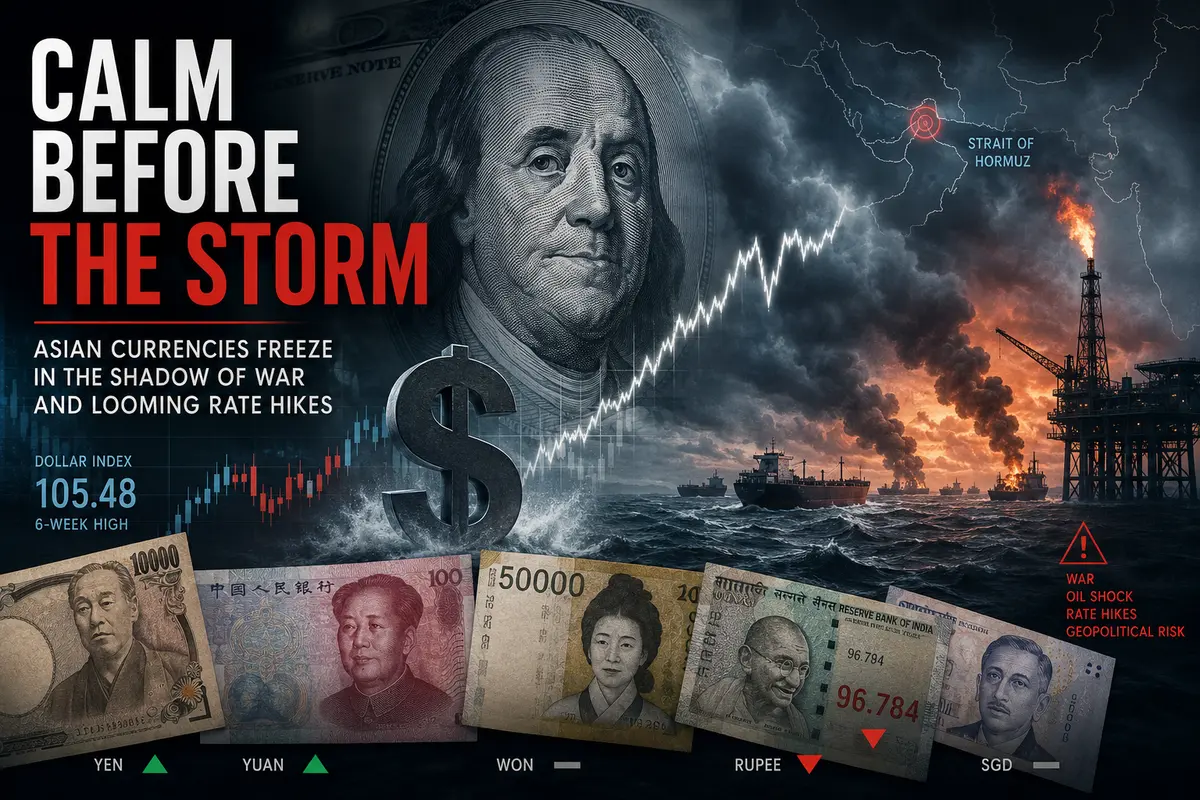
Calm Before the Storm: Asian Currencies Freeze in the Shadow of War and Looming Rate Hikes

Calm Before the Storm: Asian Currencies Freeze in the Shadow of War and Looming Rate Hikes

At first glance, Asian currency markets looked almost sleepy on Wednesday. Most pairs drifted within narrow ranges, traders seemed to hit pause, and price action resembled the heartbeat monitor of a patient under heavy sedation. But this silence is deceptive. Beneath the surface calm of sideways trading lies enormous tension ready to erupt at any moment. When three forces converge at once — a war disrupting one-fifth of global oil supplies, renewed fears of Federal Reserve rate hikes, and deepening geopolitical fractures among major powers — markets do not calm down; they become paralyzed, trying to calculate where the first blow will come from.

The Heavyweight Dollar and the Ghost of Tightening

The dollar index hovering near six-week highs is the perfect barometer of global anxiety. Whenever the world starts shaking, money inevitably rushes into the dollar, and the current situation is no exception. But what makes this moment unique is that the dollar is rising not only as a safe haven, but also as a currency that could become even more profitable. Markets have once again started talking about something they tried to forget over recent months — another Fed rate hike.

This narrative did not emerge out of nowhere. Remarks by Philadelphia Federal Reserve Bank President Anna Paulson, made almost casually on Tuesday evening, became the detonator. When a senior Fed official says it is reasonable for markets to speculate about possible rate increases, it is not just rhetoric — it is a signal. Central bankers rarely speak carelessly. Behind such comments lies growing concern within the Fed over energy-driven inflation, which has begun accelerating again after the conflict with Iran disrupted supplies through the Strait of Hormuz.

Inflation caused by a supply shock is the most unpleasant type of inflation for central banks. It cannot be fought...

Continue reading...
0
0

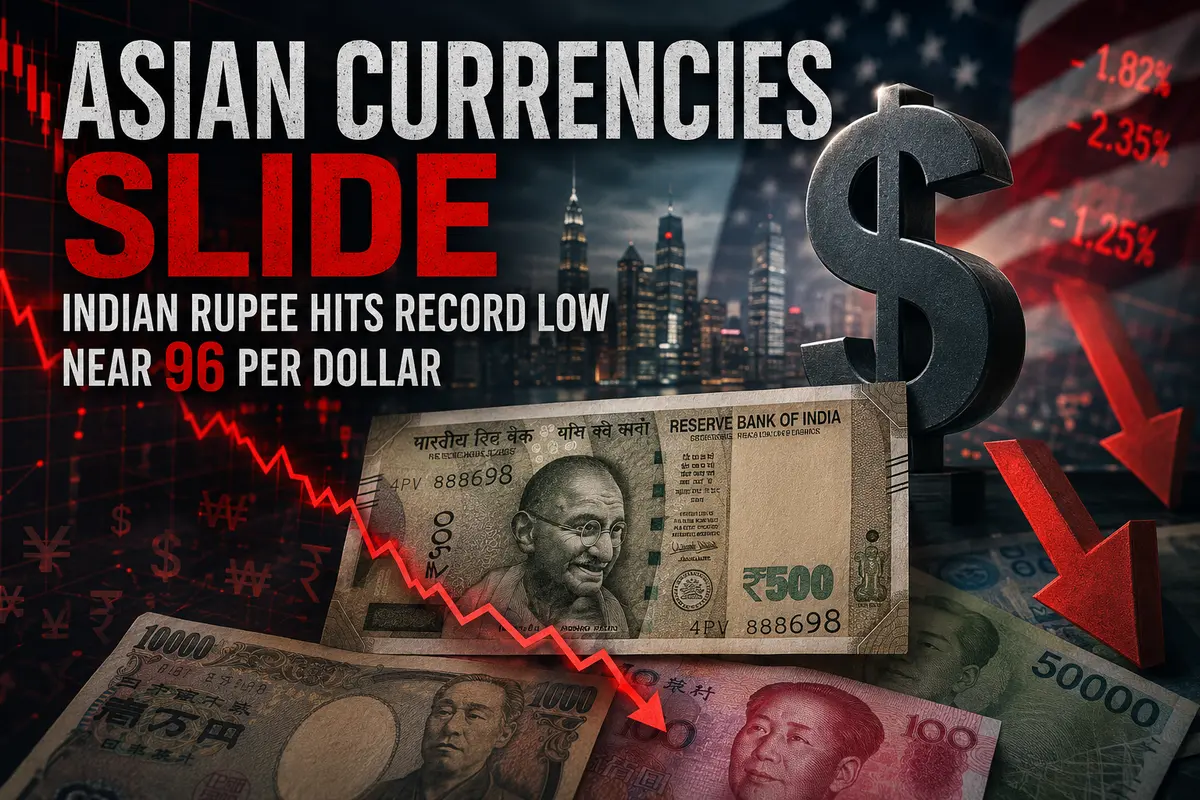
Asian Currencies Slide; Indian Rupee Hits Record Low

Asian Currencies Slide; Indian Rupee Hits Record Low
Asian currencies head for weekly losses

Asian currencies once again came under heavy pressure, and the current situation can no longer be described as an ordinary short-term correction. The market environment is developing in such a way that the U.S. dollar is receiving support from several directions at once: strong economic data from the United States, rising Treasury yields, expectations of a hawkish Federal Reserve stance, and growing nervousness across global markets. Against this backdrop, emerging Asian currencies are losing stability, while some — such as the Indian rupee — are falling to historic lows.

The rupee is especially symbolic in this situation. For India, an exchange rate approaching 96 rupees per dollar is not just an unpleasant figure on a currency screen. It reflects several deep structural problems at once: expensive oil, dependence on foreign capital, and growing pressure on the country’s trade balance. India imports enormous volumes of energy resources, and when oil prices surge, the economy begins burning through foreign exchange reserves much faster than usual. The higher oil climbs, the more dollars are needed for imports. And if foreign investors simultaneously begin pulling money out of Indian markets, pressure on the national currency intensifies dramatically.

That is exactly the combination now unfolding. Rising tensions in the Middle East have increased fears of disruptions in the Strait of Hormuz — one of the world’s most important energy transit routes. Any threat to supply immediately pushes oil prices higher. For exporting nations this can be beneficial, but for major importers such as India, South Korea, and Japan, it becomes a serious economic burden.

However, oil is only part of the story. The main driver behind the dollar’s strength is still the United States. The American economy continues to show remarkable resilience despite years of elevated interest rates. Markets...

Continue reading...
0
0
Navigation menu