Bar Pipa
We pay for a post of 10$

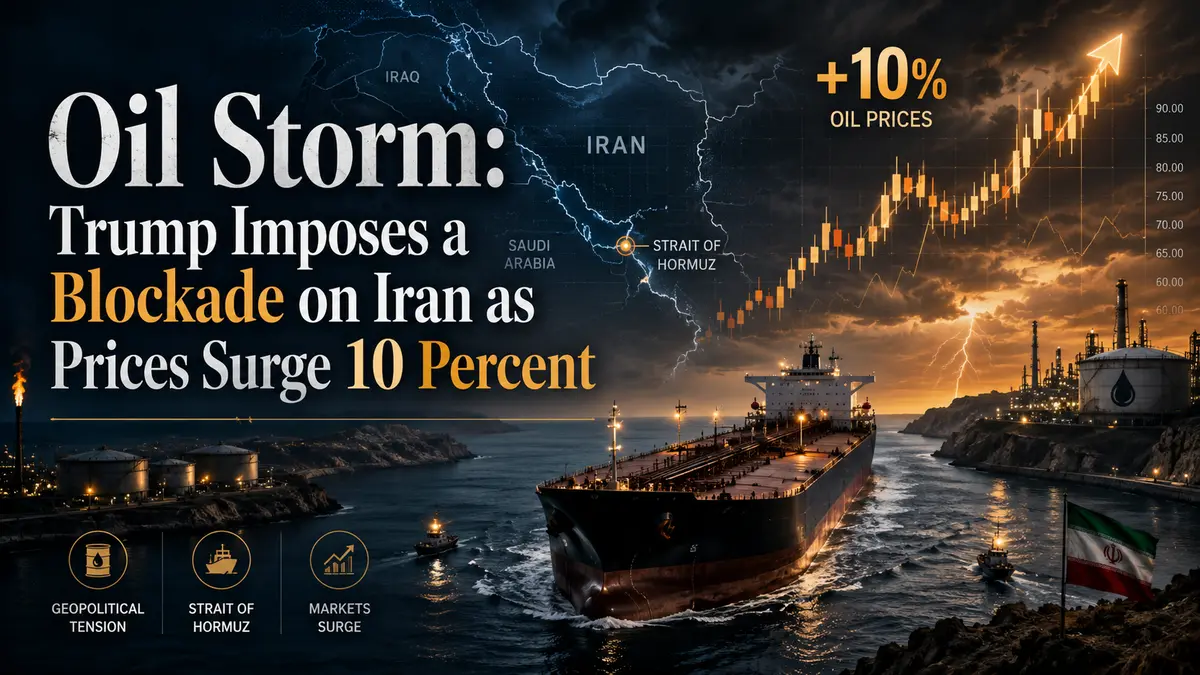
Strait of Hormuz

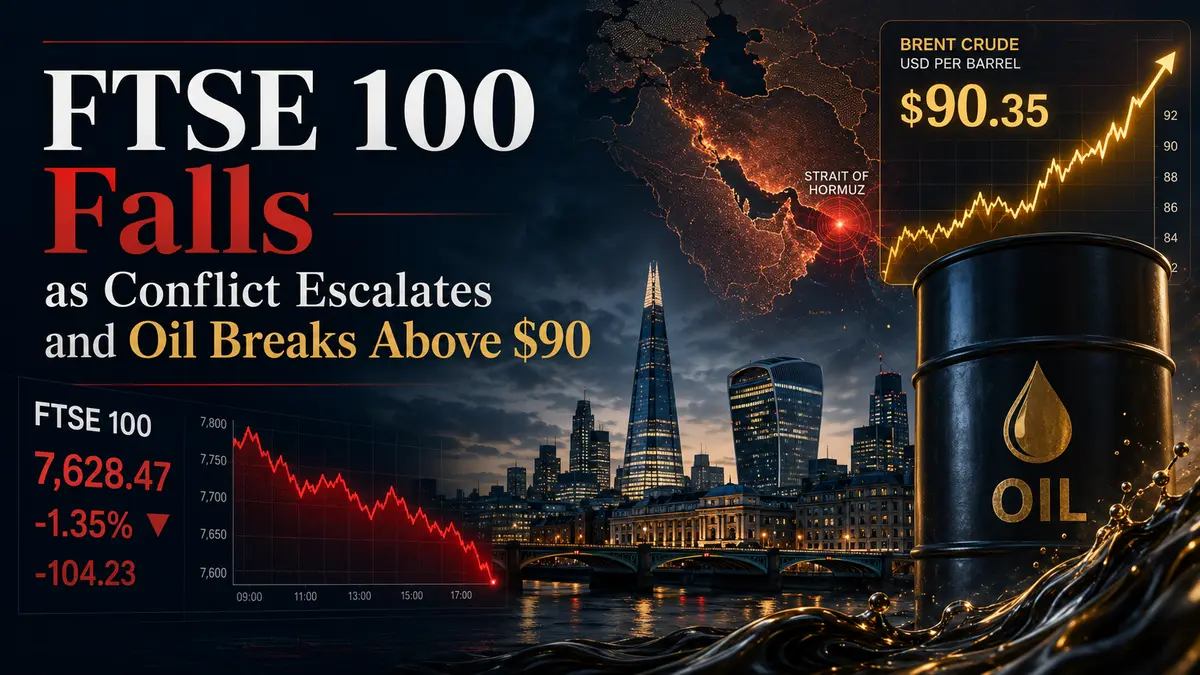
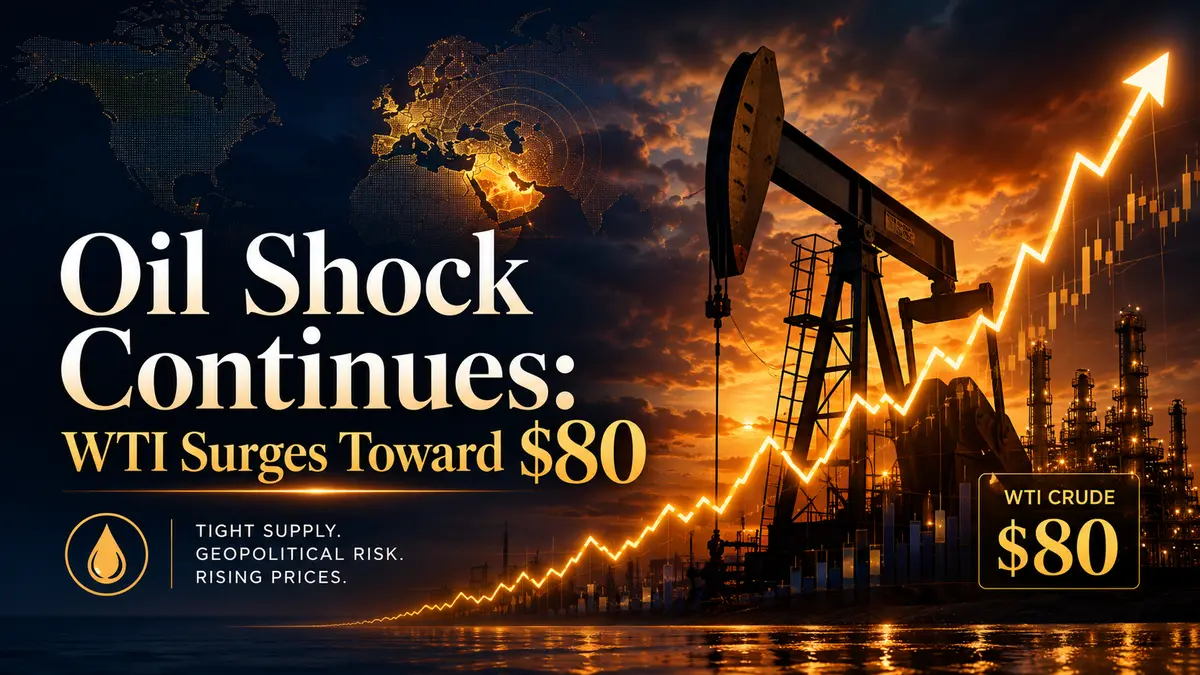
WTI Crude Oil Futures Fall During Asian Trading

WTI Crude Oil Futures Fall During Asian Trading
A Morning That Started in the Red

Thursday’s Asian trading session delivered a cold shower for oil bulls. Futures on West Texas Intermediate (WTI) crude oil, the benchmark for the U.S. market, moved into negative territory. And not just slightly—at the time of writing, WTI was down 1.21%, trading at $94.86 per barrel.

For traders accustomed to volatility, a one-percent move is hardly dramatic. But context matters. Just a day earlier, oil had posted its third consecutive session of gains. Market participants were beginning to embrace the idea that crude was back in favor, with geopolitics and tightening inventories providing strong support. Then came the pullback—not a crash, but sharp enough to make investors pause.

The decline coincided with a stronger U.S. dollar. The U.S. Dollar Index futures, which track the greenback against a basket of six major currencies, rose 0.04% to 99.47. It may seem insignificant, but in currency markets even small moves matter. When the dollar strengthens, oil—priced in dollars—typically becomes more expensive for foreign buyers, putting downward pressure on prices. The inverse correlation remains intact even on days when geopolitical headlines suggest higher oil prices.

Brent crude, the European benchmark, also came under pressure. August Brent futures fell 1.25% to $96.59 per barrel. The price spread between Brent and WTI narrowed to $1.73 in favor of Brent. Just a week ago, the spread was above $2. A narrowing spread suggests that U.S. crude is appreciating relative to its European counterpart, reflecting shifts in global supply flows.

The technical picture also offers food for thought. WTI has established support at $86.35 per barrel—a level sellers failed to break during previous sessions. Resistance stands at $96.98. With the current price at $94.86, the market sits roughly in the middle of that range. Traders looking at the charts see upside...

Continue reading...
0
0

Oil Pulls Back After Rally: Middle East and U.S. Inventories in Focus

Oil Pulls Back After Rally: Middle East and U.S. Inventories in Focus
The Three-Day Holiday Is Over

Thursday began with a reality check for the oil market. After three straight days of gains—delighting bulls, frustrating bears, and forcing traders to revise their models—the market finally saw a correction. A modest one. A measured one. Almost a polite one. But a correction nonetheless.

Brent crude futures, the European benchmark, were down 0.7% on Thursday morning, trading at $97.16 per barrel. Its American counterpart, WTI, slipped slightly more, losing 0.8% to $95.30 per barrel. Prices that would have seemed extraordinary just a week ago now look like business as usual.

Still, this decline is hardly dramatic. It is simply profit-taking. Investors who entered the market last week when prices were 5–7% lower have decided it is time to take some money off the table. They sell, prices fall. Nothing personal—just business.

Yet beneath this routine profit-taking lies something more interesting: risk assessment.

The oil market today resembles a tightrope walker balancing above a canyon. On one side is geopolitical turmoil in the Middle East; on the other are the hard numbers coming from U.S. crude inventories. Both factors are pushing prices higher. But there are forces pulling in the opposite direction as well. More on those shortly.

The Middle East: War, Ceasefire, and a Nuclear Deal

Let's begin with the biggest source of oil market volatility in recent weeks: the Middle East—a region that gave the world agriculture, writing, and seemingly an endless supply of conflict.

Events unfolded at cinematic speed this week.

First came Iranian missile strikes against Kuwait and Bahrain. These small but wealthy Gulf monarchies, accustomed to life under the American security umbrella, suddenly found themselves on the front line. The missiles came from Iran—the United States' primary regional adversary, Hezbollah's main backer, and a perennial source of instability.

Then came...

Continue reading...
0
0

Oil Between Peace and War: WTI Stalls as the Market Awaits the Outcome of the Iranian Drama

Oil Between Peace and War: WTI Stalls as the Market Awaits the Outcome of the Iranian Drama

Tuesday’s Asian trading session brought another pause to the oil market. July WTI crude futures slipped by a modest 0.5% to $91.65 per barrel. Brent followed its American counterpart, falling 0.47% to $94.53 per barrel. The moves were minimal—almost statistical noise. Yet beneath this apparent calm lies a market holding its breath. Too many unresolved questions remain in the air. Too much depends on what happens in the coming days. And traders, having learned hard lessons over recent months, are reluctant to make any aggressive moves.

Between Support and Resistance: Oil Searches for Equilibrium

The technical picture for WTI resembles a classic trading range. Support at $86.35 has proven resilient during recent declines. Each time prices approached this level, buyers stepped in, preventing bears from pushing the market lower. This suggests that the underlying supply deficit in the oil market remains intact. The Strait of Hormuz is still operating under restrictions, supply chains remain disrupted, and prices have been unable to fall significantly.

Resistance at $94.74 has become the ceiling that recent rallies have failed to break. Every attempt to move higher has been met with heavy selling pressure. This indicates that the market does not believe in an unchecked upward move. Hopes for a ceasefire with Iran, however fragile, continue to cap prices from above. Few traders want to be caught in long positions if a ceasefire is announced tomorrow and the Strait reopens.

As a result, oil remains trapped in a corridor between roughly $86 and $95 per barrel for WTI. It has traded within this range for several weeks, and neither bulls nor bears have been able to force a breakout.

Brent-WTI Spread: Three Dollars of Geopolitical Premium

The price difference between Brent and WTI currently stands at $2.88 per barrel. This moderate spread reflects the remaining...

Continue reading...
0
0

Gold Under Crossfire: Why Bombing Raids on Iran Are Sinking the Precious Metal Again

Gold Under Crossfire: Why Bombing Raids on Iran Are Sinking the Precious Metal Again

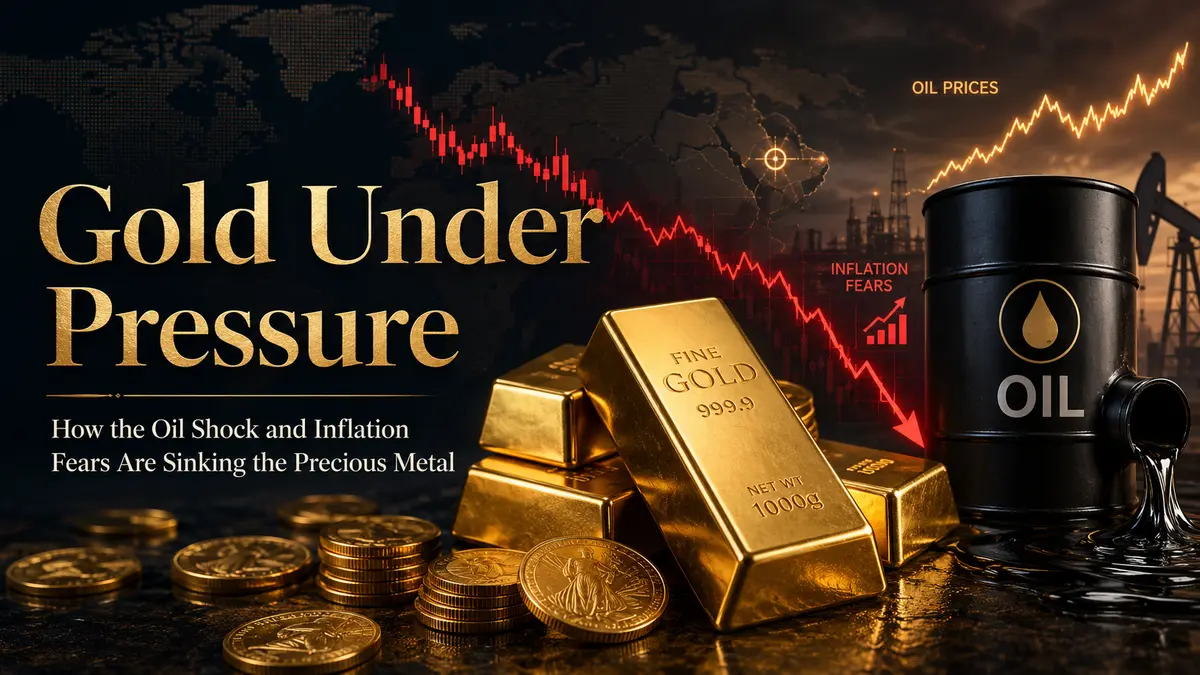
Monday began with headlines that have become an alarming routine in recent weeks. U.S. forces launched new strikes against Iranian targets—this time focusing on air defense positions and drone infrastructure. Iran responded with an attack on an airbase used by U.S. forces. Meanwhile, Israel pushed troops deeper into southern Lebanon, where fighting with Hezbollah has intensified once again. The Middle East is burning, and gold, which in the past would have been the first asset to rally on such news, is now falling.

Spot gold dropped 0.8% to $4,501 per ounce, while futures plunged an even steeper 1.3%. At first glance, this seems to defy all logic. Yet within this contradiction lies the most important story in today’s precious metals market.

The War Paradox: Why Bombs Are Hurting Gold

Traditional finance textbooks teach that when guns fire, investors rush into gold. This defensive reflex worked for decades. Vietnam, Iraq, Afghanistan, Crimea—every major military crisis sent the yellow metal higher.

But the current conflict involving Iran has rewritten the rules.

The reason is simple: the market has learned to focus not on the war itself, but on its economic consequences. And those consequences are proving devastating for gold.

The chain reaction looks like this:

Strikes on Iran and retaliatory attacks suggest a prolonged conflict. A prolonged conflict increases the likelihood that the Strait of Hormuz will remain closed or partially restricted. A restricted strait means disruptions to global oil supplies. Supply disruptions keep energy prices elevated. Higher energy prices fuel inflation. Inflation forces the Federal Reserve to keep interest rates higher for longer—or even consider raising them further.

And high interest rates are toxic for gold, an asset that generates no yield.

That is precisely the logic that pushed gold lower on Monday. The market saw fresh bombings and concluded that...

Continue reading...
0
0

Silence at the Summit: Wall Street Pauses Between Peace and Inflation

Silence at the Summit: Wall Street Pauses Between Peace and Inflation

Thursday evening on the U.S. stock market was marked by a wait-and-see mood. S&P 500 futures gained a symbolic 0.1%, while the Nasdaq and Dow Jones remained virtually unchanged. This stillness may seem dull on the surface, but it conceals enormous tension. The market has just closed at record highs for the second consecutive session. The S&P 500 reached 7,563 points, while the NASDAQ Composite surged to 26,917. Such milestones are usually celebrated, yet traders are in no hurry to pop champagne today. They are waiting. Waiting to see whether the ceasefire with Iran holds. Waiting for what Trump will say. Waiting for inflation to finally begin easing. And in that waiting lies the essence of the current market environment.

Ceasefire on the Horizon: The Market Wants to Believe

The main catalyst behind the rally that pushed indexes to record highs was reports that the United States and Iran had reached a preliminary agreement to extend the ceasefire for sixty days. Axios reported that the deal includes reopening the Strait of Hormuz, which would represent a major breakthrough after months of conflict. The market reacted immediately and enthusiastically. Oil prices moved lower, while equities moved higher.

The logic behind the move is straightforward. Reopening the strait means restoring oil supplies. Restored supplies mean lower energy prices. Lower energy prices mean reduced inflationary pressure. Reduced inflation means the Federal Reserve may not need to continue tightening policy—or could even begin considering easing. And easier monetary policy is a favorable environment for equities, especially technology stocks, whose future earnings are discounted at lower rates.

Yet the market is experienced enough to understand that a wide gap exists between a preliminary agreement and lasting peace. The proposed deal still requires President Trump’s approval. Trump is known for unexpected policy shifts. Meanwhile, Iranian media...

Continue reading...
0
0

Gold at a Crossroads: An Iran Ceasefire Beckons, but Inflation Keeps a Tight Grip

Gold at a Crossroads: An Iran Ceasefire Beckons, but Inflation Keeps a Tight Grip

Friday’s gold market was defined by painful uncertainty. Spot gold held steady at $4,495.90 per ounce, virtually unchanged, while futures edged slightly lower to $4,526. Beneath this calm surface lies a market being pulled in opposite directions. On one side is hope for peace, which pushed prices higher on Thursday. On the other is persistent inflation, preventing gold from gaining real momentum. Caught between these forces, the yellow metal remains stuck, unable to choose a clear direction.

Ceasefire on the Table: What Changed Overnight

The main development driving markets on Thursday and continuing to influence sentiment on Friday is reports that the United States and Iran are close to extending a ceasefire agreement. According to sources, the preliminary arrangement includes a 60-day truce and, critically, the reopening of the Strait of Hormuz to maritime traffic.

This is precisely the breakthrough markets have been waiting for over the past several months. Since the conflict began, the closure of the Strait of Hormuz has been a major source of oil market disruption, inflationary pressure, and monetary policy concerns. Now, with renewed hopes that the waterway could reopen, markets reacted immediately.

Gold initially fell to a two-month low on Thursday as investors feared that de-escalation would reduce demand for safe-haven assets. However, as the implications of the news became clearer, the metal reversed course and finished the day up 0.8%. This turnaround is key to understanding how the market currently operates.

Investors realized that a ceasefire would mean not only a reduction in geopolitical risk premiums but also lower oil prices. Lower oil prices would ease inflationary pressures. Lower inflation would reduce the need for the Federal Reserve to raise interest rates. And a pause in rate hikes is exactly what gold needs.

However, the agreement is not yet final....

Continue reading...
0
0

Pound on the Defensive: How Iranian Bombs and Political Calm Put Sterling Back Under the Dollar’s Shadow

Pound on the Defensive: How Iranian Bombs and Political Calm Put Sterling Back Under the Dollar’s Shadow

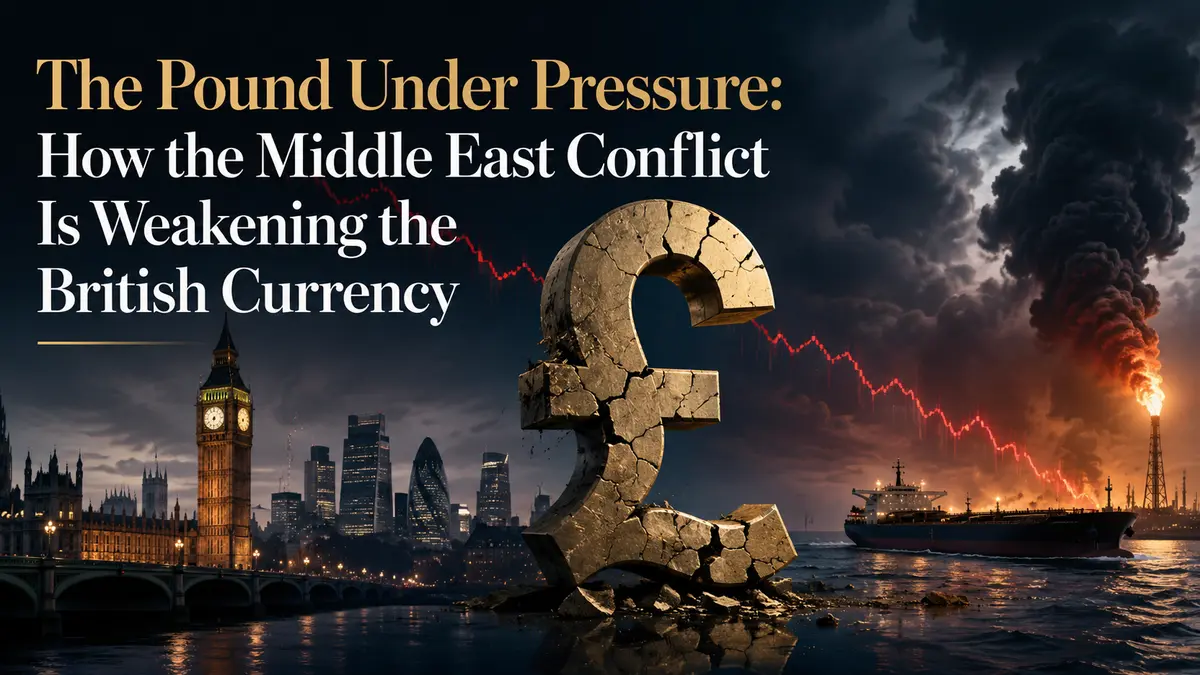
Thursday brought a dose of reality to the currency market. The pound sterling, which had recently been trying to find footing for a recovery, came under pressure once again. GBP/USD slipped 0.16% to 1.3405. The move itself was modest, but the direction speaks volumes. Sterling is losing what little support it still had and is reverting to a state of near-total dependence on the dollar narrative. Several factors converged at once: geopolitical tensions flared up again, the dollar reclaimed its safe-haven crown, and Britain’s domestic political story—which had provided at least some independent driver for the pound—has largely run out of steam.

Bandar Abbas and the Retaliation: The Escalation Markets Feared

The night between Wednesday and Thursday shattered the fragile balance markets had been trying to build around negotiations with Iran. U.S. forces struck a military facility near Bandar Abbas, the strategically important port city in southern Iran located at the entrance to the Strait of Hormuz. This was not just another airstrike. It targeted the heart of Iran’s logistical infrastructure and a location that oversees access to one of the world’s most critical oil arteries.

Iran’s response was swift. The Islamic Revolutionary Guard Corps launched an attack on a U.S. airbase, describing it as a “serious warning.” This was no longer a defensive maneuver or a limited operation that could be framed as deterrence. It marked a direct escalation, with both sides exchanging blows and each new strike raising the stakes. The ceasefire that diplomats had been discussing only recently now appears little more than a fiction.

Donald Trump added to the picture by ruling out sanctions relief or the unfreezing of Iranian assets. That erased the cautious optimism seen on Wednesday and triggered broad-based demand for the dollar. Francesco Pesole of ING captured the mood succinctly: the market...

Continue reading...
0
0

Oil Back in the Fire: WTI Surges 3% After New Strikes on Iran

Oil Back in the Fire: WTI Surges 3% After New Strikes on Iran

Thursday’s Asian session opened with a powerful rally in oil prices. July WTI futures jumped 3.34%, reaching $91.64 per barrel. Brent crude followed closely behind, gaining 3.26% to settle at $95.26. This is not just another price increase — it is a strong, confident move driven by a very specific catalyst. The reason has a name: new U.S. strikes on Iranian targets, the second round in a single week. A market that was still hoping for peace earlier this week is once again pricing in a geopolitical risk premium.

Three Percent Higher: Anatomy of the Spike

A 3.3% move in a single session is not ordinary volatility — it is a major event. To understand the scale, imagine the oil market repricing the global supply-demand balance within hours by an amount comparable to what would normally take months in calmer conditions. So what happened?

In the early hours of Thursday, U.S. forces carried out strikes against targets in southern Iran. This was already the second such operation in a week, following the first strike on Monday. Washington officially describes the actions as defensive, but the market is not interested in legal wording. What matters is that bombs are still falling, which means the conflict is far from over.

Moreover, President Trump personally dismissed reports on Wednesday about the imminent reopening of the Strait of Hormuz, stating that there is no thirty-day agreement and that neither Iran nor Oman will control the passage. That statement shattered fragile hopes for de-escalation and forced traders to reassess their positions.

Oil reacted instantly. WTI, which had tested support around $87.80 earlier in the week, exploded higher. Brent broke above $95 and, judging by the momentum, does not appear ready to stop. The market is once again pricing in the risk of prolonged supply disruptions...

Continue reading...
0
0

Gold Under Siege: How New Bombings in Iran Have Cornered the Metal

Gold Under Siege: How New Bombings in Iran Have Cornered the Metal

Thursday’s Asian trading session brought another wave of pain for gold. Spot prices slipped 0.4% to $4,438 per ounce, while futures followed, falling to $4,467. Silver plunged nearly 1%, and platinum lost 0.7%. Precious metals are under pressure once again, and the culprit is an old familiar force — war. Not the war itself, but its economic consequences, which the market has learned to price in with ruthless precision. New U.S. strikes on Iran — the second this week — once again triggered the chain reaction: “oil rises → inflation rises → interest rates rise → gold falls.” And as long as that chain remains intact, gold will stay trapped.

Ten Days in a Box: Gold Cannot Break the Walls

Since mid-May, spot gold has been stuck in a range between $4,400 and $4,600 per ounce. Ten days. For an asset capable of moving hundreds of dollars in a single session, that is an eternity. Gold keeps crashing into invisible walls like a fly against glass, unable to break either higher or lower.

The reason for this paralysis is both simple and painful. The market is being torn between two opposing forces. On one side, geopolitical uncertainty — war, strikes on Iran, the blocked Strait of Hormuz — should push gold higher as a safe-haven asset. On the other side, the inflationary consequences of that same war — expensive oil, rising prices, and the threat of higher rates — should push gold lower, because high interest rates make holding a non-yielding metal unattractive.

On Thursday, the second force prevailed. New U.S. strikes on Iranian targets pushed oil prices roughly 2% higher. Oil climbed again, and inflation expectations climbed with it. Rising inflation expectations strengthen the belief that the Federal Reserve will not cut rates — and may even raise them...

Continue reading...
0
0

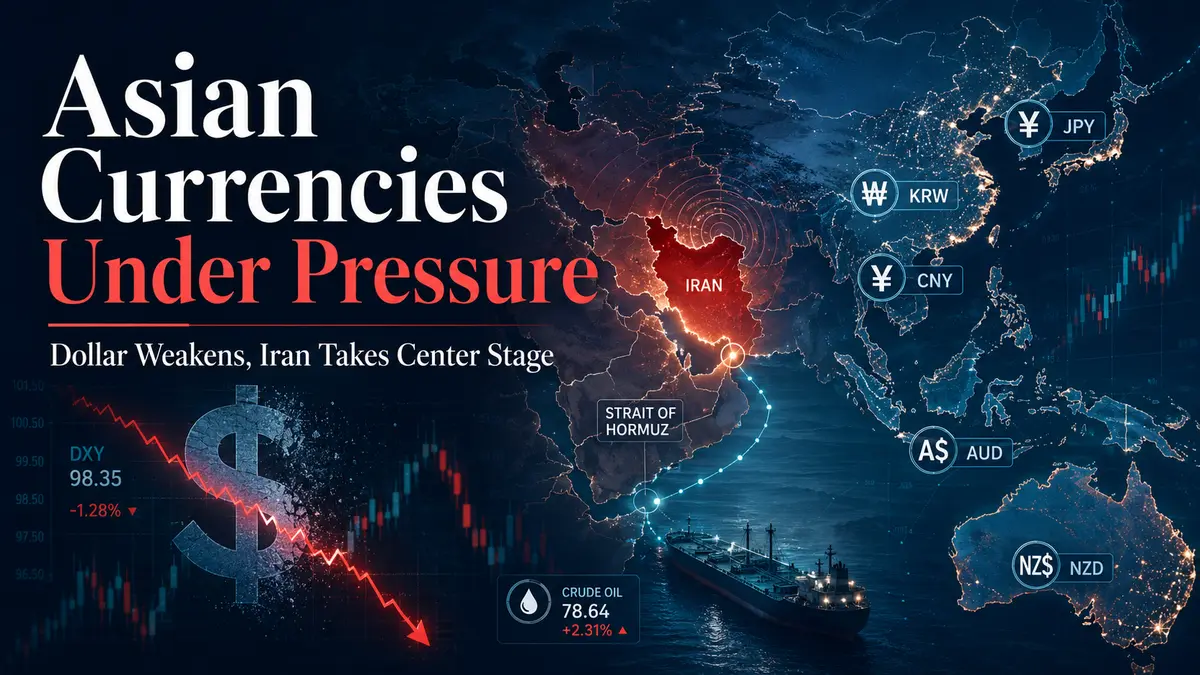
Dollar Back in the Saddle: Strikes on Iran and Inflation Fears Push Asian Currencies Lower

Dollar Back in the Saddle: Strikes on Iran and Inflation Fears Push Asian Currencies Lower

Thursday’s Asian trading session opened with news that, while increasingly familiar in recent weeks, remains deeply unsettling. U.S. armed forces launched another round of strikes on targets in southern Iran — the second such operation in a week. Markets reacted instantly and predictably: a rush into the dollar. The U.S. dollar index edged higher, Asian currencies fell into negative territory, and oil prices surged. All of this is unfolding on the very day the Federal Reserve is set to release its preferred inflation gauge — the PCE index. Thursday is shaping up to be a volatile one.

Second Strike in a Week: Why Bombs Move Currencies

Whenever the U.S. strikes Iranian targets, currency markets tend to follow the same script. The dollar rises, while nearly every other currency weakens. This has little to do with patriotism or confidence in American military power. It is simply cold financial logic.

Conflict involving Iran threatens oil supplies. Disruptions in oil supplies drive energy prices higher. Rising energy costs fuel inflation. Higher inflation, in turn, forces the Federal Reserve to keep interest rates elevated — or even raise them further. And high interest rates make the dollar more attractive to investors searching for yield.

But on Thursday, another element was added to this familiar chain reaction. President Trump personally rejected recent reports suggesting Iran was prepared to reopen the Strait of Hormuz within thirty days. That statement dealt a blow to the fragile optimism that had supported markets over the past few days. Investors who only yesterday hoped for a near-term peace agreement are now being forced to admit that the conflict may drag on. And a prolonged conflict means prolonged inflation. Prolonged inflation means rates staying higher for longer.

Markets have largely abandoned hopes for a quick resolution, and safe-haven capital is pouring...

Continue reading...
0
0
Navigation menu