Bar Pipa
We pay for a post of 10$

Market

WTI Crude Oil Futures Fall During Asian Trading

WTI Crude Oil Futures Fall During Asian Trading
A Morning That Started in the Red

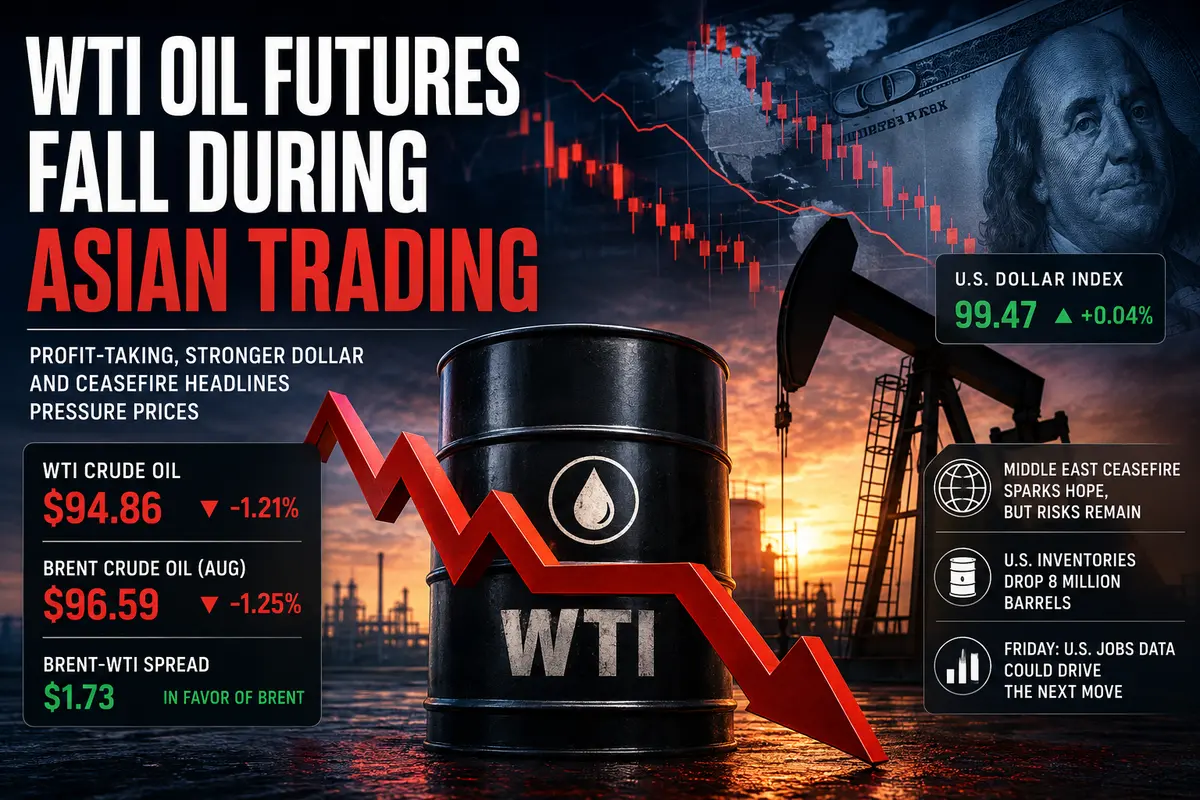
Thursday’s Asian trading session delivered a cold shower for oil bulls. Futures on West Texas Intermediate (WTI) crude oil, the benchmark for the U.S. market, moved into negative territory. And not just slightly—at the time of writing, WTI was down 1.21%, trading at $94.86 per barrel.

For traders accustomed to volatility, a one-percent move is hardly dramatic. But context matters. Just a day earlier, oil had posted its third consecutive session of gains. Market participants were beginning to embrace the idea that crude was back in favor, with geopolitics and tightening inventories providing strong support. Then came the pullback—not a crash, but sharp enough to make investors pause.

The decline coincided with a stronger U.S. dollar. The U.S. Dollar Index futures, which track the greenback against a basket of six major currencies, rose 0.04% to 99.47. It may seem insignificant, but in currency markets even small moves matter. When the dollar strengthens, oil—priced in dollars—typically becomes more expensive for foreign buyers, putting downward pressure on prices. The inverse correlation remains intact even on days when geopolitical headlines suggest higher oil prices.

Brent crude, the European benchmark, also came under pressure. August Brent futures fell 1.25% to $96.59 per barrel. The price spread between Brent and WTI narrowed to $1.73 in favor of Brent. Just a week ago, the spread was above $2. A narrowing spread suggests that U.S. crude is appreciating relative to its European counterpart, reflecting shifts in global supply flows.

The technical picture also offers food for thought. WTI has established support at $86.35 per barrel—a level sellers failed to break during previous sessions. Resistance stands at $96.98. With the current price at $94.86, the market sits roughly in the middle of that range. Traders looking at the charts see upside...

Continue reading...
0
0

The Pentagon’s Quiet Forge: How IBM Continues to Build the Digital Foundation of the U.S. Air Force

The Pentagon’s Quiet Forge: How IBM Continues to Build the Digital Foundation of the U.S. Air Force

Forty-six million dollars. In the context of the United States defense budget, measured in the hundreds of billions, it is almost an invisible amount. Contracts like this rarely make headlines, spark heated debates in Congress, or ignite storms on social media. Yet it is precisely these quiet, routine contract modifications — signed somewhere deep within the Contracting Directorate of the Air Force District of Washington — that form the very foundation on which the military machine of a superpower rests. IBM has received another contract modification for advisory and support services related to resource distribution and civil engineering programs. It sounds dry and bureaucratic. But behind those words lies work without which no fighter jet would take off, no runway would be repaired, and no budget would be allocated correctly.

What IBM Actually Does for the Air Force

The phrase “advisory and support services for resource distribution and civil engineering programs” is a classic example of how the Pentagon describes things that cannot be explained in detail for security reasons. But if we break it down piece by piece, the picture becomes clearer.

Resource distribution programs are the heart of military logistics. The U.S. Air Force operates thousands of aircraft, hundreds of bases, and tens of thousands of pieces of ground equipment. Spare parts, fuel, ammunition, food, medical supplies — all of it must be delivered to the right place at the right time. A mistake in resource allocation could mean a fighter squadron left without fuel or a military hospital without medicine. IBM helps configure and maintain the systems that manage all of this. This is not simply IT support in the conventional sense. It involves databases, forecasting algorithms, and decision-making systems. It means advising military logisticians on supply chain optimization.

Civil engineering in the Air Force context is...

Continue reading...
0
0
NorthRay

Economic Calendar: Why My Trade Died After the Words “Fed Rate” (and How I Started Looking at It Differently)

Economic Calendar: Why My Trade Died After the Words “Fed Rate” (and How I Started Looking at It Differently)

Hi, this is NorthRay.🎉

Remember when I told you about the time I opened a trade, and an hour later the price suddenly shot in the opposite direction — and I had no idea why?

I sat there staring at the chart thinking:

“What just happened? Did someone drop a nuclear bomb? Has the market gone insane?”

Then I checked the news.

Turns out that exact same hour, the head of the U.S. Federal Reserve (Fed) said a couple of sentences about interest rates.
The market reacted.
My trade died.

That was the first time I heard about the economic calendar.

And I realized: opening trades blindly without knowing what news is coming out today is like walking through a minefield blindfolded.🧐

What Is an Economic Calendar? (In Simple Words)

An economic calendar is a schedule of all major economic events around the world.

When the U.S. unemployment report comes out.
When the European Central Bank announces interest rates.
When Germany publishes industrial data.
When world leaders make important agreements.

All of it is in the calendar.

Simple analogy:

Imagine you want to cross the street. You look at the traffic light.
Green — you walk.
Red — you stop.

The economic calendar is your traffic light. It tells you:

“Be careful now, an important report is coming out.”
Or:
“The market is calm right now, it’s okay to trade.”

Without a calendar, you’re crossing the street with your eyes closed.
Maybe you’ll get lucky. Maybe not.🧠

Why News Affects the Market So Much (I Learned This the Hard Way)

The market is not just a chart. It’s people. Millions of traders around the world.

They read the news.
And they make decisions.

Good economic news → people buy the country’s currency → price goes up.

Bad news → people...

Continue reading...
0
0

Golden Reversal: Why Hopes for Peace with Iran Sent Gold Prices Soaring

Golden Reversal: Why Hopes for Peace with Iran Sent Gold Prices Soaring

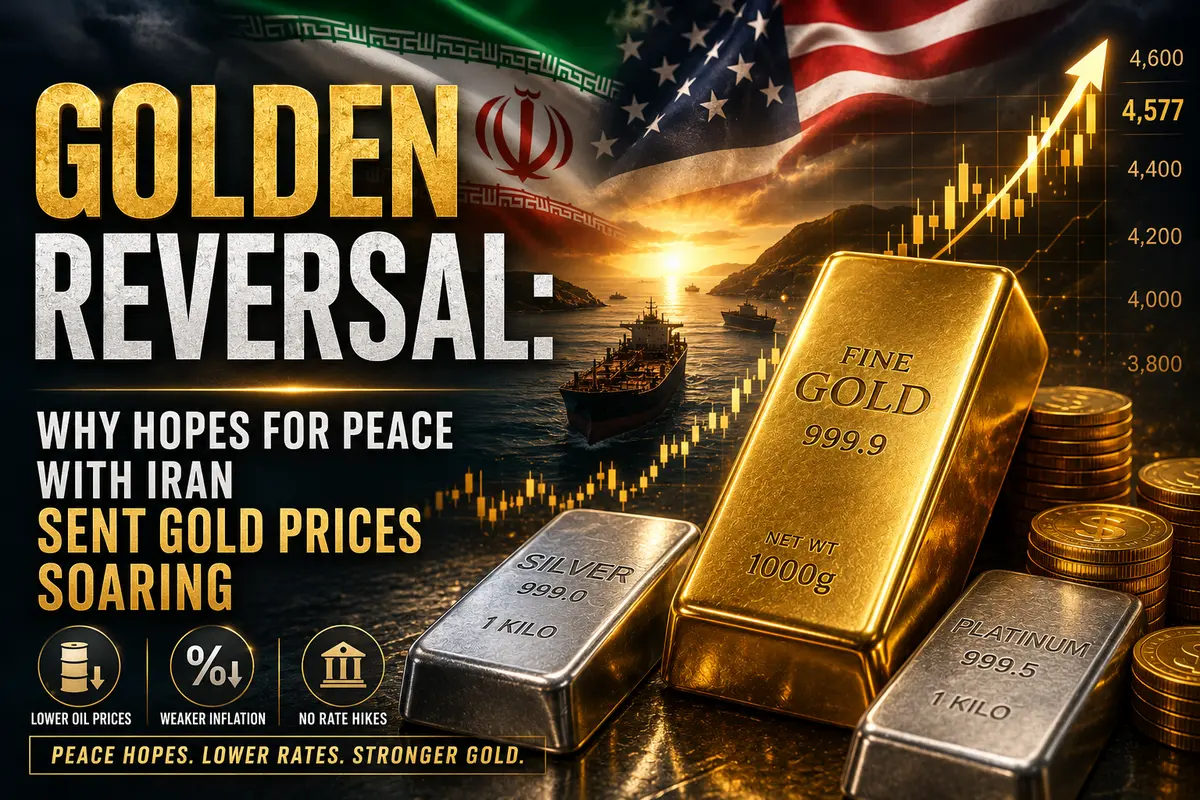
Monday’s Asian trading session delivered a surprise that many gold traders did not expect. Spot gold jumped by one and a half percent, reaching $4,577 per ounce. Futures followed, gaining 1.2% and climbing above $4,600. Silver posted an even more explosive move — up 3.8% in a single session. Platinum added 2%. The entire precious metals sector seemed to awaken from hibernation and surge higher. And the reason behind this rally was not fear or panic, but something entirely opposite — hopes for peace.

At first glance, this seems paradoxical. Gold is traditionally viewed as a safe-haven asset, a refuge during wars and crises. When the world descends into chaos, the yellow metal usually rises, and when peace appears on the horizon, it tends to fall. But today we are witnessing the opposite. The explanation lies in how the conflict with Iran has affected gold over recent months — not directly, but through a complex chain of macroeconomic consequences.

How War Suppressed Gold — and Why Peace Is Setting It Free

The war with Iran triggered an energy crisis. The disruption of shipping through the Strait of Hormuz pushed oil prices above $110 per barrel. Rising energy costs accelerated inflation worldwide. Higher inflation, in turn, forced the Federal Reserve and other major central banks to discuss raising interest rates. And it was this final link in the chain — the threat of higher rates — that became gold’s biggest enemy.

Gold does not generate income. It pays no dividends, no coupons, no interest. When interest rates rise, the opportunity cost of holding gold becomes enormous. Why hold bullion sitting in a vault when you can buy Treasury bonds and earn a guaranteed return? That logic has pressured gold for months. The war was raging, geopolitical risks were extreme, yet gold...

Continue reading...
0
0
Tom Maffin

Word Against the Market: How the RBI Governor Challenged the Bearish Assault on the Rupee

Word Against the Market: How the RBI Governor Challenged the Bearish Assault on the Rupee

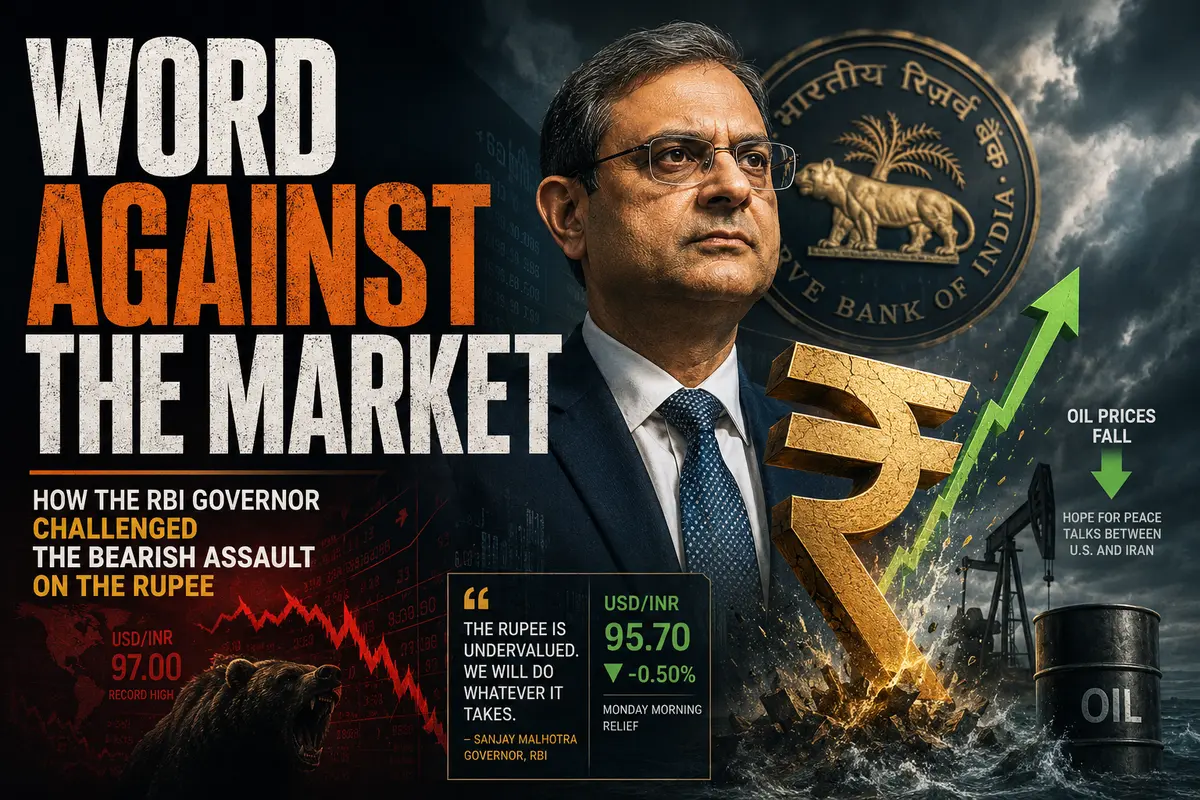
Monday morning on India’s currency market began with the very thing everyone — from oil importers to owners of street stalls selling imported goods — had been desperately waiting for. The rupee, which only on Friday had been staring into the abyss near the 97-per-dollar mark, suddenly reversed course and began to climb. The USD/INR pair fell by half a percent to 95.70 — a move that may seem modest after weeks of relentless decline, yet one whose psychological significance can be compared to the first breath of air for a drowning man. And the reason for this reversal was neither market forces nor global macroeconomic shifts. The reason was a man. One man who uttered a few sentences in an interview with the newspaper Mint.

Malhotra Steps Into the Ring: “The Rupee Is Undervalued, and We Will Do Whatever It Takes”

Sanjay Malhotra, governor of the Reserve Bank of India, is not known for making blunt public statements. Central bankers usually speak in shades, hints, and carefully crafted phrases whose interpretation has become a profession of its own. But this time, Malhotra seemed to cast diplomacy aside. His statement rang out like a gong: the rupee is undervalued. The RBI will do whatever is necessary to prevent further weakening of the currency.

“Whatever is necessary” is not a phrase central bankers throw around lightly. It is a signal that traders call a verbal intervention. And when it comes from the man controlling the foreign exchange reserves of the world’s seventh-largest economy, the market has no choice but to listen. Because words may be followed by action. And judging by recent developments, they already have been — last week the RBI actively intervened, steering USD/INR away from record highs. Malhotra made it clear these interventions were not a one-off operation,...

Continue reading...
0
0

Calm After the Storm: Oil Takes a Breather, but the Fire Isn’t Out

Calm After the Storm: Oil Takes a Breather, but the Fire Isn’t Out

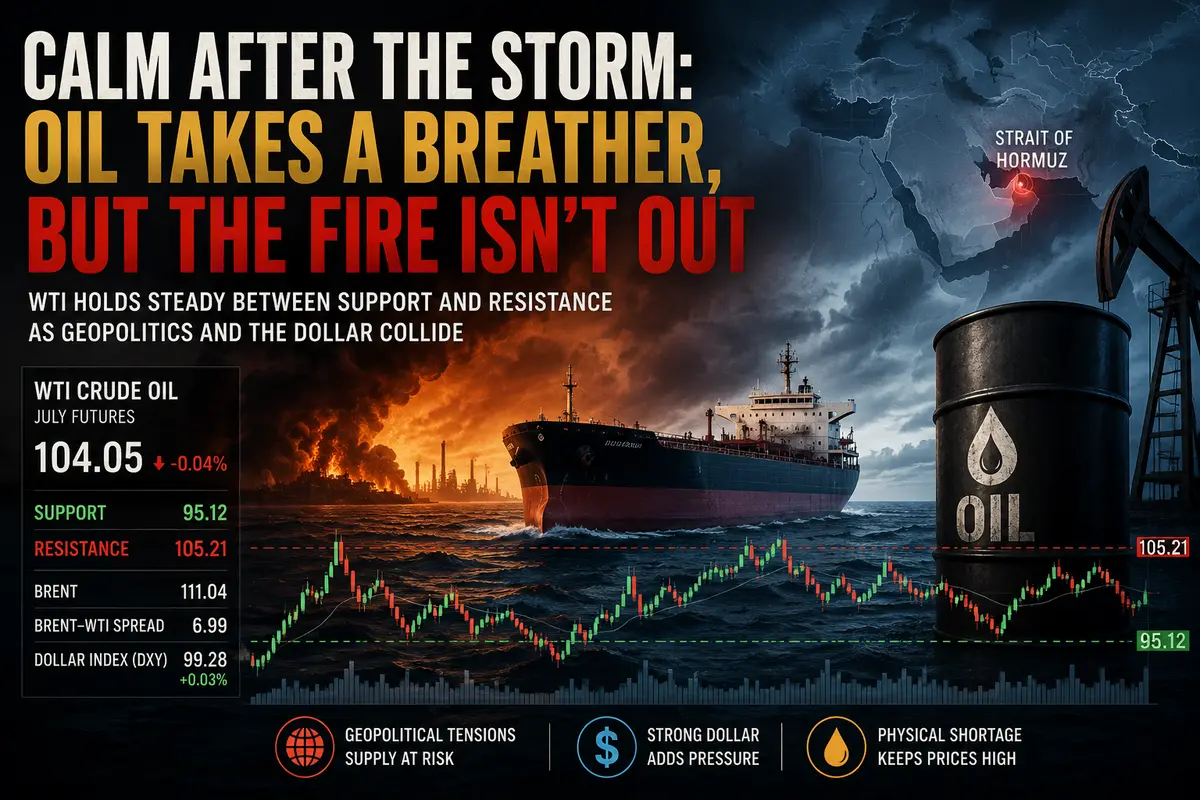
Wednesday’s Asian trading session brought something the oil market has rarely felt in recent weeks — near stillness. July WTI crude futures slipped only marginally, settling at $104.05 per barrel. A decline of four hundredths of a percent is hardly a pullback; it is statistical noise, the faint breathing of a market trying to recover after a marathon. Yet it is precisely during these moments of deceptive calm, when prices hover between support at $95.12 and resistance at $105.21, that the real drama unfolds. Behind this sideways movement lies a battle of fears, expectations, and calculations that will determine where oil heads next — upward toward new highs, or downward, offering relief to the exhausted global economy.

The Thin Line Between Support and Resistance

To understand what is happening in oil right now, one must look beyond fractions of a percentage point and focus on the levels trapping the price. Support at $95.12 is the threshold below which the market refuses to let gravity take over. Whenever oil approached this level in previous sessions, buyers immediately stepped in. This suggests that the fundamental backdrop — supply disruptions, geopolitical tensions, and shrinking inventories — remains so strong that even aggressive sellers hesitate to assault this fortress.

On the other side, resistance at $105.21 acts like an invisible ceiling. Every time prices near this boundary, automated sell orders trigger, profit-taking intensifies, and perhaps traders’ secret hopes emerge that the madness may soon end.

This oscillation between two poles perfectly illustrates the market’s schizophrenia. On one hand, everyone sees the physical shortage of crude. Tankers are avoiding the Strait of Hormuz, insurance premiums have soared, and alternative routes simply cannot compensate for the loss of Iranian and broader Middle Eastern supply. On the other hand, diplomatic efforts remain on the horizon, and every...

Continue reading...
0
0
Tom Maffin

The Milan Outlier in a Blood-Red Market

The Milan Outlier in a Blood-Red Market

While Italy’s FTSE MIB opened down 1.15% and the pan-European STOXX 600 slid 1.4%, one stock on the Milan exchange traded as if the broader market meltdown simply didn’t exist. Shares of Technoprobe surged 31% to €25.84 and, at the session high, touched a new yearly peak of €27.40. This wasn’t just a rally — it was a full-blown rocket launch moving against the gravity of the entire market.

The contrast with the broader backdrop was striking enough to make even veteran traders do a double take. Europe’s technology sector was down 3%, materials stocks had dropped 4.3%, yet Technoprobe kept climbing, ignoring geopolitical tensions, stalled US-Iran talks, and fears of disruptions in the Strait of Hormuz. To understand why, you had to look at the numbers the company released before the market opened.

A Quarterly Report That Blew Past Expectations

Technoprobe’s first-quarter 2026 results weren’t merely solid — they were record-breaking. Consolidated revenue came in at €187 million, up 19% year over year. For a mature industrial company, that kind of growth is serious. Those are the sorts of numbers you expect from young tech startups, not established equipment manufacturers.

But the real surprise was EBITDA. Earnings before interest, taxes, depreciation, and amortization reached €69.2 million. Roughly speaking, that puts EBITDA margin near 37% — the kind of profitability usually associated with software companies, not makers of physical hardware. It showed that Technoprobe wasn’t just selling more; it was doing so with increasing efficiency, keeping costs under control and extracting more profit from every euro of revenue.

Earnings per share also beat expectations. Analysts had been looking for €0.08, while the company delivered €0.09 — a 12.5% beat. In a market where companies are often praised for beating estimates by fractions of a percent, a double-digit surprise sends a...

Continue reading...
0
0

The Big Twenty-Four: Who Made the List and Why It Matters

The Big Twenty-Four: Who Made the List and Why It Matters

On May 8, asset management company Bitwise — long considered one of the key bridges between cryptocurrencies and traditional finance — published a short but remarkably revealing post on X. Accompanying it was a chart listing the world’s 24 largest financial institutions, each already involved with cryptocurrencies in one way or another. The post read: “Banks and crypto: better together.” Behind that simple phrase may lie the most important institutional story of 2026.

The list spans nearly every imaginable area of crypto activity. Trading, custody, private funds, exchange-traded products, payments, and tokenization — six columns populated by heavyweight names. Bank of America, Goldman Sachs, JPMorgan Chase, BlackRock, Fidelity Investments, HSBC, Deutsche Bank, Citigroup, Visa, and Mastercard — the list reads like the table of contents of a handbook on the global financial elite. Most importantly, these firms are no longer merely observing the crypto market or experimenting with pilot programs. They are integrating crypto infrastructure directly into their core business operations, treating it as an essential component alongside equities trading or bond custody.

Exchange-Traded Products as the Main Gateway

The broadest entry point for institutional investors has become crypto exchange-traded products — the very ETPs that regulators viewed as dangerous and exotic only a few years ago. Today, they are the main highway through which pension funds, insurance companies, wealth managers, and private banks enter the crypto market.

Bank of America now provides clients of Merrill Lynch, its wealth management division, access to spot Bitcoin ETPs. This marks a dramatic shift considering the bank’s previously skeptical stance toward cryptocurrencies. Vanguard, which once famously blocked Bitcoin ETFs and faced a wave of criticism from its own clients, now allows brokerage customers to trade crypto ETPs. It is a silent 180-degree turn driven not by ideology, but by straightforward client demand.

Alongside...

Continue reading...
0
0
Tom Maffin

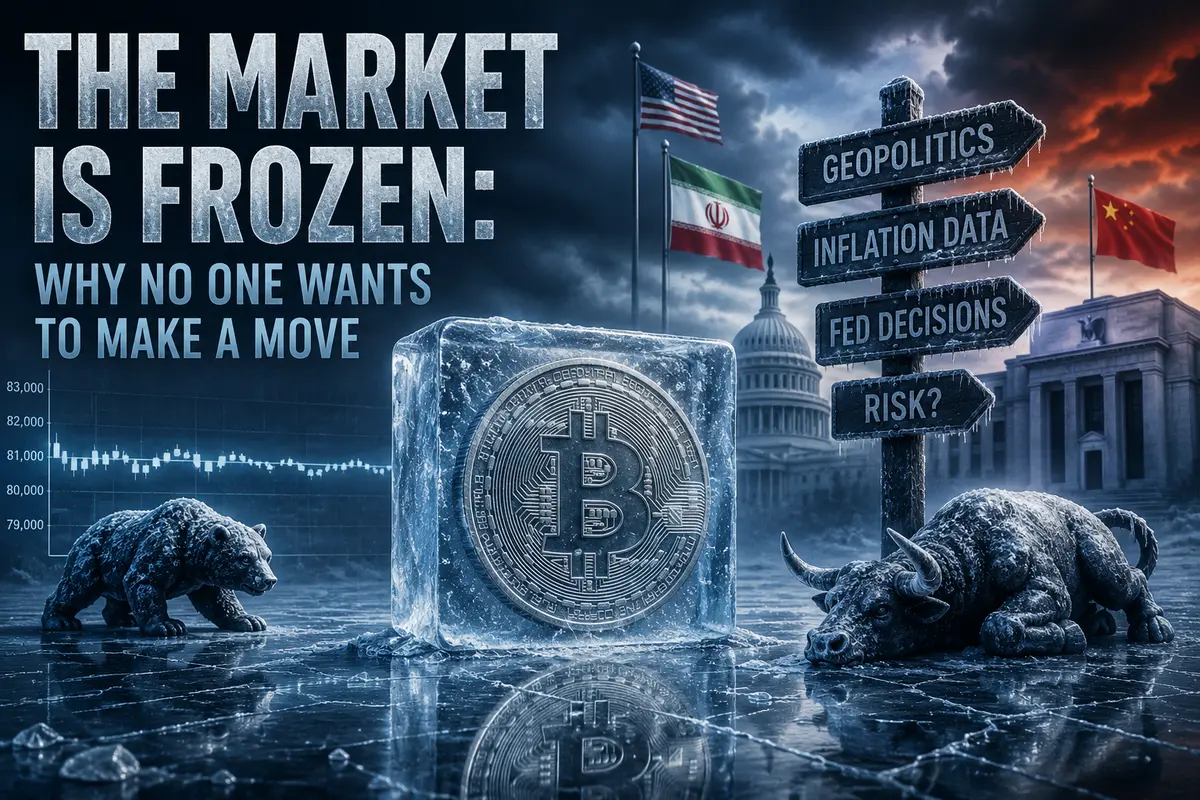
The Market Is Frozen: Why No One Wants to Make a Move

The Market Is Frozen: Why No One Wants to Make a Move

On Tuesday, Bitcoin just treaded water, practically glued to the price tag just above $81,000. No dives, no spikes — just a flat, dull line. You see this kind of lull when the market has two huge questions hanging over it at the same time, and nobody wants to be the first to place a bet.

On one hand, talks about a possible peace between the U.S. and Iran are fading, and that’s getting on people’s nerves. On the other, fresh U.S. inflation figures are about to drop, and that’s always like opening a mystery box — you never know what’s inside. Traders literally froze, turning away from their screens. Even that modest climb to $82,000 we saw over the weekend completely evaporated within a day: as soon as troubling new headlines flickered onto the feed, any desire to buy vanished instantly.

Adding fuel to the fire is the summit between the U.S. and Chinese leaders, happening against a backdrop of openly souring relations. The world’s two largest economies are hashing things out — and the crypto market, being the most jittery of all assets, is highly sensitive to every signal.

Geopolitics Strikes a Nerve: The Region Is on Edge Again

At some point, it started to feel like the Middle East was once again yanking the markets around. Reports that Trump is privately discussing additional military options against Iran hit like a cold shower. And even though nobody expects a decision this very moment — the sheer fact that such scenarios are even on the table instantly killed any appetite among investors to dabble in risky plays.

Trump, in essence, brushed off Iran’s counterproposal to the peace plan and left the door open for warships returning to the Strait of Hormuz. And when the president says the ceasefire regime...

Continue reading...
0
0

Metals Market Today: Investors Move Into Gold While Industrial Metals Wait for Signals From China

Metals Market Today: Investors Move Into Gold While Industrial Metals Wait for Signals From China

The global metals market is entering the middle of May with investors still unsure about where the economy goes next. After months of sharp swings across commodities and financial markets, traders are becoming more selective. Money is flowing back into safer assets like gold, while industrial metals are struggling to regain momentum.

Right now, everything comes down to a few major questions: Will the Federal Reserve finally start cutting interest rates? Can China revive demand in construction and manufacturing? And is the global economy slowing down more than expected?

Those questions are driving nearly every move across the metals market — from gold and silver to copper, aluminum, and nickel.

Gold Keeps Winning the Attention

Gold continues to trade near historic highs and remains the strongest part of the metals market. Investors are still looking for protection against economic uncertainty, stubborn inflation, and geopolitical risks.

There’s also growing belief that the US Federal Reserve may eventually ease interest rates later this year. That matters because lower rates usually weaken bond yields and make gold more attractive.

What’s interesting this time is that gold has stayed strong even while the dollar remains relatively expensive. In previous years, a stronger dollar would normally push gold lower. But the market mood has changed. Investors are less focused on short-term currency moves and more focused on preserving capital.

Central banks are also helping support prices. Several countries continue adding gold to reserves as governments try to reduce dependence on the US dollar and protect themselves from financial instability.

At the same time, geopolitical tensions continue to keep traders nervous. Every new headline involving conflicts, trade disputes, or political uncertainty quickly sends buyers back into safe-haven assets.

Silver Is Moving With Gold — But More Carefully

Silver is benefiting from the same safe-haven demand supporting...

Continue reading...
0
0
Navigation menu