
Bar Pipa
We pay for a post of 10$

IPO / SPO

Airdrop #1 DPLQ Deep Liquidity – Valid Until August 31

Airdrop #1 DPLQ Deep Liquidity – Valid Until August 31

Dear Community, we are glad to welcome you!

The Deep Liquidity (DPLQ) ecosystem continues to actively develop, and today we are announcing the launch of a large-scale reward campaign for our authors and supporters. If you follow the growth of our deflationary asset and want to become part of the DPLQ economy with zero initial investment, this is your chance.

We are launching Airdrop #1 DPLQ, which will run until August 31. Below is a detailed step-by-step guide on how to participate and start earning.

How the DPLQ Airdrop #1 Works

As part of this campaign, we reward you for creating high-quality content. For every written and published article on the pip.bar platform, you will receive a reward of $1 (paid out in DPLQ tokens).

Key Benefits & Conditions

  • No Limits: Payout amounts are unlimited. Write 10 high-quality articles, receive the equivalent of $10 in DPLQ tokens.

  • Daily Payouts: Token distribution is conducted once a day to all authors whose articles pass verification.

  • Full Freedom of Action: You can sell your received tokens on a decentralized exchange (PancakeSwap) immediately after they arrive in your wallet. There are no locking or vesting periods.

  • Quality Control: Articles must comply with the internal rules of the pip.bar platform and writing guidelines. Spam and low-quality content will not be rewarded.

How to Write High-Quality Informational Articles and Get Paid for Them

Step-by-Step Guide: How to Get Your Tokens

To make the process as clear and transparent as possible, we have broken it down into a few simple steps.

Step 1: Write and Publish an Article

Head over to the pip.bar platform, create an interesting, well-written, and helpful article. Make sure the text meets all the platform's requirements. Once your article is published, move on to the next step.

Step...

Continue reading...
0
0

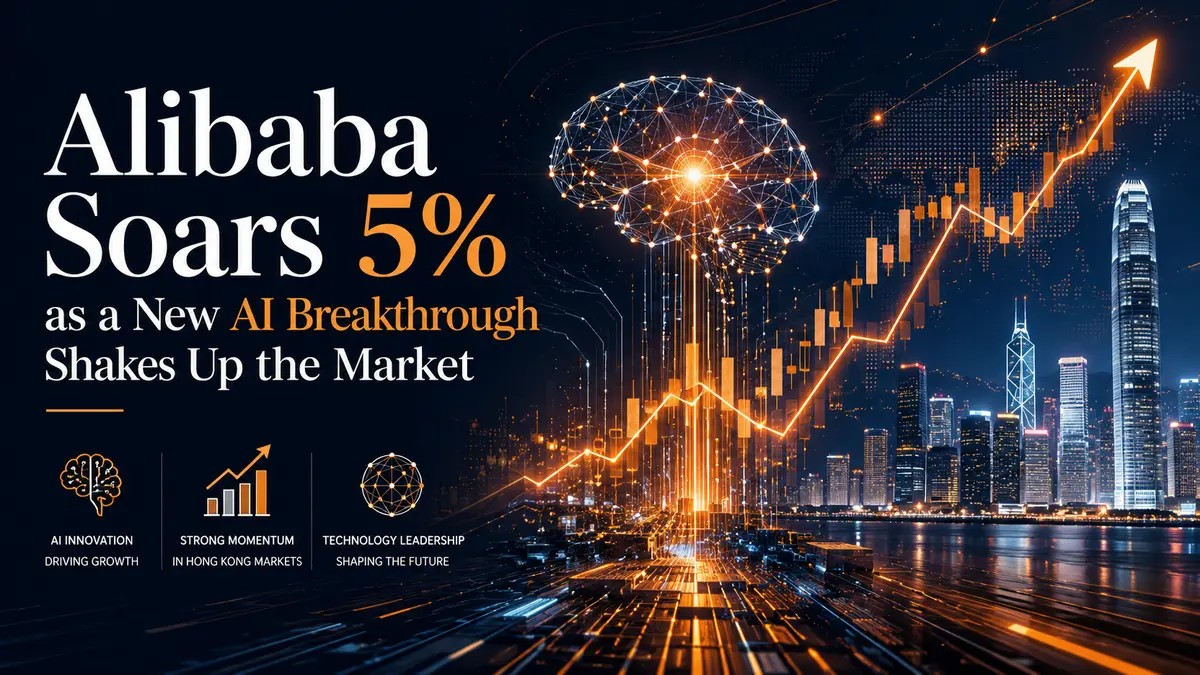
Alibaba Soars 5% as a New AI Breakthrough Shakes Up the Market

Alibaba Soars 5% as a New AI Breakthrough Shakes Up the Market

Monday’s Surge: Shares of the Chinese Giant Move Higher

The first day of the week proved triumphant for BABA ... Alibaba. The company’s shares on the Hong Kong Stock Exchange surged 5.2% to HKDUSD ... HK$118.40. The rally was not simply the result of favorable market conditions—it was driven by a specific technological breakthrough that investors immediately recognized.

On Saturday, Alibaba released a preview version of its new artificial intelligence model, Qwen3.8 Max. This is not just another routine update—it is a bold bid for leadership in the global AI race. The model contains 2.4 trillion parameters, placing it among the most powerful AI systems in the world. Alibaba claims that it is surpassed only by Anthropic’s latest flagship product, which would represent a major technological achievement.

However, what truly ignited the market was Alibaba’s promise to release the model’s weights in the near future. This is far more than a technical detail. It is a strategic move that could fundamentally strengthen Alibaba’s position in the AI industry.

Open models attract developer communities, accelerate innovation, and help create entire ecosystems around a product. The more developers who adopt Qwen, the stronger Alibaba’s competitive position is likely to become.

Qwen3.8 Max: What Kind of Beast Is It?

A model with 2.4 trillion parameters is not impressive merely because of the size of the number. It suggests that the model can process enormous volumes of data, understand complex contexts, and generate more accurate responses. Generally, the more parameters a model has, the more powerful it can be—although it also becomes more difficult and expensive to train.

Alibaba appears to have found a balance between power and efficiency. The company has not disclosed all the technical details, but it describes Qwen3.8 Max as one of the world’s most powerful AI models, reportedly ranking behind only...

Continue reading...
0
0

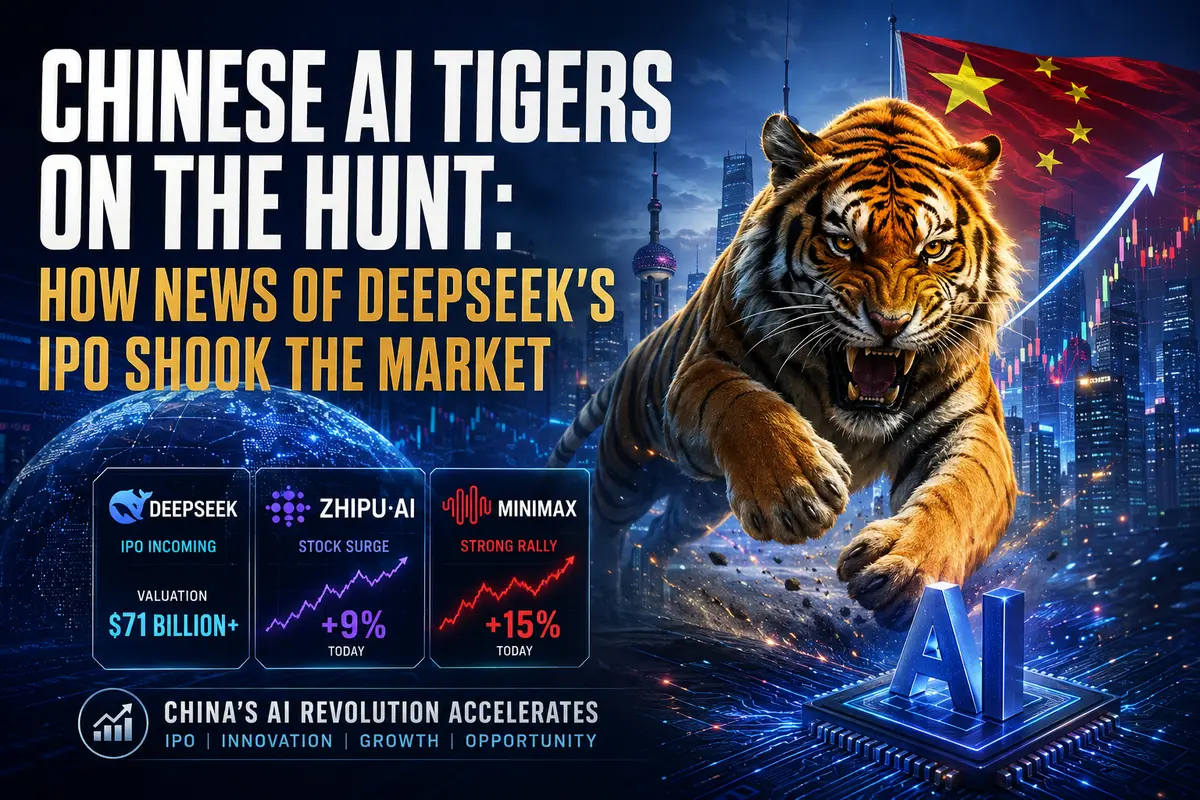
Chinese AI Tigers on the Hunt: How News of DeepSeek’s IPO Shook the Market

Chinese AI Tigers on the Hunt: How News of DeepSeek’s IPO Shook the Market

Introduction: A Day of Triumph for Chinese Artificial Intelligence

Wednesday became the day when Chinese artificial intelligence stocks soared. Reports that major AI developer DeepSeek plans to conduct an initial public offering by the end of this year triggered a wave of optimism across the market. Zhipu AI shares jumped by nearly 9%, while MiniMax Group Inc. gained almost 15%.

DeepSeek, the undisputed leader of China’s group of so-called “AI Tigers,” is reportedly preparing to file for an IPO on Mainland China’s stock market later this year. The company is also raising private financing at a valuation of at least $71 billion, only a few weeks after securing $7 billion at a valuation of $50 billion.

In this article, we will examine what is driving this rally, assess the prospects of Chinese AI companies, and consider where the sector may be heading in the coming months.

DeepSeek: The Leader of Chinese AI

A Success Story

DeepSeek became a global leader in artificial intelligence after its R1 model gained worldwide recognition in early 2025. Since then, the company has released a series of updates and new models, including the V4 model family introduced in April.

According to the latest data, V4 ranked first among open-source AI models and has also demonstrated a growing number of requests through application programming interfaces, or APIs. These results further confirm DeepSeek’s leadership within the industry.

Preparing for an IPO

According to Bloomberg, DeepSeek is preparing to file for an IPO on Mainland China’s stock market later this year. The company is also raising private financing at a valuation of at least $71 billion.

This comes only a few weeks after the company raised $7 billion at a valuation of $50 billion. The sharp increase in valuation reflects strong investor interest in the company.

Impact on...

Continue reading...
0
0

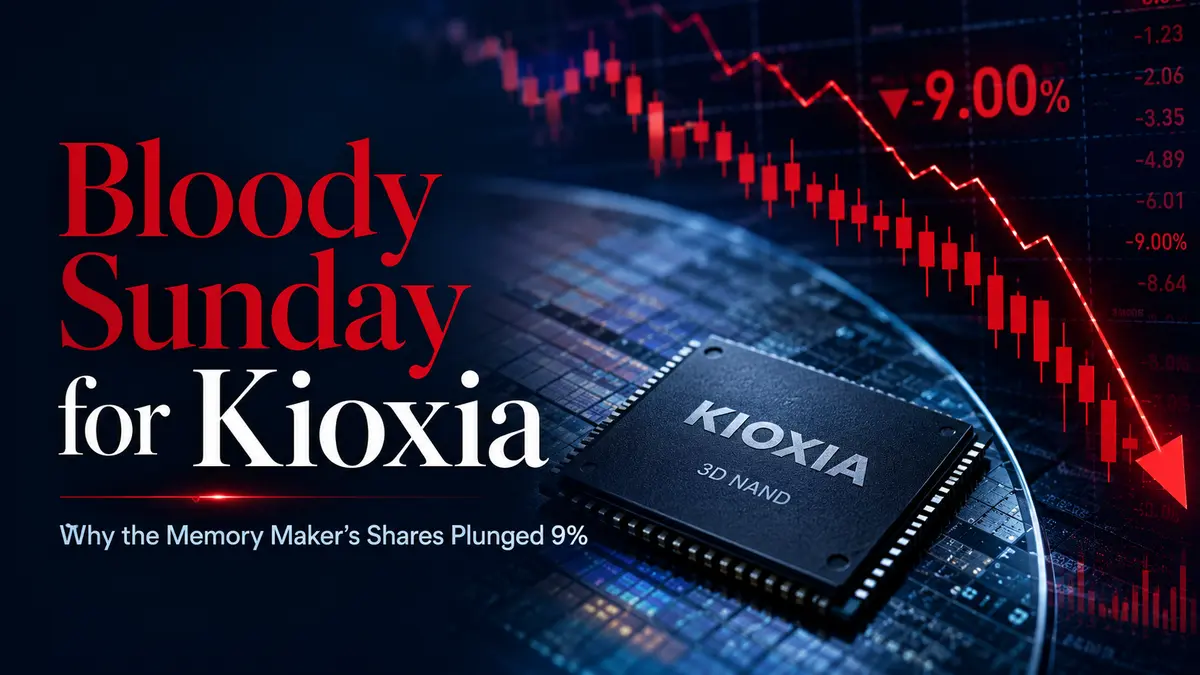
Bloody Sunday for Kioxia: Why the Memory Maker’s Shares Plunged 9%

Bloody Sunday for Kioxia: Why the Memory Maker’s Shares Plunged 9%

Introduction: The Day Investors Rushed for the Exit

Monday was a difficult day for Kioxia shareholders. Shares of the Japanese NAND memory giant fell by 9.3%, dropping to ¥69,850 per share. For a company that completed one of Japan’s largest IPOs in recent years only a few months ago, such a decline looks particularly painful.

So, what happened? There was no corporate news—no financial reports, scandals, or management changes. The reason for the decline lies elsewhere. Investors became cautious ahead of a crucial week for the global semiconductor sector. Quarterly results from key industry players ASML and TSMC are expected to provide signals regarding capital expenditure on artificial intelligence, demand for memory, and the outlook for semiconductor spending in the second half of the year.

However, this is only part of the story. Kioxia shares are also under pressure from Bernstein’s bearish stance. Last month, the brokerage reaffirmed its “Sell” rating with a target price of ¥40,000. This comes despite the fact that most analysts remain optimistic about the company. The gap between expectations and reality created the perfect storm for the share-price decline.

ASML and TSMC: Key Signals for the Entire Industry

Why ASML’s Results Matter to Kioxia

ASML is not merely a manufacturer of chipmaking equipment. It is a barometer for the entire semiconductor industry. The company produces lithography machines without which modern processors and memory chips cannot be manufactured. Its financial results show how much customers are prepared to invest in new production capacity.

If ASML reports an increase in orders, it will signal that semiconductor demand continues to grow and manufacturers are expanding production. If orders decline, however, this could point to an industry slowdown.

For Kioxia, which produces NAND memory, signals from ASML are critically important. If chipmakers reduce capital expenditure, it may mean they...

Continue reading...
0
0

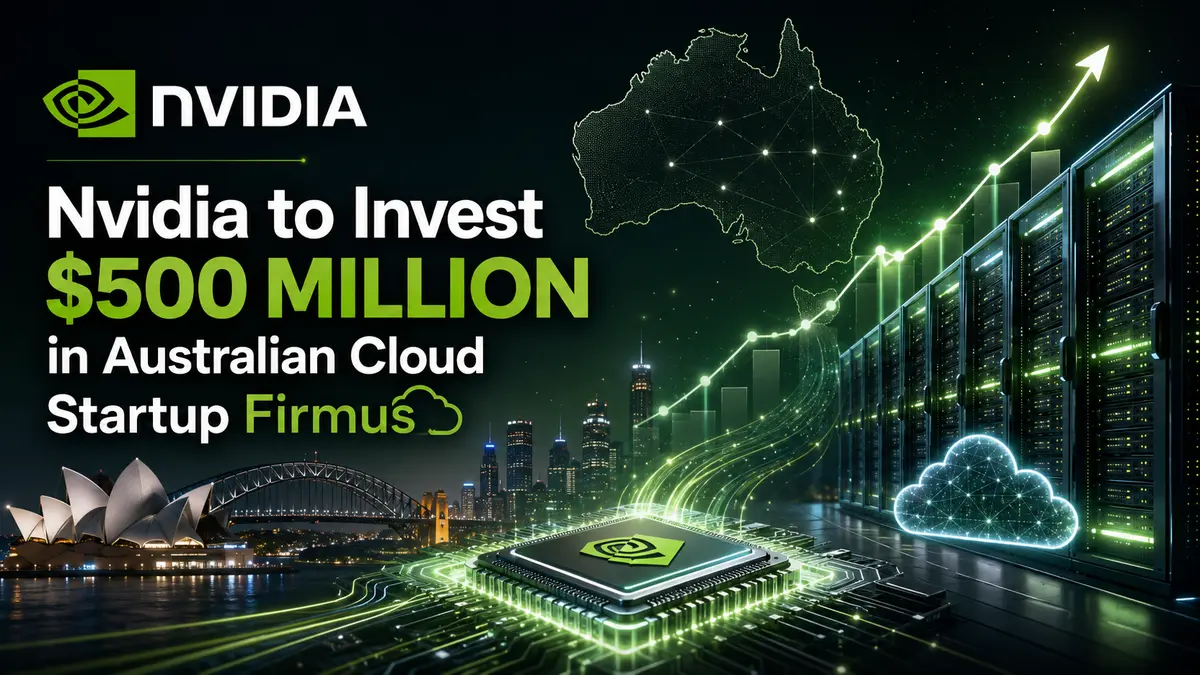
Nvidia to Invest $500 Million in Australian Cloud Startup Firmus

Nvidia to Invest $500 Million in Australian Cloud Startup Firmus

Introduction: The Thursday When an Australian Startup Got Wings from a Global Giant

Thursday. Australia, Sydney. News that could change the future of one of the country’s most ambitious technology projects has just become official. Nvidia, the global leader in graphics processors and artificial intelligence chips, has committed to investing around A$720 million ($500 million) in a $2 billion capital raise by Australian cloud startup Firmus Technologies.

This is not just an investment — it is a strategic partnership that places Firmus alongside the world’s leading cloud platforms. The deal comes ahead of the company’s planned listing on the Australian Securities Exchange (ASX) later this year, and values Firmus at approximately $15.5 billion after the capital raise — almost twice its previous valuation.

What is behind this decision? Why is Nvidia investing half a billion dollars in an Australian startup? And what does this mean for Australia’s cloud market and the entire Asia-Pacific region?

Nvidia’s investment is structured as preferred shares, which are expected to convert into ordinary shares during the initial public offering (IPO). Firmus plans to use the raised funds to purchase Nvidia chips for its data center project in Launceston, as well as to support business expansion in Australia.

The company is convening an extraordinary general meeting of shareholders on July 31 to obtain approval for the capital raise. At the same time, a 50-for-1 stock split is being proposed, designed to reduce the price of a single share before the IPO and make the shares more accessible to retail investors.

Firmus expects to list on the ASX within the next 12 months.

Let’s take a closer look at what Firmus Technologies is, why Nvidia decided to invest in this startup, and how this could change Australia’s cloud landscape.

Firmus Technologies: Who They Are and What They...

Continue reading...
0
0
Tom Maffin

Why Are Zhipu AI Shares Rising Sharply Today?

Why Are Zhipu AI Shares Rising Sharply Today?

Introduction: The Thursday When the Chinese AI Giant Shook the Market

Thursday, Hong Kong Stock Exchange. Shares of Zhipu AI, traded under the name Knowledge Atlas Tech Joint Stock, surged 14.7% to HK$2,094, attracting the attention of investors around the world. This was not just a random spike — it was the result of a large-scale secondary share placement that raised about $4 billion. The company placed 19.78 million shares at a price of HK$1,588 per share, representing a discount of around 13% to the previous closing price.

What is behind this growth? The placement took place after the key lock-up period expired on July 8, 2025, an event that many market participants feared could trigger massive selling. However, a group of major cornerstone investors — including state-backed entities and government-linked industrial funds that control around 70% of the unlocked cornerstone shares — publicly confirmed their long-term commitment to holding the stock, effectively neutralizing the expected pressure on the share price.

Another growth catalyst came from reports earlier this week that Zhipu is considering developing its own ASIC chips to support the GLM model family. This highlights the company’s intention to reduce its dependence on third-party AI hardware manufacturers.

The broader Hong Kong technology market also provided a favorable backdrop: the Hang Seng Tech Index rose sharply this week amid numerous AI-related announcements from major Chinese internet companies and capital inflows into software stocks and companies developing large language models.

Zhipu is one of the hottest stocks on the Hong Kong market: since its debut in January, the stock has gained almost 1,300%, as investors remain broadly optimistic about the company’s prospects in the artificial intelligence industry.

Let’s take a closer look at why Zhipu AI has become the focus of investor attention, what factors are supporting the growth of...

Continue reading...
0
0

Why Are Shanghai Iluvatar CoreX Shares Rising Sharply?

Why Are Shanghai Iluvatar CoreX Shares Rising Sharply?

Introduction: The Thursday When a Chinese Chipmaker Made the Whole World Talk

Thursday, Hong Kong Stock Exchange. Shares of Shanghai Iluvatar CoreX SemiCon Co surged 7.1% to HK$600, attracting the attention of investors around the world. This was not a random spike — it was the result of a large-scale share placement that raised about HK$7.07 billion ($902 million). The company placed 14.9 million shares at HK$476 each, at a discount of around 15% to the previous session’s closing price.

What is behind this growth? The company had been in talks with advisers about a possible placement, and the six-month lock-up period following its IPO had expired only a few days earlier. Investor enthusiasm was supported by commercial momentum: since Nvidia’s most powerful chips are unavailable due to U.S. export restrictions, Chinese buyers are actively seeking domestic alternatives, and capital is beginning to flow into this segment.

Another positive factor was reports that Iluvatar is in talks to supply ByteDance with at least 50,000 AI inference chips, which would make it a key supplier in ByteDance’s hardware ecosystem.

On the broader market, the backdrop for Hong Kong-listed AI and semiconductor stocks remains favorable. Driven by a wave of artificial intelligence catalysts from internet giants and capital rotation, the Hang Seng Tech Index staged a strong rally, gaining nearly 5% on July 8, 2025, and closing at 4,731 points.

Analyst sentiment toward the stock remains firmly positive: the average 12-month target price stands at HK$762.15, while all six analysts covering the stock recommend buying it — resulting in an overall rating equivalent to “Strong Buy.”

Let’s take a closer look at why Shanghai Iluvatar CoreX has become a focus of investor attention, what factors are supporting the growth of its shares, and whether the company has further potential to strengthen its...

Continue reading...
0
0

Xiaohongshu prepares for a $70B IPO in Hong Kong: why China’s RedNote is worth more than it seems

Xiaohongshu prepares for a $70B IPO in Hong Kong: why China’s RedNote is worth more than it seems

Introduction: a quiet revolution finally coming into the open

When last year American users flooded into Xiaohongshu, escaping uncertainty around TikTok, many in the West heard this name for the first time. In Chinese internet culture, however, RedNote (as the platform is known outside mainland China) has long been far from a discovery. For several years now, it has been a way of life for hundreds of millions of people—a place where questions are answered more effectively than in search engines, and where purchases happen more spontaneously than on any marketplace.

Now this story is entering a new stage. According to the Wall Street Journal, Xiaohongshu is preparing for an IPO in Hong Kong at a valuation of over $70 billion. This is not just a number in a headline. It signals that China’s social commerce sector has matured enough to go public, and that investors are willing to pay serious money for it.

Let’s break down what is behind this decision, why the valuation is controversial, and what this platform actually is—one that many in the West still casually call “the Chinese Pinterest,” repeatedly missing the point.

What Xiaohongshu is and why it is worth $70 billion

From hobby project to empire in twelve years

Founded in 2013, Xiaohongshu started as a modest shopping guide for Chinese women traveling abroad. Its founders, Miranda Qiu and Charlene Chen, could hardly have imagined that a dozen years later their creation would be valued at nearly $70 billion and considered one of the key assets of China’s internet economy.

Today it is not just an app—it is an ecosystem with more than 400 million monthly active users. For comparison, that is more than the population of the United States. And this is not an anonymous mass: each user comes with intent—seeking advice,...

Continue reading...
0
0
Tom Maffin

Thames Water: A Life-or-Death Deal for Britain’s Water Empire

Thames Water: A Life-or-Death Deal for Britain’s Water Empire

Nightmare on Kensington Road: How Britain's Largest Water Company Ended Up on Its Knees

Imagine London without water. Not for an hour, not for a day — forever. Taps run dry, toilets stop flushing, showers stop working, factories shut down, and hospitals switch to emergency mode. It sounds like the plot of a disaster movie. Yet for the 16 million people served by Thames Water, this scenario has seemed increasingly plausible over the past two years.

The company that supplies water and wastewater services to London and the Thames Valley has been teetering on the brink of collapse. Its debts exceed £15 billion. Its infrastructure is aging and leaking. Regulators have been poised to intervene at any moment. Shareholders have been fleeing without looking back.

Then, on Wednesday, June 10, 2026, a glimmer of hope appeared. Or perhaps another nail in the coffin, depending on your perspective.

Thames Water's creditors have proposed a restructuring plan that could save the company. But the price of salvation is control. The creditors want ownership of the company—and they are prepared to pay £749 million to secure it.

That may sound like a large sum. For a company carrying tens of billions in debt, however, £749 million is pocket change. This deal is not really about money. It is about who will control water services for millions of people.

The creditors are hedge funds and investment firms based in New York, Delaware, and the Cayman Islands. They are not water utility specialists. They are specialists in extracting returns from distressed assets. And a British public already frustrated by decades of underinvestment in infrastructure is watching this deal with equal measures of hope and alarm.

Let's take a closer look at what exactly the creditors are proposing, who is behind the plan, and what lies...

Continue reading...
0
0
Tom Maffin

A Space Giant Begins Its Descent: Why SpaceX Is Lowering the Bar Ahead of Its IPO

A Space Giant Begins Its Descent: Why SpaceX Is Lowering the Bar Ahead of Its IPO

In a world where technology companies are accustomed to inflating valuations to astronomical heights, news that SpaceX is lowering its target valuation ahead of its initial public offering sounds almost like an admission of defeat. But it is not defeat. It is a sober calculation.

According to Bloomberg, Elon Musk and his advisers have revised expectations from $2 trillion down to $1.8 trillion. The difference—$200 billion—is larger than the market capitalization of most Fortune 500 companies. Yet even after lowering the target, SpaceX is still positioning itself for what could become the largest IPO in human history. And that story deserves a closer look.

From $2 Trillion to $1.8 Trillion: Why the Target Is Coming Down

In April, Bloomberg reported that SpaceX was aiming for a valuation exceeding $2 trillion. It was a breathtaking figure. For comparison, Apple, the world’s most valuable public company, is worth around $3 trillion. Microsoft is valued at roughly $2.5 trillion. In other words, before even going public, SpaceX sought to stand shoulder to shoulder with the most powerful corporations of the modern era, surpassing giants such as Saudi Aramco, Alphabet, and Amazon. It was a bold statement reflecting Musk’s belief that SpaceX is not merely a launch provider, but something far greater.

Now the target has been lowered. As is often the case, the reason lies in discussions with advisers and investors. Investment banks tasked with marketing SpaceX shares to the public have conducted preliminary demand assessments. Apparently, investor appetite was not quite as limitless as initially expected. A market that has learned hard lessons from overvalued IPOs in recent years has become more demanding. Investors want not only a grand vision but also numbers that support it. And when it comes to the numbers, the SpaceX story is more nuanced.

A valuation of...

Continue reading...
0
0
Navigation menu
instaforex banner