Bar Pipa
We pay for a post of 10$

Indian rupee

The Dollar Holds Steady Amid Tensions Around Iran
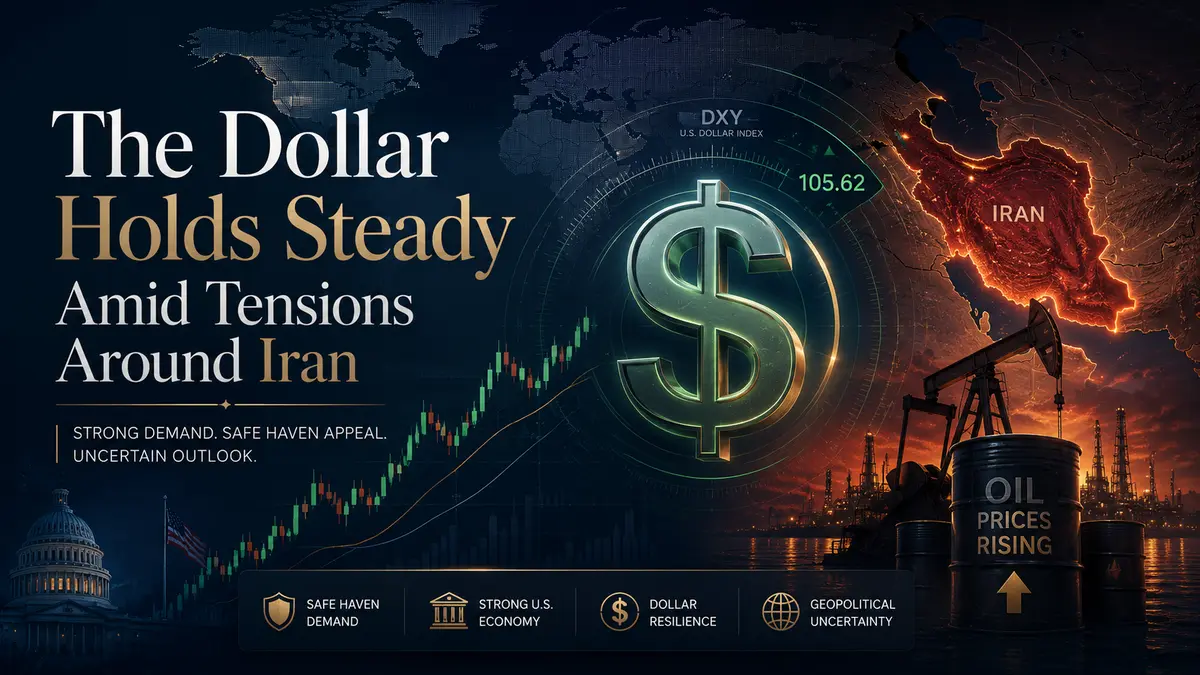
The Dollar Holds Steady Amid Tensions Around Iran

Introduction: The Thursday When Geopolitics Met Monetary Policy

Thursday. The Asian trading session opens, and investors across the region are watching their screens with a sense of tense anticipation. The U.S. dollar has stabilized, but this is not calm — it is the calm before the storm. The resumption of U.S. military actions against Iran has created a new wave of uncertainty, while the minutes of the Federal Reserve’s June meeting, published the previous day, showed that policymakers were sharply divided over further interest rate hikes.

The dollar index settled at 100.760 points after a volatile overnight session. At first, the renewed military confrontation between the United States and Iran supported the dollar as a safe-haven asset. Then the Fed minutes, which revealed disagreements within the regulator, triggered a sharp reversal. Still, the dollar remained near its recent 13-month highs.

The Chinese yuan was almost unchanged after restrained June inflation data. The consumer price index rose by 1% year-on-year, falling short of the 1.1% forecast. The producer price index, by contrast, climbed to a four-year high of 4.1% due to high energy and raw material prices.

The Japanese yen remained near 40-year lows, keeping markets on edge as they awaited possible currency intervention by the government. Tokyo has been warning for several weeks about excessive speculation against the yen, but markets continue to ignore these warnings.

Most Asian currencies traded in narrow ranges. The Australian dollar edged slightly higher, the South Korean won remained stable, and the Singapore dollar and Indian rupee were almost unchanged. Markets froze while waiting for new signals.

Let’s break down what is really happening in currency markets, why the dollar remains stable amid a geopolitical crisis, and how the Fed minutes affected investor expectations.

Geopolitical Background: Iran Back in the Spotlight

The Resumption of U.S....

Continue reading...
0
0

Asian Currencies Weaken as the Yen Faces the Threat of Intervention

Asian Currencies Weaken as the Yen Faces the Threat of Intervention

Introduction: A Monday When the Dollar Goes on the Offensive Again

Monday, the Asian trading session. Traders in Tokyo, Seoul, Shanghai, and Singapore open their terminals and see a familiar picture: the dollar is advancing again. Most Asian currencies have weakened, while the Japanese yen remains near 40-year lows, forcing markets to stay alert for possible government intervention.

USD/JPY rose by 0.3% to 161.82 yen, remaining close to levels last seen in 1986. This is not just a number; it is a psychological threshold beyond which the territory of intervention begins. Japanese officials have been issuing verbal warnings for several weeks, but markets have largely ignored them.

What is happening? A weak U.S. labor market report last week, which cast doubt on the Fed’s ability to raise rates, should have weakened the dollar. And indeed, the dollar index fell by 0.5% over the week. But on Monday, it began rising again, recovering part of its losses. The reason is persistent concern over stubborn U.S. inflation, which may force the Fed to maintain a tough policy stance in the coming months.

The yen remains the main victim of this dollar rally. The Bank of Japan raised interest rates in June and warned of possible further tightening, but this did not help. The interest rate gap between the United States and Japan remains enormous, and as long as this gap persists, the yen will remain under pressure.

Other Asian currencies are also feeling uncertain. The South Korean won, Chinese yuan, Singapore dollar, Taiwan dollar, and Indian rupee have all weakened against the dollar. Even the Australian dollar, often considered a barometer of commodity markets, fell by 0.2%.

This week, the focus will be on the minutes of the Fed’s June meeting. They may provide additional signals about the path of interest rates....

Continue reading...
0
0
Tim Drening

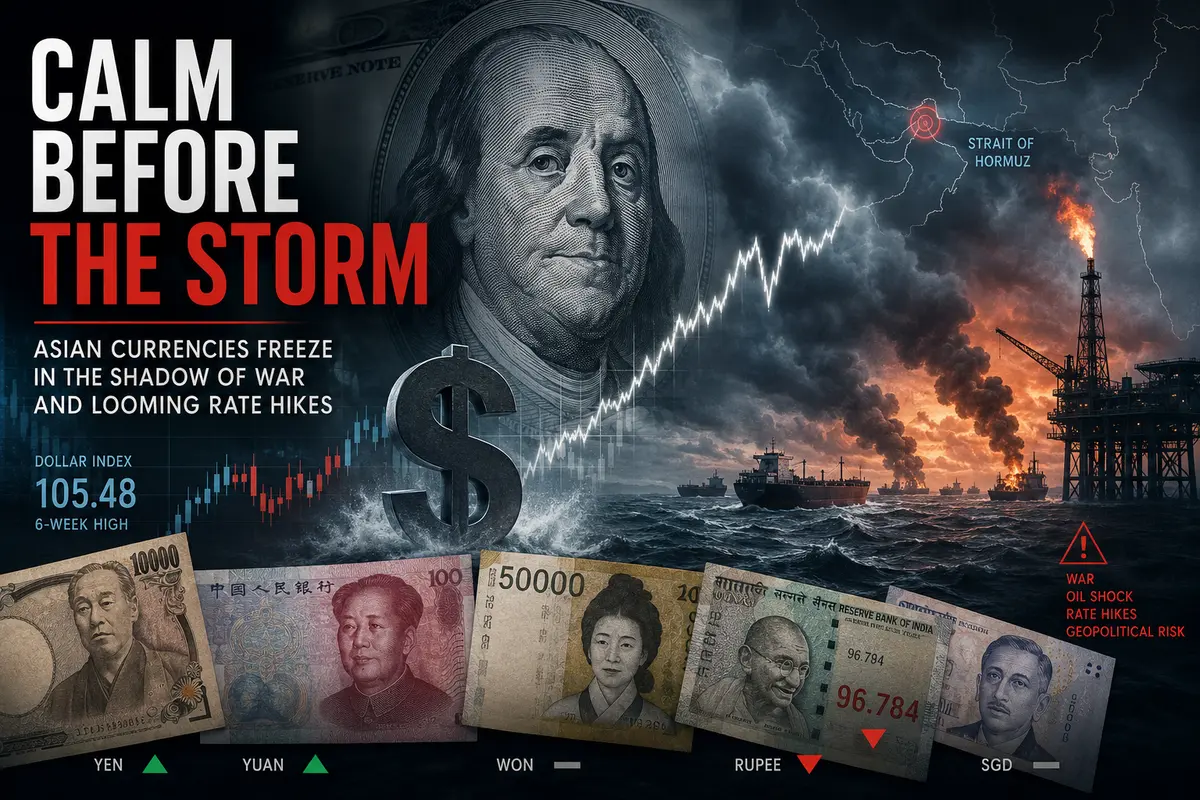
Calm Before the Storm: Asian Currencies Freeze in the Shadow of War and Looming Rate Hikes

Calm Before the Storm: Asian Currencies Freeze in the Shadow of War and Looming Rate Hikes

At first glance, Asian currency markets looked almost sleepy on Wednesday. Most pairs drifted within narrow ranges, traders seemed to hit pause, and price action resembled the heartbeat monitor of a patient under heavy sedation. But this silence is deceptive. Beneath the surface calm of sideways trading lies enormous tension ready to erupt at any moment. When three forces converge at once — a war disrupting one-fifth of global oil supplies, renewed fears of Federal Reserve rate hikes, and deepening geopolitical fractures among major powers — markets do not calm down; they become paralyzed, trying to calculate where the first blow will come from.

The Heavyweight Dollar and the Ghost of Tightening

The dollar index hovering near six-week highs is the perfect barometer of global anxiety. Whenever the world starts shaking, money inevitably rushes into the dollar, and the current situation is no exception. But what makes this moment unique is that the dollar is rising not only as a safe haven, but also as a currency that could become even more profitable. Markets have once again started talking about something they tried to forget over recent months — another Fed rate hike.

This narrative did not emerge out of nowhere. Remarks by Philadelphia Federal Reserve Bank President Anna Paulson, made almost casually on Tuesday evening, became the detonator. When a senior Fed official says it is reasonable for markets to speculate about possible rate increases, it is not just rhetoric — it is a signal. Central bankers rarely speak carelessly. Behind such comments lies growing concern within the Fed over energy-driven inflation, which has begun accelerating again after the conflict with Iran disrupted supplies through the Strait of Hormuz.

Inflation caused by a supply shock is the most unpleasant type of inflation for central banks. It cannot be fought...

Continue reading...
0
0
Navigation menu
instaforex banner