Bar Pipa
We pay for a post of 10$

Commodities

BCR

Daily Analysis 28 July 2026 | Oil Drops 6%, Gold Trades Below $4,100 as Dollar Stays Supported

Daily Analysis 28 July 2026 | Oil Drops 6%, Gold Trades Below $4,100 as Dollar Stays Supported

Currency & Commodity Analysis:


US Dollar Index:


The US dollar recorded its largest weekly gain since mid-June last week, rising 0.7%. The US dollar index rose to 101.45 last week, mainly supported by rising oil prices and inflation concerns. A stronger dollar pressured non-dollar currencies, while the yen continued to struggle near 40-year lows. The dollar index closed around 101.45, with high oil prices reshaping inflation expectations, which in turn reinforced bets on interest rate hikes, providing support for the dollar. The dollar's recent support has primarily come from oil prices. A new round of attacks in the Iranian conflict pushed Brent crude to $102 a barrel, reigniting inflation concerns. Market pricing for a rate hike at this week's Fed meeting surged from 12.8% a week ago to 35.8%, although June inflation data had briefly eased market expectations, but escalating geopolitical tensions quickly reversed this optimism. The perception that the US economy is more resilient to energy price shocks than Europe and Japan further solidifies the dollar's relative advantage.


The Fed is expected to keep interest rates unchanged this week, but at least two members are expected to vote hawkishly against it, as some members are losing patience with persistently high inflation. This assessment suggests that even if rates remain unchanged, the signals from the meeting may lean hawkish, providing additional support for the dollar. The US dollar index has rebounded from its low of 95.56 at the beginning of the year to a high of 101.80 in June, currently trading around 101.40, between 101.53 (last week's high) and the psychological level of 101. The MACD indicator is near the zero line, lacking a clear directional signal in the short term, and maintaining an overall slightly bullish oscillating pattern. On the upside, watch the 101.53 (last week's...

Continue reading...
0
0
pixel

Stablecoins Cost Banks Their Deposits: 9 Reasons Banks Are Building Tokenized Deposits

Stablecoins Cost Banks Their Deposits: 9 Reasons Banks Are Building Tokenized Deposits

Stablecoins, tokenized deposits, and deposit tokens are all digital dollars, but they are not the same instrument even though many institutions talk about them like they are.

In April, the FDIC proposed something that received minimal coverage outside of law firm memos and discussion from those in the industry. In short, it said, the underlying technology used to record a liability is irrelevant to deposit insurance. Whether a deposit is tracked on a distributed ledger or within a legacy core banking database, it receives identical treatment as long as it satisfies the statutory definition of a deposit.

Two months later, JPMorgan, Citi, Bank of America, Wells Fargo and a dozen others said they were building a shared tokenized deposit network run by The Clearing House, targeting the first half of 2027. A separate group of regionals (Huntington, First Horizon, KeyCorp, M&T, Old National) is piloting a retail version this quarter.

The question used to be whether any of this was real, but now it's which digital asset instrument, for which client, on which rail. That's a harder question, because the three things people keep lumping together do very different things to your balance sheet.


WHAT BANKS GET FROM STABLECOINS

For permitted issuers, holding the underlying cash and Treasuries represents a sticky, low-risk balance that generates fee income. When building an internal business case, however, it is critical to note that these reserves lack pass-through insurance for token holders, a point explicitly detailed in the FDIC proposal.

Because GENIUS envisions issuance via bank subsidiaries, white-labeling offers an accelerated route for institutions possessing distribution channels but lacking a native product. Capitalizing on fiat conversion and the associated remittance corridors presents clear fee opportunities. Furthermore, a distinct customer segment (including crypto exchanges, crypto treasuries, PSPs, and market makers) already functions using stablecoins and...

Continue reading...
0
0
pixel

Two Major Crypto Exchanges to Shut Down: What’s Behind It?

Two Major Crypto Exchanges to Shut Down: What’s Behind It?

Two known crypto exchanges said they are shutting down and neither of their official messages gives much detail. BitMEX and BitMart both mentioned that they are doing a review of their business. Independent analysis explains more: BitMEX lost a lot of its derivatives market share over the years. Could not find a buyer while BitMart never fully recovered from a hack in 2021 and was squeezed as liquidity moved to the biggest platforms. Neither has said they are bankrupt and both say you can still withdraw your money.

The timing is surprising. BitMEX said goodbye on July 23 2026. BitMart followed on July 26. It is very rare for two major centralized exchanges to close in the week and the whole industry sees these back-to-back announcements as a sign of how tough the middle of the exchange market is becoming.

Why Is BitMEX Really Closing?

BitMEX told its users it is sharing the news "with a heavy heart." The exchange will stop on September 23, 2026, at 04:00 UTC. The decision came from the board of HDR Global Trading Limited, the company that owns and runs the exchange after a review of the business. New account signups stopped away. From August 26 at 04:00 UTC accounts will be in reduce- mode meaning no new positions can be opened and existing positions can be force-closed to wind things down. Users who leave money behind after the closure will pay a fee of about $50 or 1% per year whichever is higher. The farewell message focused on the past: over 11 years of operation the invention of the 100x swap and no customer funds lost to hacks.

That is the story. Analysis from BeInCrypto points to three issues behind the decision:

Market share dropped. BitMEX was the first to create the swap...

Continue reading...
0
0
pixel

The Oil Earthquake

The Oil Earthquake

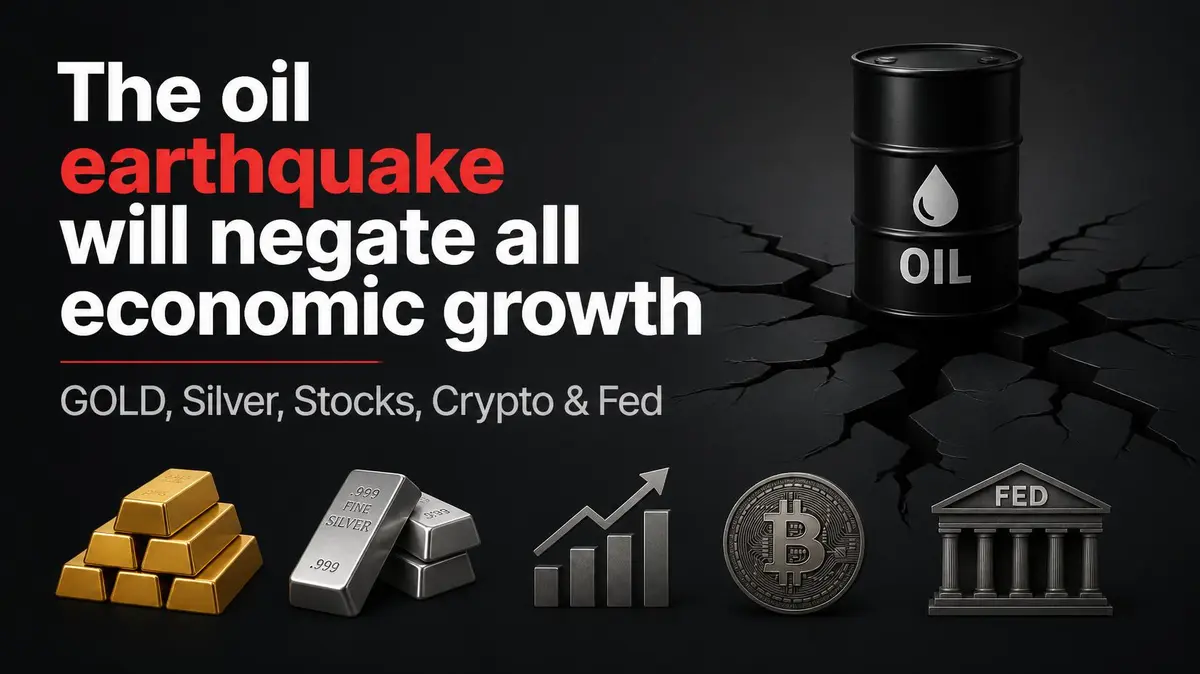
Hormuz and Bab el-Mandeb Could Reshape Inflation, Interest Rates and Global Markets

Oil has climbed roughly 30% in a single month and briefly touched $100 per barrel. Equity markets have weakened, shipping risks have risen, and investors are asking whether this is another fleeting geopolitical shock or the beginning of a deeper economic problem.

Markets first focused on the Strait of Hormuz. A second front has now opened around Bab el-Mandeb, the route long regarded as the main alternative if Hormuz became severely restricted. The real issue is not today’s oil price. It is whether the disruption lasts long enough to reintroduce inflation into the global economy and force a full reassessment of portfolio positioning.

The Analytical Framework: Follow the Question, Not the Headlines

Sound market analysis does not chase isolated headlines. It centers on one decisive question that determines how capital should be allocated.

Two months ago, when oil surged toward $140, the question was whether energy inflation would spread through the broader economy or remain largely confined to petrol and diesel. The transmission was tracked through shipping, manufacturing, storage, and consumer prices—described as “the snake inside the pipe.”

Oil then fell from around 140 to 72, forcing a new question: would inflation leave the system as quickly as it entered, or had it become embedded? The June inflation report showed monthly core inflation near zero, suggesting pressure was beginning to exit. A 70% probability was assigned that inflation risk was receding and markets would improve.

Oil has now risen again, creating a third question: will this conflict bring inflation back, or will it prove temporary? If the conflict expands and inflation returns, the Federal Reserve may raise rates, pressuring equities, crypto, and other risk assets. If the shock fades, the current decline may become a buying opportunity.

The...

Continue reading...
0
0
pixel

Week in the Trenches: July 27

Week in the Trenches: July 27

Bitcoin Holds Range as Iran's Ceasefire, Not Crypto News, Dictates the Week

The market did not move this week on crypto headlines. It moved on Iran.

Bitcoin closed the seven-day period near $65,256, up roughly 0.7 percent inside a tight $63,829–$66,803 band. Ethereum finished stronger at approximately $1,951, posting a 3.7 percent weekly gain. SOLUSD ... Solana lagged, slipping 0.8 percent to $76.29 after failing to sustain a push toward $78. The spread between majors remained visible, yet none of them broke structure. Price action stayed contained, leverage stayed measured, and the dominant catalyst came from outside the digital-asset complex.

Geopolitics Sets the Tone

Major News This Week: July 27 - July 31


US–Iran ceasefire talks proved the week’s clearest driver. Mid-week escalation briefly pushed risk assets lower and triggered visible outflows from Bitcoin ETFs. When the ceasefire held, oil prices dropped approximately 5 percent and crypto recovered most of the lost ground. The rebound was orderly rather than euphoric. Sentiment, however, had already shifted before the weekend close. Traders who had been leaning into the prior calm were forced to reassess how quickly external headlines can override on-chain developments.

ETF Flows Rotate, Not Disappear

Spot Bitcoin ETFs entered Thursday with a seven-session inflow streak totaling roughly $1 billion. That streak ended on July 24 with $225 million in net outflows—$202.5 million of it concentrated in BlackRock’s IBIT alone. Iran-related risk-off flows were widely cited as the trigger.

Ethereum ETFs moved in the opposite direction. They extended a five-day inflow streak with an additional $26.3 million on the same day. Demand did not vanish; it simply rotated. The divergence underscores a subtle shift in relative preference rather than a broad retreat from the sector.

Macro Backdrop Remains Tight but Stable

US 10-year yields hovered near 4.69 percent throughout the week. The...

Continue reading...
0
0
pixel

What’s next for Oil 2.0

What’s next for Oil 2.0

The optimists ordered a taco: flows normalize, draws stop, the worst is behind us. Two months and a second chokepoint later, the kitchen sent out nachos. Messier, and nobody ordered them.

The follow-up to "What's Next for Oil" July 25, 2026

Everyone wants the taco. A clean ceasefire, ships streaming through Hormuz, oil back under $70, and the whole crisis filed away as a scare. Instead, the world got served nachos, a messy pile that keeps getting messier. We now have more hands in the dish every week and no clean way to pick it up. That's where we are.

The first piece argued the market had pre-committed to optimism and an inventory clock that doesn't care how anyone feels. It laid out three scenarios and said mid-July was the test. Mid-July came. Here's where we actually landed, and it isn't Scenario A.

Let me walk you through why the market is still priced for a taco and why I think it's dead wrong.

I. The optimists got exactly one thing right

Give them their due: over the last month, the escaping ships did their job. Barrels crept back out of the strait, the export pull on American crude eased just enough, and U.S. commercial inventory managed a small build. That build is real. It's also the entire basis of the oil bear-case victory lap, and it's being badly misread.

Commercial crude sits at 411.7 million barrels; this is down just 1.7% year-over-year. The optimists wave that number around as proof the crisis was overblown. Look how flat inventories are. But let's be fair: there's currently no shortage in crude in the US and anyone claiming there is a current shortage is selling clicks, not reality.

Fig. 1: EIA Table 1, U.S. Petroleum Balance Sheet (week ending 7/17/2026). Commercial...

Continue reading...
0
0
pixel

The AI Trade Splits Three Ways as Money Rotates Out of Tech Into a 4.7% Ten-Year

The AI Trade Splits Three Ways as Money Rotates Out of Tech Into a 4.7% Ten-Year

Today's tape doesn't say "AI top"—it says the AI bull case is fragmenting. Demand is demonstrably real, but the value is migrating from the frontier labs toward infrastructure, memory, and data owners, and that migration is unfolding just as the 10-year spikes to 4.71% and capital rotates out of QQQ into energy, health, and financials. This is single-name rotation, not macro risk-off — for now.

The AI argument has stopped being one debate and become three

The old fight was demand: real or a bubble? On that, the bulls landed the day's cleanest punch. Wayne Liang points to the

$500B+

NVDA ... – SK Group infrastructure partnership—factory buildout plus next-gen memory co-development — and dares the bears to explain half a trillion in committed capital chasing 'demand that supposedly isn't real.' The tape backs the price side of his case: NVDA closed at $206.84, above its 20-day, with a fresh MACD buy signal (histogram +0.76) and still green MTD/YTD despite the selling. Fundstrat frames hyperscaler capex as rational return-on-capital allocation and expects the broad market to make new July highs; the All-In panel calls Google's spend a buy signal, citing a 32% historical ROIC and naming Alphabet the best public AI stock to own. Luke Gromen is the loudest voice on the other side, and his objection is structural, not directional: this buildout leans on ~$1T of repayable debt rather than the self-funding FCF of the dot-com era; tech is ~90% of GDP growth; and the US is running a 6% deficit 'in the midst of a bubble' — so a shock now hits a far more levered, concentrated system than in 2000. Wayne Liang explicitly rejects the Burry 2008 subprime analogy; Gromen's point is subtler and harder to wave away. But the genuinely new thread is neither demand nor leverage—it's...

Continue reading...
0
0

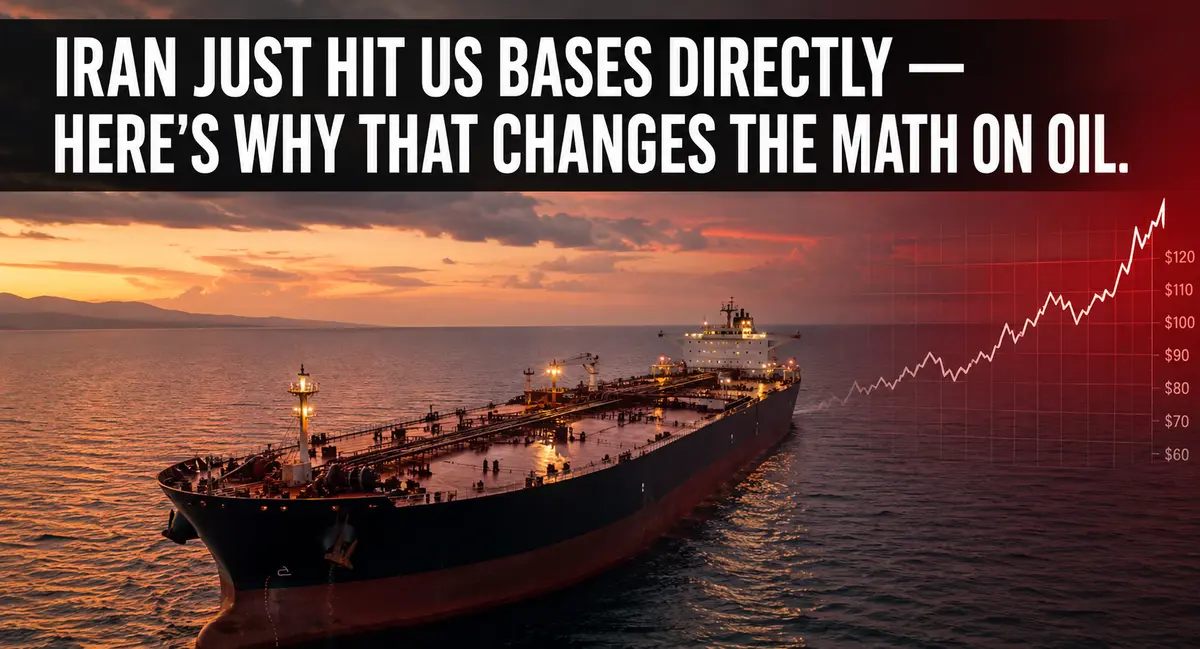
Iran Just Hit US Bases Directly; Here’s Why That Changes the Math on Oil

Iran Just Hit US Bases Directly; Here’s Why That Changes the Math on Oil

Iran's military says it launched drone strikes this week on two US-linked facilities: Al-Azraq Air Base in Jordan, and Sheikh Isa Air Base in Bahrain, a key hub for the US Navy's Fifth Fleet. Housing, equipment depots, and aircraft maintenance hangars were reportedly hit at both sites.

I want to be careful about how I frame this, because this is a real war with real casualties, not a trading abstraction. But from a markets lens, this specific escalation matters in a way that's genuinely different from the disruptions we've seen so far this month, and I think oil is still underpricing it.

A Different Kind of Target

Tanker attacks and pipeline sabotage disrupt supply. They're serious, and they've already moved prices hard this month. But striking bases that house US military personnel directly is a different category of action. 

It's not an attack on the machinery of oil transport. It's an attack on the United States itself, and historically, that kind of strike raises the odds of a proportional or escalatory US response in a way that tanker attacks alone don't.

This Didn't Happen in Isolation

A Ceasefire That Hasn't Held

Back in June, the US and Iran signed a Pakistan-brokered memorandum intended to end a war that began in February. Strikes have continued on both sides regardless. This week's attacks aren't a rupture of some quiet peace, they're the continuation of a conflict that never actually paused, dressed up periodically in diplomatic language that hasn't matched what's happening on the ground.

Three Fronts, Not One

Here's what actually worries me about the current picture: this isn't one flashpoint, it's several opening at once. Direct strikes on US bases in Jordan and Bahrain. A newly opened Red Sea front, with Houthi forces striking Saudi oil tankers and declaring a blockade...

Continue reading...
0
0
BCR

Daily Analysis 24 July 2026 | Oil Above $90 as Supply Risks Intensify

Daily Analysis 24 July 2026 | Oil Above $90 as Supply Risks Intensify

Currency & Commodity Analysis:


US Dollar Index:


The US dollar index rose to 101.55 on Thursday, its highest level in nearly three weeks, driven by soaring oil prices and escalating geopolitical tensions, pushing market expectations that the Federal Reserve will need to raise interest rates. The market currently expects a greater than 33% probability of a rate hike next week, while the probability of a rate hike in September has risen to 78%, up from 61% the previous day. The escalating hostilities in the Middle East show no signs of resolution in the near term. Consequently, oil prices have surged nearly 31% from pre-conflict levels earlier this month. While inflationary pressures have remained relatively moderate so far, the latest energy price spike has reignited concerns that higher oil prices could drive broader inflation, prompting the Federal Reserve to maintain a tighter monetary policy stance. The dollar rose against the euro after the European Central Bank kept interest rates unchanged as expected, and also strengthened against the yen and pound.


Currently, the dollar is not experiencing a typical one-sided safe-haven rally because several macroeconomic factors are offsetting each other. Escalating conflict typically creates liquidity demand, boosting the dollar's short-term safe-haven appeal; however, if oil prices continue to rise, US import costs and inflation expectations will also increase simultaneously, pushing up long-term interest rates and fiscal financing pressures. In this scenario, the dollar may initially be supported by yields, but subsequently constrained by real growth expectations and asset valuation adjustments. The dollar index is currently trading slightly below 101, indicating that the market is temporarily viewing geopolitical risks as a manageable disturbance rather than a global liquidity crisis. The 101.55 level represents this week's rebound high, while 101.80 corresponds to a stronger resistance zone around the June 24th high....

Continue reading...
0
0

The Tariff Cut Everyone’s Talking About Isn’t the One That Matters This Week

The Tariff Cut Everyone’s Talking About Isn’t the One That Matters This Week

A tweet went around this week: China and the US are working on a tariff cut plan agreed during their summit. Technically true. Also, in my view, badly timed to be read at face value.

Here's what's actually happening in the background while that headline circulates: the 10% global tariff the US has been applying under Section 122 expires tomorrow, July 24. It's expected to be replaced by an entirely different tariff mechanism, Section 301, hitting 60 countries including China. That's not part of the "cut" conversation anywhere. Nobody's tweeting about it. And I think it matters more than the headline that is getting tweeted about.

A Friendly Headline, Badly Timed

Trade headlines involving China have a way of landing exactly when traders are least equipped to evaluate them properly. This one dropped in the middle of a legal transition most people aren't tracking. If you only read the tweet, you'd walk away thinking US-China trade friction is broadly de-escalating. That's not wrong, exactly. It's just incomplete in a way that matters if you're pricing risk this week specifically.

What the "Cut" Actually Covers

The May Summit Framework

Back in May, Trump and Xi sat down in Beijing, Trump's first trip to the Chinese capital since 2017, and floated a "Board of Trade" concept: each side identifying roughly $30 billion worth of non-sensitive goods to cut tariffs on. 

That framework got a follow-up in early July, when both governments agreed in principle to fold agricultural products into it too.

Why This Is Narrower Than It Sounds

Here's my issue with how this gets reported: "tariff cut plan" makes it sound like a broad rollback. It isn't. It's a defined, negotiated list of specific goods, soybeans, certain agricultural categories, a bucket of "non-sensitive" industrial products. It's real, and it's good news...

Continue reading...
0
0
Navigation menu
instaforex banner