Bar Pipa
We pay for a post of 10$

Trading Robots

NorthRay

I Wanted a Robot to Trade for Me. I Almost Bought the “Magic Button.” Good Thing I Stopped in Time.

I Wanted a Robot to Trade for Me. I Almost Bought the “Magic Button.” Good Thing I Stopped in Time.

Hi, this is NorthRay.💪

Do you know what I was looking for in my first days of trading?

Not a strategy. Not knowledge. Not discipline.

I was looking for a magic button.

A button that would open trades for me. One that never sleeps, never gets scared, and never makes stupid mistakes. One that makes money while I drink coffee or sleep.

And I found one. Or rather, someone offered it to me.

“Trading robot with a 95% win rate.”

“Copy trading — copy professional traders and earn money.”

“Passive income of 30% per month.”

I almost fell for it because it sounded perfect.

But then I asked myself one question:

“If it’s really that simple and profitable, why isn’t every trader already a millionaire?”

So I started digging. And here’s what I learned.

What Are Trading Robots (Expert Advisors)?

A trading robot (or Expert Advisor) is a program that automatically opens and closes trades according to a predefined algorithm.

You install it in MetaTrader 4, turn it on, and the robot analyzes the chart, presses Buy and Sell, and sets stop-losses by itself.

No involvement from you. 24/5. No emotions. No fear. No greed.

Sounds like a beginner’s dream, right?

I downloaded a free robot, installed it on a demo account, and turned it on.

It opened a trade. Then another. Then another.

An hour later, I checked the results: three losing trades and one winning trade. Overall result: negative.

I thought:

“Maybe I downloaded a bad robot. Maybe I should buy a paid one?”

That’s when I started doing real research.

How I Almost Bought a Robot (And Why I’m Glad I Didn’t)

I visited a website selling a “super robot with 90% accuracy.”

Beautiful website. Equity growth charts. Reviews (probably fake). A 70% discount “today only.”

Price:...

Continue reading...
0
0
Anton Algo

Momentum Hunting: How Trading Bots Exploit the European Morning Breakout

Momentum Hunting: How Trading Bots Exploit the European Morning Breakout

The Forex market operates 24 hours a day, but its activity is distributed highly unevenly. The most powerful, directional, and profitable movements (momentum) occur when the trading hours of the world's largest financial hubs overlap. Traditionally, the opening of the European session—when exchanges in London, Frankfurt, and Paris come into play—is considered the main daily trigger.

For a retail trader, the morning chaos of Europe’s first hours is a high-risk zone. For trading bots, however, it is the perfect time for "momentum hunting." The Opening Range Breakout (ORB) strategy has existed for decades, but automation has transformed it from an exhausting routine into a highly efficient algorithmic business.

Strategy Philosophy: Why Does It Work?

The logic behind the morning breakout is rooted in how market phases transition. The Asian session (Tokyo, Sydney, Singapore) winds down just before Europe opens. For most currency pairs (excluding the JPY and AUD), Asian trading is characterized by low volume and narrow price amplitude. The price is essentially compressed like a spring, forming a consolidation or a flat market.

When European exchanges open, institutional liquidity floods the market in an avalanche: large banks, funds, and market makers begin placing their orders. The energy accumulated during the Asian flat is released. The price sharply breaks through the boundaries of the overnight range, triggering a powerful directional movement—momentum.

The robot's task is to mathematically pin down the boundaries of the overnight channel, wait for its breakout, and instantly enter a trade in the direction of the emerging trend, capturing the bulk of the morning move.

How the Algorithm Works: Step-by-Step Bot Logic

t is difficult for a human to objectively assess flat boundaries, especially in the rush of the morning open. A robot, however, operates on a rigid mathematical algorithm that can be divided into four key...

Continue reading...
0
0
Anton Algo

Mean Reversion in the Forex Market

Mean Reversion in the Forex Market
Trading Bollinger Bands and Overbought/Oversold Zones

The mean reversion strategy exploits a statistical regularity: after a strong deviation, the price tends to revert to its mean value. In the forex market, this idea appeals to traders due to its apparent simplicity—buy "cheap," sell "expensive." However, behind this apparent ease lie strict mathematical conditions, the violation of which turns a profitable system into a loss generator. Let’s examine which pairs are truly prone to reversion, how to confirm it statistically, and why the absence of a stop-loss is deadly dangerous.

Which Pairs Are Prone to Mean Reversion

orex instruments are heterogeneous in nature. Majors such as EURUSD, USDJPY, and GBPUSD exhibit pronounced trending movements, especially during periods of monetary policy divergence. Mean reversion works on them only fragmentarily—mainly during the Asian session or in periods of low volatility when the market is consolidating. Non-dollar cross rates (EURGBP, EURCHF, AUDNZD) have historically shown a stronger tendency toward stationarity, as their dynamics are driven by the difference between two non-dollar economies, not subject to global capital flows with the same intensity. Pairs involving the Swiss franc, particularly EURCHF, deserve special attention: the Swiss National Bank long maintained a currency ceiling, and even after its removal, the pair still exhibits periods of sustained reversal. Exotic pairs like USDSGD or USDHKD often have managed exchange rates, making them attractive for mean-reversion systems, but low liquidity and wide spreads eat away potential profits.

Instrument selection is a critical step. Do not apply reversal logic to a pair in a long-term fundamental trend. For example, USDTRY has shown a sustained upward trend in recent years due to the Turkish central bank’s inflationary policies, and any attempt to catch reversals is doomed.

Statistical Tests for Stationarity: ADF and the Dickey-Fuller Test

Stationarity is a property of a time...

Continue reading...
0
0
Anton Algo

Automated trading systems are rapidly displacing humans from financial markets

Automated trading systems are rapidly displacing humans from financial markets

Behind this process lies not a mere trend, but the objective technological superiority of algorithms over human traders. Let us examine the key advantages of trading robots that make them a more effective profit-generating tool.

Emotional Sterility

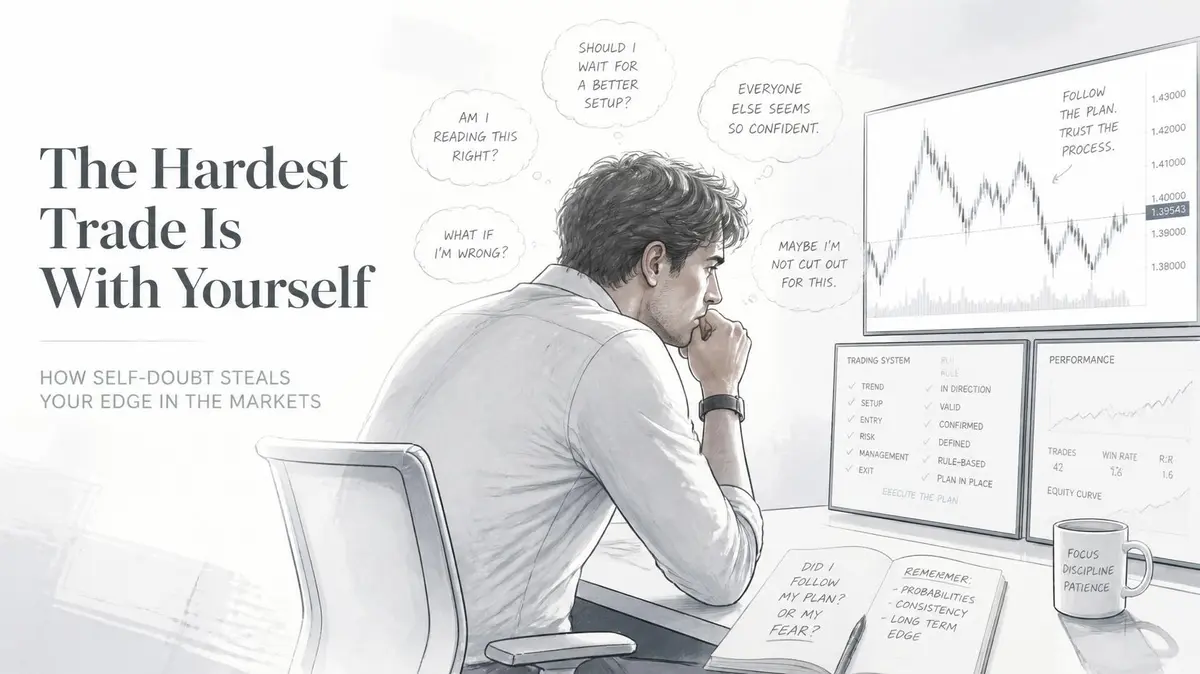
A trader's worst enemy is not volatility, but their own emotions. Fear of missing out (FOMO) pushes them into overheated assets; greed prevents timely profit-taking; hope keeps them in a clearly losing position until their account is wiped out. Humans are biologically incapable of fully suppressing their emotional background when making decisions, as the same brain regions govern both financial risk and physical threats.
A trading robot has no hormonal system. It knows nothing of panic during a sharp price drop, euphoria from a string of winning trades, or frustration after a stop-loss. The algorithm operates strictly according to its embedded mathematical model, evaluating only numerical market parameters. Concepts like "annoying" or "lucky" do not exist for it. This sterility eliminates affective errors, which account for up to eighty percent of retail traders' losses.

Impeccable Discipline

Developing a profitable strategy is not enough. The main challenge is adhering to its rules for months on end, despite a series of temporary setbacks. Humans tend to subjectively overestimate market situations: after three losing trades in a row, they either miss the fourth, objectively correct signal, or start trying to get revenge on the market by doubling their position size.
A robot never tires of routine and never loses faith in its strategy. If the system dictates opening a short position when moving averages cross, it will execute that action regardless of the prevailing news or sentiment. The algorithm will never attempt to "improve" a signal based on intuition, as it has no illusion of its own superiority over statistics. This mechanical adherence is precisely what...

Continue reading...
0
0
Anton Algo

Your 24/7 Personal Risk Manager: Why Trading Safety Starts with an Algorithm

Your 24/7 Personal Risk Manager: Why Trading Safety Starts with an Algorithm
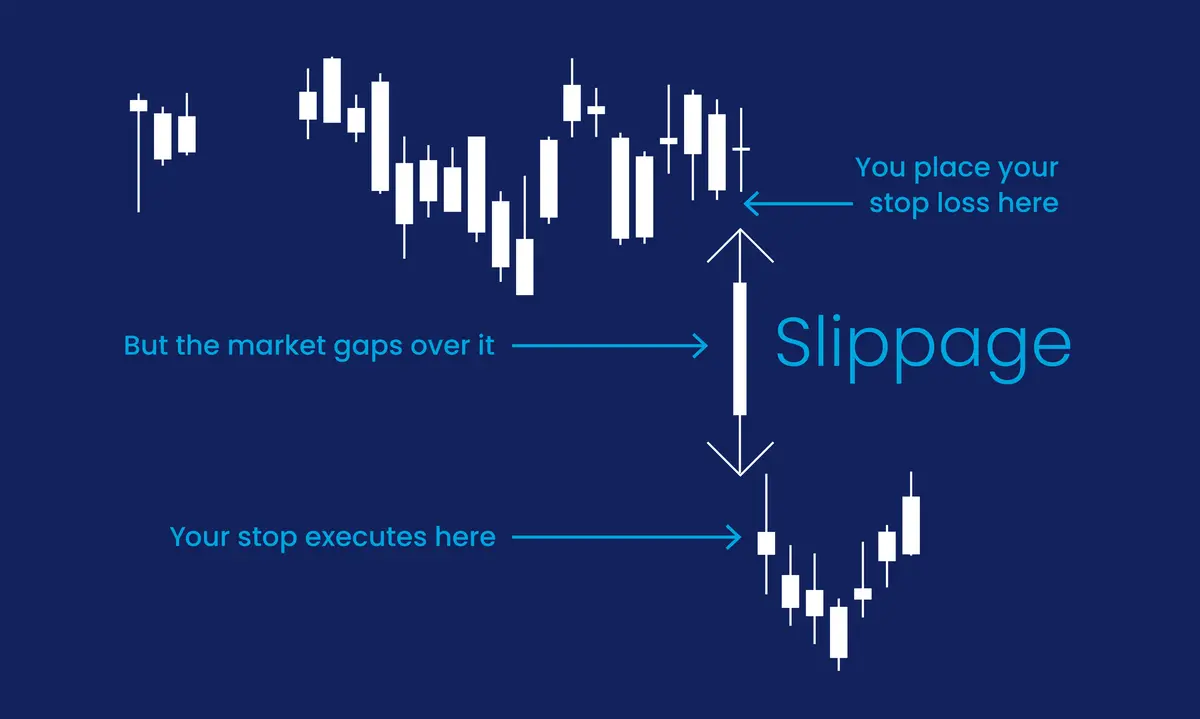
Many novice traders view a trading robot as a "profit generator" — a sort of money-printing machine designed to run non-stop. However, in today’s market conditions, the true value of automation lies elsewhere. A robot is, first and foremost, your most loyal, impartial, and vigilant risk manager, working 24 hours a day, 5 days a week. In this article, we will break down why automated systems are not a risk factor, but rather the primary tool for protecting your deposit. Emotions: The Main Enemy of Capital Statistics are relentless: more than 90% of traders lose funds not because of poor strategies, but because of an inability to follow their own rules. The human psyche is poorly adapted to the stress of financial markets. Hope: When a position goes into the red, hope kicks in: "The price is about to turn around; I just need to wait a little longer." Excitement/Greed: When the price moves against us, a gambling instinct awakes: "I'll add another position to break even faster." This is where the trading robot reveals its superpower. It has no hope, no fear, and no desire to "get revenge" on the market. It simply executes code. Built-in Protection Algorithms: The Fence You Can't Jump Over The main advantage of a high-quality trading advisor is its built-in system of checks and balances. While a trader might increase their lot size in a fit of emotion, a robot operates within strictly defined mathematical parameters. Automatic Lot Calculation: The robot calculates the volume of each trade based on the current balance. If your deposit decreases, the robot automatically reduces the risk. Humans often do the opposite, trying to "win back" losses with larger bets. Drawdown Protection: A critical drawdown level is hardcoded into the algorithm. As soon as the total loss on open...
Continue reading...
0
0
Anton Algo

Why an Advisor Saves Your Deposit When the Market Crashes: A Black Swan Analysis

Why an Advisor Saves Your Deposit When the Market Crashes: A Black Swan Analysis
The market loves to lull you to sleep. Months of steady growth, familiar patterns, analysts whispering about a "new era of stability" — and suddenly your deposit seems like an impregnable fortress. But Nassim Taleb's Black Swan theory is relentless: the very thing no one believes in sweeps everything in its path. COVID-19 in 2020, oil prices crashing into negative territory in 2021, sudden major bank defaults in 2023. In these moments, traders don't lose because they have bad strategies. They lose because they are human. And that's when the machine steps onto the stage. Impartial, fast, and governed by mathematics. In this article, we will dissect the main paradox of trading: why, during the hours of disaster, your greatest asset is a properly configured advisor — not your intuition. The Anatomy of Panic: Why Humans Lose to the Black Swan To understand the value of a robot, you must honestly acknowledge your own weaknesses. In a market crash, the human brain is, unfortunately, not your ally. Evolution gave us a "fight or flight" response but forgot to program a playbook for a market meltdown. When the chart moves two to three percent per minute, adrenaline surges through a trader's blood, followed by cortisol. Fear hormones paralyze your will. A scenario familiar to every live trader: Stop-loss postponed "for a second." You see price pierce your level. Instead of taking the loss, you tell yourself: "It'll reverse now." The market doesn't reverse. It accelerates. The Ostrich Effect. The trader closes the terminal, hoping everything will resolve by tomorrow. This is psychological defense that guarantees a blow-up. False averaging. Wanting to win back losses, the trader doubles down on a falling market, trying to "catch the bottom." There is no bottom. Only a margin call. A human in a crisis is...
Continue reading...
0
0
Anton Algo

STATISTICALLY, 8 OUT OF 10 SUCCESSFUL TRADERS ARE ROBOTS

STATISTICALLY, 8 OUT OF 10 SUCCESSFUL TRADERS ARE ROBOTS
A NUMBER THAT SHOCKS BEGINNERS

When people talk about success in financial markets, most imagine a brilliant analyst with years of experience. But reality is harsher: at the institutional level, 80% of profitable traders are algorithms. Not people. Robots.

The "8 out of 10" figure isn't pulled from thin air. It's confirmed by research from major brokers and exchange data. In FOREX and futures markets, the share of algorithmic volume reaches 70-85%. In U.S. equities — over 80%. Meanwhile, among manual traders, consistently profitable ones make up less than 10% after one year. Among algorithmic traders — over 50% with the right approach.

Why such a gap? The answer isn't in "code magic" but in the fundamental limitations of human psychology and physiology.

FIRST REASON: ABSENCE OF EMOTIONS

A human can never trade like a machine. Fear makes you close profitable trades early. Greed pushes you to increase lot size after a winning streak — a classic path to blowing your account. Hope makes you hold a losing position "until it recovers," turning a small loss into a catastrophe.

A robot doesn't know these words. For it, a trade is simply a mathematical operation. Entered on a signal. Exited on a stop or take profit. Period. No doubts, no "intuition" that actually turns out to be self-deception.

Studies show: the average manual trader makes 30-40% more errors in the second half of the day simply due to fatigue. A robot doesn't get tired. After 8 hours of trading, it's just as fresh as in the first minute.

SECOND REASON: DISCIPLINE THAT CANNOT BE BROKEN

The most common obituary of manual accounts reads: "I had a great strategy, but I didn't follow risk management."

Traders write rules on paper. Set a stop-loss at 2%. Then when the market moves against them,...

Continue reading...
0
0
Anton Algo

HOW SAFE IS IT TO USE A ROBOT IN TRADING?

HOW SAFE IS IT TO USE A ROBOT IN TRADING?
THE FEAR OF THE "BLACK BOX"

Most traders avoid algorithmic trading not out of laziness, but out of fear. They worry: "What if the robot blows the entire deposit in a minute?", "What if it gets hacked?", "What if the program freezes and opens 100 trades at once?" These concerns have merit, but they stem from a lack of understanding of how security works in modern algorithmic trading.

Let's break down point by point: which risks are real, which are overblown, and what you need to do to trade with a robot more safely than manually.

REAL RISKS (AND THEIR SOLUTIONS)TECHNICAL GLITCHES

A robot is a program. Any program can freeze, especially with a poor internet connection or on a weak computer. A power outage or Windows reboot — and the terminal closes, leaving trades unmanaged.

Solution: Use a Virtual Private Server (VPS) located near your broker's servers. A VPS runs 24/7, doesn't reboot without your command, and has a stable connection. Cost starts from $5 per month. That's cheaper than losing your deposit due to a connection break.

ERRORS IN THE ROBOT'S CODE

Unscrupulous sellers often provide robots with errors: incorrect lot calculation, ignoring the spread, crashing during volatility. This is the main cause of blowouts.

Solution: Buy or download robots only from trusted sources. Reputable developers, such as the team at https://algoforexsystem.com/, provide not only the executable file but also open source code or detailed documentation. Demand a backtest report for 5+ years and a forward test on a real demo account. Never run a robot on a real account that you haven't tested on a demo for at least a month.

HUMAN FACTOR (INCORRECT SETTINGS)

The most common money-losing scenario: a trader puts a robot on a chart but forgets to change the lot from "0.1"...

Continue reading...
0
0
Anton Algo

Algorithmic Trading: Real Advantages and Debunking the Myths About Trading Robots

Algorithmic Trading: Real Advantages and Debunking the Myths About Trading Robots
In the world of finance, numerous legends still circulate about "soulless machines" that can supposedly crash the market instantly or, conversely, make their owner a billionaire overnight. There is a grain of truth in this, but far more misconceptions. Let's break down the main myths about trading robots and see what real advantages algorithmic trading (algotrading) offers the ordinary trader. Real Advantages of Algorithmic Trading Before discussing the myths, let's honestly list what robots truly do better than humans: Emotional Neutrality — the absence of fear, greed, and hope. A robot will not hold a losing position "hoping for a rebound" and will not take profit too early out of anxiety. Reaction Speed — an algorithm reacts to a price change in milliseconds. A human is physically incapable of manually placing an order that fast. 24/5 Operation (and 24/7 on the crypto market) — a robot does not sleep, eat, or get distracted. It will not miss a trade even at 3 o'clock in the morning. Backtesting — the ability to test a strategy on several years of historical data in a couple of minutes. A human cannot manually verify thousands of trades. Strict Adherence to Risk Management — a robot will never violate its own rules: it won't open an extra lot or move a stop-loss into the "comfort zone." Now let's move on to what prevents many traders from starting to use automation — the myths. Myth #1: "A trading robot guarantees 100% profit" This is the most dangerous and widespread myth. No algorithm provides a one hundred percent guarantee because the market is a complex probabilistic system. Even the most sophisticated robot has drawdowns, unprofitable months, and periods when its strategy stops working (for example, during a change in market regime). Reality: A good robot is a...
Continue reading...
0
0
Anton Algo

Algorithmic Trading

7 Undeniable Advantages of Automation Financial markets never sleep. Currencies, stocks, and cryptocurrencies trade around the clock, with thousands of changes happening every second. Keeping up with them, staying calm, and strictly following a strategy is a task beyond human capability. The solution is algorithmic trading — an approach where computer programs execute trades based on predefined mathematical rules without trader intervention. Let’s explore the key advantages that make algo-trading the standard of modern investing. 1. Complete absence of emotions The main weakness of a human trader is psychology. Fear makes them close profitable trades early, greed makes them hold onto losing ones, and hope leads them to average down losing positions. An algorithm is free from these feelings. It strictly follows the rules: if price reaches a level — entry; if a stop-loss is triggered — exit. Such discipline preserves capital and turns trading into an engineering process. 2. Instant reaction to market changes The market moves in milliseconds. A human, even a very experienced one, spends several seconds on analysis and clicking a button. During that time, the price can move several pips against them. A robot reacts almost instantly — it catches micro-movements that often determine the outcome of scalping and intraday strategies. Execution speed is one of the main competitive advantages of machines. 3. 24/7 operation without days off Forex operates from the opening of the Wellington session to the close in New York (5 days a week), while the crypto market runs all 7 days and 24 hours. You cannot sit in front of a screen at night or during vacation. An algorithm can. It will monitor charts, place orders, move stop-losses, and lock in profits while you sleep or attend to other matters. You won’t miss a strong move simply because you were physically...
Continue reading...
0
0
Navigation menu
instaforex banner