

Dollar Under Pressure: Inflation Data Rewrites the Fed’s Policy Outlook
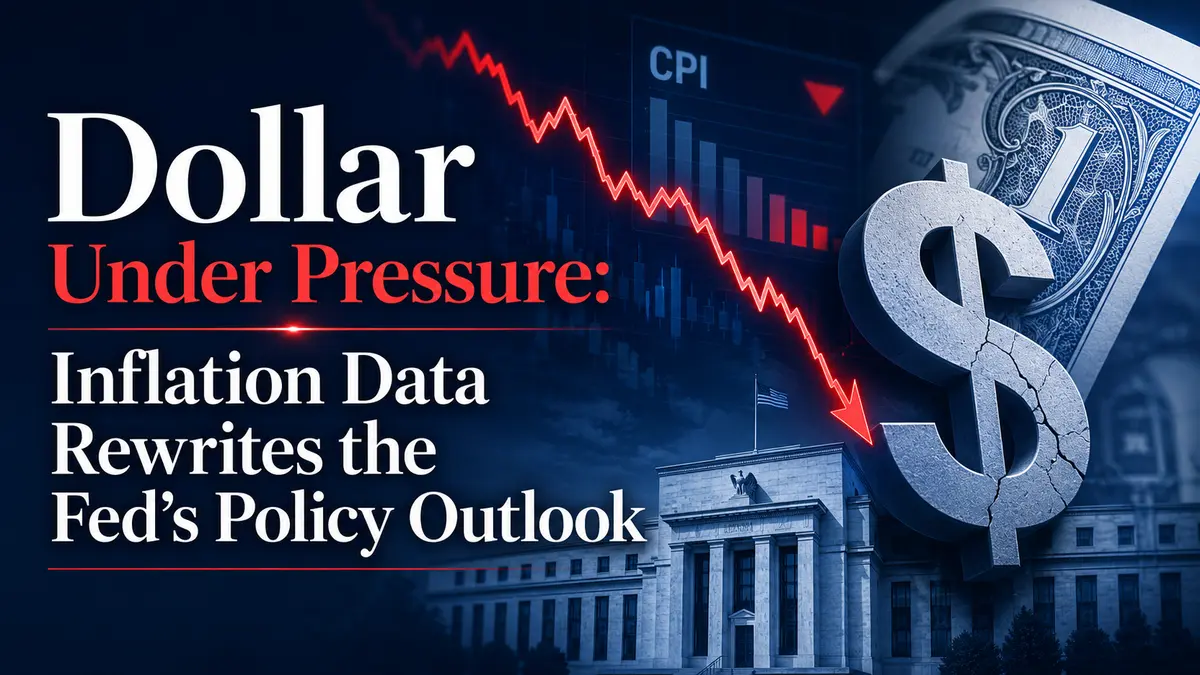
Introduction: The First Decline in Prices in Six Years
Tuesday became a day that could go down in the history of the US economy. Consumer prices in the United States declined in June for the first time in six years. The core inflation measure remained almost unchanged, easing pressure on the Federal Reserve to raise interest rates. The Consumer Price Index fell by 0.4% month over month, while analysts had expected a decline of only 0.1%. Annual inflation stood at 3.5%, compared with the forecast of 3.8%.
The dollar reacted immediately. The US Dollar Index ( USD ... ) fell by 0.52% to 100.76, reaching an intraday low of 100.60. Markets began revising their interest-rate expectations and pricing in a more accommodative Federal Reserve policy.
Against this backdrop, however, Federal Reserve Chair Kevin Warsh delivered a hawkish statement, saying that the central bank’s committee was “intolerant” of persistently high inflation and remained determined to curb price growth, which had been elevated for five years.
This contradiction between the economic data and the Fed’s rhetoric creates considerable uncertainty. In this article, we will examine every aspect of the inflation report, its impact on the dollar, and the outlook for monetary policy.
Inflation Data: Figures That Surprised the Market
CPI Declines by 0.4%
The Consumer Price Index declined by 0.4% month over month in June, while analysts had expected a fall of only 0.1%. This was the first decrease in six years, making the report a historic event.
The decline in prices was driven by several factors, including lower energy prices, reduced transportation service costs, and a degree of easing in price pressures across other categories.
Annual Inflation Falls Below Forecasts
On an annual basis, inflation stood at 3.5%, compared with the forecast of 3.8% and the previous reading of 4.2%. This represents a significant slowdown and suggests that the Fed’s efforts to combat inflation are beginning to produce results.
A decline in annual inflation below 4% is an important psychological threshold. Markets interpreted it as a sign that inflation may have already peaked.
Core CPI: Minimal Growth
The core Consumer Price Index, which excludes food and energy prices, increased by 2.6% year over year. This was below the expected 2.8% and May’s reading of 2.9%, representing the smallest increase in recent years.
Core CPI is a key indicator for the Federal Reserve because it excludes volatile components. Its growth of 2.6% brings it closer to the central bank’s 2% inflation target.
Dollar Reaction: A Decline of 0.5%
US Dollar Index Falls to 100.76
The dollar declined following the release of the inflation data. The US Dollar Index fell by 0.52% to 100.76, reaching an intraday low of 100.60. The weakening of the dollar reflects a reassessment of interest-rate expectations.
Markets are now pricing in a more accommodative Federal Reserve policy, making the dollar less attractive to investors seeking higher returns.
Reasons Behind the Decline
The fall in the dollar was driven by a lower probability of further Federal Reserve interest-rate increases. Investors interpreted the inflation data as a sign that the regulator could adopt a more accommodative policy stance.
In addition, a weaker dollar makes emerging-market currencies more attractive, creating further downward pressure on the US currency.
Impact on Global Markets
A weaker dollar supports emerging-market currencies as well as commodities priced in US dollars. This creates a positive environment for global financial markets.
However, domestic problems in individual countries could limit the positive effect.
Warsh’s Statement: Intolerance Toward Inflation
Hawkish Rhetoric
Federal Reserve Chair Kevin Warsh stated that members of the central bank’s committee were “intolerant” of persistently high inflation. He once again pledged to curb price growth, which had remained elevated for five years.
The statement came despite data showing that inflation was slowing. Warsh emphasized that fighting inflation remained the Federal Reserve’s priority.
Text of the Speech
In the prepared text of his testimony before lawmakers, Warsh stated:
“Members of our committee are intolerant of persistently high inflation. And we share a firm commitment to restoring price stability.”
This hawkish statement demonstrates that the Federal Reserve does not intend to soften its rhetoric despite the improvement in inflation data.
Warsh’s Strategy
Since taking office in May, the new Federal Reserve chair has consistently emphasized his determination to fight inflation. He has described the correct calibration of monetary policy as the central bank’s primary task.
“If we get policy right — and we will — the inflation surge of the past five years will be left behind,” Warsh said in his testimony before the House Financial Services Committee.
The Contradiction Between the Data and the Rhetoric
Why Warsh Remains Hawkish
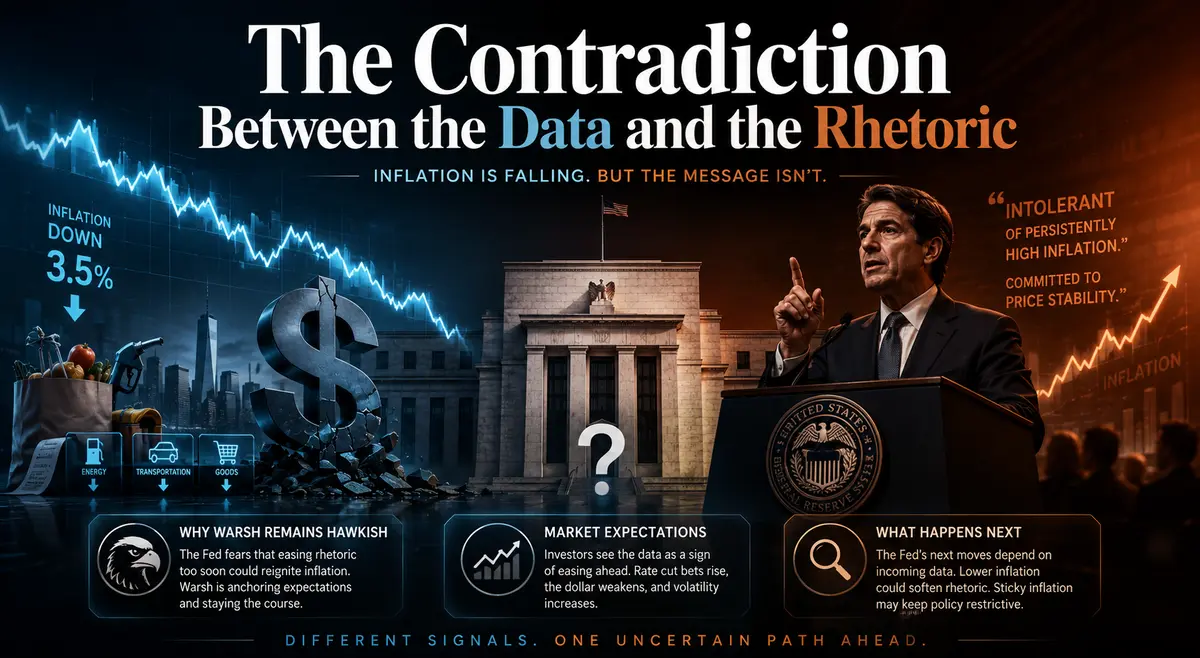
Despite the decline in inflation, Warsh continues to use hawkish rhetoric. This may reflect a desire to anchor market expectations and prevent financial conditions from easing too quickly.
The Federal Reserve is concerned that prematurely softening its rhetoric could trigger another wave of inflation. Warsh therefore continues to emphasize the central bank’s commitment to fighting inflation, even though the data indicate improvement.
Market Expectations
Markets, however, interpret the inflation data as a signal that monetary policy could become more accommodative. Investors are pricing in a softer interest-rate trajectory, weakening the dollar.
This contradiction between the Federal Reserve’s rhetoric and market expectations creates uncertainty and increases market volatility.
What Happens Next
The future direction of Federal Reserve policy will depend on new data on inflation and economic growth. If inflation continues to decline, the Fed could soften its rhetoric. If inflation remains elevated, the regulator may be forced to maintain a restrictive policy.
Investors should closely monitor statements from Warsh and other Federal Reserve officials.
Impact on Global Markets
A Weaker Dollar Supports Emerging-Market Currencies
The weakening of the dollar creates favorable conditions for emerging-market currencies. Investors begin shifting toward riskier assets in search of higher returns.
For countries with large amounts of dollar-denominated external debt, a weaker dollar also reduces the debt burden.
Rising Commodity Prices
A weaker dollar supports the prices of commodities traded in US dollars. This is positive for commodity-exporting countries, including South Africa, Australia, and Brazil.
However, domestic challenges in these countries may limit the positive effect.
Market Volatility
The contradiction between inflation data and Federal Reserve rhetoric is creating volatility in financial markets. Investors are attempting to anticipate the regulator’s next steps and adjusting their positions accordingly.
This creates both opportunities and risks for market participants.
Outlook for the Dollar
Short-Term Outlook
In the short term, the dollar may continue to weaken as the probability of further Federal Reserve interest-rate increases declines. The inflation data indicate easing price pressures, reducing the need for tighter monetary policy.
However, Warsh’s hawkish rhetoric could limit the dollar’s decline.
Long-Term Risks
Over the longer term, the dollar faces several risks, including rising government debt, political uncertainty, and increasing competition from other currencies.
Investors will closely monitor how the Federal Reserve balances the fight against inflation with the need to support economic growth.
What This Means for Investors
Opportunities in Emerging-Market Currencies
A weaker dollar creates investment opportunities in emerging-market currencies. Investors may consider them as a way to diversify their portfolios and potentially generate higher returns.
However, it is important to consider each country’s domestic risks, including political uncertainty and structural economic problems.
Volatility Risks
The contradiction between inflation data and Federal Reserve rhetoric creates the risk of increased financial-market volatility. Investors should remain cautious and avoid excessive risk-taking.
Diversification and careful analysis remain essential principles.
Conclusion: Inflation Is Falling, but the Fight Continues
The June US inflation data marked a historic event: consumer prices declined for the first time in six years. The core inflation measure remained almost unchanged, easing pressure on the Federal Reserve to raise interest rates.
The dollar fell by approximately 0.5%, reflecting revised interest-rate expectations. However, Federal Reserve Chair Kevin Warsh maintained a hawkish tone, emphasizing the central bank’s determination to combat inflation.
This contradiction between economic data and Federal Reserve rhetoric is creating uncertainty in financial markets. Investors are attempting to predict the Fed’s next steps and adjusting their strategies accordingly.
In the short term, the dollar may continue to weaken, supporting emerging-market currencies and commodity prices. However, volatility risks remain elevated.
Investors should remain cautious and maintain diversified portfolios. The current environment creates both opportunities and risks, making the correct assessment of these factors a critical task.


Comments
No comments yet. Be the first to share your thoughts!
Authentication Required
You must be logged in to post a comment.