Bar Pipa
We pay for a post of 10$

Morgan Stanley

Tom Maffin

European Defense Stocks Await Bullish Signal From NATO Summit
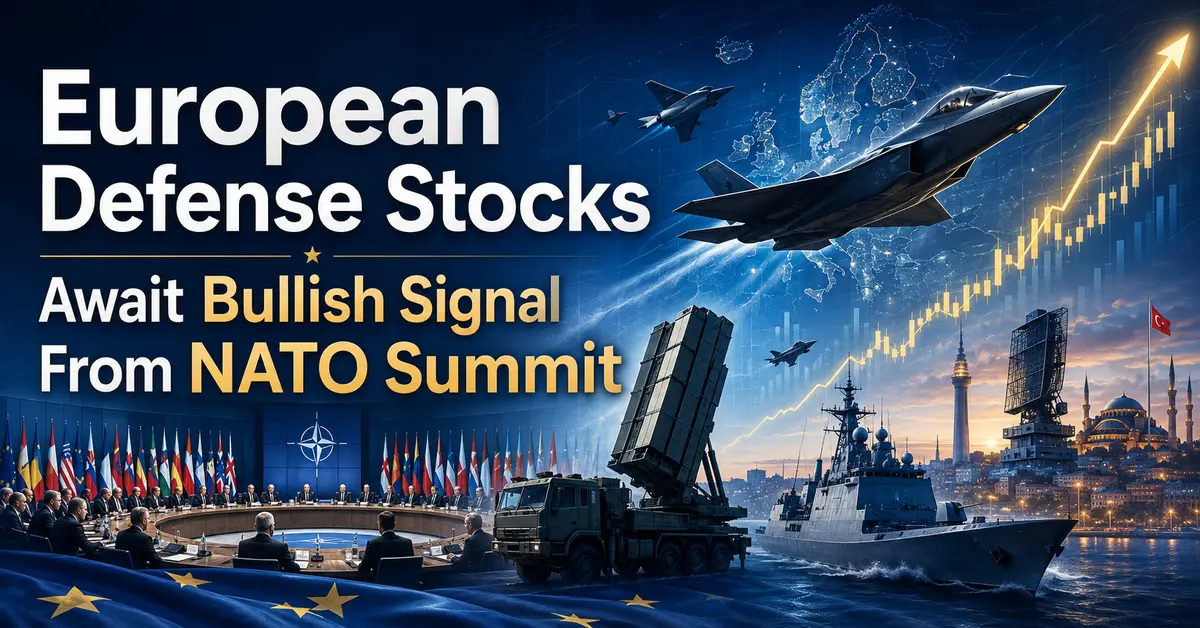
European Defense Stocks Await Bullish Signal From NATO Summit

Introduction: Ankara Could Change Everything

Tuesday. European defense stocks are frozen in anticipation. Investors are looking at the map and focusing on Ankara — the Turkish capital, where this week’s NATO summit will take place. The two-day event could become the very catalyst Europe’s defense sector has been waiting for.

Goldman Sachs’ basket of European defense stocks has already recovered 17% from its June low, reaching its highest level in more than a month. But this may only be the beginning. If the summit meets expectations, we could see a real rally. If not, the rebound may prove temporary.

What are investors expecting? First of all, clear signals about the future funding of national armies. Donald Trump, who will attend the summit, is likely to increase pressure on European allies, demanding that they raise defense spending to 5% of GDP. This demand, which once seemed unrealistic, may now become reality.

The escalation of the conflict between Russia and Ukraine adds urgency to the issue. The shortage of air defense systems in Kyiv’s arsenal is becoming increasingly obvious, and Ukrainian leader Volodymyr Zelensky is likely to use the summit to call on Western allies for additional weapons supplies.

Morgan Stanley analysts have already called the summit a “key catalyst for European defense.” They expect stronger EU commitments and a repeat of U.S. calls, which would strengthen market confidence in a multi-year cycle and provide an attractive entry point.

Defense stocks have lagged the market this year, gaining only 3.4% amid doubts over how much of the promised spending will actually materialize. The Stoxx 600 index, meanwhile, has risen nearly 10%. But after the summit, the situation could change.

Let’s take a closer look at what is really happening in Europe’s defense sector, what to expect from the NATO summit, and which...

Continue reading...
0
0

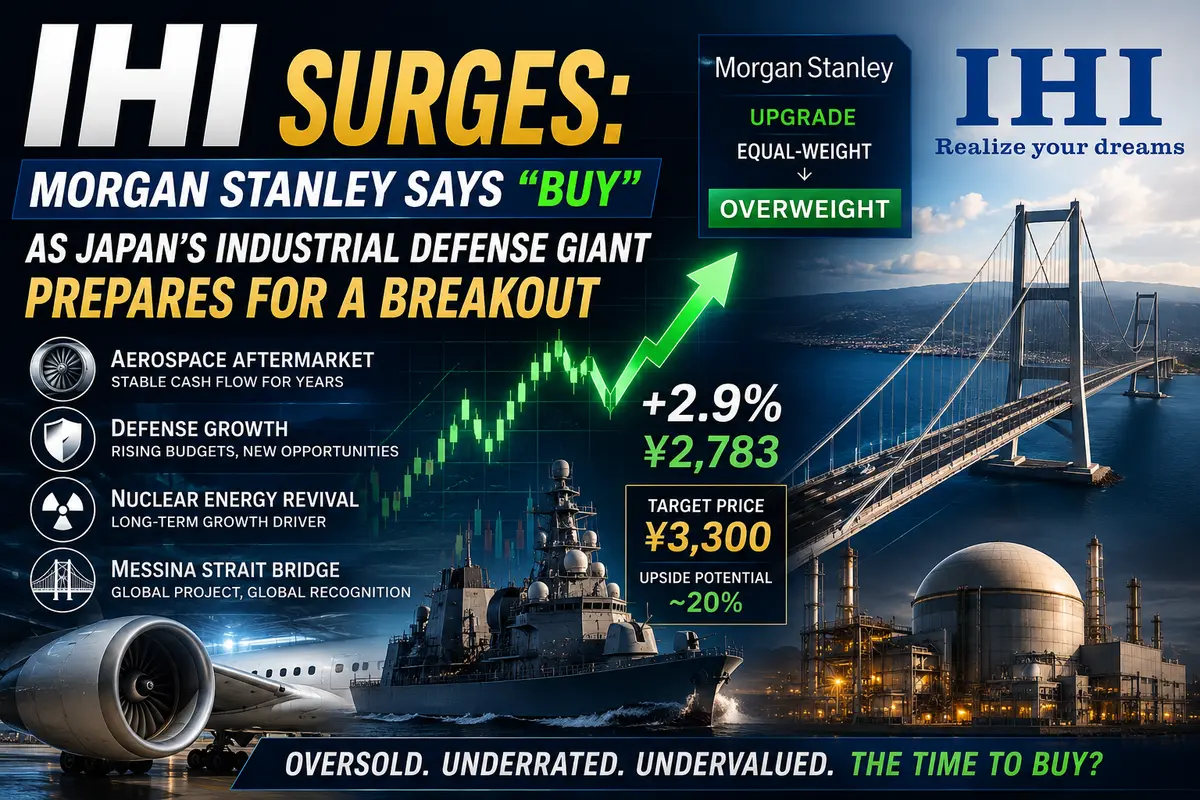
IHI Surges: Morgan Stanley Says “Buy” as Japan’s Industrial Defense Giant Prepares for a Breakout

IHI Surges: Morgan Stanley Says “Buy” as Japan’s Industrial Defense Giant Prepares for a Breakout

Tuesday: The Day an Old Industrial Conglomerate Suddenly Became Interesting

On Tuesday morning, while the Japanese market was digesting the Bank of Japan’s rate decision and preparing for the upcoming Federal Reserve meeting, one stock stood out from the crowd. Shares of IHI Corporation jumped 2.9% to ¥2,783.

Does that sound modest? Perhaps. But for a company that has lost more than 40% of its value over the past 52 weeks—from a high of ¥4,698 to a low of ¥2,069—even a 2.9% gain is noteworthy.

What happened?

Morgan Stanley, one of the world’s most influential investment banks, upgraded IHI from “Equal-weight” to “Overweight” and raised its price target to ¥3,300 from ¥3,150.

In simple terms, Morgan Stanley believes IHI shares have been heavily oversold, that the recent decline was driven by external factors—particularly tensions in the Middle East—rather than company-specific problems, and that now presents an attractive buying opportunity.

The bank described its investment thesis as “growth at a discount.” In other words, IHI offers solid growth prospects, but its shares are trading at depressed valuations due to temporary concerns.

What are those growth prospects? Three major themes:

  • Civil aerospace aftermarket services

  • Defense

  • Nuclear energy

The civil aerospace aftermarket business provides recurring revenue for years as aircraft engines require ongoing maintenance, repairs, and replacement parts. Defense spending is rising in Japan and globally. Nuclear energy is experiencing a resurgence as countries seek reliable, low-carbon power sources.

There is also a political catalyst.

Japanese Prime Minister Sanae Takaichi has publicly supported the Strait of Messina Bridge project. IHI is involved in the consortium alongside Italy’s Webuild and Spain’s Sacyr. The project is more than infrastructure—it represents international recognition of Japanese engineering expertise.

So the key questions are: Who is IHI, why has Morgan Stanley become interested now, and does the stock...

Continue reading...
0
0
Lin Brings

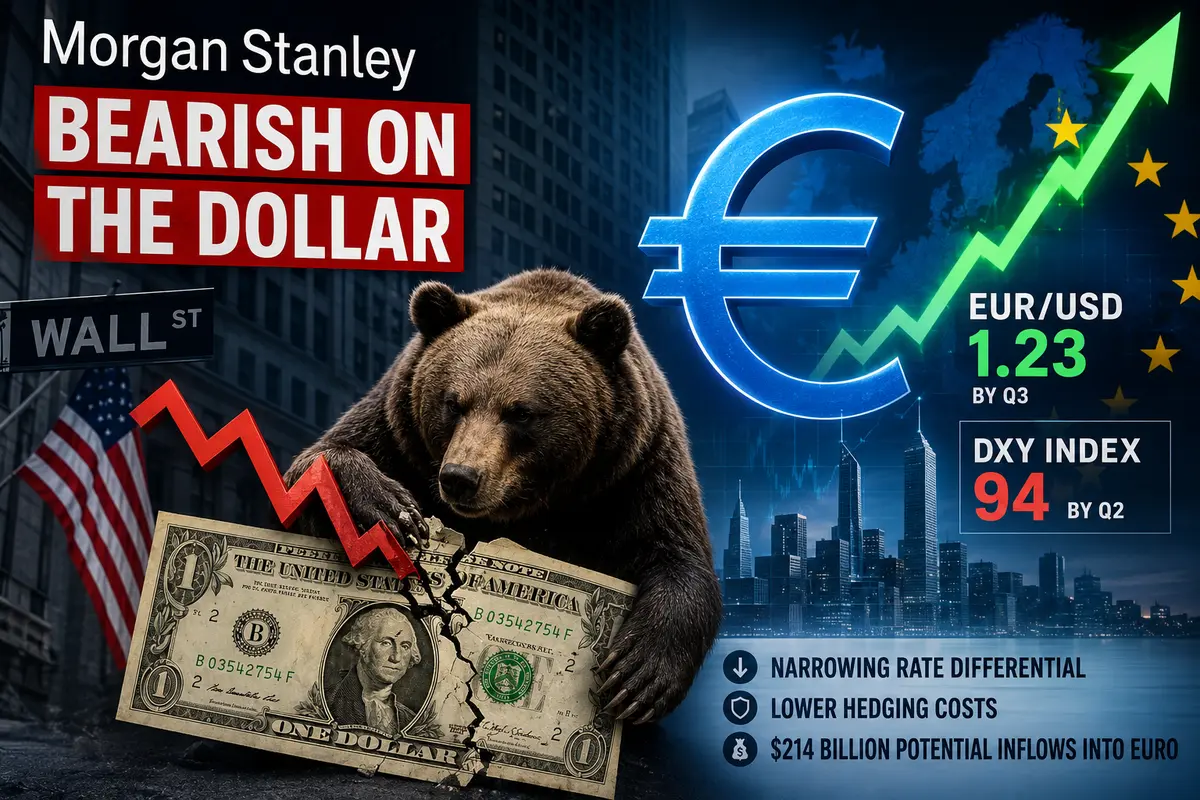
Morgan Stanley Against the Crowd: A Bearish Dollar View in a Year When Everyone Expects Strength

Morgan Stanley Against the Crowd: A Bearish Dollar View in a Year When Everyone Expects Strength

A Voice from New York: “We Are Bearish”

While much of Wall Street continues to chant “the dollar is king,” and traders around the world keep buying the U.S. currency following strong employment data while pricing in a Federal Reserve rate hike in December, a very different message is coming from Morgan Stanley’s New York office.

David Adams, Head of G-10 FX Strategy, states it plainly and without hesitation: “We are bearish on the dollar.”

This is not a cautious suggestion that “a correction is possible,” nor a diplomatic warning to “remain vigilant.” It is a clear and unambiguous signal: Morgan Stanley believes the U.S. dollar is headed lower. Not necessarily today or tomorrow, but over the coming quarters—specifically during the second and third quarters of this year.

Their reasoning is straightforward. While the Federal Reserve remains on hold, other central banks—particularly the European Central Bank (ECB)—continue to tighten monetary policy. The interest-rate differential is narrowing, and when rate differentials shrink, the dollar loses one of its most important advantages.

Why the Fed’s Pause Could Hurt the Dollar

At first glance, the opposite should be true. Higher U.S. interest rates are generally positive for the dollar. Investors from around the world buy U.S. bonds because they offer attractive yields with relatively low risk. Demand for dollars rises, and the currency strengthens.

That is a basic principle taught in introductory economics courses.

Morgan Stanley, however, views the situation differently. Yes, U.S. rates remain high—but they are no longer rising. The Fed has paused. More importantly, markets have already priced in virtually all potential rate increases. From here, the next major move is more likely to be downward.

Europe, meanwhile, is moving in the opposite direction. The ECB, which lagged behind for much of the tightening cycle, is now catching up. Morgan...

Continue reading...
0
0

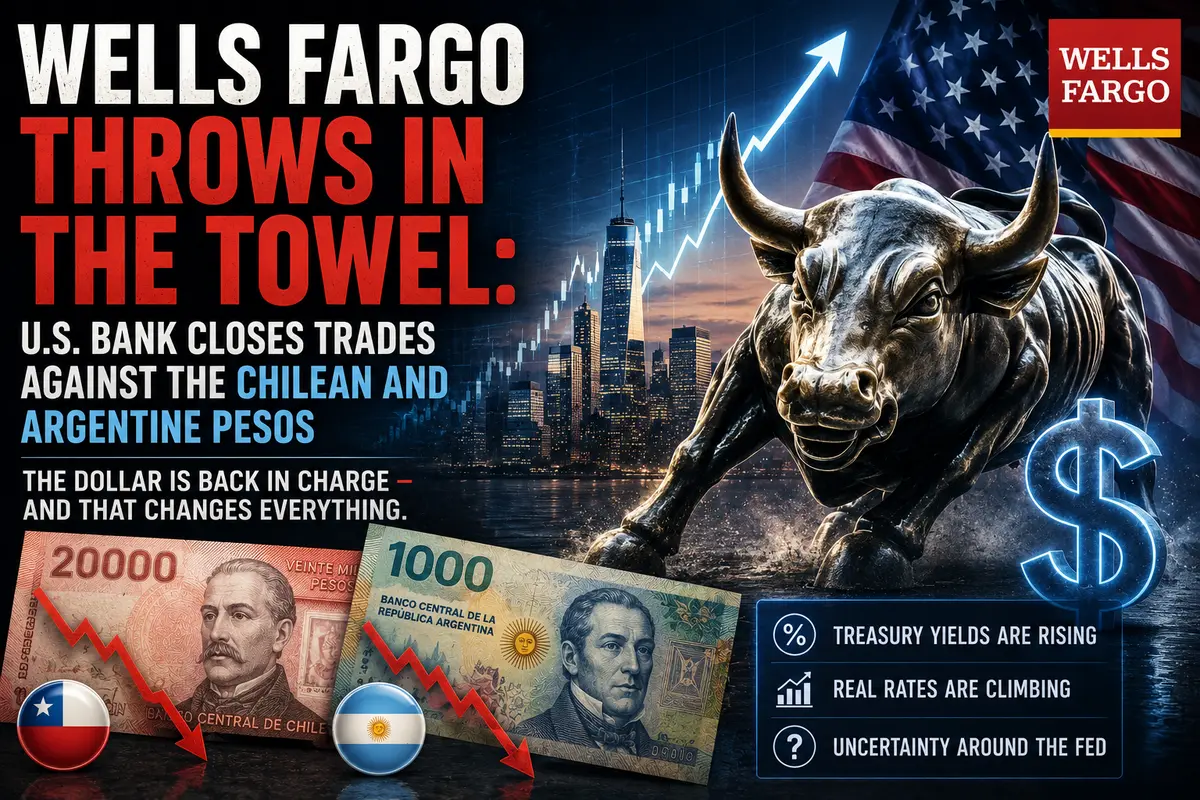
Wells Fargo Throws in the Towel: U.S. Bank Closes Trades Against the Chilean and Argentine Pesos

Wells Fargo Throws in the Towel: U.S. Bank Closes Trades Against the Chilean and Argentine Pesos

The Dollar Is Back in Charge — and That Changes Everything

In the world of finance, there are trades that rarely make headlines for the general public. Carry trades, short positions, structured longs—it's the kind of jargon that can make anyone's head spin. Yet sometimes even these seemingly dry developments reveal important shifts taking place in the global economy.

One such signal came on Monday from Wells Fargo, the third-largest U.S. bank by assets.

The bank's emerging markets strategy team made a decision that caused many investors to rethink their views on Latin America: they closed their positions in the Chilean and Argentine pesos. Not because the trades had been wildly successful across the board, but because they concluded that the environment had changed and the original thesis was no longer as compelling.

Put simply, Wells Fargo had been short the U.S. dollar against both currencies—in other words, it was betting that the pesos would strengthen while the dollar weakened. In Argentina, that bet worked exceptionally well, generating a return of more than 10%. In Chile, it did not, producing a loss of roughly 1%. Yet the bank exited both positions. And the reasons behind that decision are more important than the profits and losses themselves.

Alvaro Vivanco Explains: It's All About Rates

Alvaro Vivanco, Wells Fargo's emerging markets strategist, cited three key reasons for closing the trades:

  1. Rising U.S. Treasury yields

  2. Higher real interest rates

  3. Uncertainty surrounding the Federal Reserve

At first glance, these may sound like technical buzzwords. But they tell a straightforward story.

U.S. Treasury yields represent the return investors receive for lending money to the U.S. government. When those yields rise, the dollar becomes more attractive.

Investors around the world begin asking themselves:

"Why take currency risk in emerging markets when I can buy virtually risk-free...

Continue reading...
0
0
Tim Drening

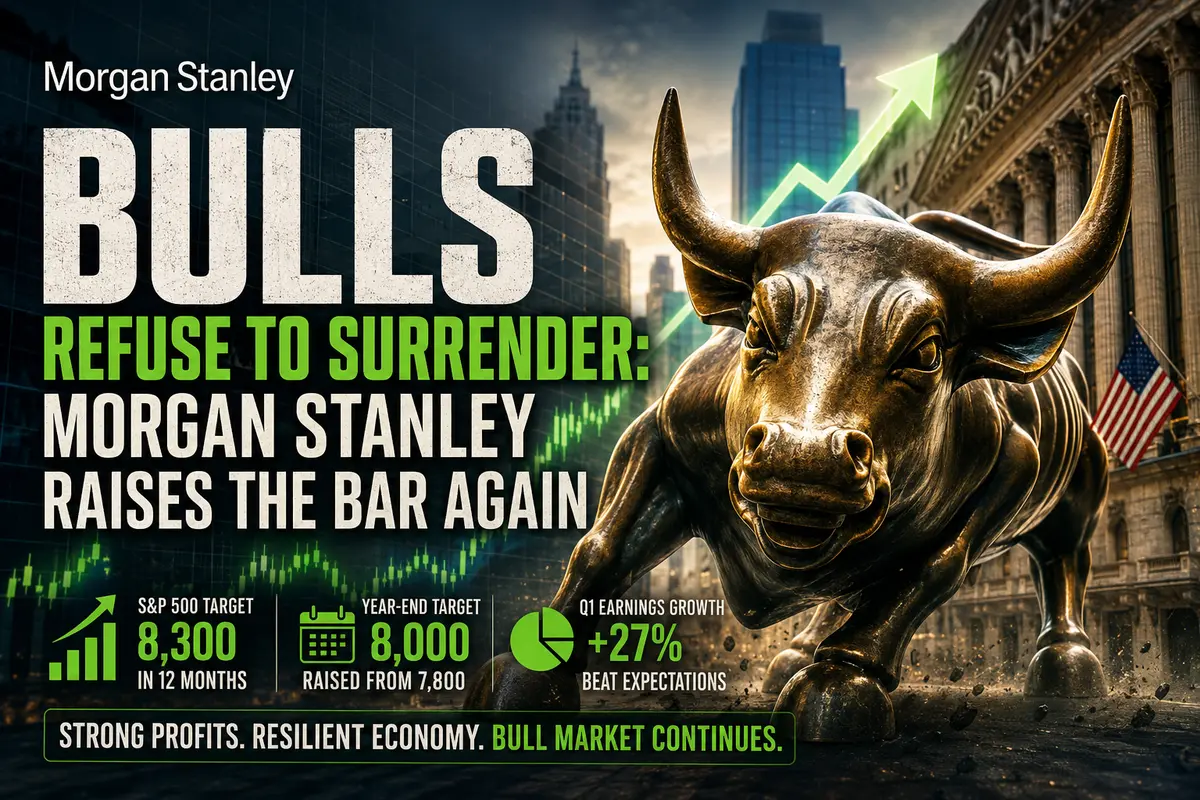
Bulls Refuse to Surrender: Morgan Stanley Raises the Bar Again

Bulls Refuse to Surrender: Morgan Stanley Raises the Bar Again

While a large part of the market remains nervous about geopolitics, oil prices, and endless recession talk, Morgan Stanley continues to stick to its narrative. The bank views the U.S. stock market with a level of optimism that many may consider excessive, yet the logic behind it is remarkably coherent. The core thesis is that two powerful engines — strong corporate earnings and a resilient economy — are capable of driving the bull market forward without losing momentum.

Bloomberg, citing the bank’s latest projections, reported some striking numbers. Over the next year, Morgan Stanley analysts believe the S&P 500 could climb to 8,300 points. From current levels, that implies roughly a twelve percent gain. Not bad for a market that already appears historically elevated. Even more interesting, however, is that Mike Wilson’s team simultaneously raised its year-end target from 7,800 to 8,000 points. In other words, the bank expects a meaningful acceleration in the coming months, not sometime in the distant future.

Earnings Season That Caught Everyone Off Guard

Why such confidence? The answer lies in what just happened during the latest U.S. earnings season. The first quarter turned out to be so strong that even hardened skeptics were forced to revise their expectations. Earnings for companies in the S&P 500 surged by twenty-seven percent. That is not merely a good result — it is more than double the modest twelve percent growth analysts had originally built into their models at the start of the reporting season.

A twenty-seven percent jump in profits is difficult to dismiss. It suggests that American businesses, despite all the noise surrounding trade wars, geopolitical crises, and expensive oil, continue to generate money with astonishing efficiency. Companies are not merely staying afloat — they are accelerating. And when that happens, the market gains a fundamental...

Continue reading...
0
0
Navigation menu
instaforex banner