Bar Pipa
We pay for a post of 10$

Rand

Rand on the Rise: How U.S. Inflation Supported the South African Currency

Rand on the Rise: How U.S. Inflation Supported the South African Currency

Introduction: An Unexpected Gift from Washington

Tuesday brought an unexpected boost for the South African rand. U.S. consumer inflation data for June came in below expectations, immediately affecting the foreign exchange markets. The rand strengthened by approximately 0.6% against the dollar, reaching 16.3725 rand per U.S. dollar ( USDZAR ... ) .

What happened? The U.S. Department of Labor reported that consumer prices rose by 3.5% in the 12 months through June, compared with 4.2% in May. This decline in inflation reduced the likelihood that the Federal Reserve would raise interest rates this year. For risk-sensitive currencies such as the South African rand, this provided a signal for appreciation.

However, the situation is not entirely straightforward. South African domestic data showed that mining production fell by 5.4% in May. This sector is crucial to the country’s economy, and its decline poses risks to future growth. In this article, we will examine all the factors affecting the rand’s exchange rate, assess its prospects, and attempt to understand where the South African currency may be heading.

U.S. Inflation: Lower Interest Rate Expectations as a Supportive Factor

June CPI Data

Inflation in the United States continues to decline. Consumer prices rose by 3.5% in the 12 months through June, compared with 4.2% in May. This slowdown suggests that the Federal Reserve’s efforts to combat inflation are beginning to produce results.

Lower inflation reduces the likelihood of further interest rate increases. Markets are now pricing in a more accommodative Federal Reserve policy, which weakens the dollar and supports emerging-market currencies, including the rand.

The Dollar’s Reaction

The U.S. dollar weakened by approximately 0.5% against a basket of currencies following the release of the data. A weaker dollar makes emerging-market currencies more attractive to investors seeking higher returns.

For the rand, this created an opportunity to...

Continue reading...
0
0

Rand Falls to One-Week Low Amid Tensions Around Iran

Rand Falls to One-Week Low Amid Tensions Around Iran

Introduction: The Wednesday When Geopolitics Turned Markets Around

Wednesday. Johannesburg, the JSE stock exchange. Traders who had hoped for a calm day in the morning saw their screens turn red. The South African rand, the country’s main currency, fell to its lowest level in a week. 16.3850 per dollar — a loss of about 0.5% compared with the previous close. This is not a collapse, but it is a serious decline that reflects global fear.

What happened? U.S. President Donald Trump announced the breakdown of a temporary peace agreement with Iran. And that changed everything. Iran’s Revolutionary Guards launched strikes on U.S. military facilities in Bahrain and Kuwait. The U.S. response was immediate. Geopolitical tensions in the Middle East erupted with renewed force.

For markets, this means the return of fear. Investors who had only just begun to believe in stabilization are once again fleeing into safe-haven assets. Emerging market currencies, including the rand, are coming under pressure. The dollar, by contrast, remains stable, while oil prices jump by more than 5%, reaching a two-week high.

The rand, as a typical emerging market currency, is sensitive to global risks. When geopolitical tensions rise, investors pull capital out of developing countries and move it into safer assets. This leads to currency weakness.

What comes next? Analysts expect the rand’s short-term dynamics to remain closely tied to developments in the Middle East, as well as to the release of the Federal Reserve meeting minutes scheduled for the same day. If the conflict escalates, the rand may fall even further. If the situation calms down, it may recover.

Let’s break down what is really happening, why Iran has once again become the main topic for markets, and how this affects the South African currency.

Breakdown of the Peace Agreement: What Happened

Trump Breaks...

Continue reading...
0
0

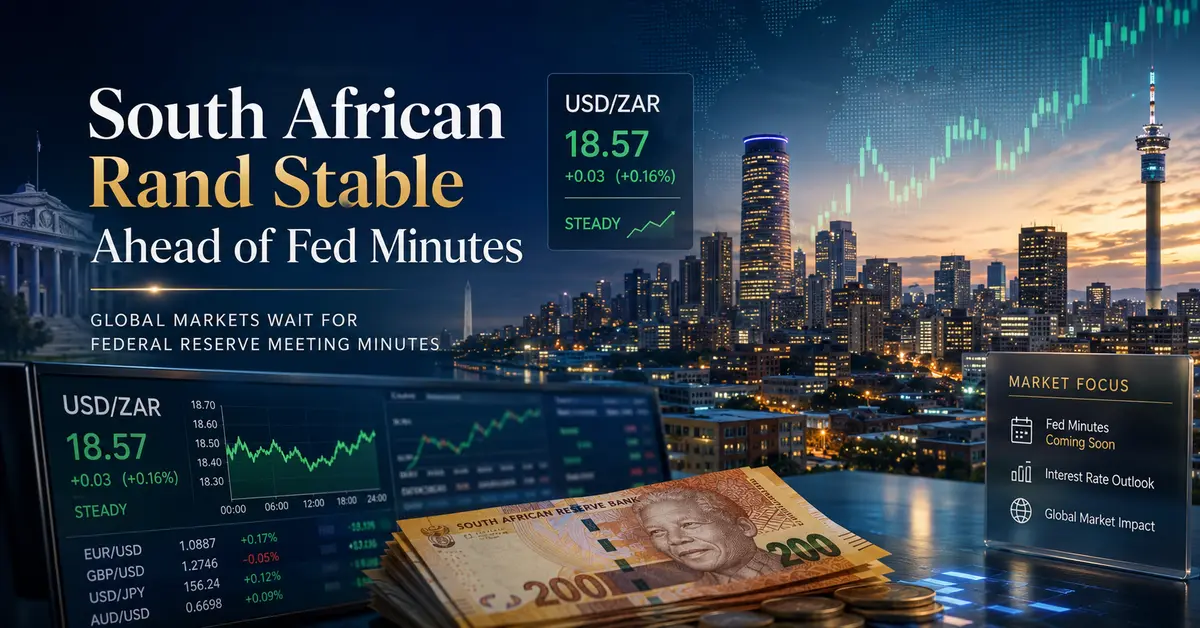
South African Rand Stable Ahead of Fed Minutes

South African Rand Stable Ahead of Fed Minutes

Introduction: South African Currency Pauses Before a Signal from Washington

Monday, Johannesburg. Traders on the JSE are watching their screens, but the market has frozen in a strange state of suspense. The South African rand remained virtually unchanged against the dollar, holding at 16.2450 per dollar. This is not a decline, nor a rise — it is the calm before the storm. And that storm will come from Washington, where the minutes of the Federal Reserve meeting are set to be published this week.

What is happening with the rand? South Africa’s currency, like many other emerging-market currencies, has paused in anticipation of signals from the Fed. Fed Chair Kevin Warsh gave limited guidance on the direction of monetary policy. Last week, he said that those expecting the regulator to soften its stance on inflation may be “disappointed.” However, he also noted that inflation has eased somewhat recently. These mixed signals are leaving markets uncertain.

The dollar traded 0.2% higher against a basket of currencies, but this modest move does not provide a clear direction. Investors are waiting for the publication of the minutes, which may offer key clues about how the Fed views the future path of interest rates.

In the absence of major domestic economic releases, the South African rand typically reacts to global factors. South Africa’s economic calendar this week is only moderately busy: foreign reserve data for June is scheduled for Tuesday, while industrial production figures for May are due on Thursday. These are not the kinds of events that can radically change the currency’s direction.

For now, the rand remains stable, but this stability is deceptive. Once the Fed minutes are released, the market may come back to life. The direction of that movement will depend on what U.S. policymakers say.

Let’s break down why...

Continue reading...
0
0
Navigation menu
instaforex banner