Bar Pipa
We pay for a post of 10$

euro

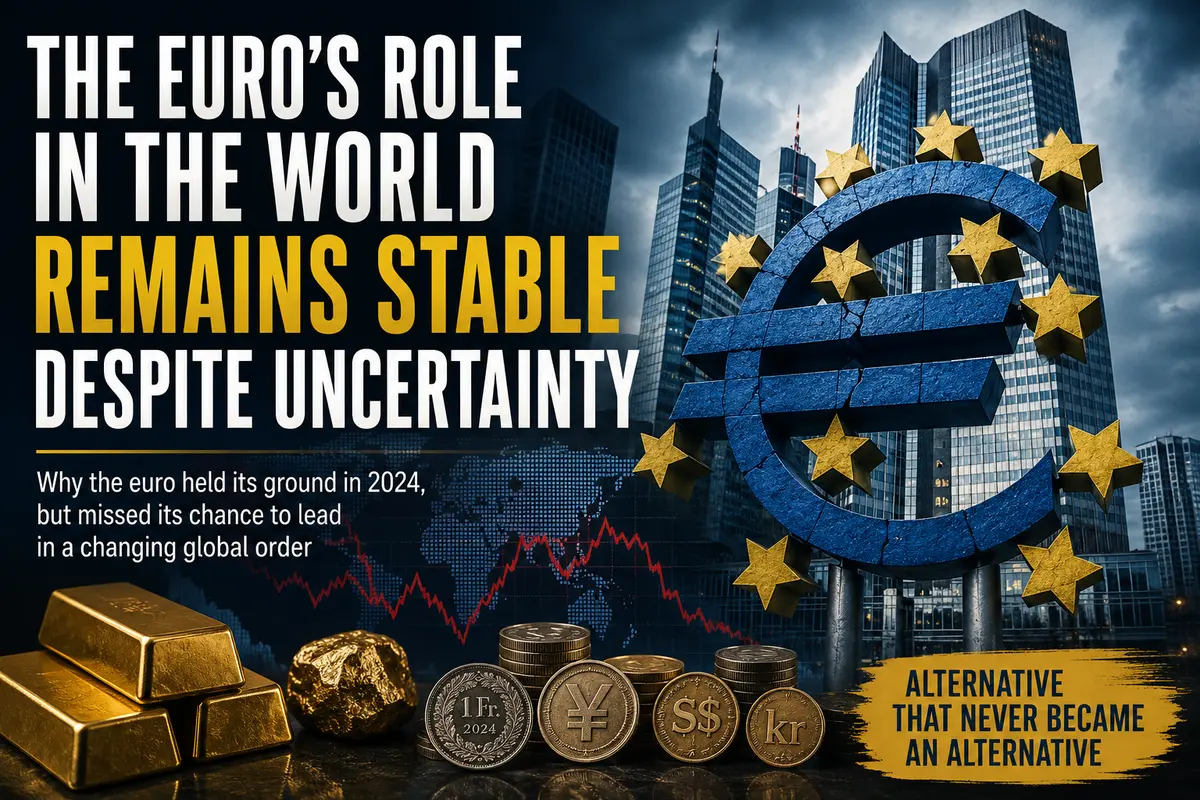
The Euro’s Role in the World Remains Stable Despite Uncertainty

The Euro’s Role in the World Remains Stable Despite Uncertainty
The Alternative That Never Became an Alternative

There was something almost tragicomic about it. Throughout 2024, analysts, economists, and geopolitical observers kept wondering: surely this is the moment when the euro finally makes its move.

The United States pursued such an unpredictable economic policy that even its own allies were left bewildered. Trade wars, abrupt policy reversals, public disputes within the administration—a perfect storm that should have pushed the world to look for an alternative to the dollar.

And that alternative already had a name: the euro. The world’s second-largest reserve currency. The natural contender for the throne.

But the world, as it often does, refused to behave as experts expected. It did not rush into the arms of the euro. In fact, it did not rush toward any single currency at all. Instead, investors, central banks, and major funds cast their votes for something else entirely: gold—and the currencies of small, often overlooked countries.

The euro remained roughly where it had always been, holding a share of about 20% of the global market.

These are not rumors or speculation. The figures were published on Tuesday by the European Central Bank (ECB) in its latest report. And, frankly, the numbers make for rather disappointing reading from a European policymaker’s perspective.

Because 20% is not bad. But it is not progress either. It is stagnation. And perhaps most frustrating of all, the euro’s current share remains below the level it enjoyed twenty years ago, in the early years of its existence.

Numbers That Don’t Lie

Let’s dispense with euphemisms. Twenty percent is not a commanding second place. It is a frozen picture.

The euro is neither growing nor shrinking. It is holding the line.

At first glance, given reports that the dollar is also losing ground, this could be framed as...

Continue reading...
0
0

Monday’s Statement That Turns the Page

Monday’s Statement That Turns the Page

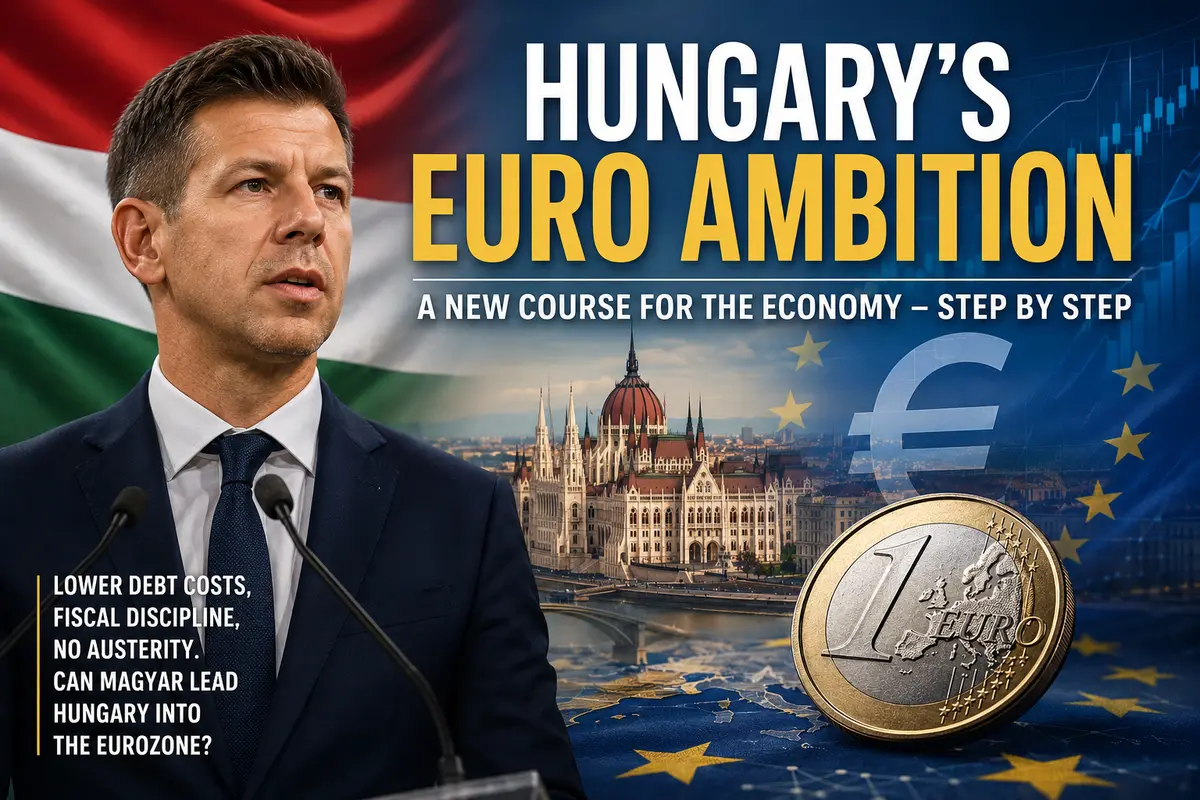
On Monday, Hungarian Prime Minister Peter Magyar said something Budapest had long been expected to say — but which the previous leadership stubbornly refused to utter. Hungary intends to adopt the euro. Not tomorrow, not the day after tomorrow, and not in emergency mode — but gradually, step by step, meeting the criteria in a way that does not harm the national economy. The wording itself says a great deal: the country is no longer debating whether it should join the eurozone, but rather discussing how exactly to do it.

This marks a tectonic shift in rhetoric. Under the previous government of Viktor Orbán, the euro was practically a taboo subject. The forint was presented as a symbol of national sovereignty, and abandoning it was portrayed as surrender to Brussels. Magyar, who replaced Orbán, is turning that logic upside down. In his view, adopting the euro is not a loss of sovereignty, but the acquisition of new opportunities for public finances and ordinary citizens alike.

Behind these words lies not just a rhetorical shift, but a fundamental reassessment of how Hungary sees its place in Europe. For three decades after the collapse of the socialist bloc, the country balanced between the West and its own sense of exceptionalism. Now the pendulum appears to have swung toward deeper integration — and that movement will have consequences far beyond currency markets.

The Criteria That Must Be Met: What “Gradually” Really Means

Magyar emphasizes gradualism for a reason. Adopting the euro is not merely about replacing banknotes in people’s wallets. It is an extraordinarily complex process requiring compliance with the Maastricht criteria, and Hungary currently fails to meet at least several of them. Inflation must be kept under control, the budget deficit must remain within three percent of GDP, public debt must be...

Continue reading...
0
0
Navigation menu