Bar Pipa
We pay for a post of 10$

Copper

Tim Drening

Gold Cools in Asia: Precious Metal Loses Ground Amid Uncertainty

Gold Cools in Asia: Precious Metal Loses Ground Amid Uncertainty

Morning Correction: Precious Metal Loses Its Shine

Asian trading on Thursday 23.07.2026 began with an unexpected but understandable cooling in the precious metals market. August gold futures on COMEX, a division of the New York Mercantile Exchange, fell to $4,123.97 per troy ounce, losing 0.67% during the session. The decline may appear insignificant, but in a world where every cent matters and investors are desperately searching for safe havens, even such a correction raises questions.

Why has gold—a traditional defensive asset that usually appreciates during periods of instability—suddenly moved lower? As is often the case, the answer lies on the surface but requires careful consideration. The U.S. Dollar Index, which measures the American currency against a basket of six major currencies, declined by 0.14% to 100.82. Such a modest weakening of the dollar should theoretically have supported gold, since commodity prices denominated in dollars generally rise when the currency loses value. Today, however, that mechanism failed to work.

At the time of writing, gold had found support at $3,963.00, while resistance awaited at $4,171.09. A range of almost $200 represents more than just technical levels—it reflects the profound uncertainty currently dominating the markets. Investors do not know where the price will move next and prefer to lock in profits rather than take risks at a time when geopolitics and macroeconomics have become tightly intertwined.

The precious metals market is also showing an interesting divergence. September XAGUSD ... silver futures declined by 0.68% to $59.89 per ounce, following the same trajectory as gold. Copper, by contrast, gained 0.41% to reach $6.52 per pound. This divergence suggests that investors see different prospects for different metals: gold and silver are viewed as defensive assets, while copper is regarded as an indicator of industrial demand and economic growth.

The Dollar and Geopolitics: Which Will Prevail?

...

Continue reading...
0
0

Gold Returns to Positive Territory as Asian Session Gives Investors Hope

Gold Returns to Positive Territory as Asian Session Gives Investors Hope

Friday’s Opening: The Yellow Metal Attempts to Recover Its Losses

Friday began on an encouraging note for the precious metals market. August gold futures XAUUSD ... on COMEX gained 0.24% and were trading at $3,982.45 per troy ounce. This is a modest but meaningful move after several days of pressure, during which the metal even fell below the psychologically important $4,000 level.

The gold market currently resembles an athlete who has just lost a race but is already gathering strength for the next one. The previous day’s decline was significant, and investors watched anxiously as the price moved further away from its recent highs. However, the morning rebound demonstrated that demand for gold has not disappeared—it was simply waiting for the right moment.

Notably, gold is rising despite a stronger U.S. dollar. The U.S. Dollar Index increased by 0.03% on Friday to 100.60. Although this movement is largely symbolic, a stronger dollar usually works against gold. In this case, however, the dollar weakness observed earlier in the week continues to support the metal, even as the U.S. currency attempts to recover. Investors appear to have concluded that geopolitical risks outweigh short-term currency fluctuations.

Technical Outlook: Support and Resistance Set the Rules

Technical indicators on Friday present a relatively clear picture. Support is located at $3,974.15, where buyers entered the market and prevented the price from falling further. Resistance is considerably higher at $4,112.50. The distance between these levels is almost $140, giving traders plenty of room to maneuver.

Interestingly, the current price of $3,982.45 is very close to the lower boundary of this range. This means buyers still have considerable work to do before gold can return to levels above $4,000. Nevertheless, the fact that the metal found support and rebounded from it suggests that many investors consider current prices attractive...

Continue reading...
0
0

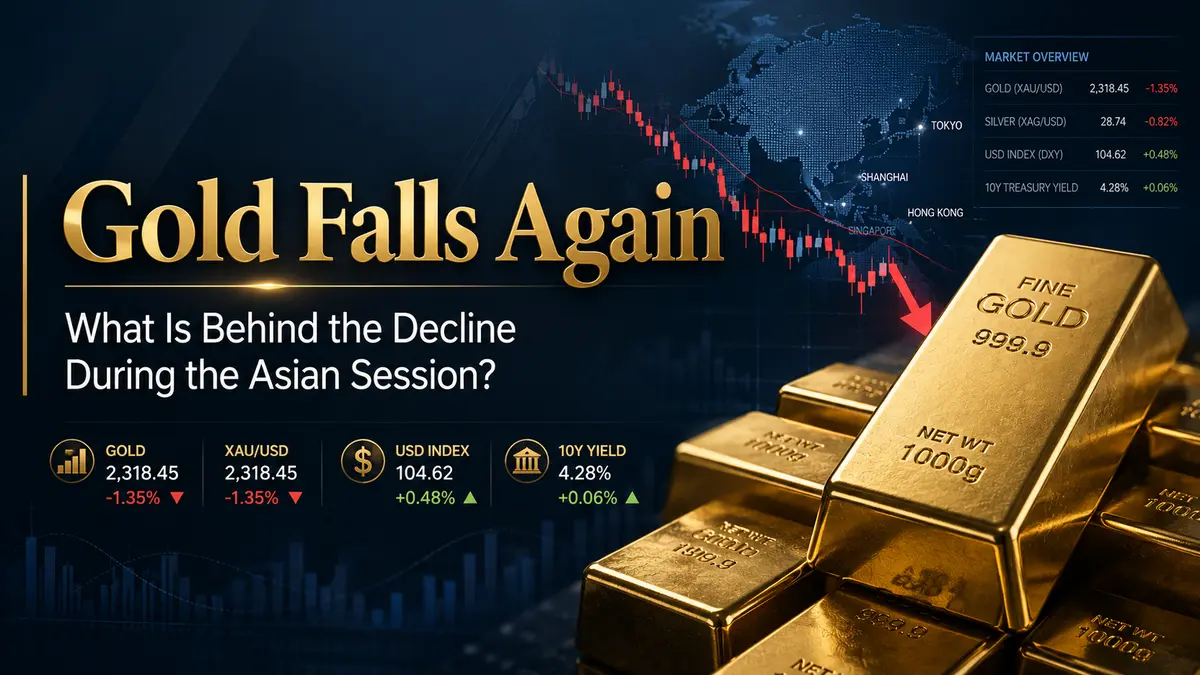
Gold Falls Again: What Is Behind the Decline During the Asian Session?

Gold Falls Again: What Is Behind the Decline During the Asian Session?

Thursday Morning: Gold Opens in Negative Territory

Asian trading on Thursday began with the gold market deciding to cool off slightly. COMEX gold futures for August delivery fell by approximately half a percent, settling at around $4,032 per troy ounce. At first glance, the decline appears modest—just 0.49%. However, in the gold market, even movements of this size are rarely accidental. Behind every change in price are investors’ expectations, fears, and calculations.

Interestingly, the decline is taking place against a backdrop of rather contradictory signals from global markets. On the one hand, the US dollar strengthened slightly, with the USD Index rising by a symbolic 0.03% to 100.30. This movement can hardly be described as a confident surge, but because gold generally has an inverse relationship with the US currency, even a slight indication of dollar strength can be enough to trigger a price correction.

On the other hand, the geopolitical situation remains tense, which would normally encourage investors to move into safe-haven assets—gold above all.

However, markets, as we know, do not always behave according to textbooks. The current dynamics of gold provide a perfect example.

Technical Picture: The Levels Everyone Is Watching

Technical indicators present a highly revealing picture. The low of today’s session was $3,990.40 per ounce. This is not merely a random figure—it represents a significant support level that traders have been monitoring for several weeks. A break below this level could open the way for a deeper correction, but buyers are continuing to defend it for now.

Resistance is located considerably higher, at $4,144.60. The price is fluctuating between these two levels as it attempts to find equilibrium. A range of almost $150 is substantial for gold, but looking at the metal’s performance over recent months, the market has already become accustomed to such price...

Continue reading...
0
0

Gold Under Pressure Again: A Technical Correction or the Beginning of a New Trend?

Gold Under Pressure Again: A Technical Correction or the Beginning of a New Trend?

Introduction: A Pullback Following Weak Inflation Data

Wednesday began with another round of correction for gold. August gold futures fell by 0.90% to $4,032.87 per troy ounce. Silver also declined by 0.81% to $58.63. This is happening against the backdrop of a weaker US dollar, which fell by 0.09% to 100.63 points.

What is happening? Why is gold falling while the dollar is weakening? A weaker dollar usually supports gold prices, but today this correlation has broken down. The reason lies in US inflation data, which came in below expectations, and comments from Federal Reserve Chair Kevin Warsh, who maintained a hawkish stance.

Investors are reassessing their positions. Lower inflation reduces demand for gold as protection against currency depreciation, while the Fed’s tough rhetoric creates expectations that interest rates will remain high. In this article, we will examine all the factors affecting gold, assess the key technical levels, and try to determine where the metal may move in the coming days.

Inflation Data: Easing Pressure

A Weak CPI Report

US inflation data for June came in below expectations. The Consumer Price Index fell by 0.4% month over month, while annual inflation stood at 3.5%, compared with the projected 3.8%. Core CPI increased by 2.6%, also below forecasts.

This decline in inflation reduces demand for gold as a safe-haven asset. Investors are becoming less concerned about currency depreciation, weakening one of the key factors that has supported gold prices.

The Dollar’s Reaction

The US dollar weakened by 0.5% following the release of the data, but this did not help gold maintain its position. A weaker dollar usually supports gold, but today this effect was outweighed by other factors.

Falling inflation and hawkish signals from the Federal Reserve created pressure on the metal that proved stronger than the currency factor.

Impact on...

Continue reading...
0
0

Gold Regains Ground: Asian Morning Brings Hope to Investors

Gold Regains Ground: Asian Morning Brings Hope to Investors

Introduction: A Ray of Light After a Difficult Period

Tuesday began on a long-awaited positive note for the gold market. August gold futures rose by 0.54%, reaching $4,027.30 per troy ounce. For investors who had endured several weeks of bearish pressure, this increase came as a breath of fresh air.

What is driving this recovery? A weaker US dollar, geopolitical uncertainty surrounding Iran, and the approaching release of key US inflation data have all created favorable conditions for gold prices to rebound. However, technical levels suggest that the path toward sustainable growth will remain challenging.

Silver and copper also posted gains, indicating a broader recovery across commodity markets. Nevertheless, it is still too early to speak of a full trend reversal. The market is awaiting signals from the Federal Reserve and consumer price data, which will determine the future direction of precious metals.

Technical Overview: Key Levels to Watch

Support Holds

Gold found support at $3,991.90 per ounce. This is a critical level, and holding above it keeps hopes of a recovery alive. Had the metal fallen below this mark, the decline could have continued toward the next support levels, potentially in the $3,800–$3,900 range.

For now, however, support has held, giving bulls renewed hope. The current 0.54% increase signals that buyers are beginning to return to the market. Nevertheless, gold must overcome resistance at $4,148.40 to establish a sustainable recovery.

Resistance as the Next Target

Resistance at $4,148.40 is the key barrier separating the bearish and bullish scenarios. If gold manages to break above this level, the way could open toward $4,200 and beyond, including the 200-day moving average near $4,491.

For now, however, this remains only a target. The market remains cautious, and investors are reluctant to open large long positions until they receive clear signals from the...

Continue reading...
0
0

Gold Plunges in U.S. Trading: The Yellow Metal Loses Its Shine

Gold Plunges in U.S. Trading: The Yellow Metal Loses Its Shine

Introduction: The Wednesday When the Safe-Haven Asset Stopped Providing Safety

Wednesday, U.S. trading session. New York, COMEX. Traders who are used to seeing gold as a reliable safe haven during periods of uncertainty are now watching their confidence collapse. Gold futures for August delivery are plunging by 1.53% to $4,093.80 per troy ounce. This is not just a correction — it is the sharpest decline in recent weeks.

What happened? The yellow metal, which usually rises on geopolitical risks, is today ignoring the escalation of the conflict between the United States and Iran. Instead of rising, gold is falling. Silver, gold’s loyal companion, is falling even harder — down 3.92% to $58.93 per ounce. Copper is losing 1.48% to $6.13 per pound.

The technical picture is also discouraging. Gold found support at $4,032.37 and resistance at $4,215.50. The current price of $4,093.80 is closer to the lower boundary of this range. If gold continues to decline, it may test support at $4,032.37. If it reverses, resistance at $4,215.50 will become the next target.

The U.S. Dollar Index fell by 0.05% to 100.73 points. This is a minor decline, but it is not helping gold. The reason for the fall is not the dollar. It is something else.

Let’s examine why gold has plunged despite the geopolitical crisis and what this means for the precious metals market.

Why Gold Is Falling: Solving the Paradox

Inflation Expectations and Interest Rates

The main reason for gold’s decline is inflation expectations. The geopolitical crisis in the Middle East has led to higher oil prices. Higher oil prices mean higher inflation. Higher inflation means higher interest rates. Higher interest rates mean a stronger dollar. And a stronger dollar weighs on gold.

Gold is traditionally considered a hedge against inflation. But when inflation leads to higher...

Continue reading...
0
0
Lin Brings

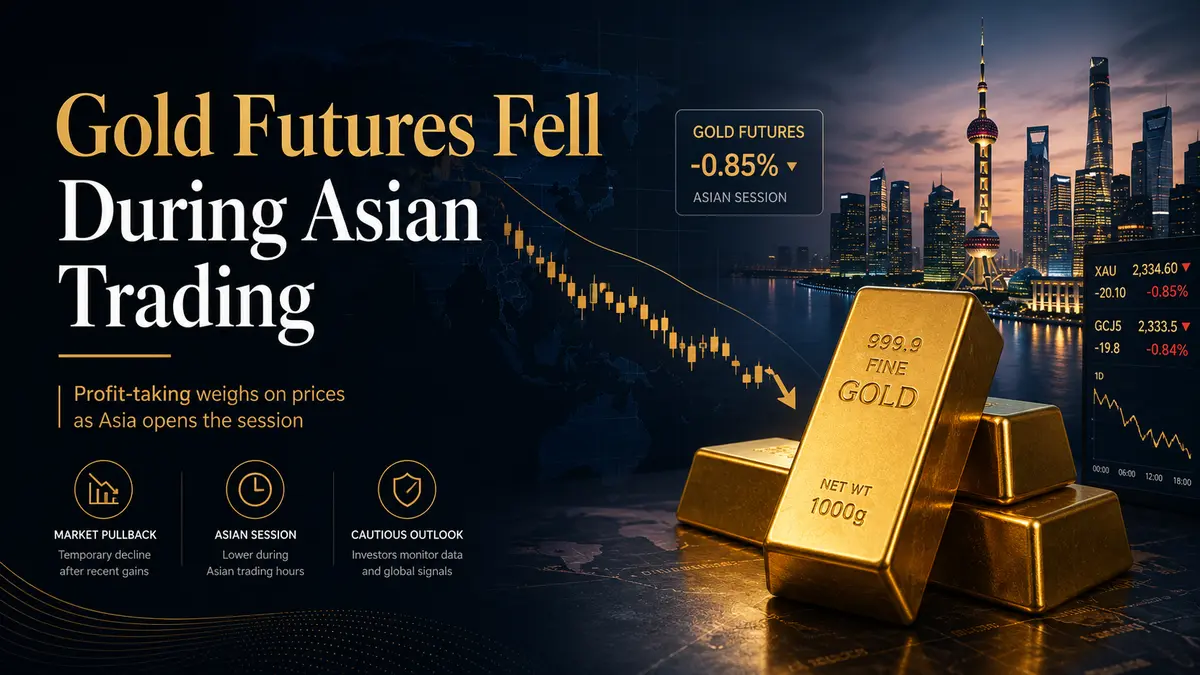
Gold Futures Fell During Asian Trading

Gold Futures Fell During Asian Trading

Introduction: A Tuesday When the Yellow Metal Lost Its Shine

Tuesday, the Asian trading session. Traders in Shanghai, Singapore, and Tokyo opened their terminals and saw an unusual picture. Gold, which had been performing confidently in recent weeks, suddenly moved lower. Futures for August delivery fell to $4,137.80 per troy ounce, losing 0.71% compared with the previous close. This is not a collapse, but it is a noticeable move that makes investors think.

What is happening? Gold, often considered a “safe haven” during periods of uncertainty, suddenly lost some of its appeal. Silver, gold’s faithful companion, fell even more sharply — by 1.95% to $61.12 per ounce. Copper, which had risen the day before amid a weaker dollar, also declined by 0.91% to $6.19 per pound. All metals moved in the same direction — downward.

The dollar index, by contrast, rose by 0.09% to 100.71 points. This is a small strengthening of the U.S. currency, but for gold, which is traded in dollars, even such a move matters. When the dollar rises, gold becomes more expensive for holders of other currencies, which reduces demand and pushes prices lower.

Technically, gold found support at $4,042.80 and resistance at $4,214.91. The current price of $4,137.80 is roughly in the middle of this range. If gold continues to fall, it may test support at $4,042.80. If it reverses, resistance at $4,214.91 will become the next target.

What is behind this decline? Several factors. First, the strengthening of the dollar amid expectations ahead of the release of the Fed minutes. Second, reduced geopolitical uncertainty after the peace agreement between the United States and Iran. Third, technical factors — after a strong rally that pushed gold toward historical highs, a correction began.

Let’s examine why gold is falling, what this means for investors, and where...

Continue reading...
0
0

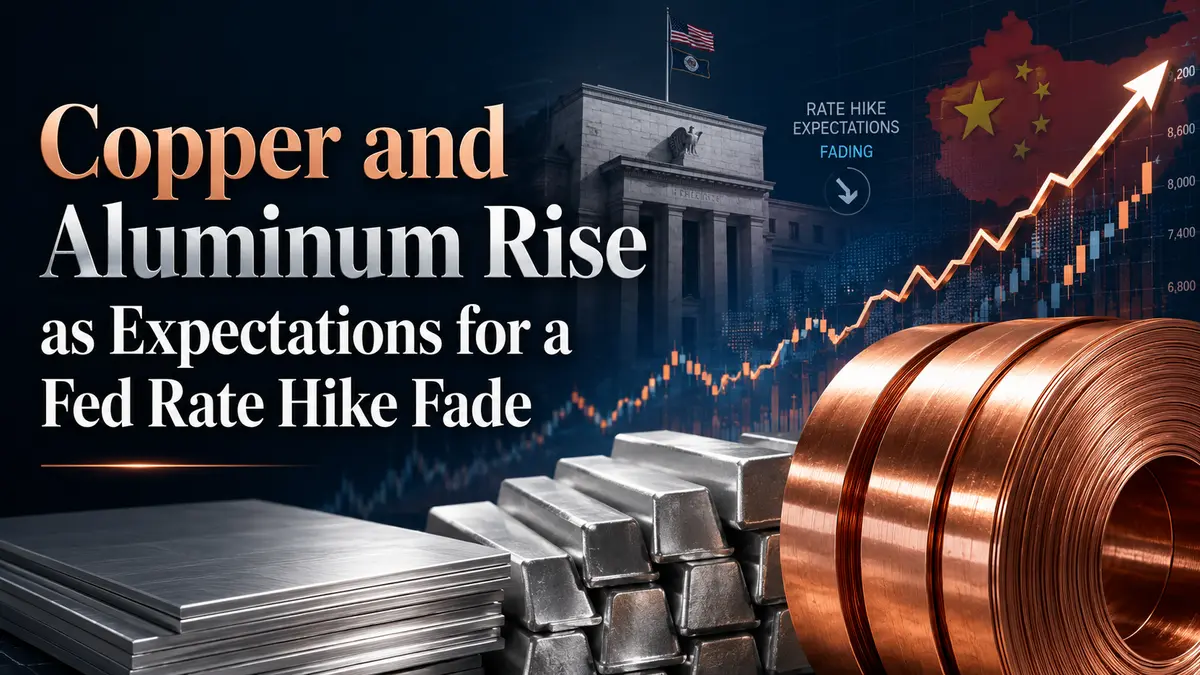
Copper and Aluminum Rise as Expectations for a Fed Rate Hike Fade

Copper and Aluminum Rise as Expectations for a Fed Rate Hike Fade

Introduction: Metals Step Out of the Shadows

Monday. The London Metal Exchange opens the week with confident growth. Copper is rising for the third day in a row, interrupting a two-week losing streak that had made investors nervous. Aluminum continues to recover from a four-month low, adding another 0.5% and returning to levels that had seemed lost forever.

What has changed? The main driver is the shift in expectations regarding the Federal Reserve’s policy. Fed Chair Kevin Warsh said last week that price risks are declining. This became a signal for markets, which immediately reduced their bets on tighter monetary policy. And for industrial metals, which are highly sensitive to the macroeconomic backdrop, this came as a long-awaited relief.

Another factor is also at play — China. Funds in China are beginning to flow into shares and futures of metals producers in anticipation of solid first-half earnings. Several Chinese companies are expected to present preliminary results in the coming weeks, and the commodity rally, from gold to copper, is expected to support their profits compared with last year.

Copper is trading at $13,402.50 per ton, gaining 0.3%. Aluminum is at $3,107 per ton, up 0.5%. These are not spectacular figures, but they matter as a shift in trend. After weeks of decline, when metals were losing 1–2% per day, even a small gain feels like a victory.

Let’s break down what is really behind this recovery, why the Fed is changing its rhetoric, and how Chinese investors are influencing the industrial metals market.

The Fed: From Hawkish Rhetoric to Dovish Signals

Kevin Warsh Acknowledges Declining Price Risks

The key event that changed sentiment in metals markets was a statement by Fed Chair Kevin Warsh last week. He acknowledged that price risks are declining. This may sound like a technical phrase,...

Continue reading...
0
0
Lin Brings

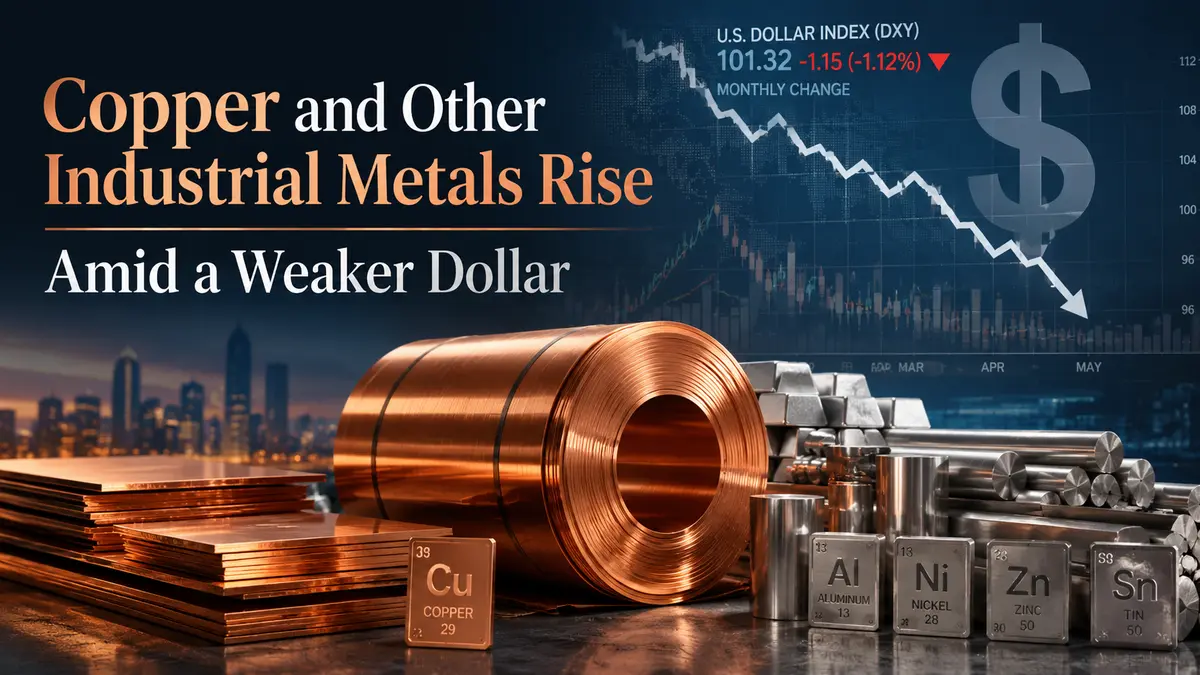
Copper and Other Industrial Metals Rise Amid a Weaker Dollar

Copper and Other Industrial Metals Rise Amid a Weaker Dollar

Introduction: The Red Metal Is Back in Play

Friday. The London Metal Exchange is coming back to life. Copper, often called “Dr. Copper” for its remarkable ability to predict industrial cycles, is gaining nearly 1%. This is not just a random move. It marks the end of a two-week decline that had made investors nervous and forced them to reconsider their positions.

What changed? The dollar, the main enemy of commodity markets in recent months, has started to lose ground. The dollar index is falling for the second day in a row, making metals cheaper for holders of other currencies. Weak U.S. labor market data has reduced expectations of another Fed rate hike. And that was enough for industrial metals to breathe a sigh of relief and begin recovering.

But it is not that simple. Yes, copper rose by 0.7% to $13,413 per ton. Aluminum gained 0.6% to $3,110 per ton. Nickel posted an even more impressive increase — 1.8% to $16,540 per ton. Zinc and tin also became more expensive. But, as analysts note, the potential for this growth is limited, because weakness in traditional industrial sectors has not disappeared.

Let’s take a closer look at what is really happening in the industrial metals market, why the dollar has finally started to retreat, and whether this trend can last.

The Dollar Loses Ground: The Main Driver of Metal Prices

Weak Employment Data Hits Hawkish Expectations

It all started with U.S. labor market data released on Thursday. The figures were significantly weaker than forecast, and this changed the balance of power across all markets — from currencies to commodities. While just a week ago markets were confident that the Fed could raise rates this year, that confidence has now been shaken.

The CME FedWatch tool, which tracks the probability of...

Continue reading...
0
0

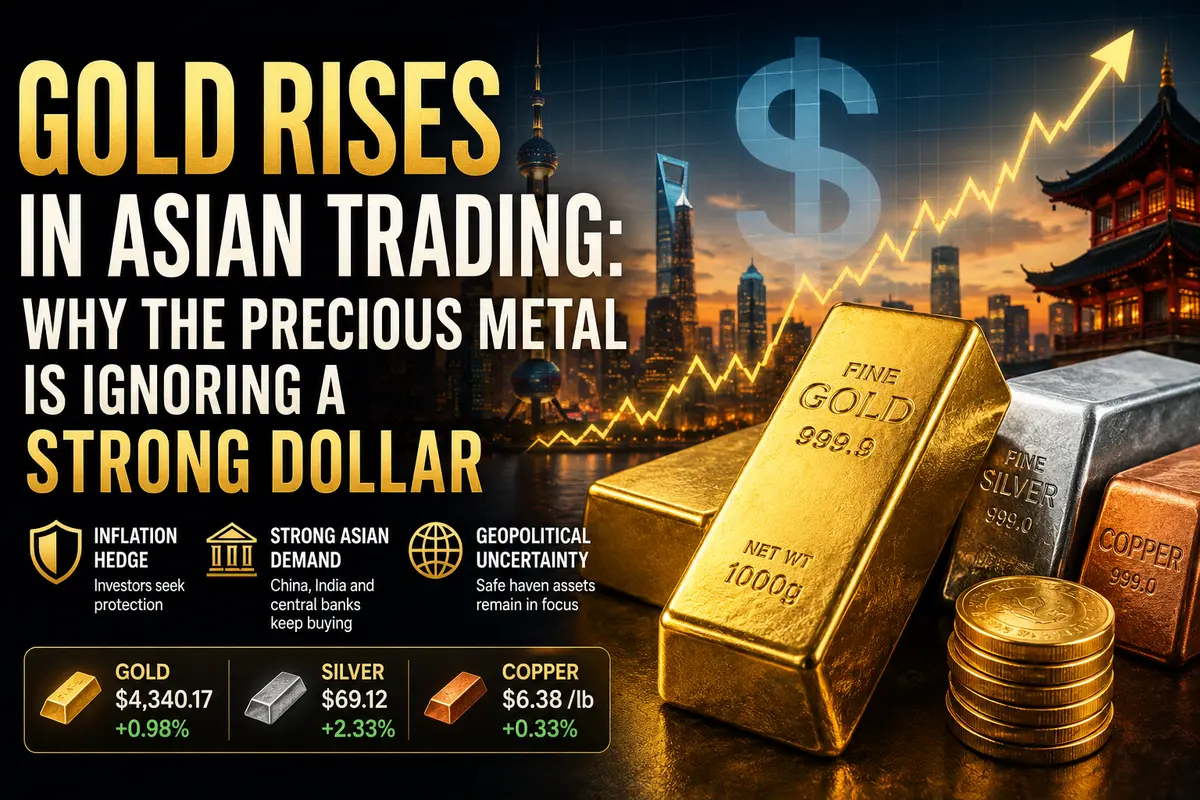
Gold Rises in Asian Trading: Why the Precious Metal Is Ignoring a Strong Dollar

Gold Rises in Asian Trading: Why the Precious Metal Is Ignoring a Strong Dollar

Introduction: A Quiet Morning on Asian Markets

Four o’clock in the morning GMT. Asian markets are waking up, traders in Tokyo, Shanghai, and Singapore are taking their seats in front of their screens, and the first sip of coffee coincides with the first glance at market quotes. Gold is rising. Not dramatically, not explosively, but steadily—up nearly 1% during the morning session. August gold futures have climbed to $4,340.17 per ounce, reaching new local highs and prompting investors around the world to ask: what is happening?

At first glance, the backdrop does not appear particularly favorable for gold. The U.S. dollar remains near two-month highs following hawkish signals from the new Federal Reserve chairman. Treasury yields are rising, making alternative assets less attractive. Under normal circumstances, both factors would put pressure on the yellow metal. Yet gold is not only holding its ground—it is advancing.

Silver, gold’s faithful companion, has surged 2.33% to $69.12 per ounce. Even copper, which suffered a sharp decline the previous day due to the Fed’s rhetoric, managed to gain 0.33% to $6.38 per pound on Thursday. It appears that Asian trading is being driven by a sentiment that cannot be explained by economic logic alone.

What is behind this rally? Why is gold ignoring a strong dollar and a hawkish Federal Reserve? And what should investors expect from the precious metal in the coming weeks? Let’s take a closer look.

Gold’s Paradox: Rising Against the Odds

A Hawkish Fed and a Strong Dollar—Gold’s Traditional Enemies

If you are even somewhat familiar with financial markets, you know the golden rule (pun intended): gold and the U.S. dollar typically move in opposite directions. When the dollar strengthens, gold tends to decline. When the dollar weakens, gold usually rises. It is a correlation that has held...

Continue reading...
0
0
Navigation menu
instaforex banner