Bar Pipa
We pay for a post of 10$

Asian Currencies

Asian Currencies Hold Steady as the Middle East and Oil Take Center Stage

Asian Currencies Hold Steady as the Middle East and Oil Take Center Stage

Tuesday: Dollar Reaches a One-Week High

Tuesday’s 21.07.2026 Asian currency trading was marked by caution. Most regional currencies remained confined to narrow trading ranges, unwilling to make a decisive move in either direction. Investors faced a difficult choice: on the one hand, the escalating conflict in the Middle East was pushing the dollar higher as a safe-haven currency; on the other, hopes for a diplomatic resolution prevented it from strengthening too sharply.

The U.S. Dollar Index rose to 100.99, its highest level since July 15. This appreciation was not driven by strong U.S. economic data or hawkish signals from the Federal Reserve. It was purely a geopolitical risk premium. In a world where military action is expanding with each passing day, the dollar remains one of the most reliable assets.

However, the dollar’s strength is putting pressure on Asian currencies. Energy-importing countries are particularly vulnerable: the rise in oil prices observed over the past several days is worsening their trade balances and creating additional inflationary pressure. For countries forced to purchase expensive oil on global markets, this represents a serious challenge. Their central banks now face a dilemma: raise interest rates to combat inflation and the risk of currency depreciation, or maintain accommodative policies to support economic growth.

Middle East Conflict: Ninth Consecutive Night of Strikes

The escalating conflict between the United States and Iran remains at the center of attention. U.S. Central Command confirmed the completion of a ninth consecutive night of airstrikes against Iranian targets. The strikes targeted command centers, missile and drone launch sites, and maritime infrastructure.

However, the most alarming development occurred on another front. The Iran-backed Houthi movement in Yemen announced a naval blockade of Saudi Arabia. This means that energy supplies passing through the Red Sea and the Bab el-Mandeb Strait could be disrupted....


Continue reading...
0
0

Asian Currencies Under Pressure: The Dollar Advances as the Yen Fights for Survival

Asian Currencies Under Pressure: The Dollar Advances as the Yen Fights for Survival

Introduction: Monday Begins with a Sell-Off

The new trading week began with an all-too-familiar scenario for Asian currencies: the dollar strengthened, regional currencies weakened, and investors sought refuge in U.S. assets. Rising U.S. Treasury yields and geopolitical tensions surrounding Iran created a perfect storm for emerging-market currencies and even some developed-market currencies.

However, amid this sea of red, one exception has captured the attention of market participants. The Japanese yen, which until recently was considered the weakest performer among G10 currencies, is unexpectedly showing signs of life. Renewed speculation about possible asset repatriation by the world’s largest pension fund is giving the yen hope of some relief.

What is driving the markets this Monday morning? What factors are prompting investors to flee Asian assets, and why has the yen suddenly become the center of attention? Let us unravel this complex combination of geopolitics, monetary policy, and hopes for a Japanese miracle.

The Dollar on Top: Why the U.S. Currency Continues to Rise

Inflation Fears and Interest Rate Expectations

The dollar’s strengthening on Monday is not a coincidence but the logical result of developments over the past few days. Investors are seriously concerned that inflation may remain elevated for much longer than previously expected. Geopolitical factors are only intensifying these concerns.

The upcoming testimony of Federal Reserve Chair Kevin Warsh before Congress and the U.S. inflation data scheduled for release on Tuesday have become the main events setting the tone for trading. Markets are looking for any indication of how long the Fed intends to keep interest rates elevated.

The rise in U.S. Treasury yields is a direct result of these expectations. When investors believe that interest rates will remain high, they demand higher yields on bonds. This, in turn, makes dollar-denominated assets more attractive and strengthens the currency.

Geopolitics as...

Continue reading...
0
0
Lin Brings

Yen on the Rise: How a Pension Giant and Producer Inflation Are Changing the Balance in the Currency Market

Yen on the Rise: How a Pension Giant and Producer Inflation Are Changing the Balance in the Currency Market

Introduction: A Quiet Shift in the Asian Market

Friday trading on Asian exchanges brought a surprise that many analysts had predicted, but few expected to see right now. The Japanese yen, long considered an underperformer in the currency market, unexpectedly led gains among Asian currencies. The reason? Not one, but two powerful events that shook the financial world: Tokyo’s announcement that it intends to encourage the world’s largest pension fund to increase investments in domestic assets, and producer inflation data that exceeded all forecasts.

The U.S. dollar, meanwhile, is showing signs of weakness. Geopolitical tensions around Iran, divided opinions within the Federal Reserve, and overall investor caution are creating the conditions for a reassessment of the dollar’s position. What is behind these movements, and what consequences could they have for the global economy? Let’s examine this in detail.

Tokyo’s Pension Plan: A Strategic Move or a Necessity?

The Government Pension Investment Fund as a Tool of Influence

The statement by Finance Minister Satsuki Katayama came like a bolt from the blue. Tokyo intends to encourage the Government Pension Investment Fund to increase investments in local assets. At first glance, this may sound like a routine decision, but when it involves a fund managing more than one and a half trillion dollars in assets, every word carries weight.

This giant institution, the largest pension fund in the world, has always been considered a model of conservative management. Its investment decisions have traditionally focused on diversification, with an emphasis on foreign assets. Now, however, the Japanese government is signaling a shift in direction.

An increase in the fund’s investments in domestic bonds and other local assets could create strong demand for the yen. The mechanism is simple: to invest in Japanese securities, the fund needs to convert foreign currency into the national...

Continue reading...
0
0

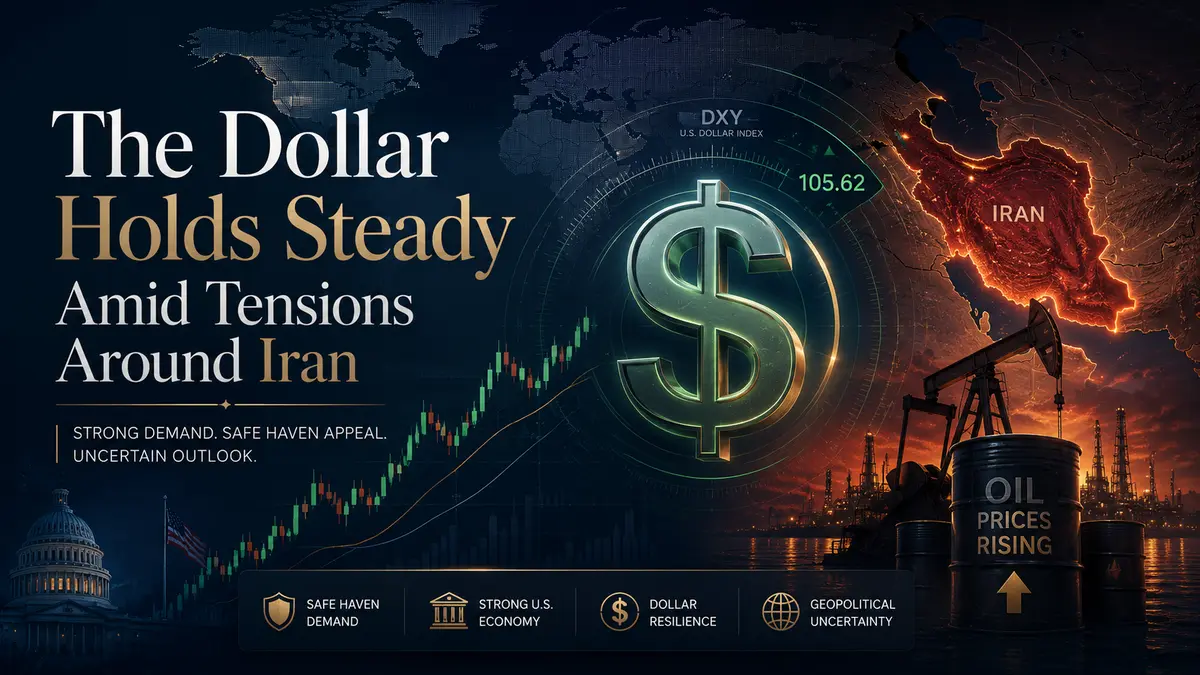
The Dollar Holds Steady Amid Tensions Around Iran

The Dollar Holds Steady Amid Tensions Around Iran

Introduction: The Thursday When Geopolitics Met Monetary Policy

Thursday. The Asian trading session opens, and investors across the region are watching their screens with a sense of tense anticipation. The U.S. dollar has stabilized, but this is not calm — it is the calm before the storm. The resumption of U.S. military actions against Iran has created a new wave of uncertainty, while the minutes of the Federal Reserve’s June meeting, published the previous day, showed that policymakers were sharply divided over further interest rate hikes.

The dollar index settled at 100.760 points after a volatile overnight session. At first, the renewed military confrontation between the United States and Iran supported the dollar as a safe-haven asset. Then the Fed minutes, which revealed disagreements within the regulator, triggered a sharp reversal. Still, the dollar remained near its recent 13-month highs.

The Chinese yuan was almost unchanged after restrained June inflation data. The consumer price index rose by 1% year-on-year, falling short of the 1.1% forecast. The producer price index, by contrast, climbed to a four-year high of 4.1% due to high energy and raw material prices.

The Japanese yen remained near 40-year lows, keeping markets on edge as they awaited possible currency intervention by the government. Tokyo has been warning for several weeks about excessive speculation against the yen, but markets continue to ignore these warnings.

Most Asian currencies traded in narrow ranges. The Australian dollar edged slightly higher, the South Korean won remained stable, and the Singapore dollar and Indian rupee were almost unchanged. Markets froze while waiting for new signals.

Let’s break down what is really happening in currency markets, why the dollar remains stable amid a geopolitical crisis, and how the Fed minutes affected investor expectations.

Geopolitical Background: Iran Back in the Spotlight

The Resumption of U.S....

Continue reading...
0
0
Tom Maffin

Asian Currencies Freeze as Markets Await Fed Signals

Asian Currencies Freeze as Markets Await Fed Signals

Introduction: A Tuesday When the Market Held Its Breath

Tuesday, the Asian trading session. Traders in Tokyo, Seoul, Shanghai, and Singapore are watching their screens, but the markets have frozen in an unusual state of suspense. Most Asian currencies are trading in narrow ranges, as if lying low before a jump. The dollar stabilized after a sharp drop last week, but no one wants to open large positions before new signals from the Federal Reserve appear.

What is happening? Markets are in a state of waiting. The main event of the week is the release of the minutes from the Fed’s June meeting, scheduled for Wednesday. These minutes may provide key signals about how members of the regulator assess the current economic situation and what steps they are ready to take in the coming months.

The Japanese yen strengthened slightly after the release of strong wage income data, but the currency still remains near 40-year lows. Markets are closely watching for a possible new intervention from Tokyo, especially since officials have been warning for several weeks about excessive speculation against the yen.

Concerns about renewed attacks in the Strait of Hormuz also weighed on local markets. Oil prices rose after reports that Iran had attacked vessels in this waterway. For Asian countries that depend heavily on energy imports, this creates additional uncertainty.

The dollar index was virtually unchanged during Asian trading, recovering from last week’s decline caused by weak U.S. labor market data. However, the dollar’s losses are limited by bets that persistent inflation will still keep the regulator’s stance tight in the coming months.

A broader range of Asian currencies also remained mostly unchanged while awaiting new economic data this week. The Chinese yuan, Singapore dollar, and Indian rupee all froze in narrow ranges. Even the South Korean won,...

Continue reading...
0
0

Asian Currencies Weaken as the Yen Faces the Threat of Intervention

Asian Currencies Weaken as the Yen Faces the Threat of Intervention

Introduction: A Monday When the Dollar Goes on the Offensive Again

Monday, the Asian trading session. Traders in Tokyo, Seoul, Shanghai, and Singapore open their terminals and see a familiar picture: the dollar is advancing again. Most Asian currencies have weakened, while the Japanese yen remains near 40-year lows, forcing markets to stay alert for possible government intervention.

USD/JPY rose by 0.3% to 161.82 yen, remaining close to levels last seen in 1986. This is not just a number; it is a psychological threshold beyond which the territory of intervention begins. Japanese officials have been issuing verbal warnings for several weeks, but markets have largely ignored them.

What is happening? A weak U.S. labor market report last week, which cast doubt on the Fed’s ability to raise rates, should have weakened the dollar. And indeed, the dollar index fell by 0.5% over the week. But on Monday, it began rising again, recovering part of its losses. The reason is persistent concern over stubborn U.S. inflation, which may force the Fed to maintain a tough policy stance in the coming months.

The yen remains the main victim of this dollar rally. The Bank of Japan raised interest rates in June and warned of possible further tightening, but this did not help. The interest rate gap between the United States and Japan remains enormous, and as long as this gap persists, the yen will remain under pressure.

Other Asian currencies are also feeling uncertain. The South Korean won, Chinese yuan, Singapore dollar, Taiwan dollar, and Indian rupee have all weakened against the dollar. Even the Australian dollar, often considered a barometer of commodity markets, fell by 0.2%.

This week, the focus will be on the minutes of the Fed’s June meeting. They may provide additional signals about the path of interest rates....

Continue reading...
0
0
Tom Maffin

The Dollar Catches Its Breath After the Bond Storm

The Dollar Catches Its Breath After the Bond Storm

Tuesday morning on the currency market began in relative calm. The U.S. dollar index and dollar futures stabilized during Asian trading, offering a long-awaited pause after several days of relentless selling in the bond market that had dragged virtually every other asset down with it. Investors, exhausted by surging yields and constant repricing of interest-rate expectations, stepped back to reassess the situation and consider what might come next.

Two factors helped trigger this temporary relief.

The first was a technical correction in the Treasury market. Yields on 10-year U.S. government bonds fell by half a percentage point from levels that had hovered near yearly highs just a day earlier. Thirty-year yields dropped by two-tenths of a percentage point after coming within arm’s reach of their highest levels in nineteen years. Nineteen years ago is so far back that many traders sitting at their terminals today were still in school — or had not even considered a career in finance.

The second factor was oil. The bond selloff eased alongside declining energy prices. The reason for that decline has a name: Donald Trump. The American president stated that he had postponed a planned military operation against Iran and that negotiations were progressing successfully. Markets, which had spent recent weeks bracing for the possibility of another Middle East war, interpreted the statement as a cautiously optimistic signal. Oil moved lower, and bonds calmed down with it.

Still, this calm remains highly conditional. Oil prices continue to hold onto much of their recent gains, and the inflationary consequences of the Iranian conflict have not disappeared. Markets remain tense — just slightly less tense today than yesterday.

The Japanese Paradox: The Economy Grows, the Yen Falls

The most intriguing story of Tuesday revolves around the Japanese yen. The dollar-yen pair rose by one-tenth of...

Continue reading...
0
0
Navigation menu
instaforex banner