

Dollar at a 2.5-Month High: The Fed Sends a Signal, Iran Adds Fuel to the Fire
Introduction: the day the greenback got even stronger
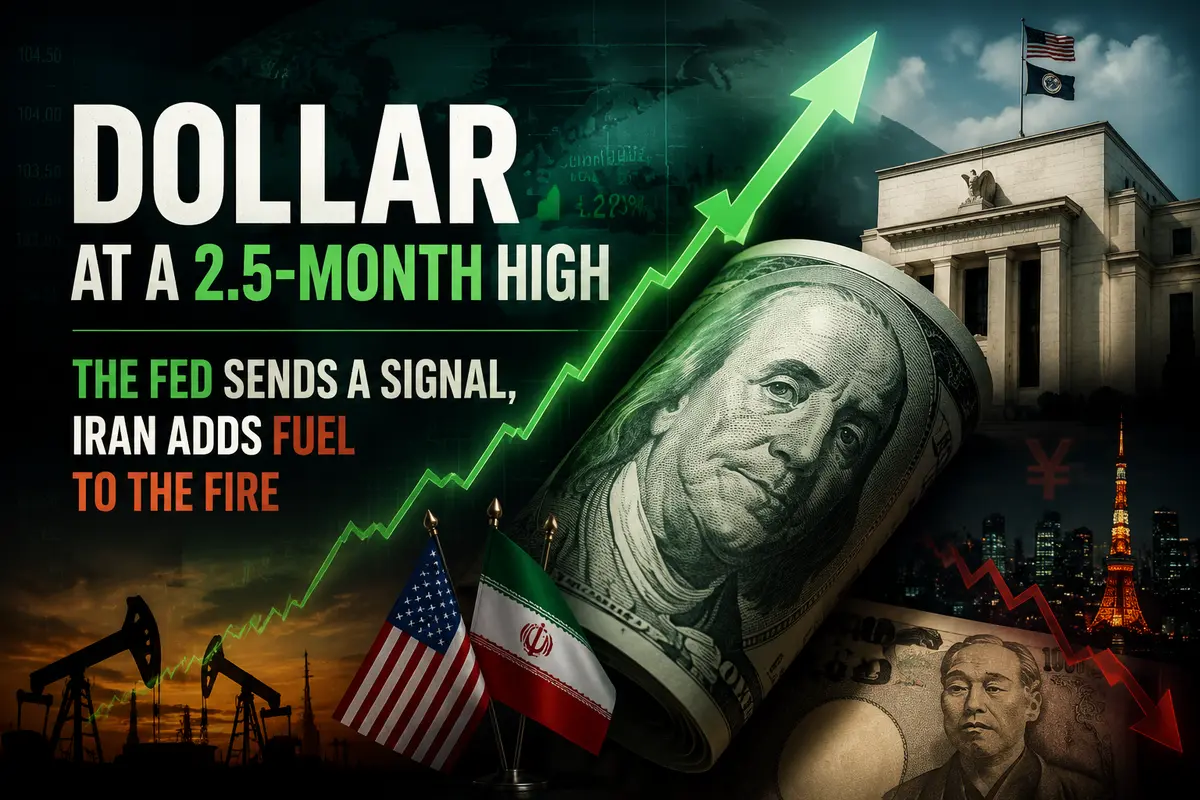
The currency market at this hour looks like a set of swings someone has violently pushed and let go. The US dollar, the world’s primary currency, has climbed to a two-month high and doesn’t seem eager to come back down anytime soon. The USD index, which measures the dollar’s strength against a basket of major global currencies, rose another 0.2% in Asian trading on Thursday, following a solid 0.6% jump on Wednesday. The last time we saw these levels was at the end of March.
So what happened? The Fed didn’t raise rates. And a peace move involving Iran was supposed to calm markets. Yet the dollar keeps rising. Behind this apparent paradox lies a complex interplay of expectations, policy signals, and geopolitical shifts that is forcing investors worldwide to rethink their strategies.
Let’s break down why the US currency is feeling so confident that Japanese authorities are already preparing their pencils for another intervention—and why a temporary agreement with Iran, which was expected to weaken the dollar, has instead reinforced it.
The Fed: a hawkish dove or a dovish hawk
A pause that sounds like a warning
The Federal Reserve meeting on Wednesday was one of those events markets wait for with bated breath, then dissect every word of the statement. Formally, everything was predictable: interest rates were left unchanged. But if you think investors were relieved, you would be mistaken.
The Fed delivered what financial markets call a “hawkish pause.” It kept rates steady but made it clear that the tightening cycle is not over. Moreover, policymakers still see room for further hikes later this year. These are not empty words.
Updated projections showed that nine out of nineteen Fed officials expect at least one rate hike by the end of 2026. Nine out of nineteen is almost half. And this is despite US inflation no longer being what it was a year ago and the labor market still showing resilience.
Markets took this signal seriously. Interest rate futures tracked by CME FedWatch immediately repriced probabilities: now 83% of traders are pricing in a rate hike by December. Just a couple of weeks ago, those odds were 50/50. In a single day, the market shifted from “maybe” to “most likely.”
Rising yields, strengthening dollar
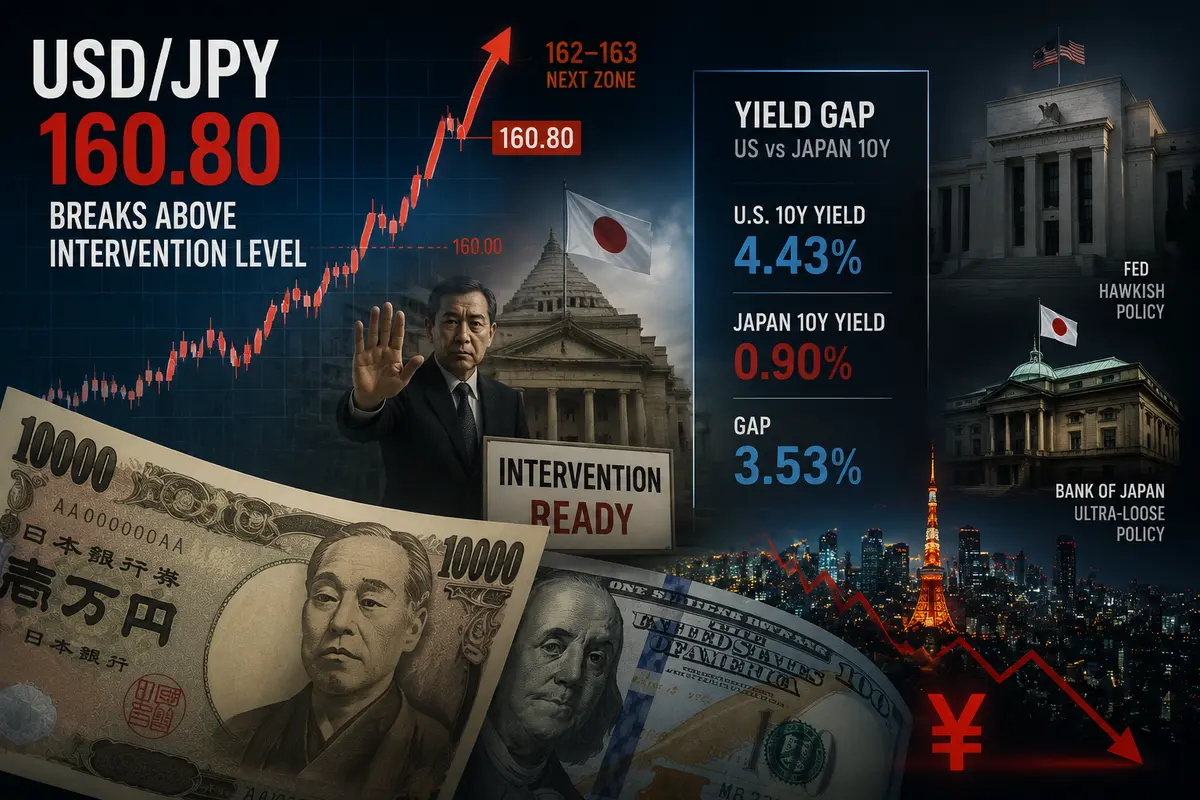
As rate expectations shifted, US Treasury yields followed. The policy-sensitive 2-year notes jumped to levels not seen in over a year. Meanwhile, 10-year bonds approached 4.43%.
US government bonds are the anchor of global finance. When their yields rise, they become more attractive to investors worldwide. Money flows out of other assets and currencies into US debt—creating demand for the dollar itself. It’s a simple mechanism, but it works reliably.
Higher yields also mean higher borrowing costs for the US government, but for currency markets the key effect is different: higher US rates signal a stronger economy and support a stronger dollar relative to currencies whose central banks cannot match such aggressive policy.
The Iran factor: peace that didn’t weaken the dollar
A deal everyone expected—but not this fast
While the Fed was meeting in Washington, another major event occurred: the US and Iran signed a temporary peace agreement. The deal extends the ceasefire regime and lays the groundwork for broader negotiations.
At first glance, news of peace in the Middle East should have weakened the dollar. Less geopolitical tension usually means less demand for safe-haven assets—therefore a weaker dollar. This logic has held for decades. But not this time.
The agreement did help push oil prices lower. Cheaper oil benefits energy-importing countries, especially in Europe and Asia. But for the dollar, lower oil prices turned out to be largely neutral. The dominant driver of the dollar’s strength right now is not geopolitics—it is monetary policy.
As long as the Fed signals potential further hikes, all other news takes a back seat. Peace with Iran does not change the fact that the US economy remains strong and rates are likely to stay higher for longer. This “higher for longer” narrative is what keeps the dollar supported and even pushes it higher.
Oil is cheaper, but the dollar doesn’t fall
In theory, peace with Iran and cheaper oil should create a classic “risk-on” environment that weakens the dollar. Investors usually move out of safe havens and into emerging market currencies. But this mechanism has broken down.
The reason is that investors still see the US as a safe haven in an unstable world. Europe is showing weak growth, China is dealing with a property crisis, and Japan is struggling with a weakening yen. The US, despite inflation and high rates, still looks more attractive.
Cheaper oil also lowers inflation expectations. Paradoxically, that helps the dollar, because it gives the Fed more room to maintain a hawkish stance. If inflation isn’t accelerating, the central bank can keep rates higher for longer without fear of overheating the economy.
So instead of weakening the dollar, the Iran agreement has unintentionally strengthened it.
Asia: yen under pressure, yuan weakening
Japan: 160 yen per dollar and intervention looming
Among Asian currencies, the Japanese yen is under the most pressure. The USD/JPY pair jumped to 160.80 on Wednesday, exceeding levels that previously triggered official intervention. At that time, Japanese authorities stepped in to support the currency and temporarily cooled speculation.
Now the dollar is pushing higher again, and 160.80 has been broken. Analysts at ING suggest Japanese authorities may need to prepare for 162–163 before intervening again.
The driver is clear: aggressive Fed policy lifting US yields, while the Bank of Japan remains one of the few central banks still maintaining ultra-loose policy. Even though it has started raising rates, the increases are minimal, and the yield gap between US and Japanese bonds remains enormous.
As long as this gap persists, the yen will remain weak. Intervention may slow the trend, but it cannot reverse it while monetary policy divergence continues.
China and other Asian currencies
The dollar is also pressuring other Asian currencies. The Chinese yuan is weakening alongside the yen, though more gradually. The People’s Bank of China is managing the currency within a controlled range, but the direction is still downward.
Indian rupee, Indonesian rupiah, and Thai baht are all feeling the strain. Central banks must either spend reserves to support their currencies or accept depreciation and imported inflation.
Countries with large dollar-denominated debt are especially vulnerable. A stronger dollar makes debt servicing more expensive, increasing fiscal and corporate risks. This is a classic “dollar squeeze” scenario seen many times in emerging markets.
For now, however, conditions are not critical. Asian markets are adjusting, and the declines remain manageable. But if the dollar continues rising and the Fed hikes again, pressure could intensify significantly.
What next: will the dollar keep dominating?
Three scenarios for the coming months
1. Continued dollar strength
This is the most likely outcome if the Fed hikes rates again in December while other central banks remain on hold or ease policy. The USD index could break new yearly highs, with USD/JPY and EUR/USD reaching multi-decade extremes.
2. Dollar stabilisation
This could happen if US inflation data improves and the Fed signals the peak rate has been reached. Markets like certainty, and volatility would decline as the dollar finds equilibrium.
3. Dollar weakening
This would require a US economic slowdown or a major reduction in global risk, prompting investors to rotate out of the dollar. For now, this scenario looks unlikely.
The role of oil and geopolitics
Oil remains an important factor. If Iranian oil returns to global markets and prices continue falling, this could have a disinflationary effect in Europe, Asia, and even the US.
However, the Fed focuses more on core inflation, which excludes volatile components like energy. If lower oil prices don’t translate into lower core inflation, the Fed may ignore the signal.
Moreover, the Iran situation remains fragile. The agreement is temporary, and any escalation could quickly reverse oil prices and risk sentiment, impacting the dollar again.
Conclusion: the dollar at the center of global turbulence
The US dollar at a two-month high is not just a number—it reflects a complex interaction of economic, political, and psychological forces shaping global financial flows.
The Fed has sent a clear message: inflation must be fully defeated before policy eases. This signal has become the main driver of dollar strength, overshadowing even major geopolitical developments like the US-Iran agreement.
Paradoxically, the Iran deal—expected to weaken the dollar—has strengthened it by lowering oil prices and reinforcing the Fed’s hawkish stance. The result is a circular logic: peace → cheaper oil → lower inflation risk → more room for high rates → stronger dollar.
The Japanese yen is the main casualty of this cycle, continuing to weaken as intervention looms. But as long as monetary policy divergence persists, the trend is unlikely to reverse.
Asia, Europe, and emerging markets are watching the dollar’s rise with growing concern. But they have limited tools to counter it. They can only adapt to a world where the dollar once again dominates and the US economy sets the tone for global finance.
The coming weeks will show how durable this trend is. If the Fed continues signaling higher rates, the dollar may climb further. If US growth slows, the rally may pause. But one thing is certain: the dollar remains the world’s dominant currency—both a shield and a source of global financial pressure.

Comments
No comments yet. Be the first to share your thoughts!
Authentication Required
You must be logged in to post a comment.