Bar Pipa
We pay for a post of 10$

ECB

Rose Gramit

Currency Swings: The Dollar Loses Ground, the Euro Gains Momentum, and the Yen Balances on the Edge
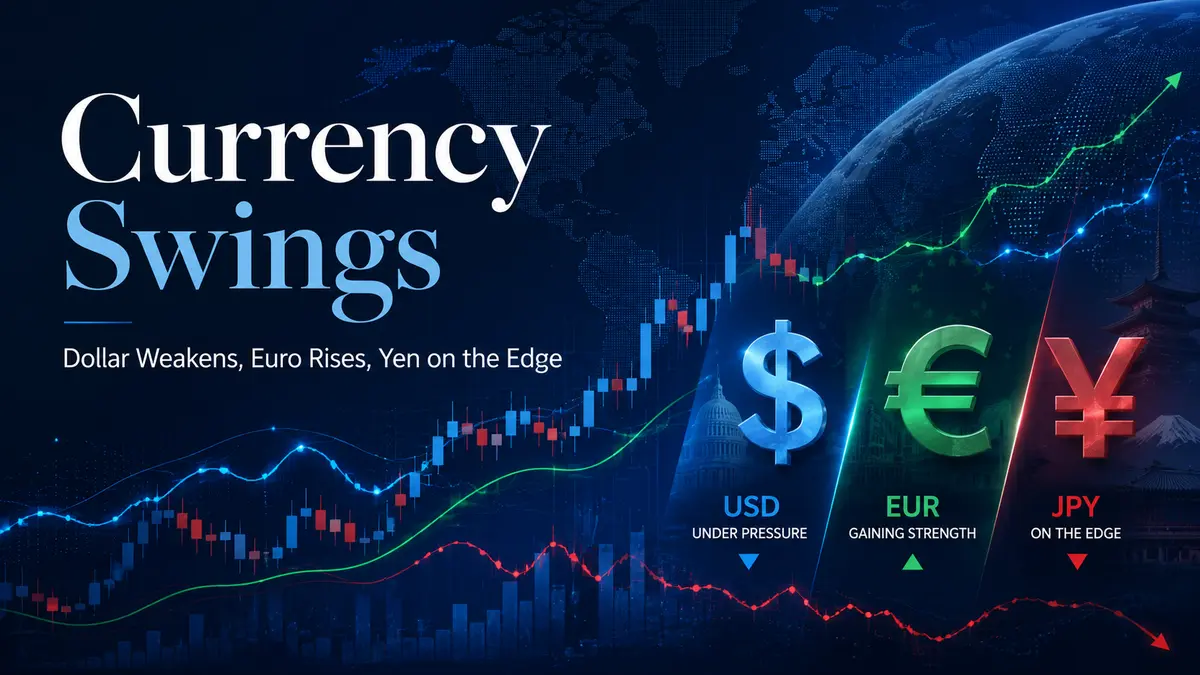
Currency Swings: The Dollar Loses Ground, the Euro Gains Momentum, and the Yen Balances on the Edge

The Calm Before the Storm: Markets Hold Their Breath Ahead of the ECB Decision

Thursday began on the currency markets with quiet but unmistakable tension. The U.S. Dollar Index, a barometer of global confidence in the American currency, edged lower to 101.02. The decline was barely noticeable, but against the backdrop of recent events, it carried symbolic significance. The dollar was losing ground to the euro, which climbed to a one-week high ahead of the European Central Bank’s crucial monetary policy decision.

Investors around the world were holding their breath. Later today, the ECB is expected to announce its decision on interest rates. Although markets almost unanimously expect rates to remain unchanged, the real intrigue lies elsewhere: will policymakers maintain their hawkish rhetoric? Will they hint at another rate increase later this year? The answers could determine not only the euro’s future but also the direction of global capital flows.

As always, geopolitics is adding fuel to the fire. The Middle East remains engulfed in conflict. The U.S. military has carried out new strikes against Iran, while Yemen’s Houthis, loyal to their regional patron, have attacked oil tankers in the Red Sea. Brent crude remains firmly above $95 per barrel, creating a serious headache for central banks already struggling with inflation and now facing another surge in energy prices.

Despite its slight decline, the dollar remains a safe-haven currency. When the world becomes unstable, investors usually rush into the USDEUR ... U.S. dollar. Today, however, that classic mechanism appears to have malfunctioned. At least in the short term, the euro looks more attractive ahead of the ECB meeting.

European Central Bank: Hawks and Doves Enter a New Round

The ECB decision expected today is more than a technical procedure. It is a political and economic manifesto. President Christine Lagarde and her...


Continue reading...
0
0

Retail Sales in Italy Rose by 0.2% in May: Numbers That Say Nothing About Consumer Sentiment

Retail Sales in Italy Rose by 0.2% in May: Numbers That Say Nothing About Consumer Sentiment

Introduction: Italian Shopping That Neither Delights nor Alarms

Friday. Rome, Milan, Naples — Italians are opening their wallets slightly wider than in previous months. The National Institute of Statistics, ISTAT, has published retail sales data for May, and the figures look... rather dull. Sales rose by 0.2% compared with April, when the indicator did not change at all. In annual terms, growth was 2.2%, slightly better than the revised April increase of 1.7%.

For the eurozone’s third-largest economy, this is neither a victory nor a defeat. It is more of a confirmation that the Italian consumer continues to spend, but without enthusiasm, without excitement, and without the confidence that drove markets in pre-COVID times.

Sales of food products increased by 0.2% month-on-month. Non-food goods also rose by 0.2%. Everything is even, everything is predictable, everything is within the margin of statistical error. Inflation in Italy, measured by the Harmonised Index of Consumer Prices, stands at 3.2% year-on-year. In other words, real sales growth, if inflation is deducted, is almost zero.

But let’s not rush to conclusions. Behind these dry figures lie many nuances: seasonal factors, regional differences, and consumer behavior patterns. And most importantly, the question of what these numbers say about the overall state of the Italian economy. Because retail sales are not just statistics — they are a mirror of consumer confidence, and consumer confidence is the engine of economic growth.

Let’s dig deeper. What really stands behind the 0.2% increase? Why is Italy, a country that has survived more than one crisis, now showing such sluggish momentum? And what does this mean for the future of the eurozone economy as a whole?

Figures and Context: What ISTAT Says

May vs. April: Stability Without Momentum

Let’s start with the most obvious point. Retail sales in Italy rose by...

Continue reading...
0
0
Lin Brings

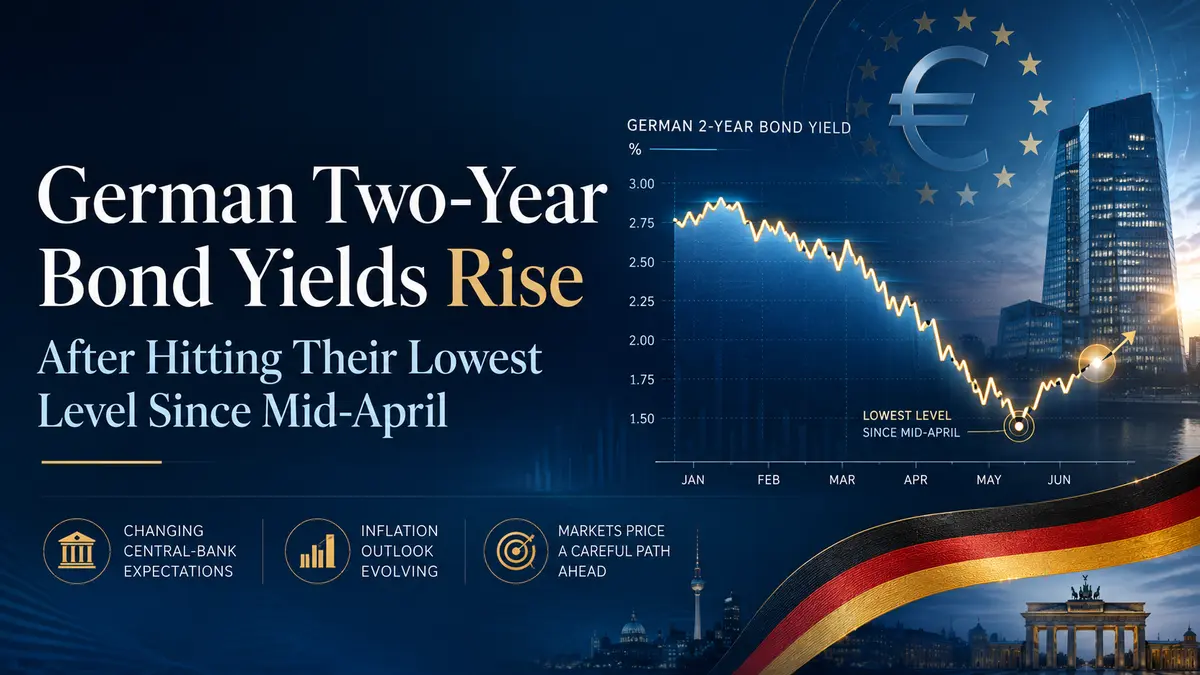
German Two-Year Bond Yields Rise After Hitting Their Lowest Level Since Mid-April

German Two-Year Bond Yields Rise After Hitting Their Lowest Level Since Mid-April

Introduction: A Rebound After the Drop

Friday. European markets are opening after a turbulent Thursday, when German two-year bonds experienced a powerful rally that pushed their yields down to the lowest levels since mid-April. 2.51% — this is what short-term eurozone bonds now offer, and this figure symbolizes not just a technical rebound, but a deep reassessment of expectations about where the global economy is heading.

What happened over these few days? Markets went through a real information storm that completely washed away previous forecasts. U.S. employment data, which came in significantly weaker than expected, became the trigger that forced investors to reconsider their bets on further Fed rate hikes. Then came European inflation figures, which were also below forecasts, along with geopolitical news from Qatar, where the United States and Iran continue peace talks.

All of this together created a new narrative — a narrative suggesting that inflation risks are retreating and central banks may be able to adopt a softer stance. German two-year bonds, which have always been the most sensitive indicator of expectations regarding ECB rates, reacted faster than anything else. Their yield first collapsed, and then, on Friday, corrected slightly upward — but this is only a technical correction after an excessively sharp move.

Nevertheless, even taking this small increase into account, yields remain significantly below the levels seen at the beginning of the week. This indicates that markets are taking seriously a scenario in which central banks pause their tightening cycle and may even begin considering rate cuts. But is everything really that simple? Let’s take a closer look.

U.S. Labor Market Data: An Unexpected Cold Shower

The Numbers That Changed Expectations

The main event of the week, which changed the balance of power in the markets, was the U.S. employment data for June. Economists...

Continue reading...
0
0

Eurobond Yields Rise amid Hawkish Rhetoric in Sintra

Eurobond Yields Rise amid Hawkish Rhetoric in Sintra

Introduction: The Portuguese Coast Where Hopes Break Apart

The coast of Sintra, with its fairy-tale palaces and sweeping ocean views, has always seemed like a place for inspiration and romance. But these days, the Portuguese city has turned into the epicenter of a harsh financial reality. The European Central Bank’s annual forum, which brings together the world’s leading central bankers, has this year become not merely a platform for exchanging views, but a battlefield for investors’ expectations.

The outcome of the two-day debate came as a surprise to those accustomed to soft wording and cautious signals. The hawkish rhetoric voiced by Federal Reserve Chair Kevin Warsh and ECB President Christine Lagarde immediately reverberated across sovereign debt markets. The yield on benchmark 10-year German bonds, which had recently been falling toward multi-month lows, reversed course and began climbing toward 2.95%.

All of this is happening at a time when inflation risks appeared to be receding. Oil has fallen to levels not seen since before the start of geopolitical turmoil, global supply chains are normalizing, and the eurozone economy is sending mixed signals. But the central bankers gathered on the Atlantic coast made one thing clear: the party is over. Inflation has not yet been defeated, and rate cuts are not a matter for the coming months.

Investors who had already begun pricing in imminent policy easing found themselves confused. Their expectations crashed against the firm statements made in Sintra just as Atlantic waves crash against the cliffs of Cabo da Roca. Bond markets are now undergoing a painful repricing.

What did Warsh and Lagarde actually say? Why have Eurobonds, which had protected capital during periods of uncertainty, begun to lose ground? And how will this shift affect the eurozone economy in the coming months? Let’s take a closer look.

Sintra 2026:...

Continue reading...
0
0

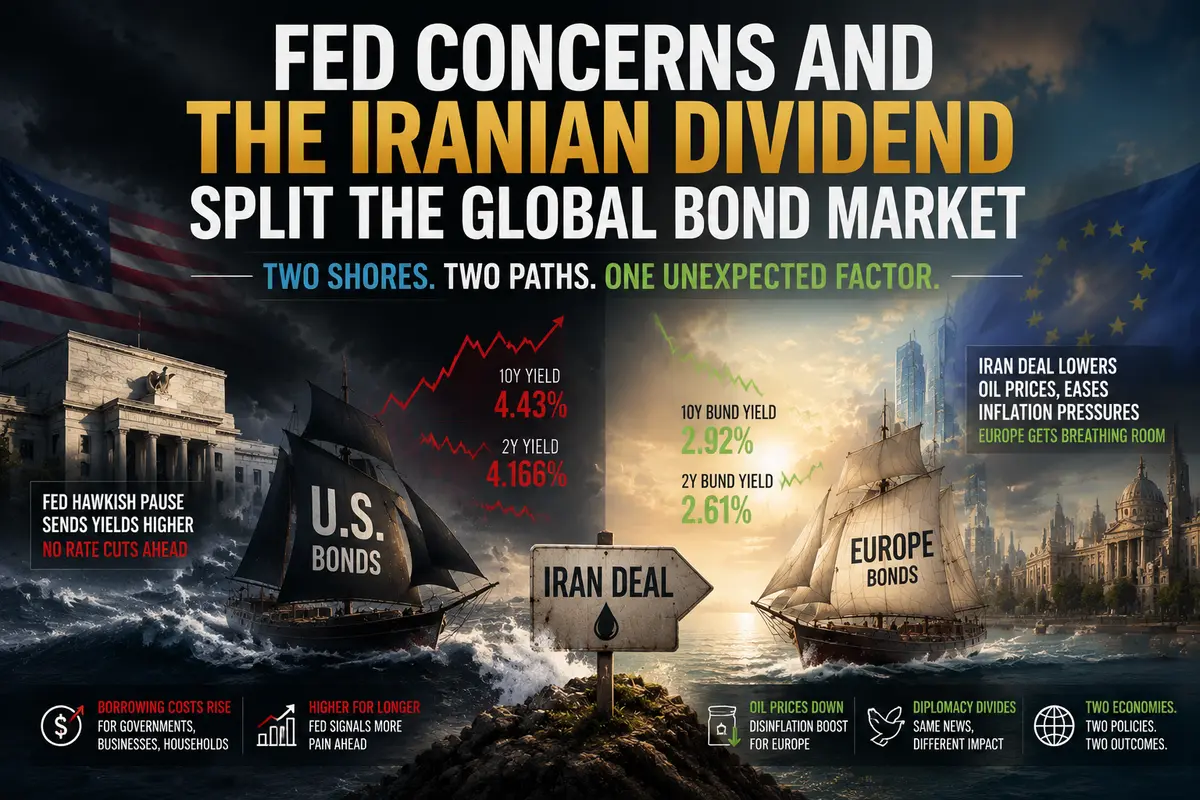
Fed concerns and the Iranian dividend split the global bond market

Fed concerns and the Iranian dividend split the global bond market

Introduction: two shores of the same Atlantic

Imagine two ships sailing in the same ocean but caught in completely different currents. One is racing forward with a tailwind, its crew confident in its course and ready to tighten the sails. The second is barely moving, its holds underfilled, and its captain anxiously scanning the horizon. That is roughly what the government bond markets on both sides of the Atlantic look like today.

What we are seeing in recent days is not just ordinary yield fluctuations. It is a tectonic rupture exposing fundamental differences in the economic trajectories of the United States and Europe. On one side is the Federal Reserve’s aggressive rhetoric, signaling that the era of cheap money has not ended, only paused. On the other is Europe, where every new price signal from the Middle East is perceived as a potential escape from inflationary suffocation.

And at the center of this storm sits an unexpected factor that would normally seem secondary in any other year — a temporary agreement between the United States and Iran. What diplomats discussed in negotiation rooms, bond traders instantly translated into numbers and charts. And those numbers began speaking different languages on opposite sides of the ocean.

Let’s unpack what is really happening in the bond market, why the Fed and the ECB are looking in different directions, and how a peace initiative with Iran unexpectedly became a point of division for investors.

The Fed said “pause,” markets heard “attack”

A hawkish pause: how unchanged rates became a tightening signal

Thursday, Federal Reserve meeting. Everyone expected a rate decision. And it came — no change. But if you think markets breathed a sigh of relief, you are very wrong. In the world of central banking, it is often not the decision itself that...

Continue reading...
0
0

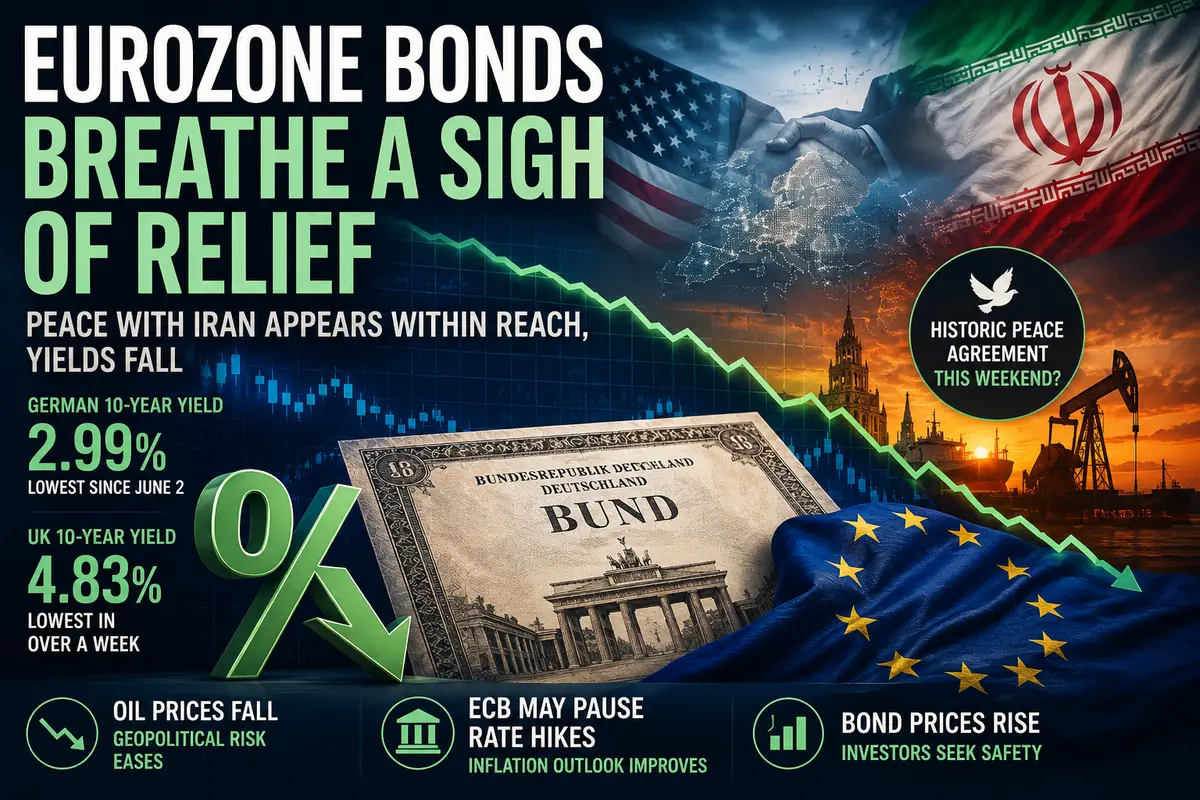
Eurozone Bonds Breathe a Sigh of Relief: Peace with Iran Appears Within Reach, Yields Fall

Eurozone Bonds Breathe a Sigh of Relief: Peace with Iran Appears Within Reach, Yields Fall

Friday: A Day of Hope for Diplomacy

On Friday morning, European markets woke up with the feeling that the heavy burden weighing on them for months had suddenly become a little lighter. It had not disappeared or melted away—it simply stopped suffocating them. Eurozone government bonds rallied, which means their yields declined.

That may sound counterintuitive to those accustomed to thinking that “up” is good and “down” is bad. In the bond market, however, the opposite is true: when bond prices rise, yields fall. And on Friday, the yield on benchmark 10-year German Bunds dropped below 3% for the first time since early June.

Three percent is a psychological threshold. Above it lies a zone of pain, where borrowers—governments, corporations, and mortgage holders—feel the rising cost of money. Below it lies a zone of relief, even if that relief proves temporary.

What happened? Geopolitics.

Donald Trump, who rarely delights markets with predictability, delivered a statement that bond traders would almost be willing to build him a monument for. He said that a historic peace agreement between the United States and Iran could be signed in Europe as early as this weekend.

If true—and Trump is known for presenting wishes as realities—the conflict in the Middle East, which has flared on and off since spring, could finally come to an end. Iran would stop threatening to close the Strait of Hormuz. Israel would halt strikes on the outskirts of Beirut. Oil prices, already at two-month lows, could fall even further. Eurozone inflation, fueled by expensive energy, would begin to slow. And the European Central Bank (ECB), which has been forced to raise interest rates to combat inflation, could at least afford to pause.

All of this is music to the ears of bondholders.

Bonds thrive on low inflation and low interest...

Continue reading...
0
0
Lin Brings

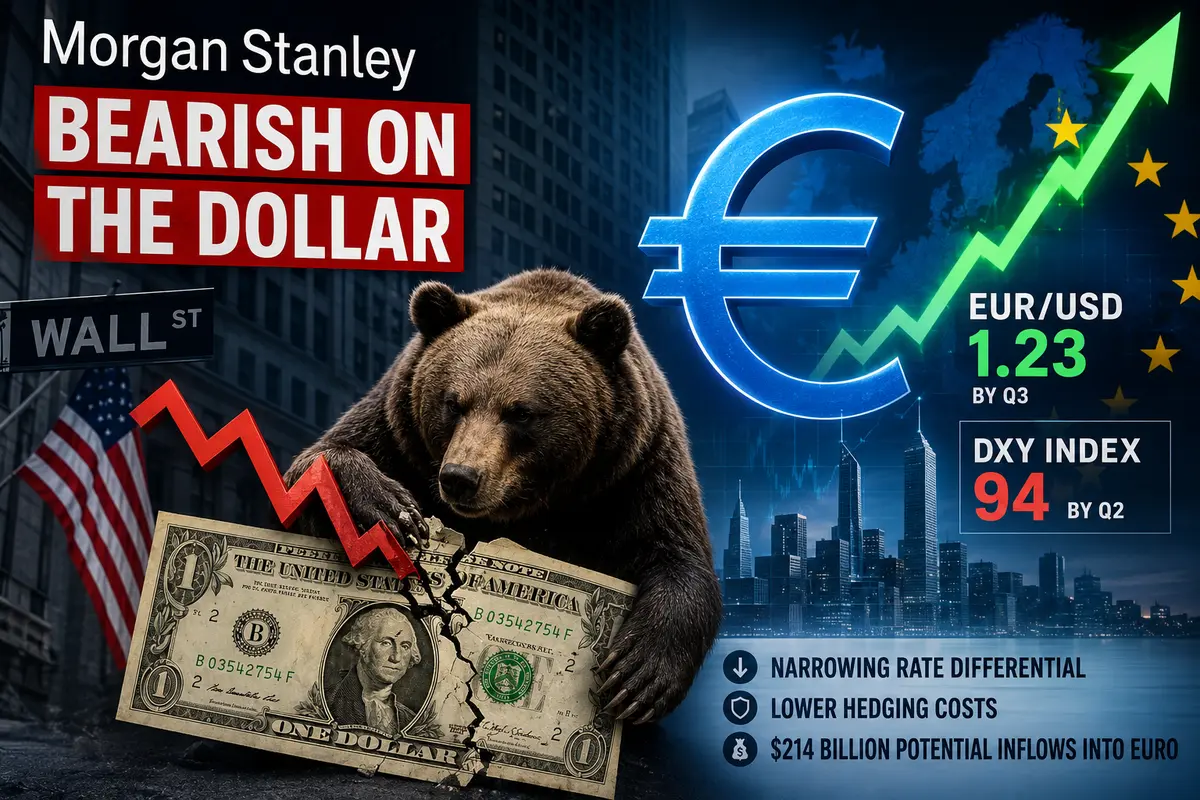
Morgan Stanley Against the Crowd: A Bearish Dollar View in a Year When Everyone Expects Strength

Morgan Stanley Against the Crowd: A Bearish Dollar View in a Year When Everyone Expects Strength

A Voice from New York: “We Are Bearish”

While much of Wall Street continues to chant “the dollar is king,” and traders around the world keep buying the U.S. currency following strong employment data while pricing in a Federal Reserve rate hike in December, a very different message is coming from Morgan Stanley’s New York office.

David Adams, Head of G-10 FX Strategy, states it plainly and without hesitation: “We are bearish on the dollar.”

This is not a cautious suggestion that “a correction is possible,” nor a diplomatic warning to “remain vigilant.” It is a clear and unambiguous signal: Morgan Stanley believes the U.S. dollar is headed lower. Not necessarily today or tomorrow, but over the coming quarters—specifically during the second and third quarters of this year.

Their reasoning is straightforward. While the Federal Reserve remains on hold, other central banks—particularly the European Central Bank (ECB)—continue to tighten monetary policy. The interest-rate differential is narrowing, and when rate differentials shrink, the dollar loses one of its most important advantages.

Why the Fed’s Pause Could Hurt the Dollar

At first glance, the opposite should be true. Higher U.S. interest rates are generally positive for the dollar. Investors from around the world buy U.S. bonds because they offer attractive yields with relatively low risk. Demand for dollars rises, and the currency strengthens.

That is a basic principle taught in introductory economics courses.

Morgan Stanley, however, views the situation differently. Yes, U.S. rates remain high—but they are no longer rising. The Fed has paused. More importantly, markets have already priced in virtually all potential rate increases. From here, the next major move is more likely to be downward.

Europe, meanwhile, is moving in the opposite direction. The ECB, which lagged behind for much of the tightening cycle, is now catching up. Morgan...

Continue reading...
0
0
John Madnes

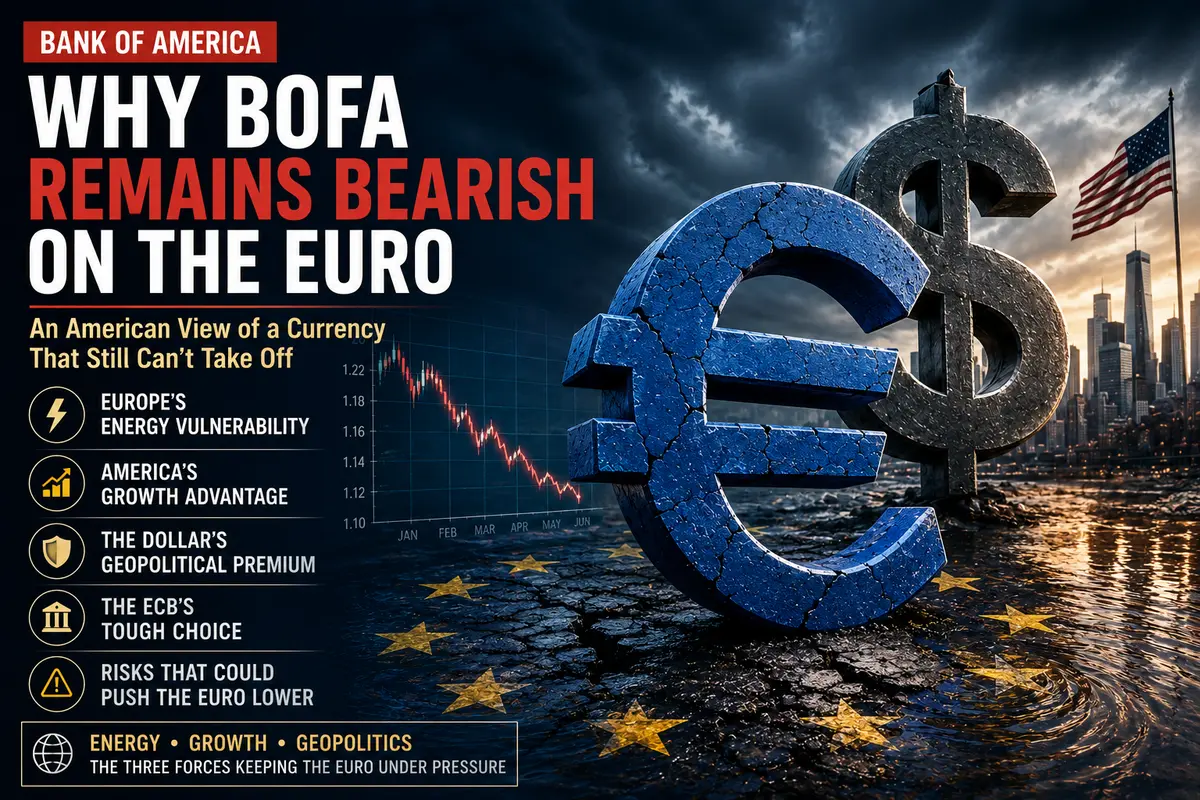
Why BofA Remains Bearish on the Euro

Why BofA Remains Bearish on the Euro

An American View of a Currency That Still Cannot Take Off

Bank of America, one of the world’s largest financial institutions, has not changed its view on the euro. It looks at the single European currency with caution bordering on pessimism — not catastrophic or panicked, but rather weary and pragmatic. BofA analysts see too many factors that will weigh on the euro in the coming months, and too few that could support it.

The euro is going through a difficult period. It is not collapsing, but it is not rising either. It is moving sideways around 1.16–1.17 against the dollar, sometimes slightly higher, sometimes slightly lower. Investors who just a year ago believed in a quick return to 1.20 and above are now simply hoping it will not fall to 1.10.

BofA offers no false hopes. Its analysts believe pressure on the euro will persist at least through the second and third quarters. Only toward the end of the year, if energy markets begin to normalize and eurozone growth improves, may the single currency have a chance to recover.

But what exactly is holding the euro back? Why can a currency serving an economy of 450 million people and GDP of 15 trillion euros not strengthen against the dollar? The answers lie in three areas: energy, economic growth, and geopolitics.

Europe’s Energy Curse

The first and perhaps main reason for the euro’s weakness is Europe’s energy vulnerability. BofA says directly: Europe remains more vulnerable to rising energy costs than the United States. This is not new, but under current conditions this vulnerability is becoming critical.

Natural gas prices have historically had a much stronger impact on the eurozone economy. European industry, especially Germany’s, was built on cheap Russian gas. After the start of the war in Ukraine and the...

Continue reading...
0
0
John Madnes

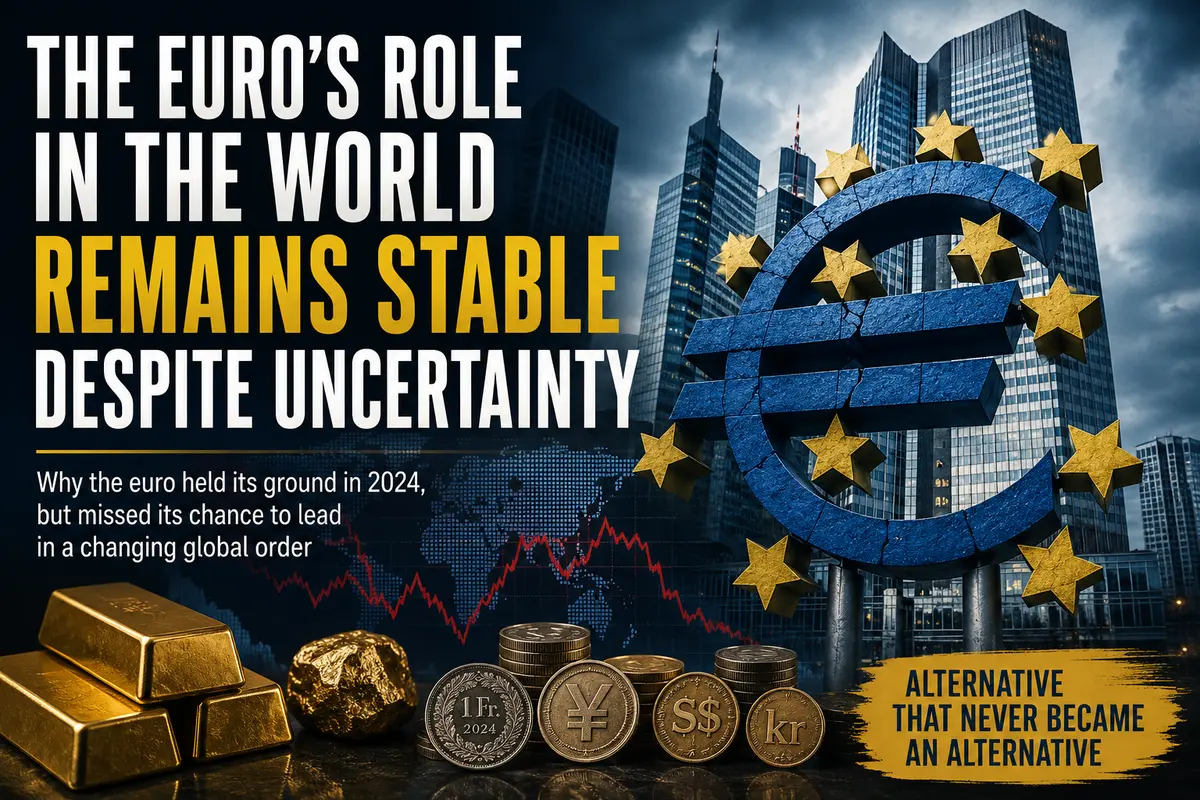
The Euro’s Role in the World Remains Stable Despite Uncertainty

The Euro’s Role in the World Remains Stable Despite Uncertainty

The Alternative That Never Became an Alternative

There was something almost tragicomic about it. Throughout 2024, analysts, economists, and geopolitical observers kept wondering: surely this is the moment when the euro finally makes its move.

The United States pursued such an unpredictable economic policy that even its own allies were left bewildered. Trade wars, abrupt policy reversals, public disputes within the administration—a perfect storm that should have pushed the world to look for an alternative to the dollar.

And that alternative already had a name: the euro. The world’s second-largest reserve currency. The natural contender for the throne.

But the world, as it often does, refused to behave as experts expected. It did not rush into the arms of the euro. In fact, it did not rush toward any single currency at all. Instead, investors, central banks, and major funds cast their votes for something else entirely: gold—and the currencies of small, often overlooked countries.

The euro remained roughly where it had always been, holding a share of about 20% of the global market.

These are not rumors or speculation. The figures were published on Tuesday by the European Central Bank (ECB) in its latest report. And, frankly, the numbers make for rather disappointing reading from a European policymaker’s perspective.

Because 20% is not bad. But it is not progress either. It is stagnation. And perhaps most frustrating of all, the euro’s current share remains below the level it enjoyed twenty years ago, in the early years of its existence.

Numbers That Don’t Lie

Let’s dispense with euphemisms. Twenty percent is not a commanding second place. It is a frozen picture.

The euro is neither growing nor shrinking. It is holding the line.

At first glance, given reports that the dollar is also losing ground, this could be framed as...

Continue reading...
0
0
Navigation menu
instaforex banner