

Gold Falls Amid Tensions Around Iran
Introduction: The Thursday When Gold Lost Its Shine
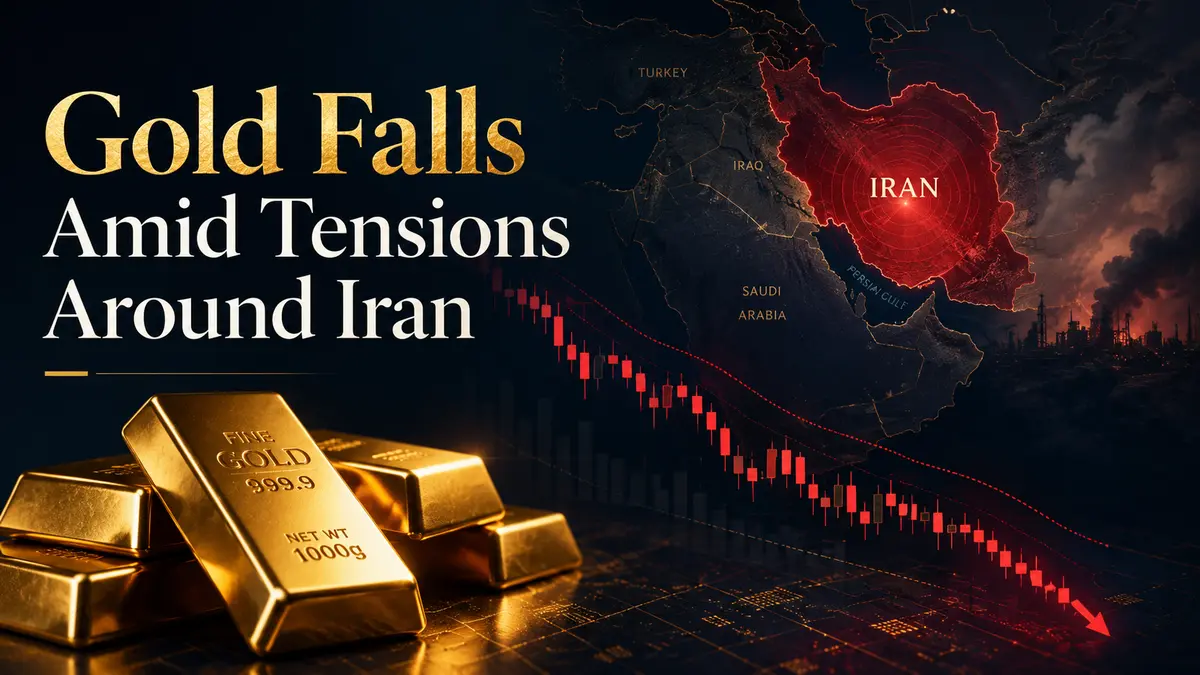
Thursday, Asian trading session. Traders in Shanghai, Singapore, and Tokyo open their terminals and see the yellow metal continuing to lose ground. The spot price of gold falls by 0.2% to $4,070.81 per ounce. Futures decline by 0.1% to $4,079.47. This marks the third consecutive decline for the precious metal, which is usually considered a “safe haven” during periods of uncertainty.
What is happening? The gold paradox. The resumption of hostilities between the United States and Iran should have supported gold prices, since geopolitical uncertainty traditionally pushes investors toward defensive assets. But instead, gold is falling.
The reason is a strengthening dollar. Renewed military activity between the U.S. and Iran triggered a sharp rise in oil prices, increasing concerns about persistent inflation driven by energy costs. And high inflation means high interest rates, which support the dollar and put pressure on gold.
The minutes of the Fed’s June meeting, published on Wednesday, turned out to be less “dovish” than markets had feared. Members of the regulator were largely divided over the need to raise rates this year. However, the minutes recorded growing concern among central bank officials about the persistence of inflation.
The dollar index is holding near the 13-month highs reached in June. The dollar benefited from fears of rising inflation. When the dollar rises, gold becomes more expensive for holders of other currencies, reducing demand and putting pressure on prices.
Other precious metals also mostly declined on Thursday. The spot price of silver fell by 0.5% to $58.0060 per ounce. Platinum, by contrast, rose by 0.5% to $1,594.0 per ounce.
ANZ analysts noted that any recovery in energy prices would strengthen expectations that the Fed may keep interest rates elevated for longer in order to fight stubbornly high inflation.
Let’s examine why gold is falling amid geopolitical tensions, how the dollar and inflation expectations affect prices, and what may happen to the yellow metal in the coming days.
The Gold Paradox: Why the Safe-Haven Asset Is Not Rising
Geopolitical Tensions vs. a Strong Dollar
Usually, geopolitical tensions support gold. Investors buy the yellow metal as a defensive asset during periods of uncertainty. But in the current situation, this logic is not working.
Why? Because inflation expectations have come to the forefront. The resumption of hostilities between the United States and Iran led to higher oil prices. And high oil prices mean high inflation. High inflation means high interest rates. High interest rates mean a strong dollar. And a strong dollar puts pressure on gold.
As a result, geopolitical tensions are supporting the dollar, not gold. Investors are moving into the dollar because it offers higher yields in an environment of high inflation.
Inflation Expectations and Interest Rates
Inflation expectations remain a key factor for gold. If inflation stays high, the Fed will be forced to keep interest rates elevated. This supports the dollar and weighs on gold.
The minutes of the Fed’s June meeting showed that members of the regulator are concerned about the persistence of inflation. This strengthened expectations that rates will remain high for longer.
As ANZ analysts noted, any recovery in energy prices would reinforce expectations that the Fed may keep interest rates elevated for longer in order to fight stubbornly high inflation.
The Dollar: Gold’s Main Enemy
The Dollar Index Near 13-Month Highs
The dollar index is holding near the 13-month highs reached in June. The dollar benefited from fears of rising inflation.
When the dollar rises, gold becomes more expensive for holders of other currencies. This reduces demand for physical gold and puts pressure on prices.
Interest Rates and the Dollar’s Appeal
High interest rates in the United States make dollar-denominated assets more attractive. Investors prefer to invest in the dollar because it offers higher yields.
This creates steady demand for the dollar, which puts pressure on gold.
Fed Minutes: Disagreements, but Not Dovish
What the Minutes Showed
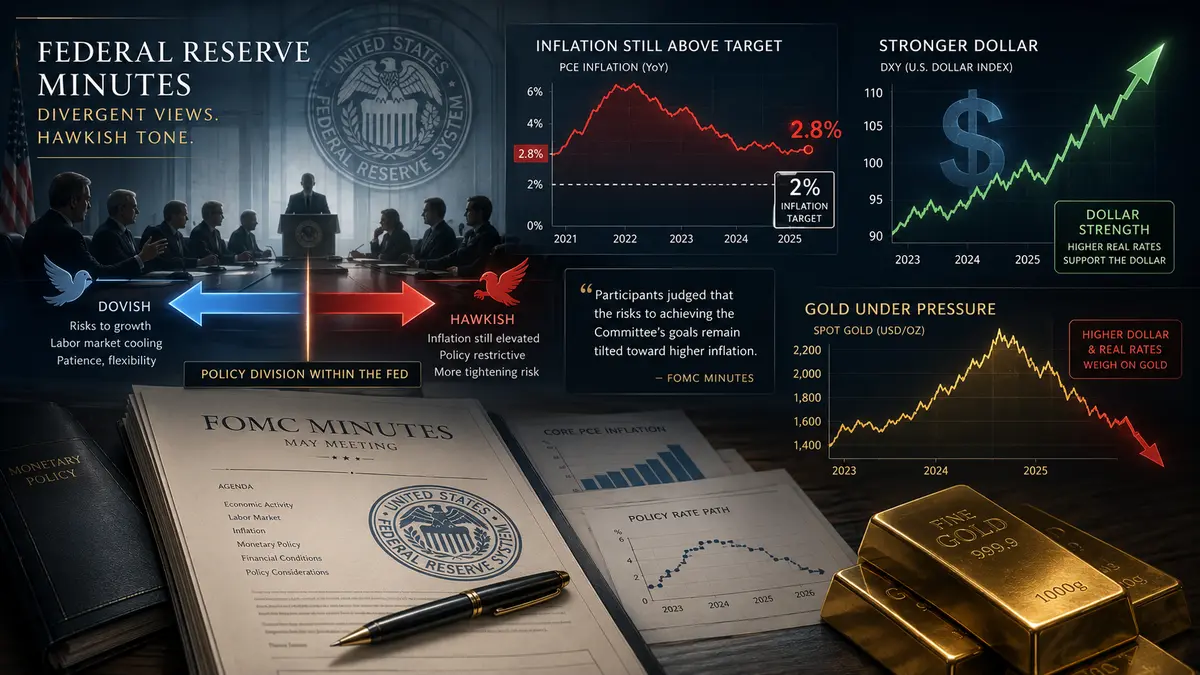
The minutes of the Fed’s June meeting, published on Wednesday, showed that members of the regulator were largely divided over the need for further interest rate hikes.
Some Fed members believe inflation remains too high and requires further policy tightening. Others believe the economy is beginning to slow and that additional rate hikes could hurt growth.
Concern About Persistent Inflation
The minutes recorded growing concern among central bank officials about the persistence of inflation. Inflation in the United States has accelerated sharply since the start of the U.S.-Iran war in late February, while price growth still remains significantly above the Fed’s annual target of 2%.
If inflation remains high, the Fed will be forced to keep interest rates elevated. This supports the dollar and puts pressure on gold.
Kevin Warsh’s Speech
Fed Chair Kevin Warsh, in a recent speech, once again confirmed the regulator’s commitment to achieving the 2% inflation target. This is a hawkish signal that supports the dollar and puts pressure on gold.
Other Precious Metals: Silver Falls, Platinum Rises
Silver: Down 0.5%
The spot price of silver fell by 0.5% to $58.0060 per ounce. Like gold, silver is sensitive to a stronger dollar and inflation expectations.
However, silver also has industrial applications, which makes it sensitive to economic cycles. If the economy slows, demand for silver may decline, putting additional pressure on prices.
Platinum: Up 0.5%
The spot price of platinum rose by 0.5% to $1,594.0 per ounce. Platinum is mainly used in the automotive industry for the production of catalytic converters. The rise in platinum prices may be linked to expectations of recovering demand in this sector.
What Awaits Gold in the Coming Days
Conflict Escalation
If the conflict between the United States and Iran continues to escalate, inflation expectations may rise, supporting the dollar and putting pressure on gold.
However, if geopolitical uncertainty becomes too high, investors may start buying gold as a safe-haven asset, which would support prices.
Conflict De-escalation
If the situation stabilizes, oil prices may fall, reducing inflation expectations and weakening the dollar. This could support gold.
Fed Minutes as a Long-Term Factor
The Fed minutes showed disagreements within the regulator, creating uncertainty about future monetary policy. If the Fed continues to signal a hawkish stance, gold will remain under pressure. If it shifts toward a dovish position, gold may receive support.
Conclusion: Gold at a Crossroads
Gold is falling amid tensions around Iran. The spot price declined by 0.2% to $4,070.81 per ounce, while futures fell by 0.1% to $4,079.47.
The reason is a strengthening dollar, which is benefiting from inflation expectations. The resumption of hostilities between the United States and Iran led to higher oil prices, increasing concerns about persistent inflation and high interest rates.
The minutes of the Fed’s June meeting showed disagreements among members of the regulator, but also recorded concern about the persistence of inflation. Fed Chair Kevin Warsh confirmed the regulator’s commitment to achieving the 2% inflation target.
The dollar is holding near 13-month highs, putting pressure on gold. Other precious metals also mostly declined on Thursday.
Gold is at a crossroads. Geopolitical uncertainty and macroeconomic signals will determine its fate in the coming days and weeks. If inflation expectations continue to rise, gold may remain under pressure. If geopolitical uncertainty becomes too high, investors may return to buying the yellow metal.

Comments
No comments yet. Be the first to share your thoughts!
Authentication Required
You must be logged in to post a comment.