Bar Pipa
We pay for a post of 10$

Goldman Sachs

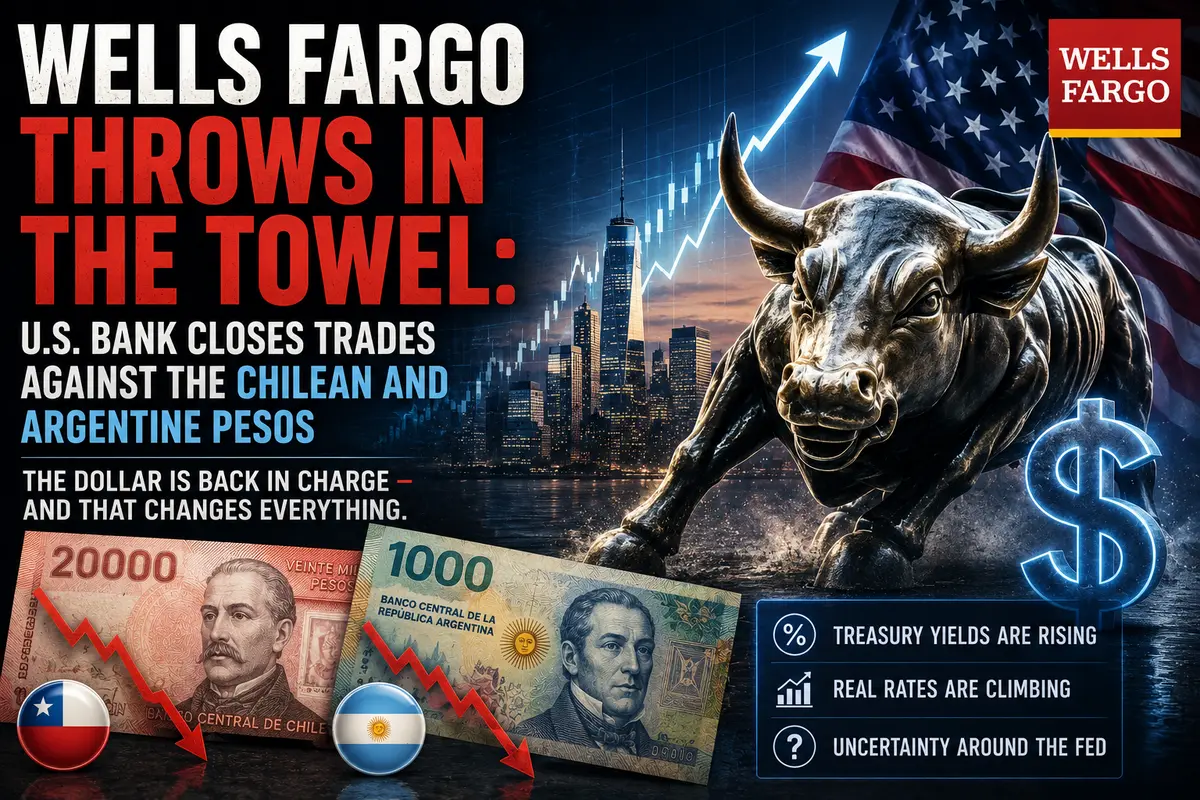
Wells Fargo Throws in the Towel: U.S. Bank Closes Trades Against the Chilean and Argentine Pesos

Wells Fargo Throws in the Towel: U.S. Bank Closes Trades Against the Chilean and Argentine Pesos
The Dollar Is Back in Charge — and That Changes Everything

In the world of finance, there are trades that rarely make headlines for the general public. Carry trades, short positions, structured longs—it's the kind of jargon that can make anyone's head spin. Yet sometimes even these seemingly dry developments reveal important shifts taking place in the global economy.

One such signal came on Monday from Wells Fargo, the third-largest U.S. bank by assets.

The bank's emerging markets strategy team made a decision that caused many investors to rethink their views on Latin America: they closed their positions in the Chilean and Argentine pesos. Not because the trades had been wildly successful across the board, but because they concluded that the environment had changed and the original thesis was no longer as compelling.

Put simply, Wells Fargo had been short the U.S. dollar against both currencies—in other words, it was betting that the pesos would strengthen while the dollar weakened. In Argentina, that bet worked exceptionally well, generating a return of more than 10%. In Chile, it did not, producing a loss of roughly 1%. Yet the bank exited both positions. And the reasons behind that decision are more important than the profits and losses themselves.

Alvaro Vivanco Explains: It's All About Rates

Alvaro Vivanco, Wells Fargo's emerging markets strategist, cited three key reasons for closing the trades:

Rising U.S. Treasury yields

Higher real interest rates

Uncertainty surrounding the Federal Reserve

At first glance, these may sound like technical buzzwords. But they tell a straightforward story.

U.S. Treasury yields represent the return investors receive for lending money to the U.S. government. When those yields rise, the dollar becomes more attractive.

Investors around the world begin asking themselves:

"Why take currency risk in emerging markets when I can buy virtually risk-free...

Continue reading...
0
0

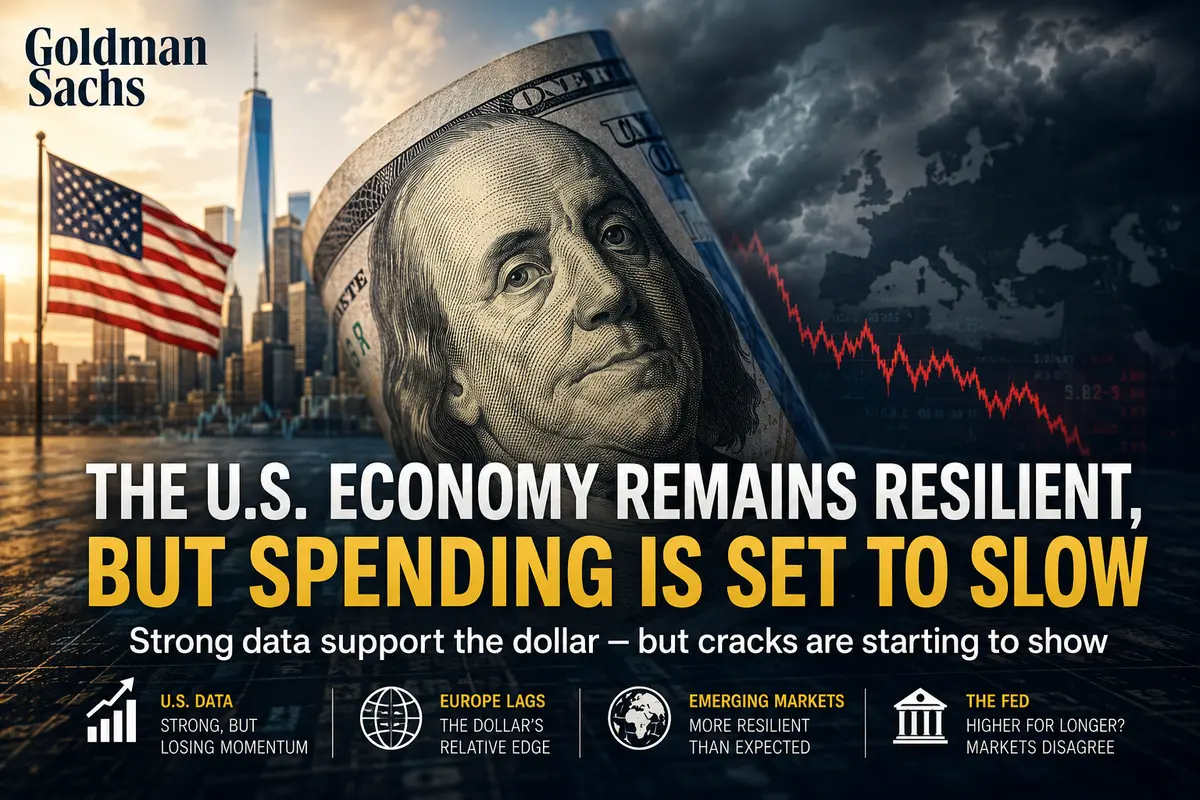
Goldman Sachs: The U.S. Economy Remains Resilient, but Spending Is Set to Slow

Goldman Sachs: The U.S. Economy Remains Resilient, but Spending Is Set to Slow
America Is Holding Up — But It’s Not Bulletproof

Goldman Sachs, one of the most influential voices in global finance, recently released a detailed assessment of the U.S. dollar and the American economy. The bank’s conclusions are both encouraging and cautionary. On one hand, the U.S. economy continues to demonstrate remarkable resilience. On the other, there are growing signs that this resilience is beginning to show cracks—not fatal or catastrophic cracks, but noticeable ones for those who know how to read between the lines of economic reports and data.

According to Goldman Sachs, the U.S. dollar remains supported by strong economic fundamentals and rising interest-rate expectations. This has been the foundation underpinning the currency for the past eighteen months. However, the bank’s analysts warn that improving global risk sentiment and the resilience of foreign currencies could limit further dollar gains. In other words, the dollar is no longer as attractive as it once was. It remains strong, but its advantage over other currencies is gradually narrowing.

Goldman’s assessment of the latest U.S. economic data is particularly noteworthy. Friday’s employment report exceeded expectations, while resilient ISM business activity indexes pointed to continued economic expansion. Together, these factors support higher Treasury yields and wider interest-rate differentials in favor of the dollar. Europe, Japan, and China continue to lag behind. America remains ahead, and the dollar is reaping the benefits of that leadership.

Yet Goldman also sees the other side of the story. Strong employment and inflation data are positive for the dollar, but they can be negative for equities because they encourage the Federal Reserve to maintain a restrictive monetary stance. And restrictive policy increases recession risk. There is no recession today, but the possibility remains on the horizon—and investors are aware of it.

U.S. Data: Resilience with Signs of Fatigue

What...

Continue reading...
0
0
Tom Maffin

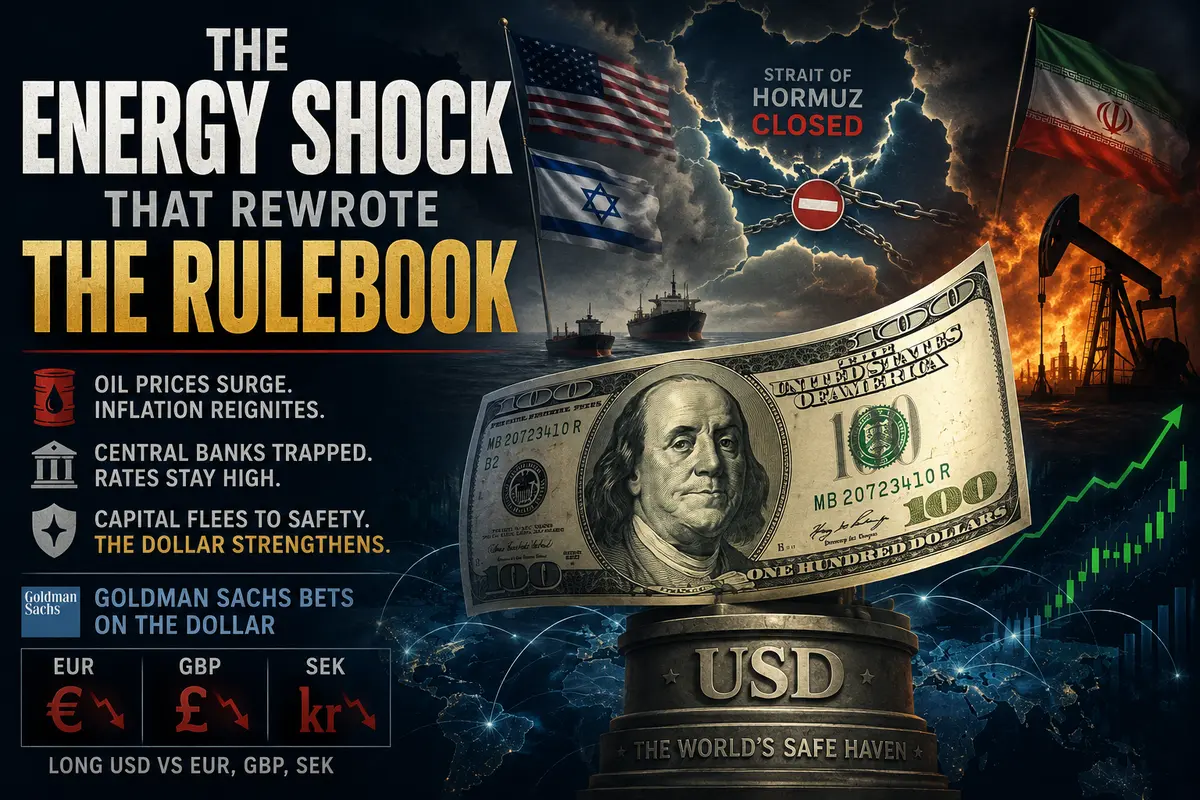
The Energy Shock That Rewrote the Rulebook

The Energy Shock That Rewrote the Rulebook

What happened in late February is still reverberating through global markets. The joint American and Israeli strikes on Iran didn't just become another line in the news feed — they physically reshaped the global energy market. The Strait of Hormuz, through which a fifth of the world's oil passes, was effectively closed to normal shipping. This isn't the kind of shock the market can digest in a couple of weeks and forget. It's a tectonic shift whose consequences will be felt for months.

The first reaction was a sharp spike in oil prices. But as always happens in these stories, a whole chain of consequences followed the oil surge. Inflation, which had seemed to be losing steam, suddenly got fresh fuel to accelerate. Central banks around the world, already starting to entertain the idea of easing policy, found themselves trapped: cutting rates now means risking a new inflationary spiral. Not cutting them means squeezing already fragile economic growth. It's at this crossroads that the renewed strength of the U.S. dollar is born.

Goldman Sachs Bets on the Dollar

Currency strategists at one of the most influential banks on Wall Street have released a fresh research note, and its core message sounds unambiguous: the dollar will keep strengthening. In the near term, an almost perfect storm is brewing for the greenback — not the kind that sinks ships, but the kind that fills sails.

Karen Reichgott Fishman, a strategist at Goldman Sachs, laid out the picture without embellishment. Macroeconomic reality, in her words, is playing squarely in the dollar's favor. Here's why. On one hand, inflation is gaining momentum again, stoked by expensive oil. On the other, the U.S. economy is showing enviable resilience to external shocks. Unlike Europe, which sits far closer to the epicenter of the conflict and is...

Continue reading...
0
0
Navigation menu
instaforex banner