Bar Pipa
We pay for a post of 10$

DXY

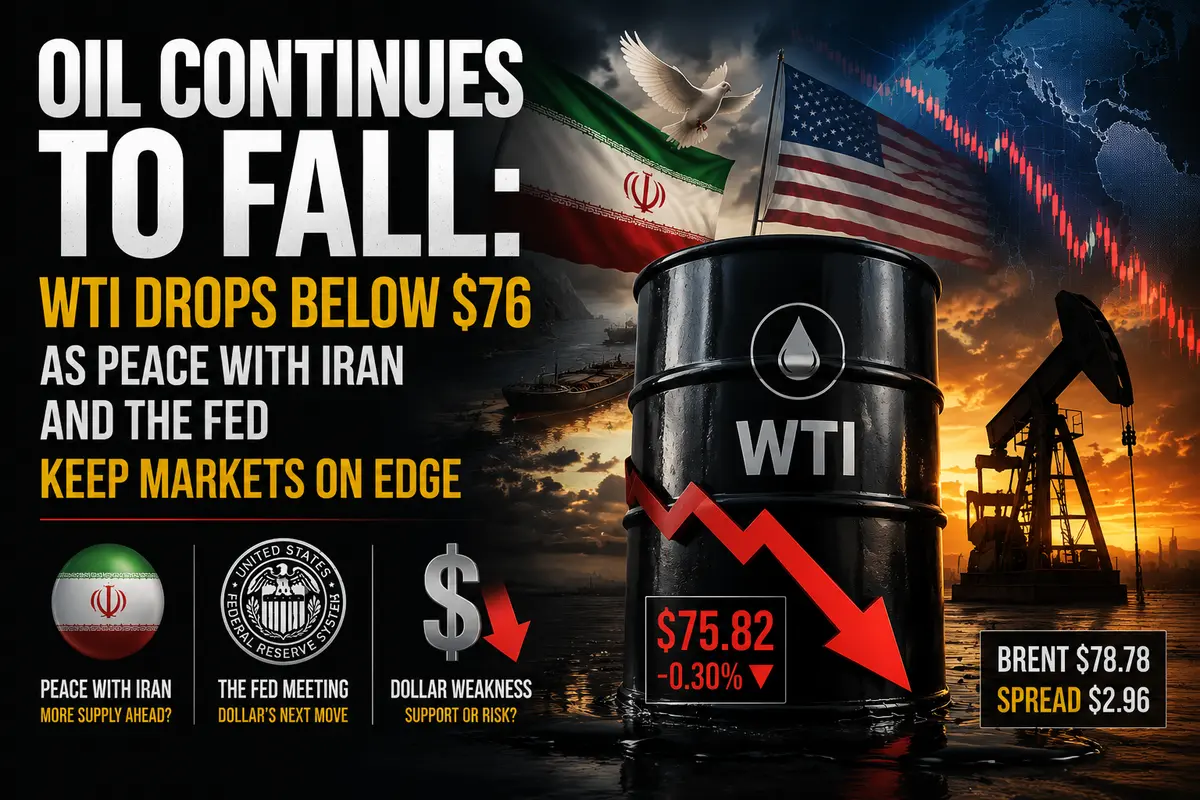
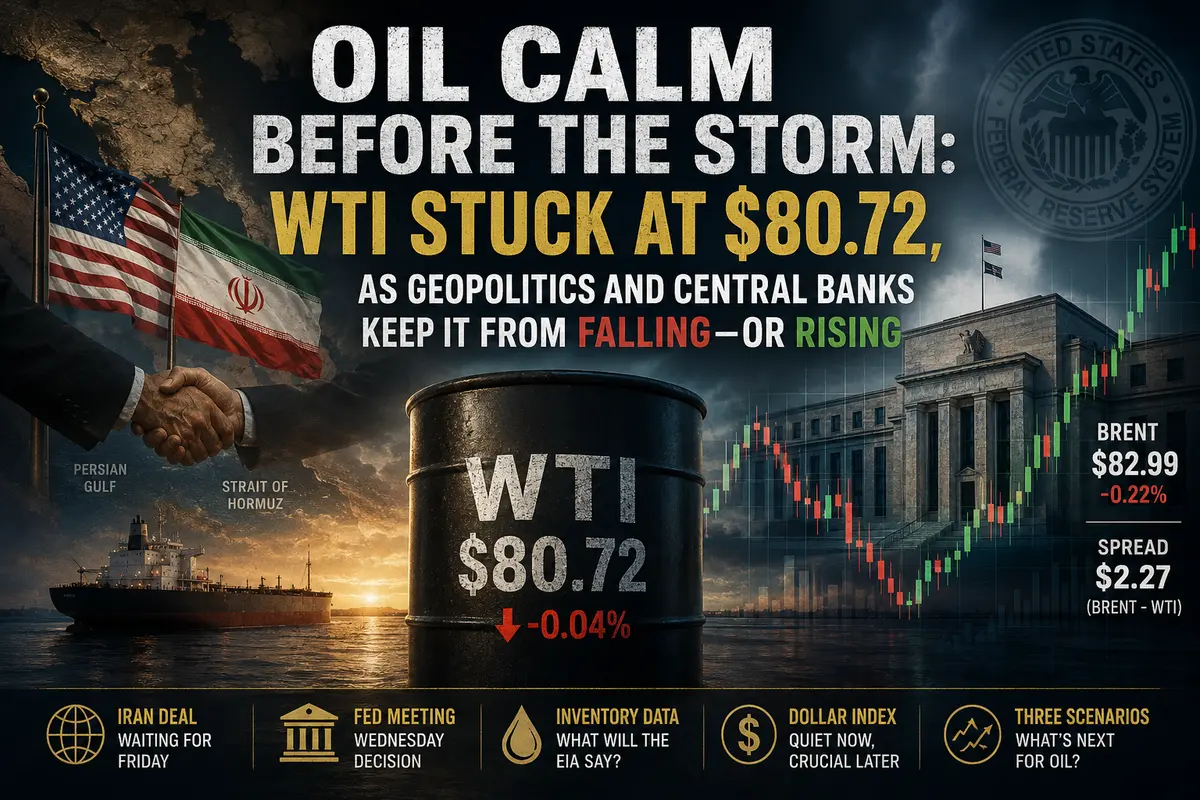
Oil Plunges 2%: An Illusion of Peace or a Real Calm?

Oil Plunges 2%: An Illusion of Peace or a Real Calm?
Thursday: The Silence That Hurts Your Wallet

You wake up on Thursday, open your trading terminal, and can hardly believe your eyes. WTI crude oil, which was trading near $94 just yesterday, is now changing hands at $91.88. A drop of 2.05% in just a few hours. The $88 support level that held earlier this week failed to provide a floor. Oil broke lower and continues to slide.

What happened? Did the war in the Middle East suddenly end? No. Iran and Israel exchanged strikes. The United States launched new attacks on Iranian targets. Iran threatened to block the Strait of Hormuz. All of this happened within the last 24 hours. Oil should have been rising, yet it is falling.

A paradox? Only at first glance.

The oil market today is not a mirror of geopolitics. It is a mirror of expectations. And expectations change faster than missile trajectories.

Let's take a closer look.

On Thursday morning, WTI found support at $85.95, the low of today's session. Resistance stands at $95.47. That's an unusually wide range of nearly $10, signaling extreme volatility.

Brent crude is also declining, though slightly less sharply—down 1.75% to $94.73 per barrel. The spread between the two benchmarks is $2.85 in favor of Brent. That's a fairly normal level for a market that is not expecting immediate disruptions to Persian Gulf supply.

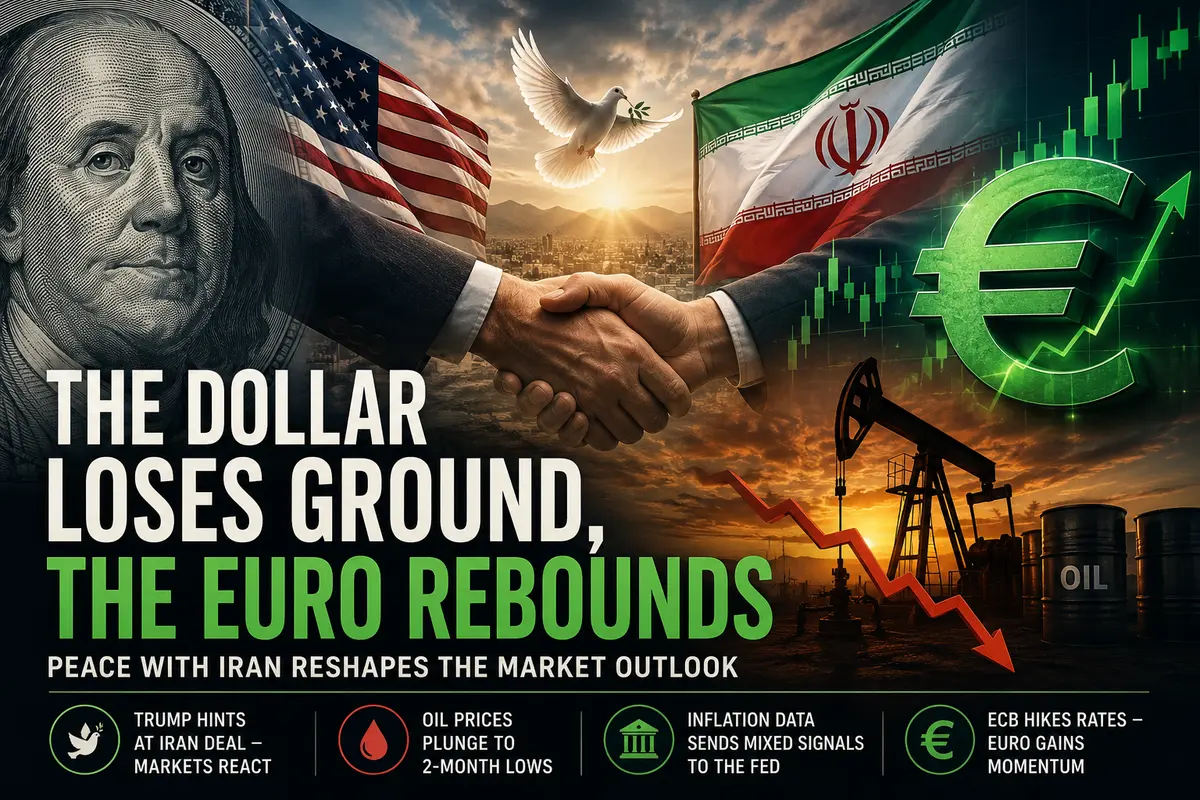
The U.S. dollar, which typically strengthens during periods of panic, weakened slightly today. The DXY Dollar Index slipped 0.03% to 99.96. A symbolic move, perhaps, but an important one: the dollar is no longer acting as an unquestioned safe haven. Or rather, investors are no longer convinced that the conflict will escalate into a catastrophe.

But let's dig deeper.

Why Is Oil Falling?

There are three main reasons, and all of them point to...

Continue reading...
0
0

Asia Frozen in Place: U.S. Strikes on Iran, Inflation, and the Dollar Keep Currencies Under Pressure

Asia Frozen in Place: U.S. Strikes on Iran, Inflation, and the Dollar Keep Currencies Under Pressure
Thursday Morning: Calm Before the Storm or Quiet After the Shock?

When you wake up in Singapore, Tokyo, or Shanghai on Thursday and open the charts, you see something unusual. Asian currencies are neither falling nor rising. They are standing still — like rabbits frozen in the headlights.

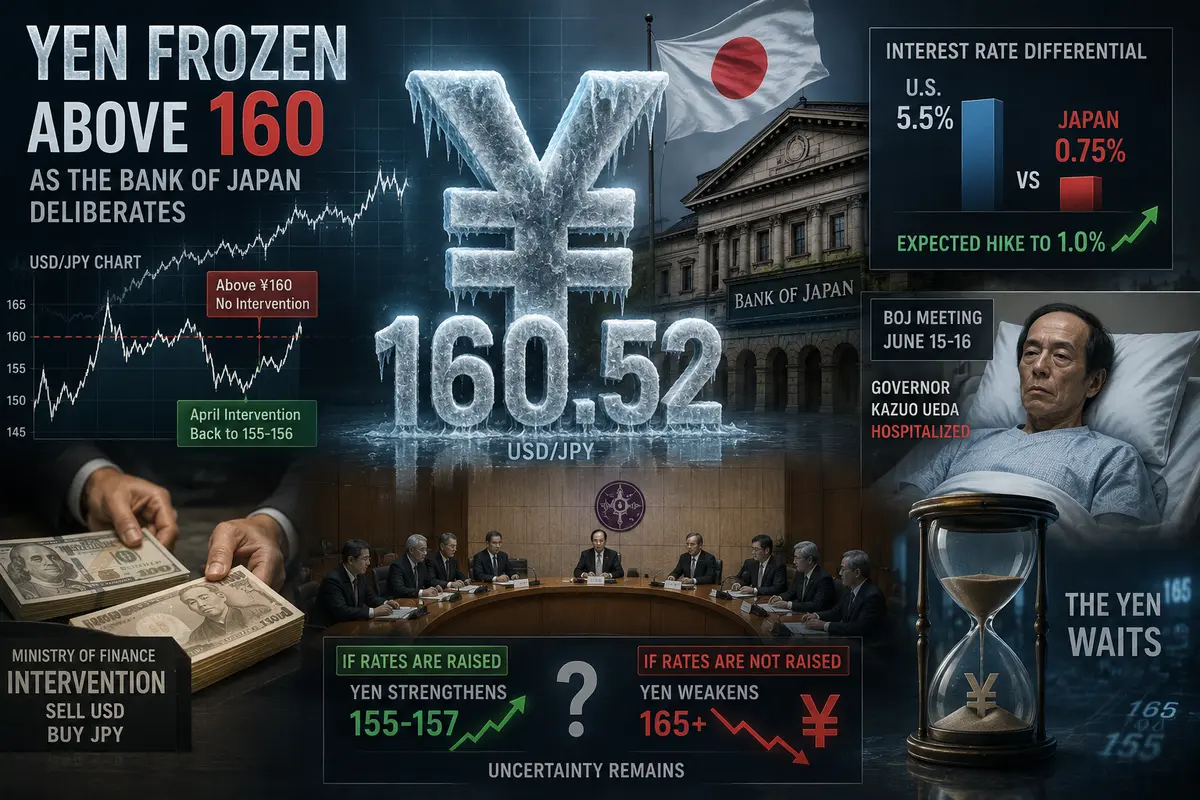
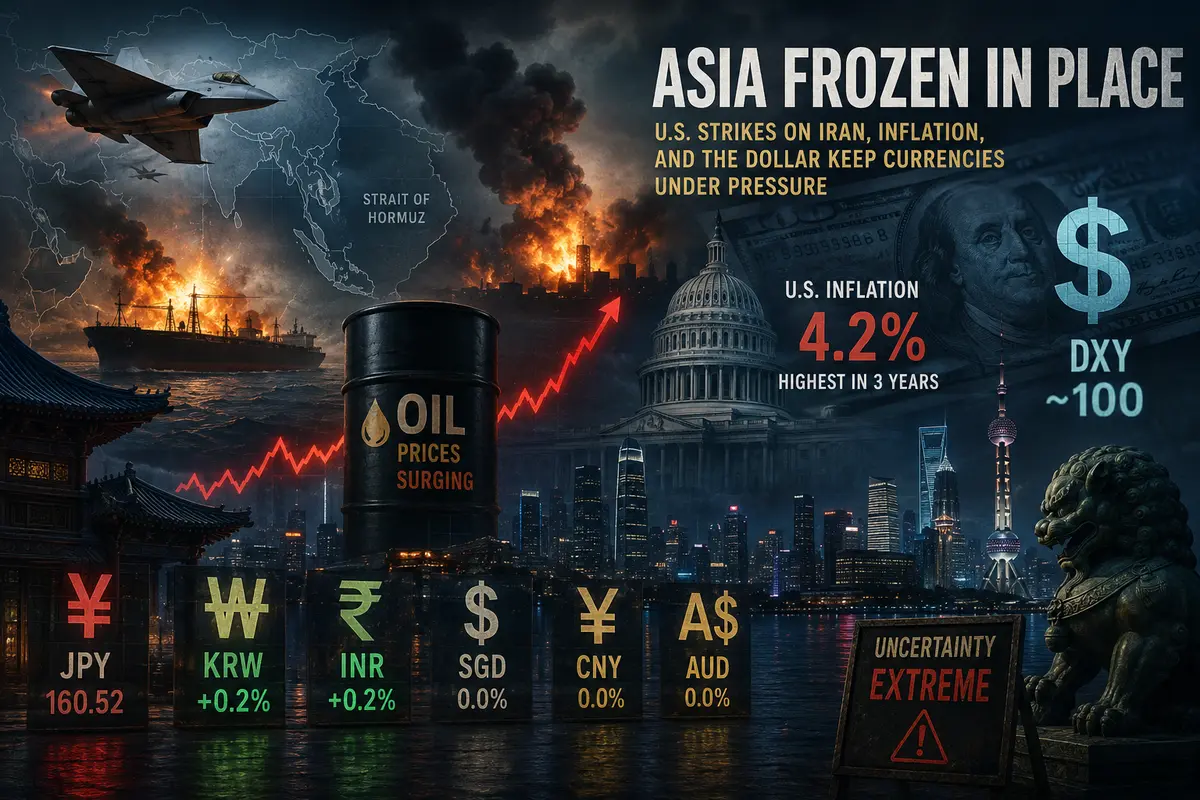
The South Korean won gained just 0.2%, a move barely beyond statistical noise. The Indian rupee also rose 0.2%. The Singapore dollar, Australian dollar, and Chinese yuan were virtually unchanged. The Japanese yen remained stuck at 160.52 per U.S. dollar.

The U.S. Dollar Index (DXY) is holding near 100. It is not falling, despite inflation data released yesterday that ING analysts described as “softer than expected.” It is not rising either, even after overnight reports of new U.S. military strikes against Iranian targets. It is simply standing still — as if the entire world is holding its breath.

And that is what makes this calm so unsettling. Beneath the surface are forces capable of tearing markets apart at any moment: new U.S. strikes on Iran, the threat of a blockade of the Strait of Hormuz, oil prices that have surged but have not yet been fully reflected in currency markets, U.S. inflation accelerating to a three-year high, and the possibility of a Bank of Japan rate hike next week while its governor is reportedly hospitalized.

Traders do not know what to do. They are neither buying nor selling. They are waiting for clarity.

And there is none.

Let’s examine what happened over the last 24 hours and where Asian currencies could head next.

New U.S. Strikes on Iran: Is the Strait of Hormuz Closed?

Wednesday night brought fresh concerns. U.S. forces reportedly carried out additional strikes against Iranian targets. The Pentagon described them as a “proportional response” to earlier Iranian actions, including...

Continue reading...
0
0

Bets Against the Dollar Have Fallen Apart: The Fed Refused to Let Trump “Break” the U.S. Currency

Bets Against the Dollar Have Fallen Apart: The Fed Refused to Let Trump “Break” the U.S. Currency
The Dream of Devaluation: How Traders Profited from a Weak Dollar

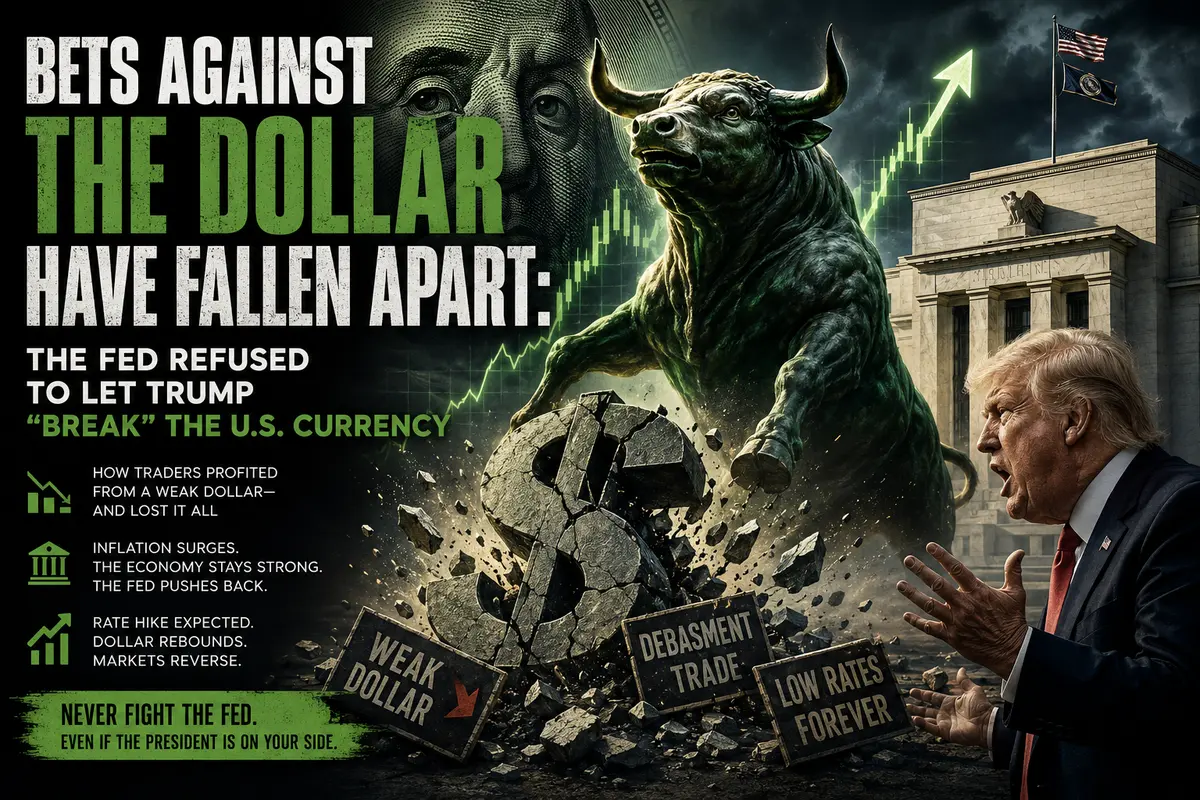
There was a wonderful moment, about a year ago, when it seemed the U.S. dollar was doomed. Not in a catastrophic sense—not like the Zimbabwean dollar or the Argentine peso. Rather, in a calm, predictable, almost comfortable way: the dollar would gradually lose value. Inflation would steadily erode its purchasing power, like a mouse nibbling away at a piece of cheese. The Federal Reserve, which newly elected President Donald Trump appeared determined to pressure, would keep interest rates low to please the White House. And investors, tired of American financial dominance, would shift their billions into euros, yuan, gold—anything but greenbacks.

The strategy had a sophisticated name: the “debasement trade.” It sounded almost scientific. In reality, it was a simple bet: the dollar would weaken because America no longer wanted a strong dollar. A weaker dollar helps exporters. Trump had long complained about the currency’s strength. Surely he would get his way. Surely the Fed would bend.

The traders who made that bet a year ago earned billions. The U.S. Dollar Index (DXY) fell to its lowest level in eight years. The euro surged to 1.20. The pound climbed to 1.35. American travelers were delighted—their dollars bought more abroad than they had in years. U.S. importers were pleased as well. Exporters complained, but few were listening.

Then something went wrong.

Inflation, which many had written off, came roaring back—not as a visitor, but as the owner of the house. Oil prices soared amid conflict in the Middle East. The U.S. economy, instead of slowing, kept growing: 172,000 jobs were added in May, while unemployment stood at 4.3%. And the Federal Reserve, which Trump had hoped to tame, showed its teeth.

Markets now price in more than a 70% probability...

Continue reading...
0
0

Taiwan’s Market Plunges 3.5%: Chips, Glass, and Power Drag Everything Down

Taiwan’s Market Plunges 3.5%: Chips, Glass, and Power Drag Everything Down
A Wednesday That Brought Nothing Good

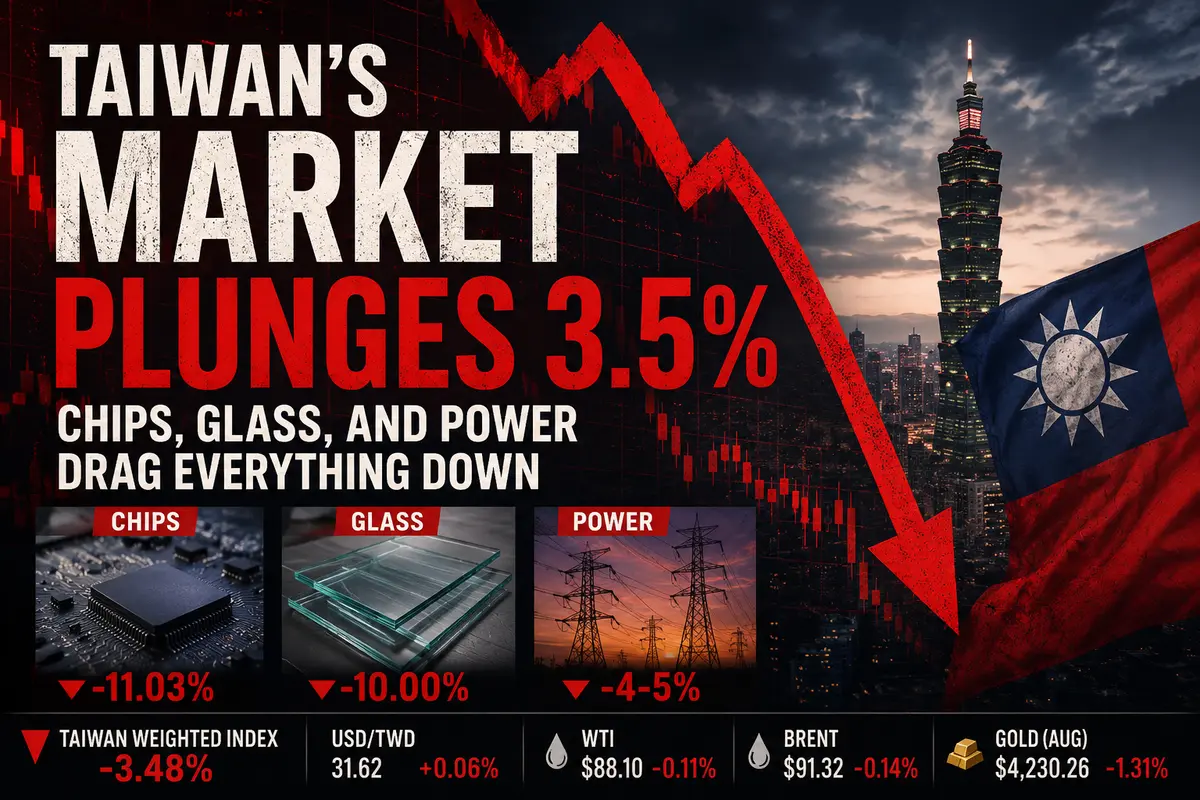
When you wake up in Taipei and open your brokerage app, you expect to see green numbers. Or at least yellow ones. But not red. On the morning of June 10, 2026, everything was red. Not just red—blood red. Taiwan’s benchmark stock index, the Taiwan Weighted Index, the island’s main economic barometer, plunged 3.48% in a single day. Without any obvious domestic trigger. Simply because the world around it seemed to be falling apart.

This was not just a decline. It was a stampede for the exits. Investors sold everything they could. Technology stocks—especially semiconductor companies—were hit first. Glass manufacturers were dumped as well. Energy companies were not spared. Three sectors that form the backbone of Taiwan’s economy came under pressure simultaneously.

Who was to blame? External factors, as is often the case. The conflict in the Middle East, driving up oil prices and fueling panic. Expectations of prolonged high interest rates from the Federal Reserve, which continue to suppress demand for risk assets. An overheating artificial intelligence sector that, after months of relentless gains, has finally entered a correction. And, of course, the ever-present geopolitical tensions surrounding Taiwan itself.

But let’s take it step by step.

Technology Sector: The Main Casualty

Taiwan is semiconductors. Semiconductors are Taiwan. The island produces more than 60% of the world’s chips and over 90% of the most advanced ones. TSMC, UMC, MediaTek, ASE Group—names familiar to every investor on the planet. And when those names fall, the entire market follows.

On Wednesday, Taiwan’s technology sector suffered the steepest losses. Shares of WT Microelectronics, one of Asia’s largest distributors of electronic components, plunged 11.03%. A loss of NT$31 per share in a single session is enormous. Investors fled a company widely viewed as a barometer of electronics demand...

Continue reading...
0
0

Gold Breaks Down: $4,200 Is History as Iran and the Fed Keep Pressure on the Market

Gold Breaks Down: $4,200 Is History as Iran and the Fed Keep Pressure on the Market
The fourth day of pain: not even a helicopter incident could save the yellow metal

Wednesday morning. You open the gold chart and can hardly believe what you see. Spot gold is trading at $4,180 per ounce, down 1.9% overnight. Four consecutive trading sessions in the red. Four. The last time that happened was last year, when the Federal Reserve was just beginning its aggressive rate-hiking cycle.

Gold has broken below the psychological $4,200 level and never looked back. It keeps falling, and nobody knows where the bottom is. U.S. gold futures are at $4,204.75, also down 1.9%, their lowest level since March 23. Three months ago, the world looked very different: the Middle East ceasefire was still holding, U.S. inflation was easing, and the Fed was signaling rate cuts. Those promises have now all but disappeared.

What Happened?

The same story that has plagued gold for weeks continues. The dollar is strong. Interest rates remain high. Inflation refuses to retreat. And the Middle East—which would normally support gold prices—has instead become another source of pressure.

Now a new and dangerous twist has emerged. On Tuesday, Washington reportedly launched fresh strikes against Iranian targets following the downing of a U.S. military helicopter near the Strait of Hormuz.

Think about what that means. The United States and Iran are no longer exchanging blows through intermediaries or proxy forces in Lebanon or Yemen. These are direct strikes. A helicopter has been shot down. Airstrikes are underway. The Strait of Hormuz—the artery through which roughly one-fifth of the world's oil flows—is increasingly becoming a conflict zone.

And do you know how gold is reacting?

It’s falling.

Not rising—falling.

Because markets are looking three steps ahead. Strikes on Iran lead to higher oil prices (which rose another 1% on Wednesday),...

Continue reading...
0
0

Morgan Stanley Against the Crowd: A Bearish Dollar View in a Year When Everyone Expects Strength

Morgan Stanley Against the Crowd: A Bearish Dollar View in a Year When Everyone Expects Strength
A Voice from New York: “We Are Bearish”

While much of Wall Street continues to chant “the dollar is king,” and traders around the world keep buying the U.S. currency following strong employment data while pricing in a Federal Reserve rate hike in December, a very different message is coming from Morgan Stanley’s New York office.

David Adams, Head of G-10 FX Strategy, states it plainly and without hesitation: “We are bearish on the dollar.”

This is not a cautious suggestion that “a correction is possible,” nor a diplomatic warning to “remain vigilant.” It is a clear and unambiguous signal: Morgan Stanley believes the U.S. dollar is headed lower. Not necessarily today or tomorrow, but over the coming quarters—specifically during the second and third quarters of this year.

Their reasoning is straightforward. While the Federal Reserve remains on hold, other central banks—particularly the European Central Bank (ECB)—continue to tighten monetary policy. The interest-rate differential is narrowing, and when rate differentials shrink, the dollar loses one of its most important advantages.

Why the Fed’s Pause Could Hurt the Dollar

At first glance, the opposite should be true. Higher U.S. interest rates are generally positive for the dollar. Investors from around the world buy U.S. bonds because they offer attractive yields with relatively low risk. Demand for dollars rises, and the currency strengthens.

That is a basic principle taught in introductory economics courses.

Morgan Stanley, however, views the situation differently. Yes, U.S. rates remain high—but they are no longer rising. The Fed has paused. More importantly, markets have already priced in virtually all potential rate increases. From here, the next major move is more likely to be downward.

Europe, meanwhile, is moving in the opposite direction. The ECB, which lagged behind for much of the tightening cycle, is now catching up. Morgan...

Continue reading...
0
0

Goldman Sachs: The U.S. Economy Remains Resilient, but Spending Is Set to Slow

Goldman Sachs: The U.S. Economy Remains Resilient, but Spending Is Set to Slow
America Is Holding Up — But It’s Not Bulletproof

Goldman Sachs, one of the most influential voices in global finance, recently released a detailed assessment of the U.S. dollar and the American economy. The bank’s conclusions are both encouraging and cautionary. On one hand, the U.S. economy continues to demonstrate remarkable resilience. On the other, there are growing signs that this resilience is beginning to show cracks—not fatal or catastrophic cracks, but noticeable ones for those who know how to read between the lines of economic reports and data.

According to Goldman Sachs, the U.S. dollar remains supported by strong economic fundamentals and rising interest-rate expectations. This has been the foundation underpinning the currency for the past eighteen months. However, the bank’s analysts warn that improving global risk sentiment and the resilience of foreign currencies could limit further dollar gains. In other words, the dollar is no longer as attractive as it once was. It remains strong, but its advantage over other currencies is gradually narrowing.

Goldman’s assessment of the latest U.S. economic data is particularly noteworthy. Friday’s employment report exceeded expectations, while resilient ISM business activity indexes pointed to continued economic expansion. Together, these factors support higher Treasury yields and wider interest-rate differentials in favor of the dollar. Europe, Japan, and China continue to lag behind. America remains ahead, and the dollar is reaping the benefits of that leadership.

Yet Goldman also sees the other side of the story. Strong employment and inflation data are positive for the dollar, but they can be negative for equities because they encourage the Federal Reserve to maintain a restrictive monetary stance. And restrictive policy increases recession risk. There is no recession today, but the possibility remains on the horizon—and investors are aware of it.

U.S. Data: Resilience with Signs of Fatigue

What...

Continue reading...
0
0
Navigation menu
instaforex banner