Bar Pipa
We pay for a post of 10$

Metals

Gold Under Geopolitical Pressure: Why the Precious Metal Is Falling Amid War and Interest Rates
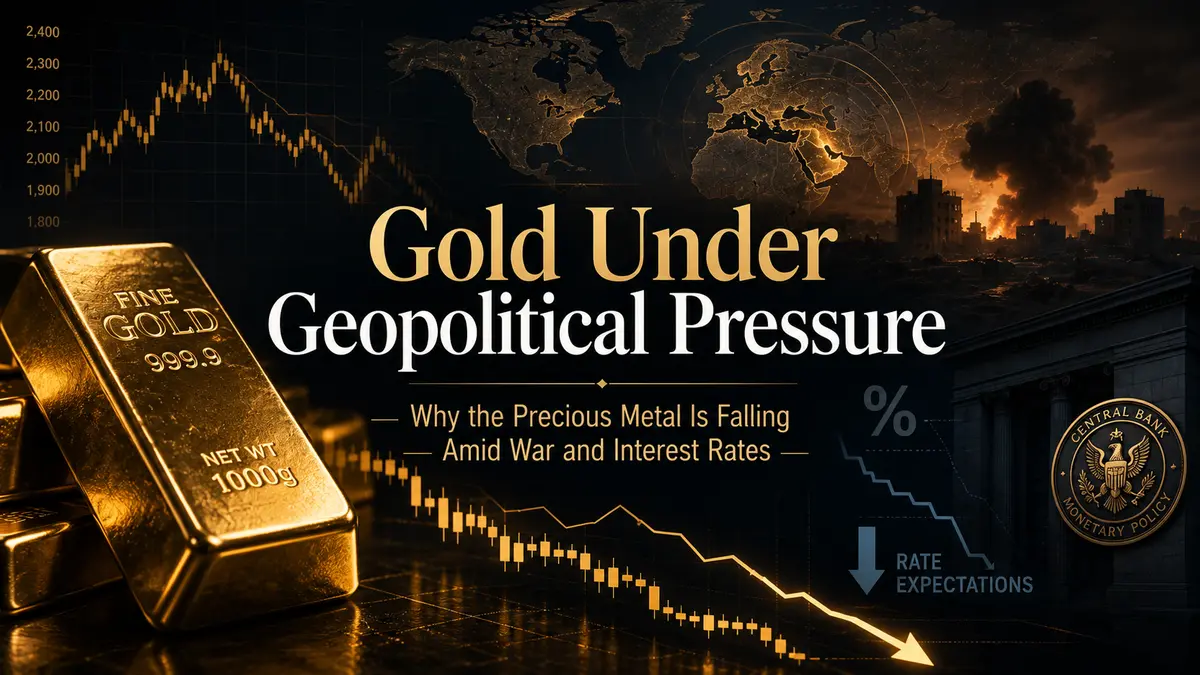
Gold Under Geopolitical Pressure: Why the Precious Metal Is Falling Amid War and Interest Rates

Introduction: The Safe-Haven Asset Paradox

In the world of finance, there are axioms that seem unshakable. One of them says that during periods of geopolitical instability, investors flee to gold. It is the ultimate refuge, a safe harbor where money waits out the storm. But the current week has shattered this neat narrative. Prices for the yellow metal barely changed on Friday, yet over the course of five trading sessions they are down by roughly one and a half percent. And this is despite the fact that the conflict between the United States and Iran has entered a new phase, while oil prices have surged to levels that only recently seemed almost unimaginable.

So what is happening? Why has gold, the traditional beneficiary of crises, suddenly come under pressure precisely when its protective qualities should have been fully on display? The answer, as is often the case, lies in a complex combination of factors, where geopolitics collides with monetary policy and short-term fears give way to long-term calculations. Let’s break it down.

The Iran Factor: War as an Inflation Catalyst

Escalation of the Conflict and the Market Reaction

This week began with what many analysts called a “worst-case scenario.” U.S. President Donald Trump announced the end of the ceasefire with Iran and ordered an intensification of strikes against the country. Tehran responded in kind, and the Middle East once again found itself on the brink of full-scale war.

For financial markets, this became a moment of truth. Oil prices reacted immediately with a sharp jump. And this is logical: the Middle East remains a key supplier of energy resources, and any military action in the region directly threatens the stability of supply.

But why did gold not follow oil higher? After all, classic logic suggests: war → uncertainty → rising...

Continue reading...
0
0

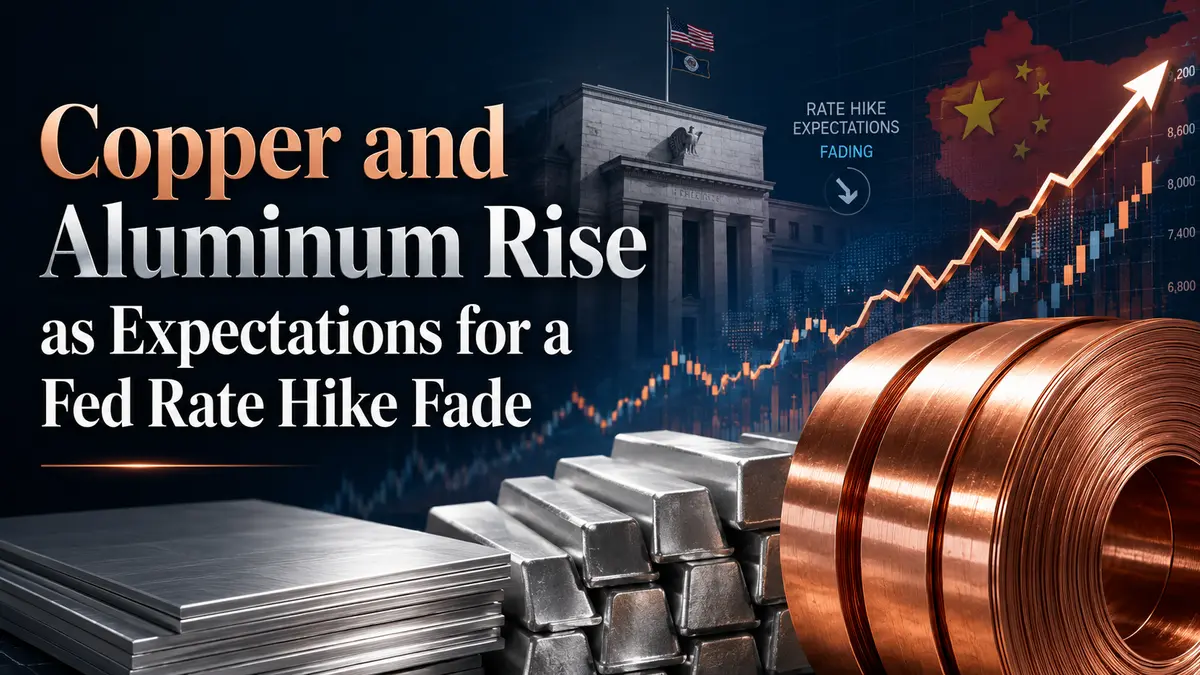
Copper and Aluminum Rise as Expectations for a Fed Rate Hike Fade

Copper and Aluminum Rise as Expectations for a Fed Rate Hike Fade

Introduction: Metals Step Out of the Shadows

Monday. The London Metal Exchange opens the week with confident growth. Copper is rising for the third day in a row, interrupting a two-week losing streak that had made investors nervous. Aluminum continues to recover from a four-month low, adding another 0.5% and returning to levels that had seemed lost forever.

What has changed? The main driver is the shift in expectations regarding the Federal Reserve’s policy. Fed Chair Kevin Warsh said last week that price risks are declining. This became a signal for markets, which immediately reduced their bets on tighter monetary policy. And for industrial metals, which are highly sensitive to the macroeconomic backdrop, this came as a long-awaited relief.

Another factor is also at play — China. Funds in China are beginning to flow into shares and futures of metals producers in anticipation of solid first-half earnings. Several Chinese companies are expected to present preliminary results in the coming weeks, and the commodity rally, from gold to copper, is expected to support their profits compared with last year.

Copper is trading at $13,402.50 per ton, gaining 0.3%. Aluminum is at $3,107 per ton, up 0.5%. These are not spectacular figures, but they matter as a shift in trend. After weeks of decline, when metals were losing 1–2% per day, even a small gain feels like a victory.

Let’s break down what is really behind this recovery, why the Fed is changing its rhetoric, and how Chinese investors are influencing the industrial metals market.

The Fed: From Hawkish Rhetoric to Dovish Signals

Kevin Warsh Acknowledges Declining Price Risks

The key event that changed sentiment in metals markets was a statement by Fed Chair Kevin Warsh last week. He acknowledged that price risks are declining. This may sound like a technical phrase,...

Continue reading...
0
0
Lin Brings

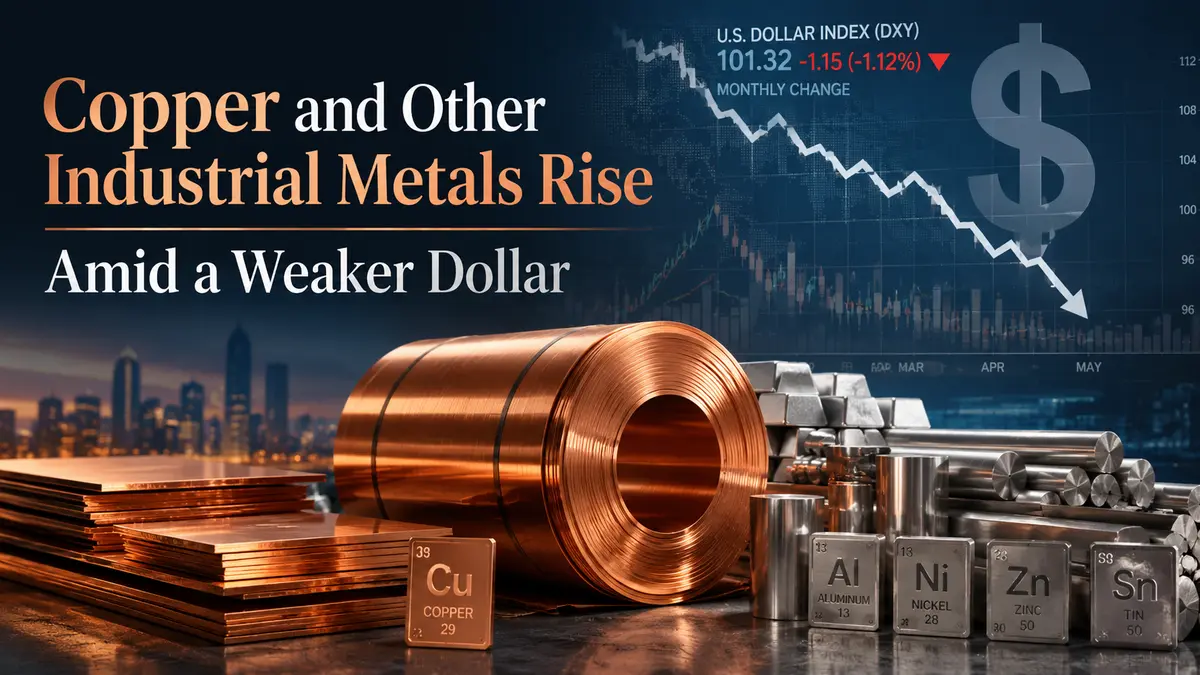
Copper and Other Industrial Metals Rise Amid a Weaker Dollar

Copper and Other Industrial Metals Rise Amid a Weaker Dollar

Introduction: The Red Metal Is Back in Play

Friday. The London Metal Exchange is coming back to life. Copper, often called “Dr. Copper” for its remarkable ability to predict industrial cycles, is gaining nearly 1%. This is not just a random move. It marks the end of a two-week decline that had made investors nervous and forced them to reconsider their positions.

What changed? The dollar, the main enemy of commodity markets in recent months, has started to lose ground. The dollar index is falling for the second day in a row, making metals cheaper for holders of other currencies. Weak U.S. labor market data has reduced expectations of another Fed rate hike. And that was enough for industrial metals to breathe a sigh of relief and begin recovering.

But it is not that simple. Yes, copper rose by 0.7% to $13,413 per ton. Aluminum gained 0.6% to $3,110 per ton. Nickel posted an even more impressive increase — 1.8% to $16,540 per ton. Zinc and tin also became more expensive. But, as analysts note, the potential for this growth is limited, because weakness in traditional industrial sectors has not disappeared.

Let’s take a closer look at what is really happening in the industrial metals market, why the dollar has finally started to retreat, and whether this trend can last.

The Dollar Loses Ground: The Main Driver of Metal Prices

Weak Employment Data Hits Hawkish Expectations

It all started with U.S. labor market data released on Thursday. The figures were significantly weaker than forecast, and this changed the balance of power across all markets — from currencies to commodities. While just a week ago markets were confident that the Fed could raise rates this year, that confidence has now been shaken.

The CME FedWatch tool, which tracks the probability of...

Continue reading...
0
0
Tom Maffin

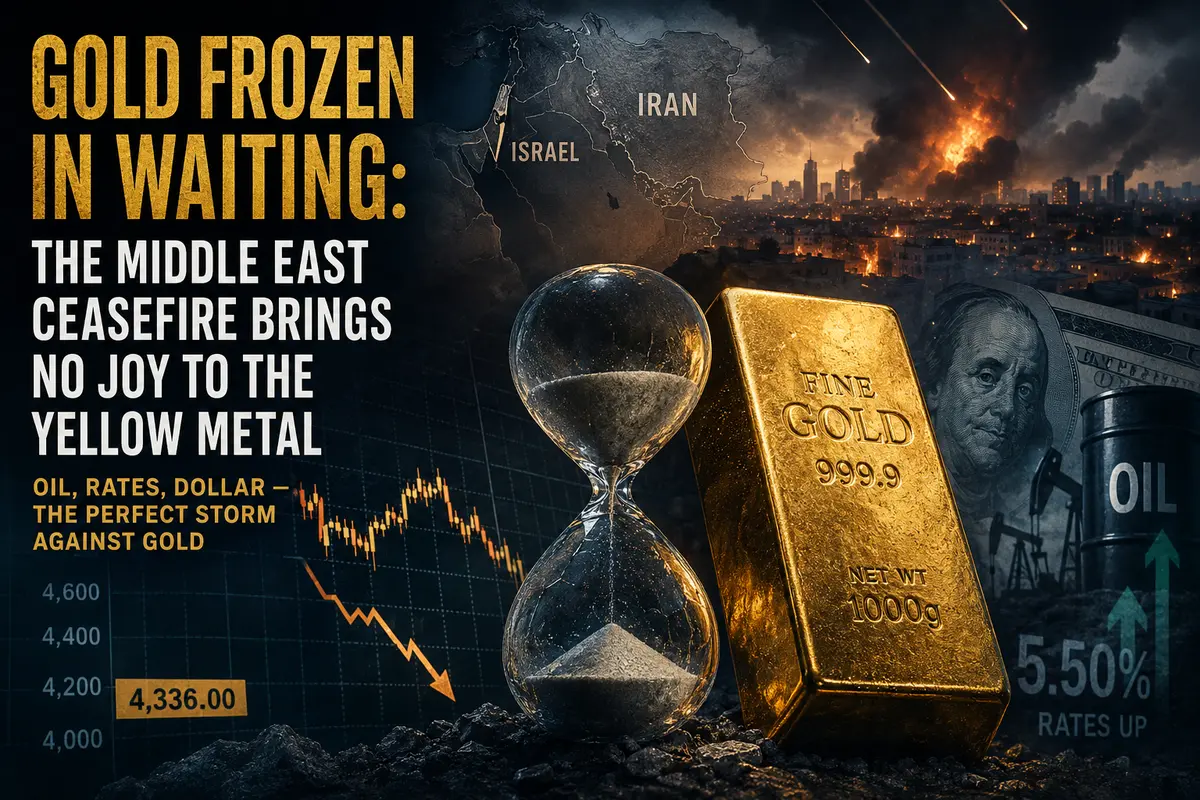
Gold Frozen in Waiting: The Middle East Ceasefire Brings No Joy to the Yellow Metal

Gold Frozen in Waiting: The Middle East Ceasefire Brings No Joy to the Yellow Metal

A Strange War in Which Gold Is Losing

There is a deeply rooted, almost archetypal belief: when the world is falling apart, when missiles fly, tanks fire, and politicians threaten one another with destruction, you buy gold. The yellow metal has been tested by centuries. It survived the fall of Rome, the plague, world wars, and the hyperinflation of the Weimar Republic. A war in the Middle East? Surely that means rushing to jewelry stores and coin dealers.

Not this time.

Reality has once again proven more complicated than the simplified lessons found in economics textbooks. The conflict between Iran and Israel, which flared up again on Sunday with missile exchanges and airstrikes, has brought gold nothing but another round of pain. On Tuesday morning, gold was trading near an 11-week low. Spot prices stood at $4,336 per ounce, up just 0.2%—not nearly enough to recover Monday’s losses. August futures were at $4,361, virtually unchanged.

What kind of war is this, where the traditional safe-haven asset falls instead of rising? And why has the ceasefire, which should theoretically calm markets and reduce demand for safe-haven assets, left gold almost exactly where it was?

As is often the case, the answer lies in three interconnected factors: oil, interest rates, and the U.S. dollar. Together, they are working against gold almost perfectly.

The Oil Paradox: The Worse It Is for the World, the Worse It Is for Gold

Let’s break it down.

Iran and Israel exchanged strikes. Iran launched missiles into northern Israel. Israel conducted airstrikes on Beirut suburbs where, according to its intelligence, Iranian assets were located. Whenever conflict erupts in the Middle East, markets immediately become nervous about oil.

The Strait of Hormuz, through which roughly one-fifth of global oil exports pass, is within range of Iranian missiles and naval...

Continue reading...
0
0
John Madnes

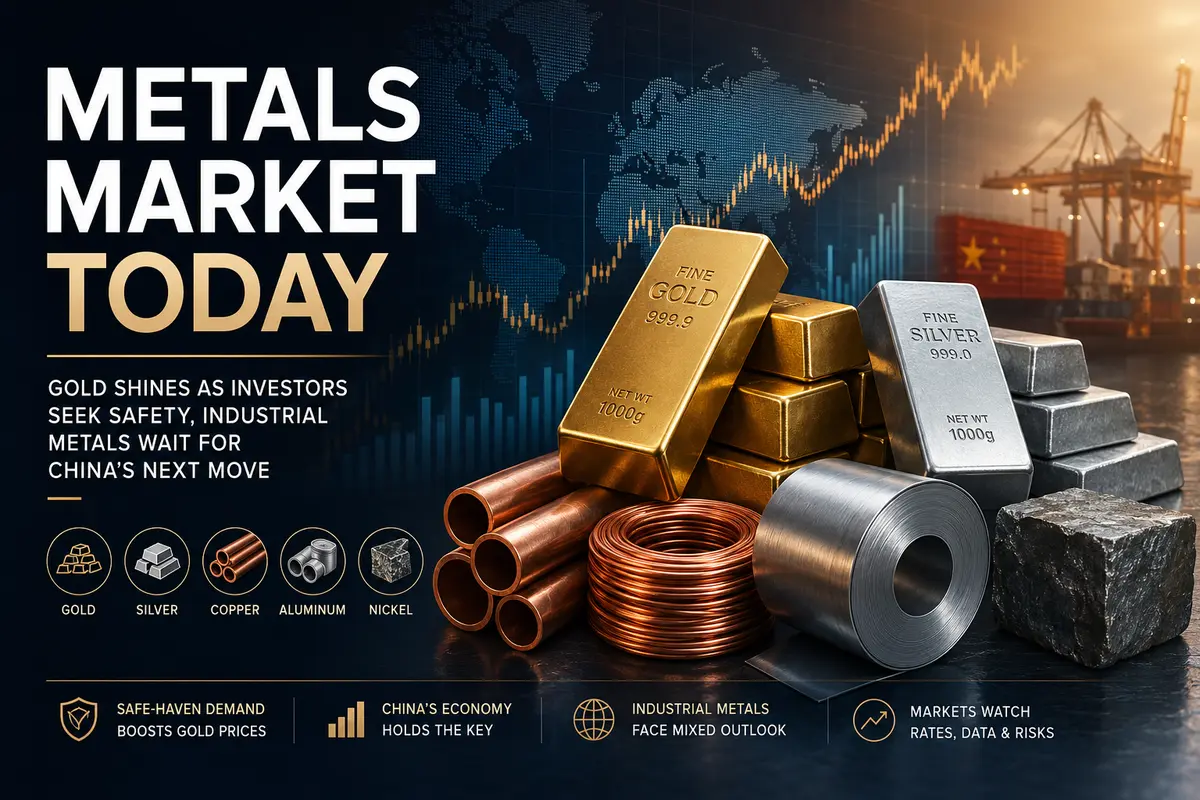
Metals Market Today: Investors Move Into Gold While Industrial Metals Wait for Signals From China

Metals Market Today: Investors Move Into Gold While Industrial Metals Wait for Signals From China

The global metals market is entering the middle of May with investors still unsure about where the economy goes next. After months of sharp swings across commodities and financial markets, traders are becoming more selective. Money is flowing back into safer assets like gold, while industrial metals are struggling to regain momentum.

Right now, everything comes down to a few major questions: Will the Federal Reserve finally start cutting interest rates? Can China revive demand in construction and manufacturing? And is the global economy slowing down more than expected?

Those questions are driving nearly every move across the metals market — from gold and silver to copper, aluminum, and nickel.

Gold Keeps Winning the Attention

Gold continues to trade near historic highs and remains the strongest part of the metals market. Investors are still looking for protection against economic uncertainty, stubborn inflation, and geopolitical risks.

There’s also growing belief that the US Federal Reserve may eventually ease interest rates later this year. That matters because lower rates usually weaken bond yields and make gold more attractive.

What’s interesting this time is that gold has stayed strong even while the dollar remains relatively expensive. In previous years, a stronger dollar would normally push gold lower. But the market mood has changed. Investors are less focused on short-term currency moves and more focused on preserving capital.

Central banks are also helping support prices. Several countries continue adding gold to reserves as governments try to reduce dependence on the US dollar and protect themselves from financial instability.

At the same time, geopolitical tensions continue to keep traders nervous. Every new headline involving conflicts, trade disputes, or political uncertainty quickly sends buyers back into safe-haven assets.

Silver Is Moving With Gold — But More Carefully

Silver is benefiting from the same safe-haven demand supporting...

Continue reading...
0
0
Navigation menu
instaforex banner