

Copper and Other Industrial Metals Rise Amid a Weaker Dollar
Introduction: The Red Metal Is Back in Play
Friday. The London Metal Exchange is coming back to life. Copper, often called “Dr. Copper” for its remarkable ability to predict industrial cycles, is gaining nearly 1%. This is not just a random move. It marks the end of a two-week decline that had made investors nervous and forced them to reconsider their positions.
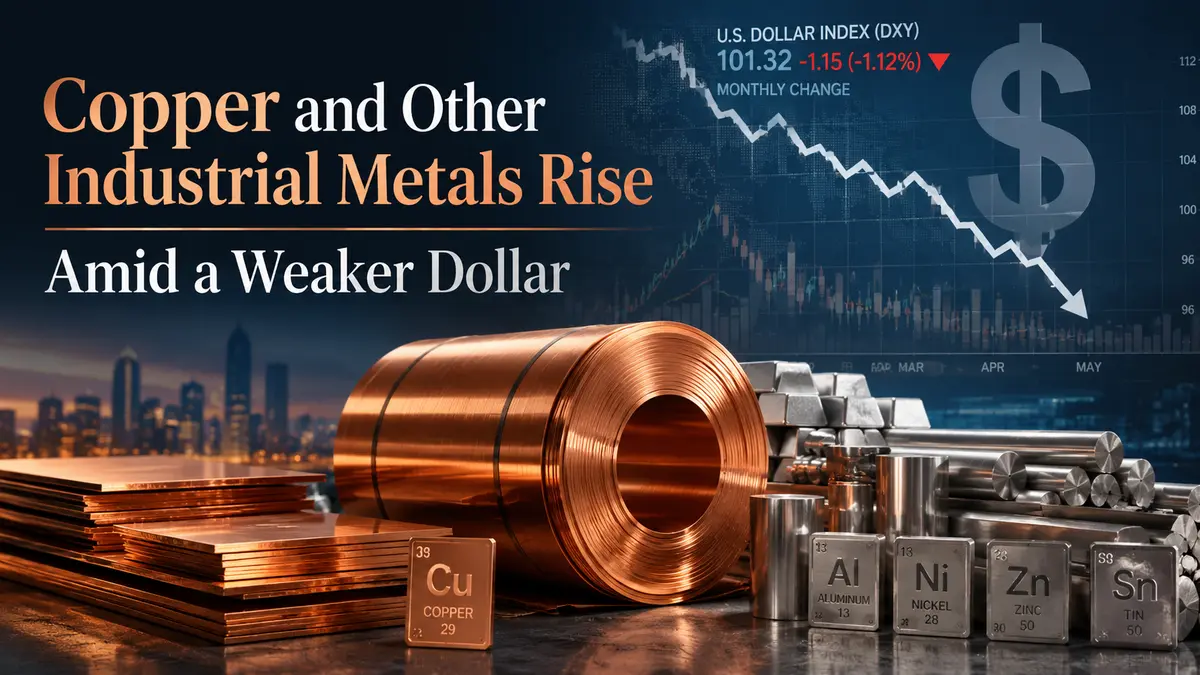
What changed? The dollar, the main enemy of commodity markets in recent months, has started to lose ground. The dollar index is falling for the second day in a row, making metals cheaper for holders of other currencies. Weak U.S. labor market data has reduced expectations of another Fed rate hike. And that was enough for industrial metals to breathe a sigh of relief and begin recovering.
But it is not that simple. Yes, copper rose by 0.7% to $13,413 per ton. Aluminum gained 0.6% to $3,110 per ton. Nickel posted an even more impressive increase — 1.8% to $16,540 per ton. Zinc and tin also became more expensive. But, as analysts note, the potential for this growth is limited, because weakness in traditional industrial sectors has not disappeared.
Let’s take a closer look at what is really happening in the industrial metals market, why the dollar has finally started to retreat, and whether this trend can last.
The Dollar Loses Ground: The Main Driver of Metal Prices
Weak Employment Data Hits Hawkish Expectations
It all started with U.S. labor market data released on Thursday. The figures were significantly weaker than forecast, and this changed the balance of power across all markets — from currencies to commodities. While just a week ago markets were confident that the Fed could raise rates this year, that confidence has now been shaken.
The CME FedWatch tool, which tracks the probability of rate changes, recorded a sharp decline in tightening expectations. Investors shifted their forecasts toward a pause, while some even began talking about the possibility of rate cuts next year.
For the dollar, this was a signal to weaken. The dollar index, which had recently reached 13-month highs, began to decline and lost more than 0.5% over two days. For commodity markets, where all prices are denominated in dollars, this means one thing: metals become cheaper for buyers who hold other currencies.
Falling Oil Prices and Their Effect
Another factor weakening the dollar was the decline in oil prices. Brent crude was almost unchanged over the week, but only after giving back all the gains made during the Middle East conflict. The peace agreement between the United States and Iran, signed last month, restored market confidence in stable supplies.
The resumption of shipments through the Strait of Hormuz increased oil supply on the market, leading to lower prices. Cheaper oil reduces inflation expectations, giving the Fed more room to pause its tightening cycle. Fewer hawkish expectations mean a weaker dollar, and a weaker dollar means more expensive metals. The chain reaction works.
Copper: The Leader Among Metals, But Not Without Problems
A Technical Rebound or a Trend Reversal?
Copper rose by 0.7% to $13,413 per ton. This ends a two-week losing streak that began after hawkish comments from Fed Chair Kevin Warsh in Sintra. Technically, this looks like a rebound from an important support level that managed to hold.
But it is still too early to talk about a trend reversal. Weakness in traditional industries, especially construction and manufacturing, continues to limit demand for copper. China, the world’s largest copper consumer, is sending mixed signals: the recovery in the technology sector is not enough to offset stagnation in real estate.
The China Factor
China remains the key player in the copper market. Demand for the “red metal” in China determines the global balance. At the moment, the Chinese economy is going through a difficult period: the government is trying to stimulate growth, but problems in the real estate sector and weak exports are holding back the recovery.
China’s copper imports have fluctuated in recent months but have not shown steady growth. This means that fundamental demand for copper remains weak, and the current price increase is more of a reaction to macroeconomic signals than to a real rise in consumption.
Long-Term Prospects
Despite current problems, the long-term outlook for copper remains positive. The transition to green energy, transport electrification, and the development of renewable energy all require enormous amounts of copper. According to some estimates, copper demand will grow by 30–40% over the next ten years.
But these long-term factors do not support prices in the short term. Markets live on today’s news, and today’s news points to weak demand and excess supply. Therefore, the current rise in copper is not the beginning of a new bullish cycle, but merely a correction after an excessive decline.
Other Metals: Aluminum, Nickel, Zinc, and Tin
Aluminum: A Return to Pre-War Levels
Aluminum gained 0.6% to $3,110 per ton. This metal was particularly hard hit by geopolitical events in recent months. During the Middle East conflict, aluminum prices surged due to fears of supply disruptions. Now that the threat has eased, aluminum has returned to levels last seen before the war began.
The current rise in aluminum is more of a stabilization after a decline than the beginning of a new rally. Aluminum supply remains high, especially from China, which is the world’s largest producer. Demand, on the other hand, remains weak due to problems in the construction sector and the automotive industry.
Nickel: A 1.8% Jump
Nickel posted the strongest gain among industrial metals on Friday — 1.8% to $16,540 per ton. This metal is particularly volatile because of its dual nature: it is used both in stainless steel production and in batteries for electric vehicles.
The rise in nickel may be linked to news about expanding battery production in China and Europe. But, as with copper, fundamental demand remains weak, and the current increase may prove short-lived.
Zinc and Tin: Modest Participation
Zinc and tin also rose, though less noticeably. These metals have narrower areas of application and are less dependent on macroeconomic signals. Their growth is more of a “domino effect,” where general optimism in the metals market pulls all positions higher.

The Role of the Fed and Macroeconomic Signals
From Hawkish Rhetoric to Dovish Expectations
The main driver behind the rise in metals was a shift in expectations regarding Fed policy. Just a month ago, after Kevin Warsh’s speech in Sintra, markets were confident in another rate hike. This put downward pressure on metals because high rates slow industrial growth and strengthen the dollar.
Now, after weak employment data, markets have revised their expectations. The probability of a rate hike this year has fallen from 60% to a level that can be described as “uncertain.” Investors have begun pricing in a pause, or even a rate cut next year.
For metals, this means the easing of one of the main obstacles. When markets no longer expect tightening, they can assess the outlook for industrial demand more calmly. And this is reflected in prices.
Employment Data: The Beginning of a New Era?
Weak U.S. employment data is not just a one-off statistic. It may be a sign that high interest rates are beginning to have a real impact on the economy. If the labor market continues to cool, this could mark the beginning of a new phase in which the Fed will be forced not only to keep rates unchanged but to cut them.
But it is still too early to draw such conclusions. One report does not change the trend, especially considering that the data for the previous three months was strong. Markets need more evidence before confidently pricing in rate cuts.
Outlook: Where Are Metals Heading?
Short-Term View: Correction or Reversal?
In the short term, metals may continue to rise if the dollar keeps weakening and economic data does not deteriorate sharply. Resistance for copper is at $13,600 and then $14,000. If copper can break through these levels, it will open the way to higher marks.
But there are also bearish risks. If next month’s employment data comes in strong, markets may switch back to a hawkish scenario. In that case, the dollar will strengthen, and metals will come under pressure again.
Long-Term View: The Green Transition and Structural Demand
In the long term, industrial metals remain one of the most attractive asset classes. The transition to green energy, transport electrification, and urbanization in developing countries all create structural demand for copper, aluminum, nickel, and other metals.
It is especially important that metal supply is limited. New mines take a long time and a lot of money to build, while existing mines are aging. This means that any recovery in demand could lead to higher prices.
But structural demand is a factor that works over a 5–10 year horizon. In the coming quarters, metals will depend on macroeconomic signals and Fed policy.
Conclusion: A Pause in Pressure, But Not a Victory
Industrial metals rose on Friday thanks to a weaker dollar and lower expectations of Fed tightening. Copper gained 0.7% to $13,413 per ton, aluminum rose 0.6% to $3,110, and nickel climbed 1.8% to $16,540. This ends a two-week decline and offers hope for a recovery.
But this rise is more of a correction than the beginning of a new bullish trend. Weakness in traditional industrial sectors, problems in China’s real estate sector, and uncertainty in the global economy continue to limit demand for metals.
The dollar has retreated, but it remains strong. The Fed will not raise rates this month, but a future hike cannot be ruled out. Investors are cautious about the outlook for metals, and every new macroeconomic signal could change the picture.
For now, metals are getting a breather. They are using the dollar’s moment of weakness to recover some of their lost ground. But sustainable growth requires something more — a real improvement in industrial demand, especially in China, and investor confidence that a recession is not coming.
That is not here yet. This means the current rise is not a victory, but only a pause in the pressure. How long it lasts will depend on economic data, central bank policy, and, of course, the dollar itself.

Comments
No comments yet. Be the first to share your thoughts!
Authentication Required
You must be logged in to post a comment.