Bar Pipa
We pay for a post of 10$

Forex

Tokyo Records and an Oil Pullback: How Asian Markets Are Celebrating Hopes for Peace
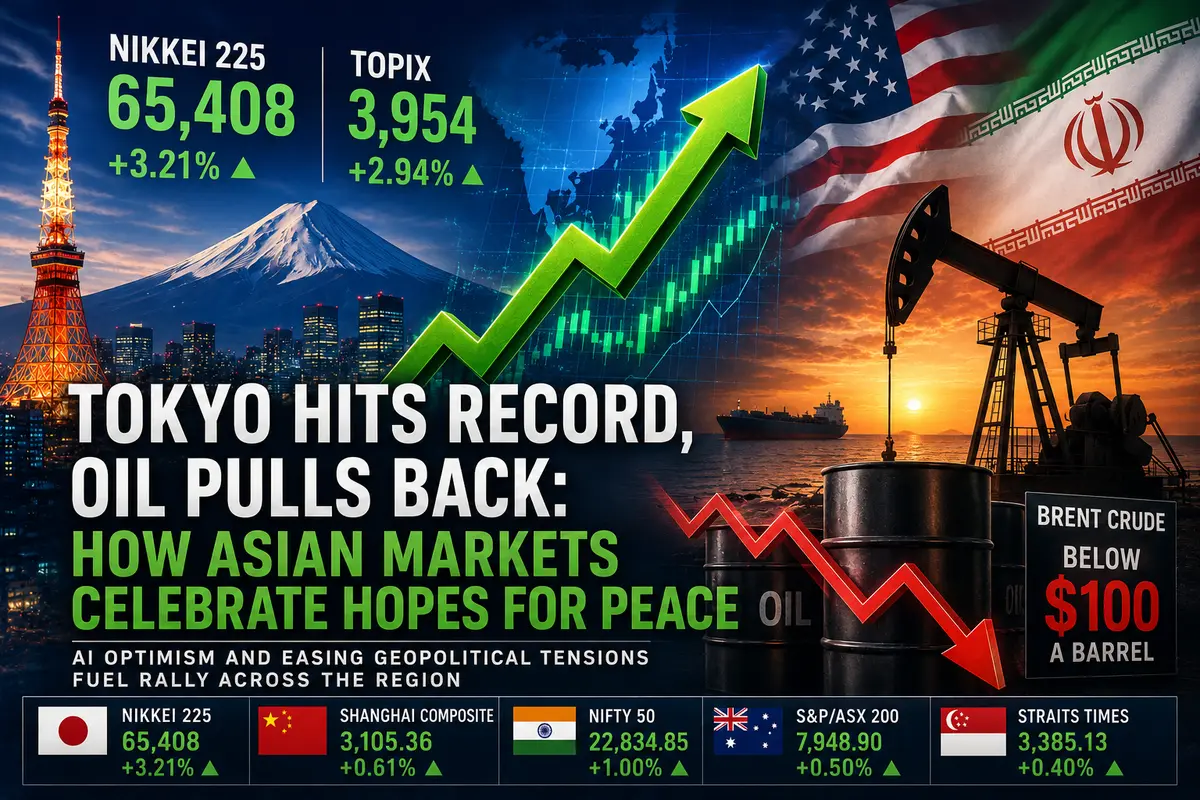
Tokyo Records and an Oil Pullback: How Asian Markets Are Celebrating Hopes for Peace

Monday began on Asian stock exchanges in a way not seen for a very long time. Japan’s Nikkei 225 soared to the skies, hitting a fresh all-time high of 65,408 points. The TOPIX followed closely behind, also rewriting the record books. Chinese indexes moved higher. Australia, Singapore, and India all painted their screens green. And all of this unfolded against the backdrop of a U.S. market holiday, with the world’s biggest players absent from their desks. Left to themselves, Asian markets staged a rally driven by the intersection of two powerful forces: renewed optimism surrounding artificial intelligence and hopes for an end to the Iran conflict.

Tokyo Records: When the Nikkei Storms the Heavens

Japan’s stock market traded on Monday as if no global crisis existed. The Nikkei 225 gained more than three percent during the session, reaching a level that would have seemed фантастical just a year ago. TOPIX, the broader gauge of Japan’s economy, climbed to nearly 3,954 points, also setting a historic record. This was not merely growth — it was a display of strength.

The driving force behind Tokyo’s rally was shares of companies tied to semiconductors and artificial intelligence. Renesas Electronics and Rohm both surged by ten percent. This was not abstract optimism but a direct spillover from Wall Street, where U.S. semiconductor companies staged their own rally late last week after upbeat earnings and forecasts. Nvidia set the tone, and now Japanese suppliers and partners have picked up the baton.

Japan, long viewed as a fading economic power trapped in deflation, has suddenly found itself in an ideal position to profit from the AI boom. Japanese firms produce critical components for chips — substrates, chemicals, and precision equipment. No TSMC or Samsung factory can operate without them. And as global demand for computing power...

Continue reading...
0
0
Lin Brings

Peace as a Currency Driver: Why a Single Word from Trump Turned Asian Markets Upside Down

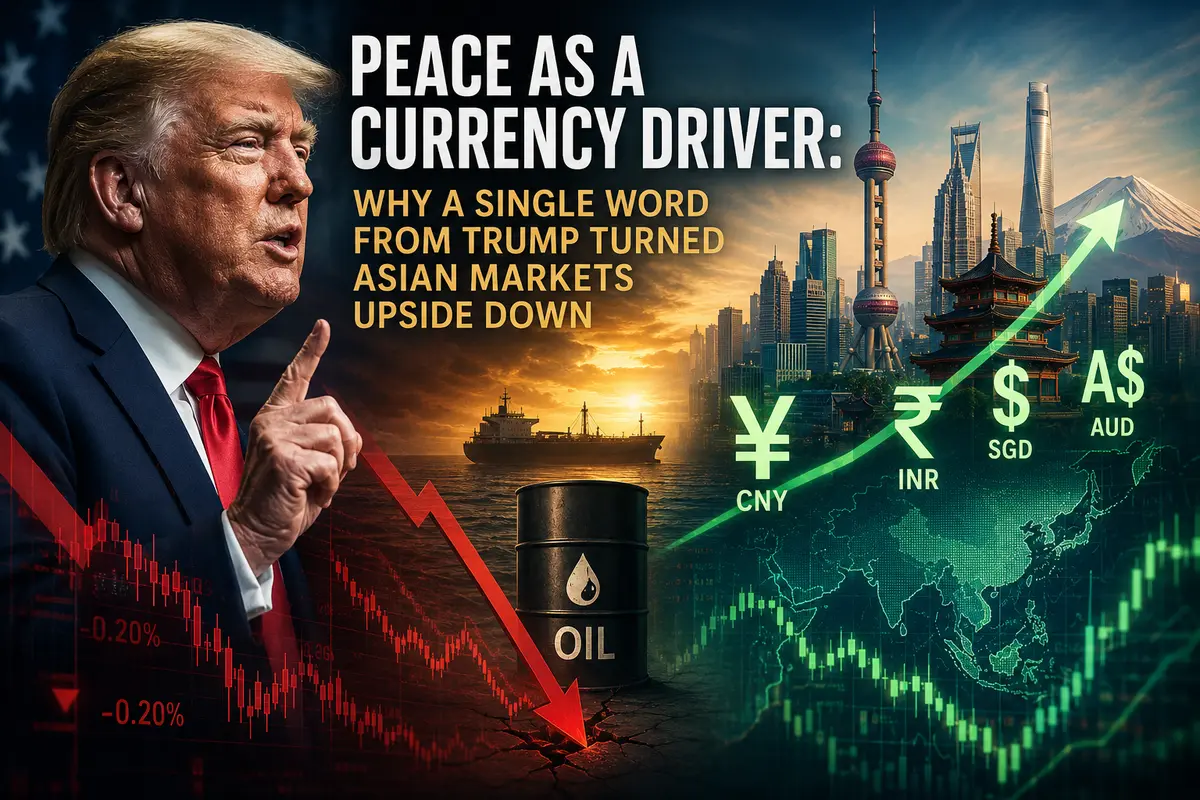
Peace as a Currency Driver: Why a Single Word from Trump Turned Asian Markets Upside Down

Monday on Asian currency markets began with a sight rarely seen in recent weeks — the dollar was retreating while currencies from Tokyo to Mumbai moved higher in unison. The U.S. dollar index slipped by two-tenths of a percent, and futures on the index fell by roughly the same amount. The move was modest, barely noticeable on the charts, but behind it stood a tectonic shift in sentiment. The reason was a few words spoken by Donald Trump over the weekend. Words that may have marked the beginning of the end of this year’s most destructive geopolitical crisis. And Asian currencies, being among the most sensitive barometers of global risk appetite, reacted instantly.

Trump the Peacemaker: “Largely Agreed”

Over the weekend, the U.S. president made a statement markets had been waiting months to hear. The United States and Iran had “largely agreed” on a framework deal to resolve the conflict. The key point was the resumption of shipping through the Strait of Hormuz — the very artery whose blockade had sent oil prices soaring and triggered a global chain reaction of inflation. Separate sources added further detail: Iranian and Pakistani mediators also reported progress. The picture looked almost idyllic.

But Trump would not be Trump without adding a note of uncertainty to the optimism. Almost immediately after the encouraging statement, he clarified that he was in no hurry to finalize a deal. Iran, for its part, largely rejected U.S. demands regarding the transfer of enriched uranium stockpiles — one of the most contentious points in the negotiations. Contradictory signals, mixed messages, swings between hope and skepticism. Classic Trump diplomacy, in which no one knows until the very last moment whether an agreement will be signed or another escalation will follow.

Still, markets exhausted by months of uncertainty chose to focus...

Continue reading...
0
0
Tom Maffin

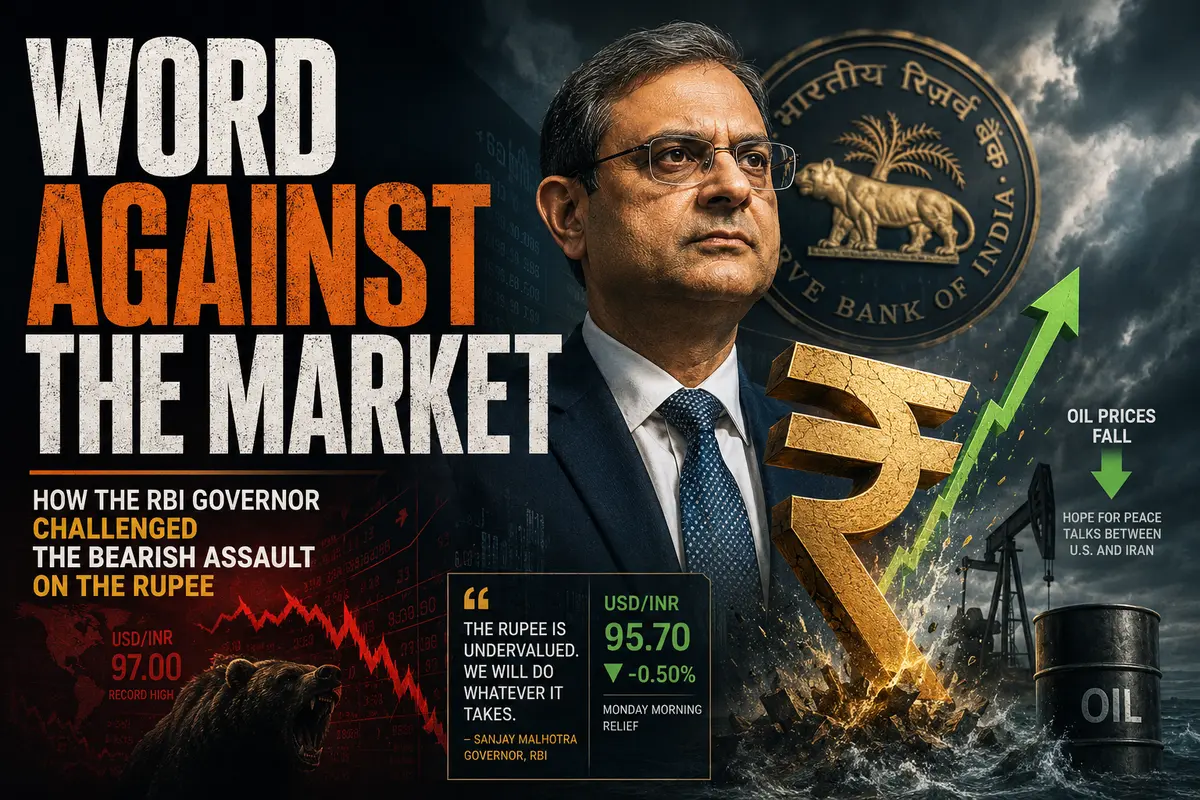
Word Against the Market: How the RBI Governor Challenged the Bearish Assault on the Rupee

Word Against the Market: How the RBI Governor Challenged the Bearish Assault on the Rupee

Monday morning on India’s currency market began with the very thing everyone — from oil importers to owners of street stalls selling imported goods — had been desperately waiting for. The rupee, which only on Friday had been staring into the abyss near the 97-per-dollar mark, suddenly reversed course and began to climb. The USD/INR pair fell by half a percent to 95.70 — a move that may seem modest after weeks of relentless decline, yet one whose psychological significance can be compared to the first breath of air for a drowning man. And the reason for this reversal was neither market forces nor global macroeconomic shifts. The reason was a man. One man who uttered a few sentences in an interview with the newspaper Mint.

Malhotra Steps Into the Ring: “The Rupee Is Undervalued, and We Will Do Whatever It Takes”

Sanjay Malhotra, governor of the Reserve Bank of India, is not known for making blunt public statements. Central bankers usually speak in shades, hints, and carefully crafted phrases whose interpretation has become a profession of its own. But this time, Malhotra seemed to cast diplomacy aside. His statement rang out like a gong: the rupee is undervalued. The RBI will do whatever is necessary to prevent further weakening of the currency.

“Whatever is necessary” is not a phrase central bankers throw around lightly. It is a signal that traders call a verbal intervention. And when it comes from the man controlling the foreign exchange reserves of the world’s seventh-largest economy, the market has no choice but to listen. Because words may be followed by action. And judging by recent developments, they already have been — last week the RBI actively intervened, steering USD/INR away from record highs. Malhotra made it clear these interventions were not a one-off operation,...

Continue reading...
0
0
NorthRay

I Tried to Buy Apple at 3 AM… and Learned the Stock Market Isn’t Open 24/7 (That’s Why I Opened SPX Instead)

I Tried to Buy Apple at 3 AM… and Learned the Stock Market Isn’t Open 24/7 (That’s Why I Opened SPX Instead)

Hey, this is NorthRay.💪

Remember how I said I was going to open a trade on Apple?

Well… I tried. Honestly.

I spent the evening watching the AAPL chart, preparing, analyzing everything. But I decided to wait until morning so I’d be fresh.

I wake up at 8 AM Moscow time. Open the terminal. Click on Apple.

…Nothing.

The chart is frozen. The price isn’t moving. The Buy and Sell buttons are greyed out.

My first thought was: “That’s it. I got blocked. The broker is dead. The internet broke.”

And then it hit me.

The U.S. stock market was asleep.

At 8 AM Moscow time, it’s still the middle of the night on Wall Street. The exchange wouldn’t open for several more hours.

That’s how I learned markets operate on different schedules.🤐

My New Trade: SPX Sell

I had to postpone Apple. But I couldn’t just sit there doing nothing.

So I checked which instruments were available at that moment. I saw SPX (the S&P 500 index — basically a basket of 500 major U.S. companies).

Unlike Apple, SPX is available for trading almost 24 hours a day with many brokers (through CFDs — contracts for difference). So I was able to open a trade in the morning.🤥

What I did:

Instrument: SPX (S&P 500 Index)

Type: Sell

Volume: 0.10 lot

Stop-loss and take-profit: Set (of course)

Why Sell: The market looked overbought to me, and after yesterday’s rally I expected a pullback

The trade is still open. No result yet. We’ll see what happens.

The Biggest Lesson This Week: Markets Operate on Different Schedules

I used to think trading was basically 24/7. Sit down whenever you want and trade.

Turns out… not exactly.🧐

Forex (Currency Pairs) — Almost 24 Hours

The Forex market operates 24 hours a day,...

Continue reading...
0
0
Lin Brings

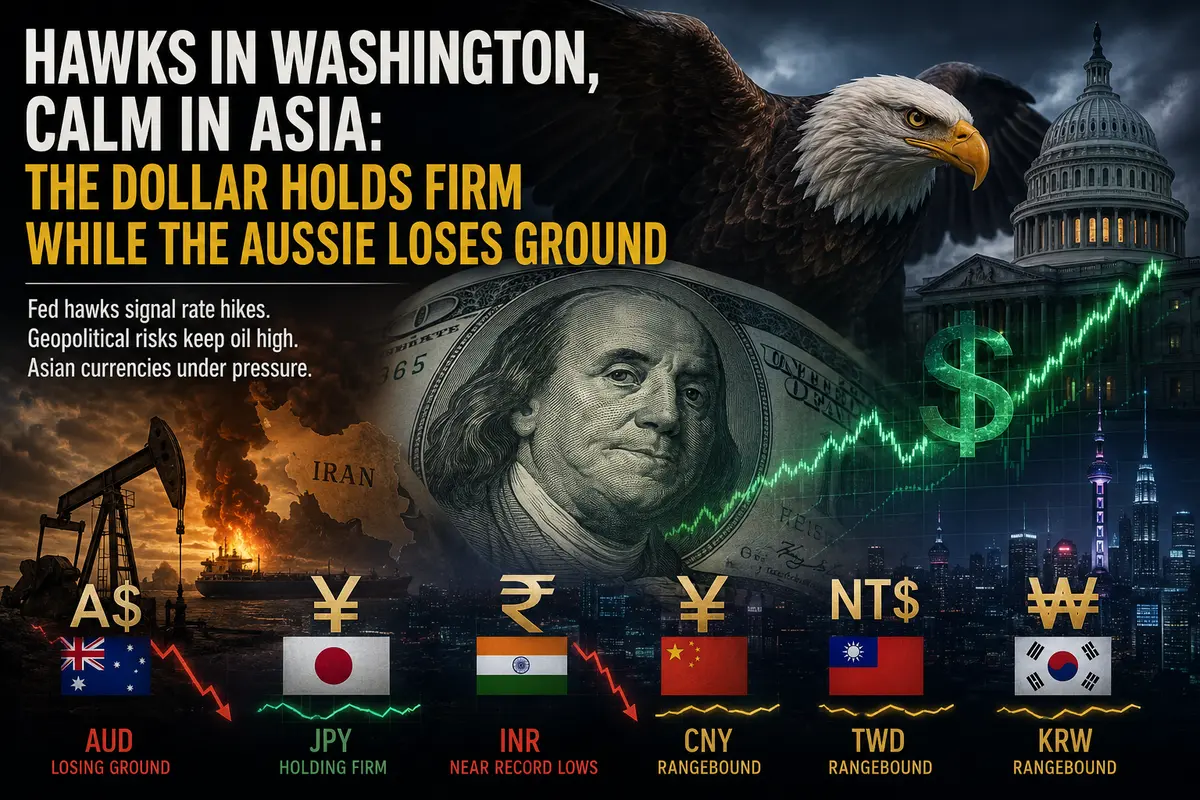
Hawks in Washington, Calm in Asia: The Dollar Holds Firm While the Aussie Loses Ground

Hawks in Washington, Calm in Asia: The Dollar Holds Firm While the Aussie Loses Ground

Thursday’s Asian trading session unfolded under the shadow of what the Federal Reserve released the previous evening. The minutes from April’s Fed meeting — anticipated with a level of tension rivaling that of Big Tech earnings reports — did not disappoint those betting on a hawkish turn. The document confirmed what markets had been whispering about for weeks: the hawks inside the Fed are spreading their wings, and the idea of further rate hikes is no longer fringe speculation. The dollar, sensing renewed strength, stabilized near six-week highs, while Asian currencies — with the exception of the yen — retreated into defensive mode. The Australian dollar, meanwhile, suffered a particularly sharp blow from an unexpected source: its own labor market.

Fed Minutes: The Hawks Step Out of the Shadows

Reading Fed minutes is always an exercise in decoding. Dry language conceals dramatic clashes of opinion, cautious hints, and diplomatically softened disagreements. But the April document was surprisingly candid. More and more officials on the Federal Open Market Committee now acknowledge the possibility of raising interest rates. This is not merely a shift in tone — it is a tectonic change in the monetary landscape, one that would have seemed unthinkable just a few months ago.

The reason behind this shift is simple and ominous: inflation. The very inflation the Fed vowed to keep near two percent refuses to cool. On the contrary, it has accelerated sharply over the past two months. The chief culprit is oil. Supply disruptions caused by the war against Iran have driven energy prices to levels that ripple through the cost of everything — from gasoline and airfare to grocery baskets. This is supply-side inflation, the most troublesome kind for central banks because it cannot be fought effectively through traditional demand cooling. Yet judging by the...

Continue reading...
0
0

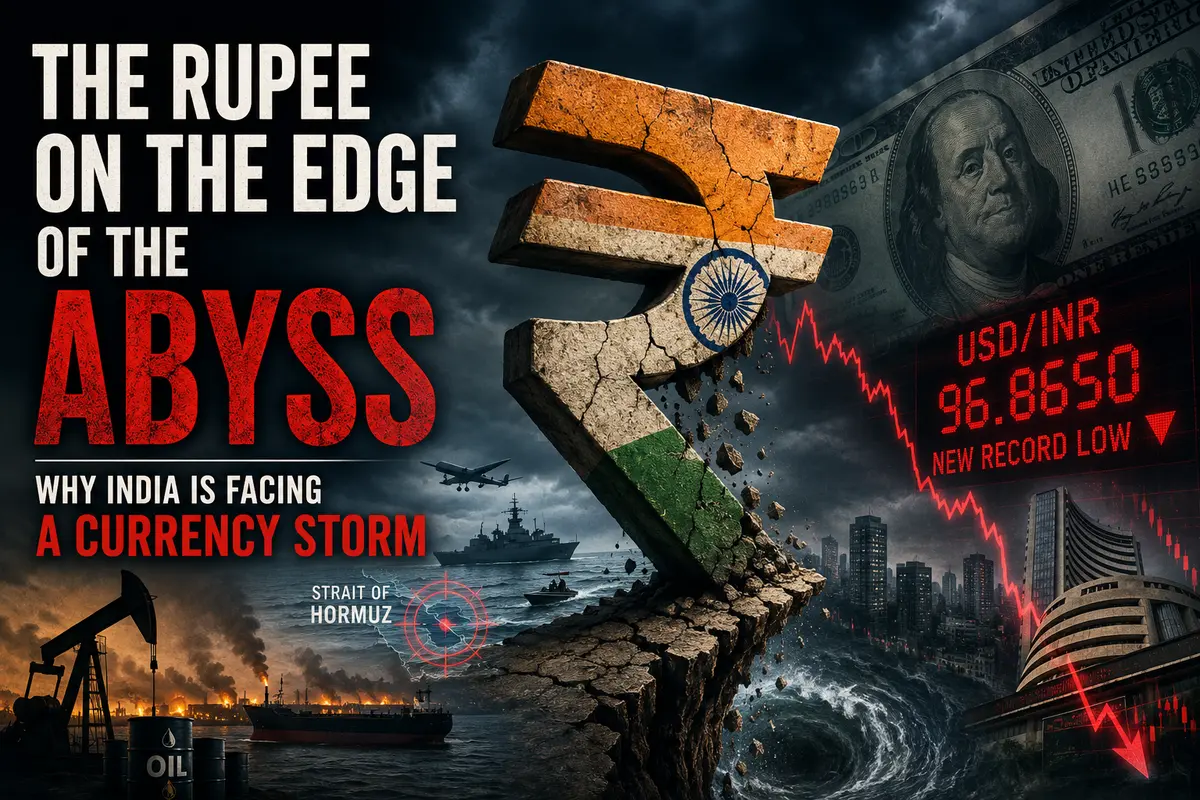
The Rupee on the Edge of the Abyss: Why India Is Facing a Currency Storm

The Rupee on the Edge of the Abyss: Why India Is Facing a Currency Storm

Seven consecutive record lows. This is no longer a simple decline — it is a free fall with eyes wide open, where every new step downward stops being a shock and becomes routine. The level of 96.8650 rupees per dollar, recorded on Wednesday, is not the bottom but merely another mark carved into the wall of shame. The psychological threshold of 100 rupees per dollar no longer feels like fantasy. It looms on the horizon as an inevitability — one that even the corridors of the Reserve Bank of India seem to have accepted. But the real drama of the rupee is unfolding not on trading charts, but within the deep structural cracks that have spread through the foundation of the Indian economy. Cracks that did not exist even six months ago.

The Oil Curse: Anatomy of Vulnerability

India is the world’s third-largest consumer of oil. The phrase sounds impressive, almost like the status of a superpower. But behind it hides a statistical nightmare: more than 80 percent of the crude oil consumed by the country is imported. Saudi Arabia, Iraq, and the United Arab Emirates effectively hold the Indian energy sector by the throat. And when oil prices surge by more than fifty percent, as they have since late February, India’s economy literally begins to suffocate.

The mechanism of destruction is simple and ruthless. Oil importers — India’s state-owned and private refining companies — must pay for every shipment in U.S. dollars. To obtain those dollars, they sell rupees. When the price of a barrel rises by one and a half times, the demand for dollars rises proportionally. An avalanche of rupees floods the currency market, wiping out every support level. A weaker rupee then makes every subsequent oil purchase even more expensive in local currency terms. The result...

Continue reading...
0
0

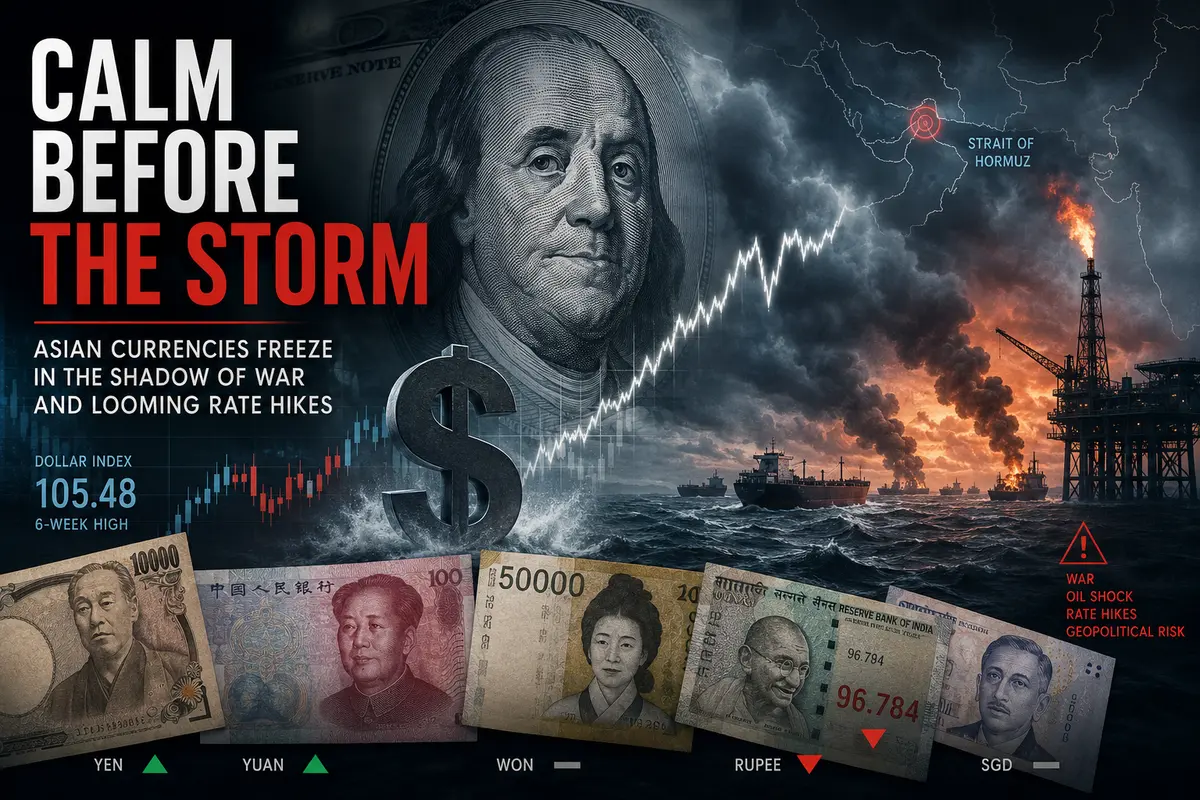
Calm Before the Storm: Asian Currencies Freeze in the Shadow of War and Looming Rate Hikes

Calm Before the Storm: Asian Currencies Freeze in the Shadow of War and Looming Rate Hikes

At first glance, Asian currency markets looked almost sleepy on Wednesday. Most pairs drifted within narrow ranges, traders seemed to hit pause, and price action resembled the heartbeat monitor of a patient under heavy sedation. But this silence is deceptive. Beneath the surface calm of sideways trading lies enormous tension ready to erupt at any moment. When three forces converge at once — a war disrupting one-fifth of global oil supplies, renewed fears of Federal Reserve rate hikes, and deepening geopolitical fractures among major powers — markets do not calm down; they become paralyzed, trying to calculate where the first blow will come from.

The Heavyweight Dollar and the Ghost of Tightening

The dollar index hovering near six-week highs is the perfect barometer of global anxiety. Whenever the world starts shaking, money inevitably rushes into the dollar, and the current situation is no exception. But what makes this moment unique is that the dollar is rising not only as a safe haven, but also as a currency that could become even more profitable. Markets have once again started talking about something they tried to forget over recent months — another Fed rate hike.

This narrative did not emerge out of nowhere. Remarks by Philadelphia Federal Reserve Bank President Anna Paulson, made almost casually on Tuesday evening, became the detonator. When a senior Fed official says it is reasonable for markets to speculate about possible rate increases, it is not just rhetoric — it is a signal. Central bankers rarely speak carelessly. Behind such comments lies growing concern within the Fed over energy-driven inflation, which has begun accelerating again after the conflict with Iran disrupted supplies through the Strait of Hormuz.

Inflation caused by a supply shock is the most unpleasant type of inflation for central banks. It cannot be fought...

Continue reading...
0
0
Lin Brings

The Rupee on the Edge: Why India Is Facing a Currency Storm

The Rupee on the Edge: Why India Is Facing a Currency Storm

The 96.8650 level that USD/INR pierced this week is not just another number flashing across traders’ screens. It is a diagnosis. Seven consecutive all-time highs are not how healthy markets behave during temporary stress — this is how a system behaves when some fundamental safeguard has broken down. The rupee has fallen before; there have been crashes and speculative panics. But the current situation stands out for its relentless, almost hopeless consistency. The currency is not merely weakening — it is losing the ability to find a bottom. And while the world watches the standoff in the Strait of Hormuz with fascination, the real drama is unfolding not on the decks of destroyers, but in the corridors of the Reserve Bank of India and on the balance sheets of Indian importers staring in horror at their dollar-denominated invoices.

The Oil Trap: Anatomy of a Curse

The entire structure of the Indian economy resembles a building erected on barrels of crude oil. This is neither exaggeration nor literary metaphor. India is the world’s third-largest oil consumer, yet unlike the other members of this uneasy top three, it possesses very little domestic production. More than 80% of the oil the country consumes is imported, sending foreign currency flowing to Saudi Arabia, Iraq, and — in less tense times — Iran.

When oil trades around seventy dollars a barrel, this structure can still maintain balance. But when prices surge by more than fifty percent in just a few months, as they have since late February, the current account begins to crack under the pressure.

The mechanics of this destruction are simple and ruthless. Indian refiners now require far more dollars to pay for the same physical volume of imports. They enter the foreign exchange market and aggressively sell rupees to buy U.S. currency....

Continue reading...
0
0
NorthRay

MetaTrader 4: The First Shock, Breaking It Down, and How to Stop Feeling Lost

MetaTrader 4: The First Shock, Breaking It Down, and How to Stop Feeling Lost

Hey, this is NorthRay.🙌

Remember my very first post? The one where I sat staring at the terminal, afraid to click anything?

Well, that terminal was MetaTrader 4.

When I opened it for the first time, I had a complete culture shock.

— A bunch of confusing windows.
— A chart full of red and green candles.
— Panels with numbers changing every second.
— Buttons with names that sounded like magic spells: Market Watch, Navigator, Terminal, Buy, Sell.

I felt like an astronaut dropped onto an alien planet without instructions.

A few weeks passed. I kept clicking the wrong things, mixing up windows, accidentally closing charts and having no idea how to get them back.

But eventually, I figured it out.

And now I’m going to walk you through every corner of MT4 the way I wish someone had explained it to me in the beginning.

What MetaTrader 4 Is and Why Everyone Uses It

MetaTrader 4 (or just MT4) is the most popular trading platform in the world.

It’s been around for years, but brokers love it and traders are used to it. It’s simple (once you understand it), stable, and has everything you need to get started.

There’s also MT5 — the “older sister.” But for beginners, MT4 is perfect.

The main thing you need to understand: MT4 is just a tool. Like a hammer. It doesn’t make money for you. You simply use it to open and close trades.🛡️

The First Things You See When You Open MT4

Let’s break down all the main windows. I’ll call them the same way I remembered them myself.

1. Market Watch

— Usually on the left side.
— Shows a list of currency pairs, gold, oil, stocks (if your broker offers them).
— Prices update in real time.
—...

Continue reading...
0
0
Tom Maffin

Money That Feeds: How the Card Works

Money That Feeds: How the Card Works

The nonprofit organization WYDE, which has already attracted attention with its Impact Exchange concept, is preparing to launch a new financial tool. In partnership with the fintech platform Crowded, it is introducing a debit card called EAT that runs on the Visa infrastructure. At first glance, it sounds like a standard business card, but embedded within it is a mechanism that could reshape how businesses participate in charitable giving.

The concept is simple and elegant. Every time a cardholder — whether an entrepreneur, company, or organization — makes a purchase, a small portion of the transaction is automatically directed to hunger-relief organizations. No separate donations, no additional actions, no checkboxes or “donate” buttons. The money goes to charity automatically, simply because the business continues operating and spending on its everyday needs.

That is the core innovation. Charity stops being a separate act that requires a conscious decision and instead becomes integrated into daily financial activity. A company buys office supplies, pays for lunch with clients, or covers software subscriptions — and with each transaction, a few cents or dollars are sent to those fighting hunger. Over the course of a year, those contributions can add up to thousands of meals.

Crowded: Fintech Infrastructure for Good

WYDE’s partner in launching the card is Crowded — a fintech company specializing in services for nonprofit organizations. This is an important detail because the charitable sector has historically suffered from a lack of modern financial infrastructure. Banks are often reluctant to open accounts for nonprofits, payment systems are rarely tailored to their specific needs, and donation accounting is frequently handled through semi-manual processes.

Crowded manages the entire technical side: payment processing, fraud protection, and integrated card management. This means cardholders receive the same level of convenience and security as with any other Visa business...

Continue reading...
0
0
Navigation menu
instaforex banner