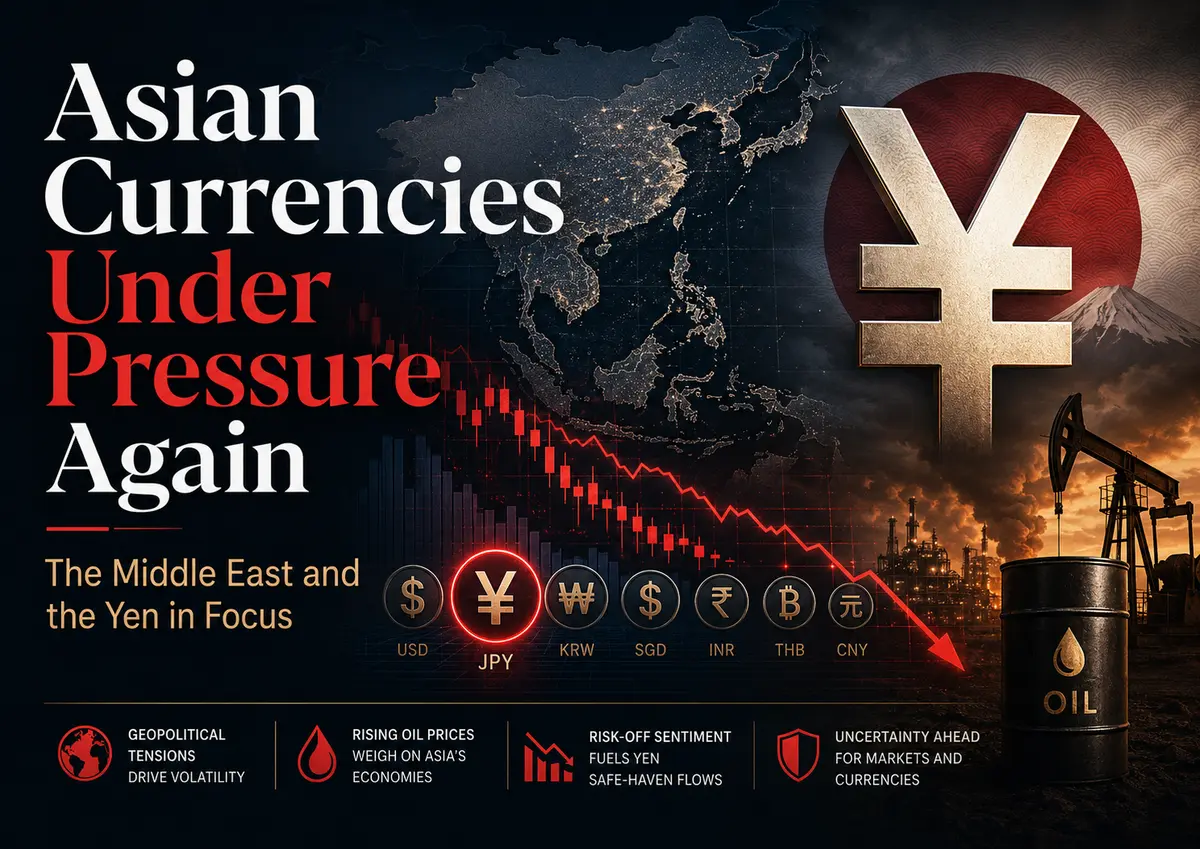
Asian Currencies Under Pressure Again: The Middle East and the Yen in Focus
Friday Morning: Asia Holds Its Breath
Friday began across Asian currency markets with a sense of uneasy calm. Most regional currencies remained confined to narrow trading ranges, seemingly waiting for developments unfolding thousands of kilometres away. The Middle East once again became the main source of market-moving news, and its influence outweighed even the much-anticipated weakening of the US dollar.
The US Dollar Index, which fell to one-month lows this week following softer inflation data, edged up by 0.1% to 100.79 on Friday morning. The move may appear insignificant, but it was enough to encourage caution among Asian currencies. The dollar continues to benefit from its safe-haven status, and whenever geopolitical tensions intensify, investors begin turning back toward the US currency despite its fundamental weaknesses.
The situation in the Middle East is indeed becoming increasingly tense. The United States and Iran continue to exchange strikes, while yesterday’s reports of renewed military action confirmed that neither side appears ready to de-escalate the conflict. Oil prices remain close to one-month highs, automatically triggering a chain of rising inflation expectations. More expensive oil means higher energy costs, higher consumer prices and, ultimately, tighter monetary policy. For Asian economies, most of which are net energy importers, this represents a double blow.
The Yen: Near a 40-Year Low and Hoping for a Miracle
The Japanese yen remains the central currency drama of the year. The USDJPY ... pair is once again trading near 162.4, only a few tenths below the 40-year low of 162.84 reached earlier this month. The yen has not been this weak since the Japanese economy was operating under entirely different conditions.
The reasons behind the decline are well known and no longer surprise market participants. The enormous interest-rate gap between the United States and Japan continues to work against the yen. While...