
Bar Pipa
We pay for a post of 10$

TOPIX

Asian Stocks Rise as Nikkei 225 Hits a Record High
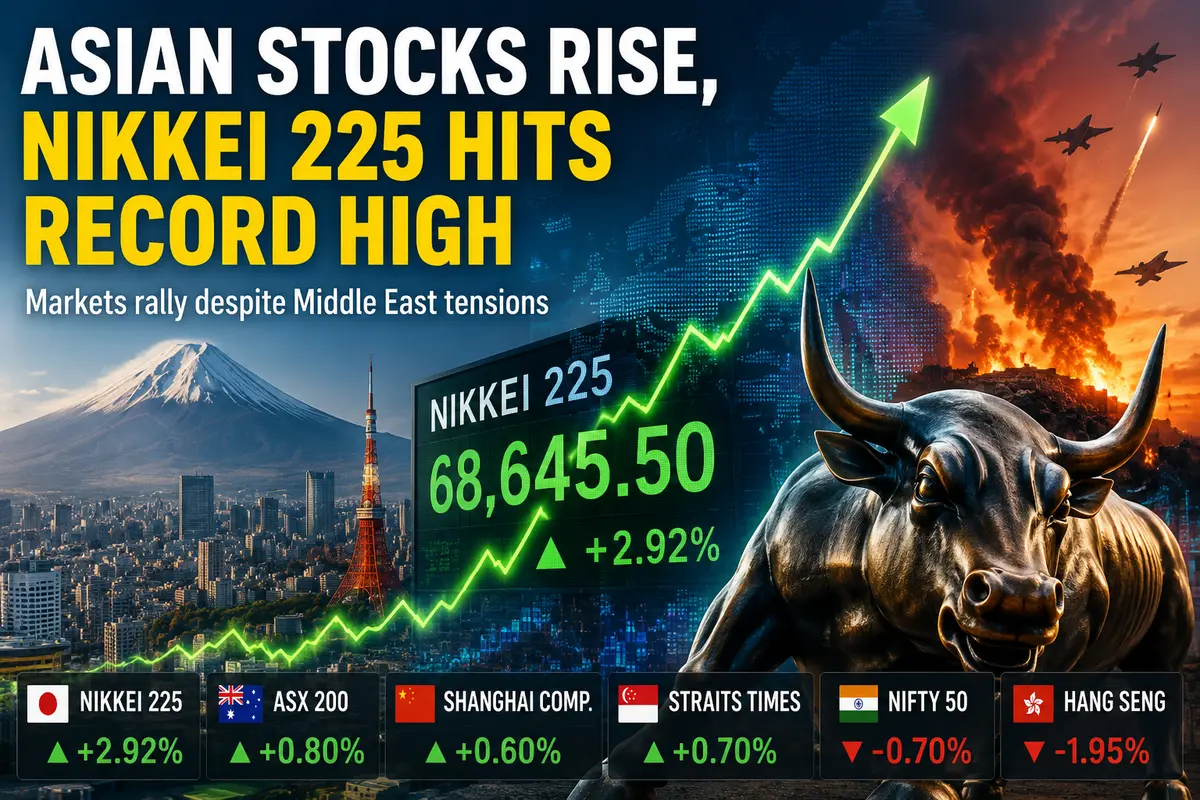
Asian Stocks Rise as Nikkei 225 Hits a Record High
A Morning That Began With a Surge

Asian stock markets delivered a pleasant surprise on Wednesday, staging a remarkable rally despite a global backdrop that offered little reason for optimism. The Middle East remained engulfed in conflict. Iran and the United States exchanged airstrikes for the third time in a week. Oil prices climbed. Diplomatic negotiations stalled. Diplomats stayed silent while military forces took action.

Under such circumstances, most markets would be expected to fall—or at least pause in anxious anticipation. But Asian markets ignored the script. They rose. And not just modestly: Japan’s Nikkei 225 surged to an all-time record high, surpassing a milestone many believed was unattainable after three decades of economic stagnation.

What happened? Have investors stopped worrying? Or are they seeing something that analysts obsessed with geopolitics are missing?

As is often the case, the answer is more complicated. On Wednesday, Asia demonstrated a remarkable ability to tune out negative headlines and focus on the factors working in its favor. And there are plenty of them: a technology boom, government stimulus measures, and weak economic data that paradoxically reinforce expectations for accommodative monetary policy. Together, these factors created a cocktail strong enough to outweigh fears of escalating military conflict.

Japan: Thirty Years Later

The star of the day was Japan’s Nikkei 225. The index climbed nearly 3% to reach 68,645.5 points—an all-time high in its history dating back to 1950.

To appreciate the significance of this achievement, it helps to remember where Japan stood three decades ago. In 1990, the Nikkei collapsed following the bursting of the country’s asset bubble. Since then, despite periods of recovery and decline, the peak reached in 1989 had seemed permanently out of reach.

Now, a new record has been set.

The Nikkei was not alone in its triumph. The broader...

Continue reading...
0
0

Tokyo Records and an Oil Pullback: How Asian Markets Are Celebrating Hopes for Peace

Tokyo Records and an Oil Pullback: How Asian Markets Are Celebrating Hopes for Peace

Monday began on Asian stock exchanges in a way not seen for a very long time. Japan’s Nikkei 225 soared to the skies, hitting a fresh all-time high of 65,408 points. The TOPIX followed closely behind, also rewriting the record books. Chinese indexes moved higher. Australia, Singapore, and India all painted their screens green. And all of this unfolded against the backdrop of a U.S. market holiday, with the world’s biggest players absent from their desks. Left to themselves, Asian markets staged a rally driven by the intersection of two powerful forces: renewed optimism surrounding artificial intelligence and hopes for an end to the Iran conflict.

Tokyo Records: When the Nikkei Storms the Heavens

Japan’s stock market traded on Monday as if no global crisis existed. The Nikkei 225 gained more than three percent during the session, reaching a level that would have seemed фантастical just a year ago. TOPIX, the broader gauge of Japan’s economy, climbed to nearly 3,954 points, also setting a historic record. This was not merely growth — it was a display of strength.

The driving force behind Tokyo’s rally was shares of companies tied to semiconductors and artificial intelligence. Renesas Electronics and Rohm both surged by ten percent. This was not abstract optimism but a direct spillover from Wall Street, where U.S. semiconductor companies staged their own rally late last week after upbeat earnings and forecasts. Nvidia set the tone, and now Japanese suppliers and partners have picked up the baton.

Japan, long viewed as a fading economic power trapped in deflation, has suddenly found itself in an ideal position to profit from the AI boom. Japanese firms produce critical components for chips — substrates, chemicals, and precision equipment. No TSMC or Samsung factory can operate without them. And as global demand for computing power...

Continue reading...
0
0
Navigation menu