

Hawks in Washington, Calm in Asia: The Dollar Holds Firm While the Aussie Loses Ground
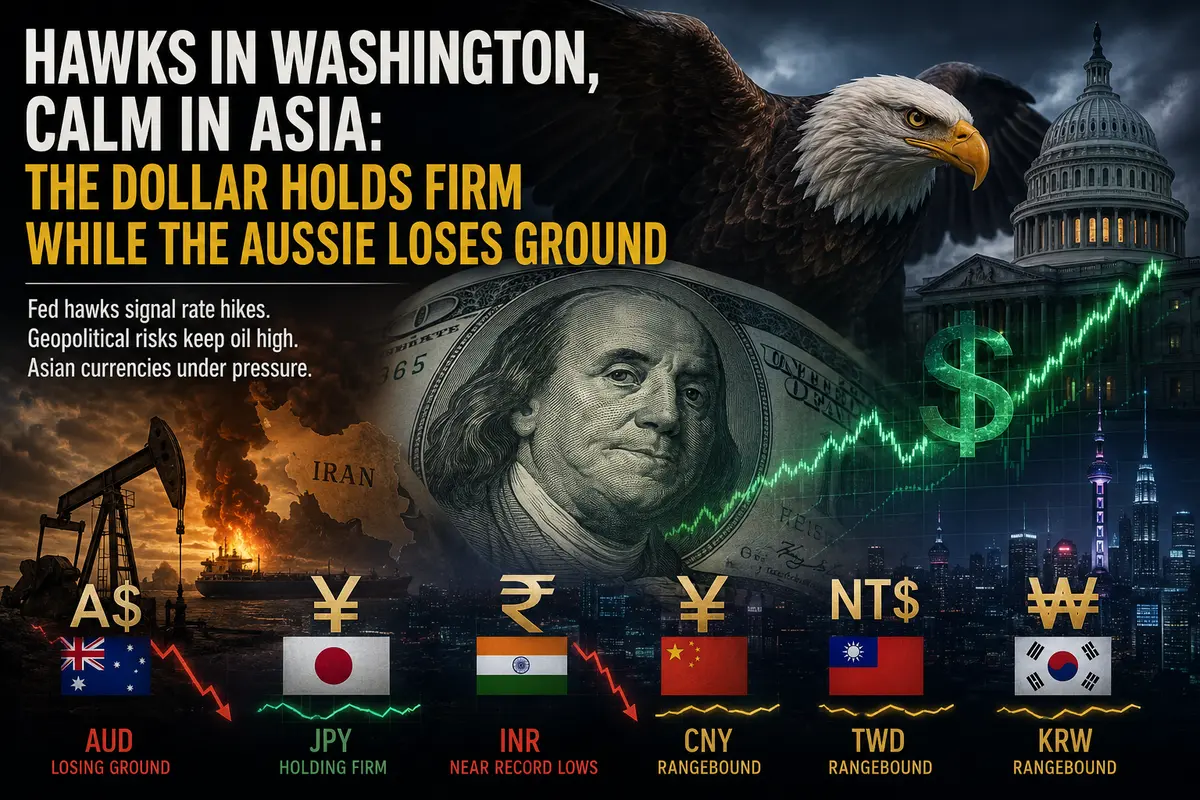
Thursday’s Asian trading session unfolded under the shadow of what the Federal Reserve released the previous evening. The minutes from April’s Fed meeting — anticipated with a level of tension rivaling that of Big Tech earnings reports — did not disappoint those betting on a hawkish turn. The document confirmed what markets had been whispering about for weeks: the hawks inside the Fed are spreading their wings, and the idea of further rate hikes is no longer fringe speculation. The dollar, sensing renewed strength, stabilized near six-week highs, while Asian currencies — with the exception of the yen — retreated into defensive mode. The Australian dollar, meanwhile, suffered a particularly sharp blow from an unexpected source: its own labor market.
Fed Minutes: The Hawks Step Out of the Shadows
Reading Fed minutes is always an exercise in decoding. Dry language conceals dramatic clashes of opinion, cautious hints, and diplomatically softened disagreements. But the April document was surprisingly candid. More and more officials on the Federal Open Market Committee now acknowledge the possibility of raising interest rates. This is not merely a shift in tone — it is a tectonic change in the monetary landscape, one that would have seemed unthinkable just a few months ago.
The reason behind this shift is simple and ominous: inflation. The very inflation the Fed vowed to keep near two percent refuses to cool. On the contrary, it has accelerated sharply over the past two months. The chief culprit is oil. Supply disruptions caused by the war against Iran have driven energy prices to levels that ripple through the cost of everything — from gasoline and airfare to grocery baskets. This is supply-side inflation, the most troublesome kind for central banks because it cannot be fought effectively through traditional demand cooling. Yet judging by the...
