Bar Pipa
We pay for a post of 10$

Asia

Oil Roller Coaster: WTI Falls Again as Markets Speculate on an Iran Deal

Oil Roller Coaster: WTI Falls Again as Markets Speculate on an Iran Deal

Wednesday’s Asian oil trading session opened in negative territory. July WTI futures dropped by as much as two percent, falling to $91.99 per barrel. Brent followed the U.S. benchmark lower, declining 1.74% to $94.99. After several days of nervous swings between fear and hope, the market appears ready to believe in a positive outcome again — at least for the duration of one Asian session. Yet this decline, much like the previous rally, lacks conviction. It resembles another turn on a roller coaster where every rise is followed by a drop, and every drop by another rise. And one man seems to be operating the ride — Donald Trump, whose statements about negotiations with Iran continue to keep oil traders in a state of permanent uncertainty.

Two Percent Down: Why Oil Is Falling Today

A two-percent drop in WTI during a single session is a move worth noticing. But to understand it, context matters. The day before, oil prices climbed on reports of U.S. strikes in southern Iran, which undermined hopes for a quick peace agreement. Today prices are falling. Why? Because despite the strikes, negotiations are still ongoing. Diplomats remain at the table. Trump says progress is being made. Iranian officials, while denying that a deal is close, have not walked away from talks. And the market, which panicked over bombs on Monday, is slowly regaining faith in diplomacy on Tuesday and Wednesday.

This is largely a psychological move. Fundamentally, nothing has changed. The Strait of Hormuz remains partially closed to normal shipping. Oil supplies from the region are still disrupted. Freight insurance premiums remain elevated. But the market is tired of being afraid. Traders are looking for any excuse to justify profit-taking after the previous rally, and continued negotiations provide exactly that excuse.

It is also important that...

Continue reading...
0
0

The Pharaohs’ Treasure Hunt: How Egypt Plans to Redraw the Map of Its Subsoil Wealth

The Pharaohs’ Treasure Hunt: How Egypt Plans to Redraw the Map of Its Subsoil Wealth

Forty-two years is not just a number. It is more than half a human lifetime. In that span, the world moved from rotary phones to smartphones, from typewriters to artificial intelligence, from the Cold War to war with Iran. Yet in Egypt, one crucial sector remained frozen in time throughout all those decades. A country whose gold mines supplied precious metal for the tombs of pharaohs, whose quarries produced copper and turquoise for queens’ jewelry, whose stone pits provided material for the pyramids, had not carried out a single comprehensive airborne survey of its mineral wealth for more than four decades. Now, that paradox is coming to an end. Egypt has announced a large-scale mineral exploration initiative, a decision that could transform not only the country’s economy but also the entire geological map of North Africa.

Xcalibur and Drones Over the Desert: How the Treasure Hunt Will Work

Egypt’s Minister of Petroleum and Mineral Resources, Karim Badawi, personally attended the signing ceremony — and this was far more than a ceremonial gesture. For Cairo, the project carries strategic importance. The contractor selected for the mission is Xcalibur Smart Mapping, one of the world’s leading companies in airborne geophysical surveying, with experience across every continent. The company will work alongside Egypt’s Nuclear Materials Authority and the local firm Drone Tech. The consortium is carefully balanced: global expertise, state oversight of nuclear materials, and domestic technological capability.

The technologies involved have advanced dramatically since the early 1980s, when Egypt last conducted anything comparable. Modern airborne geophysical exploration is far more than aerial photography. It is a sophisticated combination of magnetic surveys, gravimetry, electromagnetic sounding, and gamma spectrometry. Aircraft or drones equipped with this technology fly over targeted areas while instruments detect even the slightest anomalies in Earth’s magnetic field, gravity, and rock...

Continue reading...
0
0

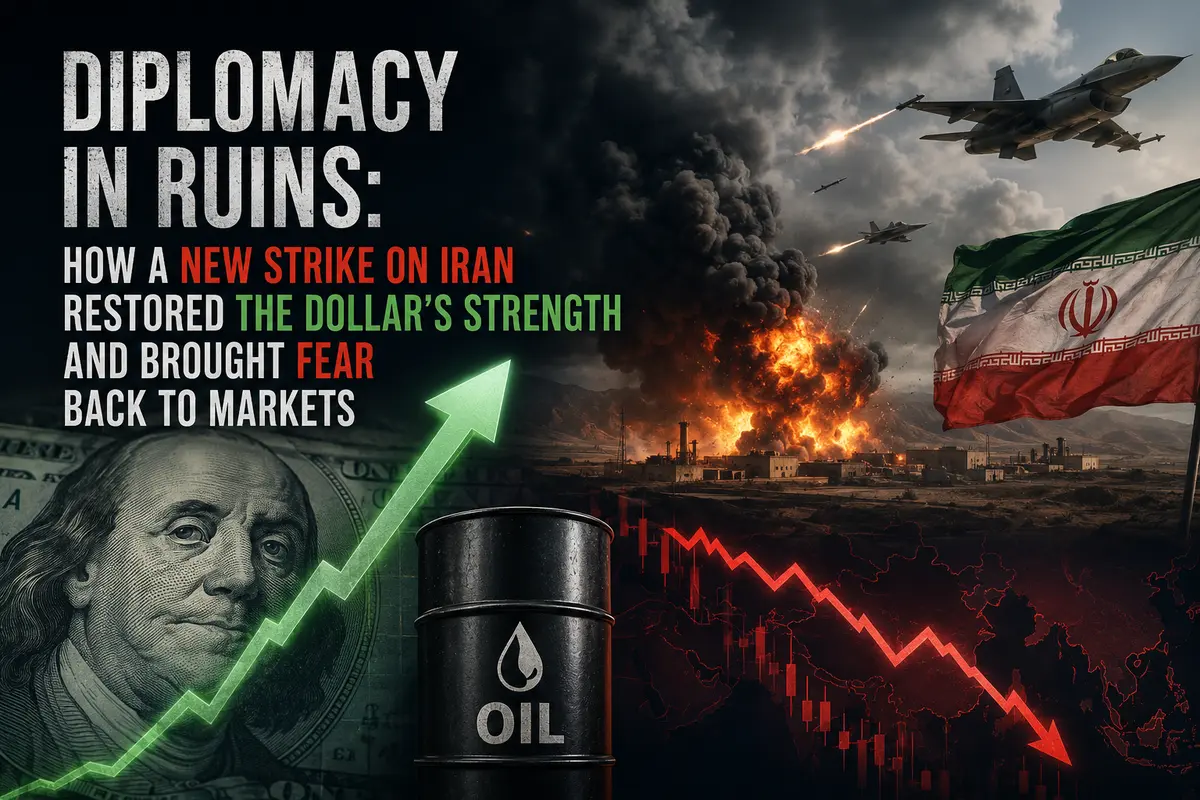
Diplomacy in Ruins: How a New Strike on Iran Restored the Dollar’s Strength and Brought Fear Back to Markets

Diplomacy in Ruins: How a New Strike on Iran Restored the Dollar’s Strength and Brought Fear Back to Markets

Monday ended with explosions. By Tuesday, markets woke up in a different world — one where hopes for imminent peace, which had lifted Asian stocks and currencies just a day earlier, were shattered by the harsh reality of military force. The United States carried out strikes on targets in southern Iran. Although details remain scarce and official statements cautious, that alone was enough for the markets. The dollar resumed its climb. Oil surged alongside it. Asian currencies, which had celebrated gains on Monday morning, came under pressure by Tuesday. The geopolitical pendulum swung back — and this time, those who had rushed to believe in peace were the ones falling.

Strikes on Southern Iran: What We Know and Why It Matters

Reports of new U.S. strikes on Iranian facilities emerged on Monday. The targets were located in the south of the country — a region strategically important both for Iran’s military infrastructure and for control over the Persian Gulf coastline. Details of the operation remain classified, but the mere resumption of military action after several days of intense negotiations suggests either that diplomacy has hit a dead end or that talks are being used as cover for continued military pressure.

Iranian officials reacted immediately. Their warning was blunt and unequivocal: any attacks on the country’s military facilities would trigger retaliation. This was not rhetoric — it was a promise of escalation. Markets interpreted it exactly that way: as a signal that the conflict is far from over and that the risks of a new spiral of violence are growing by the hour.

The contrast with the mood over the weekend could not be sharper. As recently as Saturday and Sunday, Trump had spoken about a memorandum that was “mostly agreed upon,” about reopening shipping routes through the Strait of Hormuz,...

Continue reading...
0
0
Lin Brings

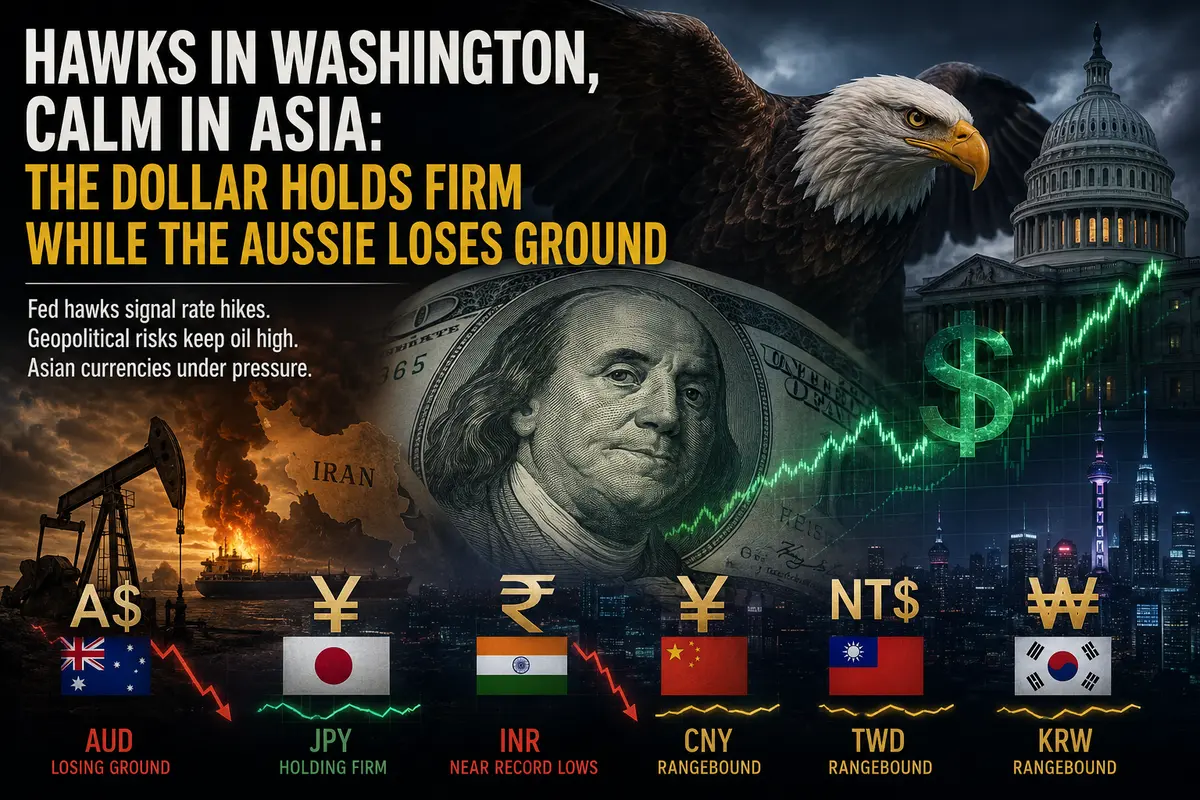
Hawks in Washington, Calm in Asia: The Dollar Holds Firm While the Aussie Loses Ground

Hawks in Washington, Calm in Asia: The Dollar Holds Firm While the Aussie Loses Ground

Thursday’s Asian trading session unfolded under the shadow of what the Federal Reserve released the previous evening. The minutes from April’s Fed meeting — anticipated with a level of tension rivaling that of Big Tech earnings reports — did not disappoint those betting on a hawkish turn. The document confirmed what markets had been whispering about for weeks: the hawks inside the Fed are spreading their wings, and the idea of further rate hikes is no longer fringe speculation. The dollar, sensing renewed strength, stabilized near six-week highs, while Asian currencies — with the exception of the yen — retreated into defensive mode. The Australian dollar, meanwhile, suffered a particularly sharp blow from an unexpected source: its own labor market.

Fed Minutes: The Hawks Step Out of the Shadows

Reading Fed minutes is always an exercise in decoding. Dry language conceals dramatic clashes of opinion, cautious hints, and diplomatically softened disagreements. But the April document was surprisingly candid. More and more officials on the Federal Open Market Committee now acknowledge the possibility of raising interest rates. This is not merely a shift in tone — it is a tectonic change in the monetary landscape, one that would have seemed unthinkable just a few months ago.

The reason behind this shift is simple and ominous: inflation. The very inflation the Fed vowed to keep near two percent refuses to cool. On the contrary, it has accelerated sharply over the past two months. The chief culprit is oil. Supply disruptions caused by the war against Iran have driven energy prices to levels that ripple through the cost of everything — from gasoline and airfare to grocery baskets. This is supply-side inflation, the most troublesome kind for central banks because it cannot be fought effectively through traditional demand cooling. Yet judging by the...

Continue reading...
0
0
Navigation menu