
Bar Pipa
We pay for a post of 10$

Trade

NorthRay

Why the Chart Looks Like a Christmas Tree and Why People Put Lines on It (My First Indicator — Stochastic)
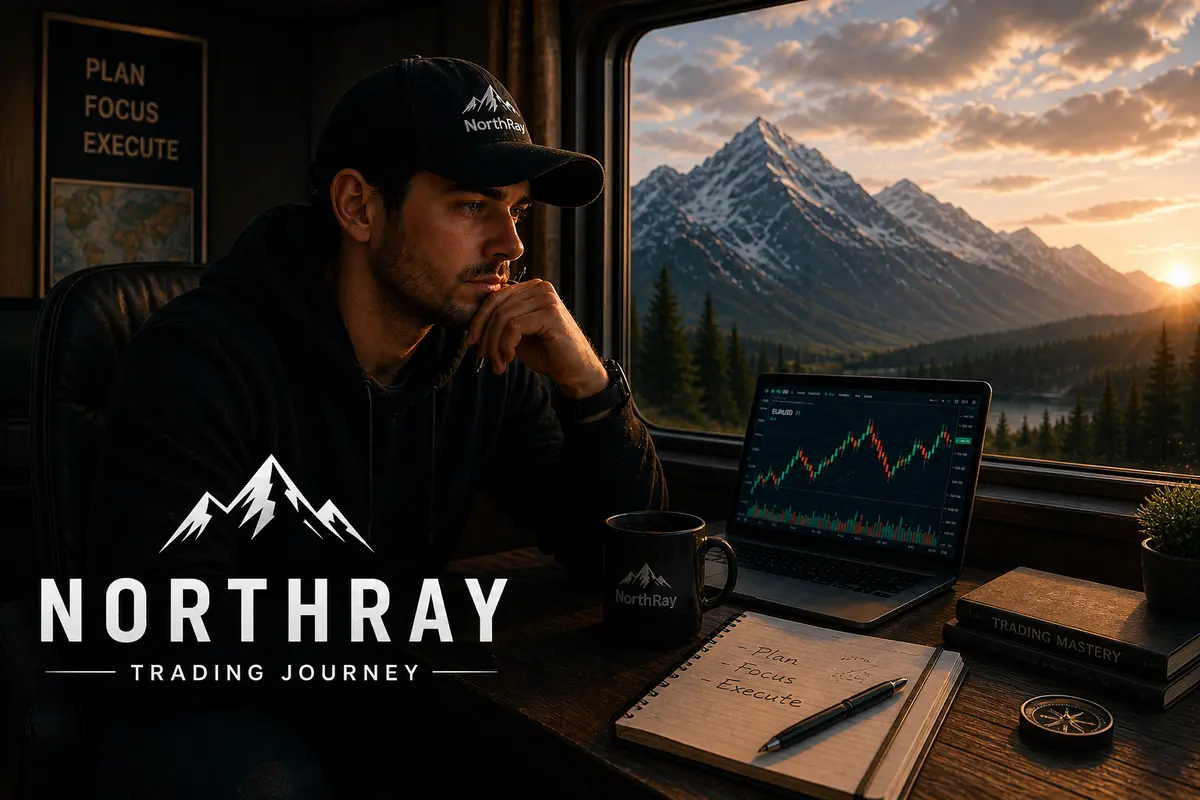
Why the Chart Looks Like a Christmas Tree and Why People Put Lines on It (My First Indicator — Stochastic)

Hi, this is NorthRay.

For a long time, I looked at a clean chart. Just candles. No lines. No colorful bands. Pure simplicity.

I used to think: “Why would I need indicators? I can already see the market.”

Then I realized I wasn’t seeing everything.

Trader friends in chat rooms would say things like: “Stochastic is overbought,” “RSI shows divergence,” “The moving average got broken.”

I nodded and pretended to understand, but inside I was thinking: “What are you even talking about?”

So I decided to figure it out.🔎

What Indicators Are in Simple Terms

An indicator is a mathematical formula that draws an extra line (or histogram, or zones) on the chart to help you make decisions.

It does not predict the future. Remember that once and for all.

It simply processes past price data and displays it in a convenient form.

Here’s a simple analogy:

You look at the thermometer outside your window. It says -10°C. You think: “It’s cold outside, I should wear a jacket.”

The thermometer doesn’t predict tomorrow’s weather. It just tells you what’s happening now. The decision is yours.

An indicator is basically a thermometer for the chart. It says: “The market is overheated right now,” or “The market is too cold right now.” What you do with that information is up to you.💬

Why Use Indicators at All (If You Can Just Watch Candles)

I asked myself that question too. Here’s what I came up with.

Three reasons:

1. Indicators Help Remove Emotions

When I only look at candles, my eyes can deceive me. One candle looks huge and scary. It feels like the whole market is about to collapse.

An indicator gives an objective number. For example: “Stochastic shows 85 — this is an overbought zone. Statistically, price is more likely to...

Continue reading...
0
0
NorthRay

I Tried to Buy Apple at 3 AM… and Learned the Stock Market Isn’t Open 24/7 (That’s Why I Opened SPX Instead)

I Tried to Buy Apple at 3 AM… and Learned the Stock Market Isn’t Open 24/7 (That’s Why I Opened SPX Instead)

Hey, this is NorthRay.💪

Remember how I said I was going to open a trade on Apple?

Well… I tried. Honestly.

I spent the evening watching the AAPL chart, preparing, analyzing everything. But I decided to wait until morning so I’d be fresh.

I wake up at 8 AM Moscow time. Open the terminal. Click on Apple.

…Nothing.

The chart is frozen. The price isn’t moving. The Buy and Sell buttons are greyed out.

My first thought was: “That’s it. I got blocked. The broker is dead. The internet broke.”

And then it hit me.

The U.S. stock market was asleep.

At 8 AM Moscow time, it’s still the middle of the night on Wall Street. The exchange wouldn’t open for several more hours.

That’s how I learned markets operate on different schedules.🤐

My New Trade: SPX Sell

I had to postpone Apple. But I couldn’t just sit there doing nothing.

So I checked which instruments were available at that moment. I saw SPX (the S&P 500 index — basically a basket of 500 major U.S. companies).

Unlike Apple, SPX is available for trading almost 24 hours a day with many brokers (through CFDs — contracts for difference). So I was able to open a trade in the morning.🤥

What I did:

Instrument: SPX (S&P 500 Index)

Type: Sell

Volume: 0.10 lot

Stop-loss and take-profit: Set (of course)

Why Sell: The market looked overbought to me, and after yesterday’s rally I expected a pullback

The trade is still open. No result yet. We’ll see what happens.

The Biggest Lesson This Week: Markets Operate on Different Schedules

I used to think trading was basically 24/7. Sit down whenever you want and trade.

Turns out… not exactly.🧐

Forex (Currency Pairs) — Almost 24 Hours

The Forex market operates 24 hours a day,...

Continue reading...
0
0
NorthRay

I Set Take Profit and Stop Loss. And My Trade Closed in Profit for $10.97. Now I’m Thinking About 1.0 Lot.

I Set Take Profit and Stop Loss. And My Trade Closed in Profit for $10.97. Now I’m Thinking About 1.0 Lot.

Hey, this is NorthRay.

Remember last time I said I was learning not to freak out and to trust my strategy?

Well, today I took the next step.

I opened a new order on EUR/USD. Again with 0.50 lots. But this time — with two new words in my vocabulary:

Take Profit and Stop Loss.

Before, I used to look at those fields in the terminal and leave them empty. I thought: "Why? I'll close it myself when I need to."

How wrong I was.


What Take Profit and Stop Loss are (for those who were also afraid of them)

I'll explain it the way I understood it myself. Simply.

Stop Loss — is your safety net.

It's the price at which a trade will close AUTOMATICALLY if the market goes against you.

You tell the broker in advance: "Listen, if the price drops to this level — close the trade. Don't ask me. I don't want to lose more than I'm ready to lose."

Why you need it:

You don't sit at the screen 24/7.

You don't rely on "maybe it will turn around."

You limit your losses.

Without a stop loss, you're like a skier without brakes. Fun until you have to hit a tree.

Take Profit — is your success alarm clock.

It's the price at which a trade will close AUTOMATICALLY with a profit.

You tell the broker: "When the price reaches this level — take my profit. I won't be greedy and hope for more."

Why you need it:

You lock in profit before the market turns around.

You don't torture yourself with the question "close or not close."

You protect yourself from greed.


What I did this time

I opened an order on EUR/USD, 0.50 lots.

And for the first time in...

Continue reading...
0
0
Navigation menu
