Bar Pipa
We pay for a post of 10$

Analytics

John Madnes

A Magnet for Exchange Rates: Where the Option Traps Are Set This Wednesday
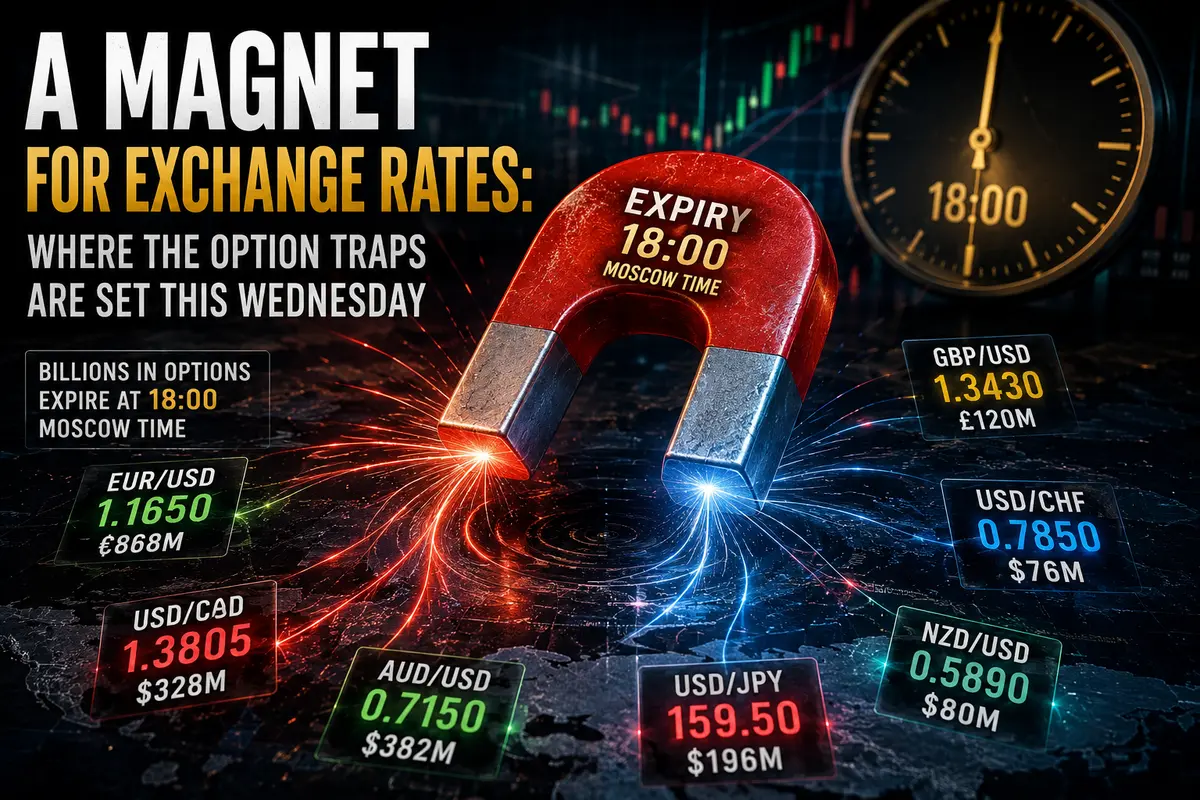
A Magnet for Exchange Rates: Where the Option Traps Are Set This Wednesday

Wednesday, 6 PM. For most people, it’s the hour when attention shifts from work to evening plans. But for currency traders, this moment becomes a point of maximum gravity. Options contracts worth billions of dollars are expiring, and these expiries can pull spot exchange rates toward specific levels with a force that cannot be ignored. Let’s walk through the key currency pairs and see where the traps are set today.

EUR/USD: Nearly €1 Billion at 1.1650

The main magnet for the euro today sits at 1.1650. Options worth a massive €868 million expire at this strike. The spot rate is currently 1.1645 — just five pips away. This means that in the remaining hours before expiry, market makers will do everything possible to keep the pair near this level.

The mechanics are simple: when price approaches a large strike, option holders aggressively hedge their positions, creating artificial gravity. The pair may fluctuate within a narrow range of a few pips around 1.1650, but sharp moves are unlikely.

An additional anchor lies at 1.1640, where €138 million in options expire. This is closer to the current spot price but smaller in size. Most likely, these options will expire without major market impact, though they create extra support just below current levels. If price unexpectedly drops toward 1.1640, buyers may step in and push it back toward the primary magnet zone.

USD/CAD: $328 Million at 1.3805

The largest single options pool today expires in USD/CAD. At the 1.3805 strike, $328 million is concentrated. This is not just a large expiry — it’s a true gravitational anomaly.

The spot rate is 1.3834, slightly above the strike. That suggests the pair could be pulled lower toward 1.3805, as market makers sell USD against CAD to minimize payouts.

Another level sits at 1.4095 with $128...

Continue reading...
0
0
Lin Brings

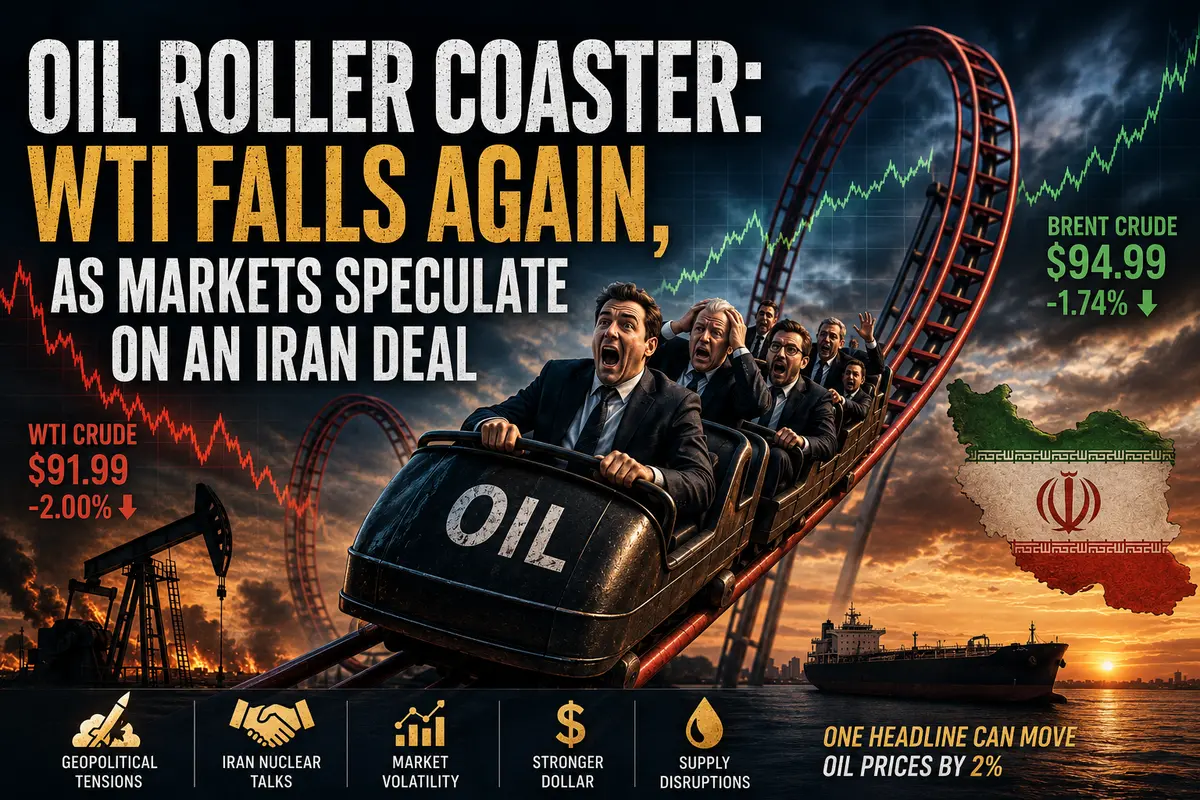
Oil Roller Coaster: WTI Falls Again as Markets Speculate on an Iran Deal

Oil Roller Coaster: WTI Falls Again as Markets Speculate on an Iran Deal

Wednesday’s Asian oil trading session opened in negative territory. July WTI futures dropped by as much as two percent, falling to $91.99 per barrel. Brent followed the U.S. benchmark lower, declining 1.74% to $94.99. After several days of nervous swings between fear and hope, the market appears ready to believe in a positive outcome again — at least for the duration of one Asian session. Yet this decline, much like the previous rally, lacks conviction. It resembles another turn on a roller coaster where every rise is followed by a drop, and every drop by another rise. And one man seems to be operating the ride — Donald Trump, whose statements about negotiations with Iran continue to keep oil traders in a state of permanent uncertainty.

Two Percent Down: Why Oil Is Falling Today

A two-percent drop in WTI during a single session is a move worth noticing. But to understand it, context matters. The day before, oil prices climbed on reports of U.S. strikes in southern Iran, which undermined hopes for a quick peace agreement. Today prices are falling. Why? Because despite the strikes, negotiations are still ongoing. Diplomats remain at the table. Trump says progress is being made. Iranian officials, while denying that a deal is close, have not walked away from talks. And the market, which panicked over bombs on Monday, is slowly regaining faith in diplomacy on Tuesday and Wednesday.

This is largely a psychological move. Fundamentally, nothing has changed. The Strait of Hormuz remains partially closed to normal shipping. Oil supplies from the region are still disrupted. Freight insurance premiums remain elevated. But the market is tired of being afraid. Traders are looking for any excuse to justify profit-taking after the previous rally, and continued negotiations provide exactly that excuse.

It is also important that...

Continue reading...
0
0
Tom Maffin

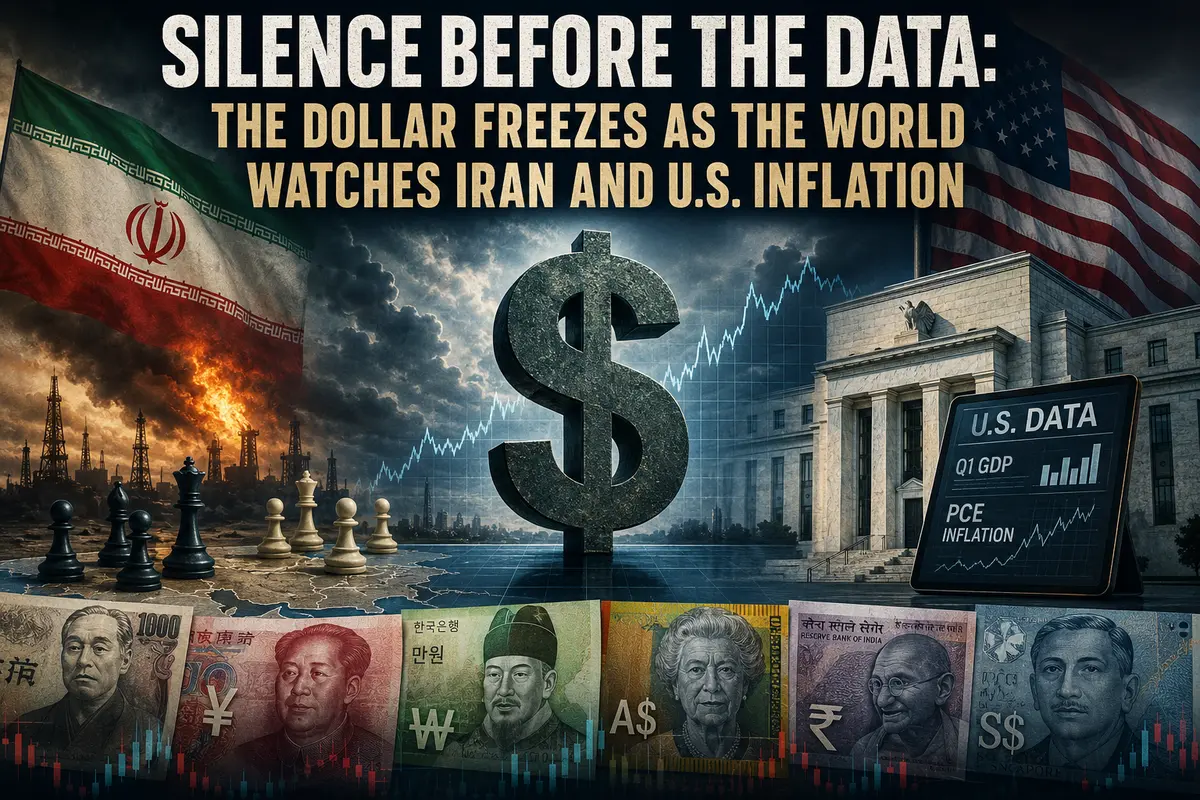
Silence Before the Data: The Dollar Freezes as the World Watches Iran and U.S. Inflation

Silence Before the Data: The Dollar Freezes as the World Watches Iran and U.S. Inflation

Wednesday on the currency markets was defined by anticipation. The dollar stood still, like a predator before the leap, making no sharp moves either upward or downward. The U.S. dollar index and its futures were virtually unchanged during Asian trading, stabilizing after a brief surge earlier in the week.

But this stillness is deceptive. Beneath it lies enormous tension — traders are frozen ahead of two events capable of turning the market upside down. One is geopolitical, the other macroeconomic. And both sit at a point of maximum uncertainty.

Iran Talks: Diplomacy Through a Crosshair

The main factor preventing the dollar from falling — and at the same time keeping it from rallying — is Iran.

Negotiations between the United States and Iran over de-escalating the conflict are continuing, but no one seems to fully understand their real condition. According to media reports, indirect contacts are still ongoing even after U.S. forces struck targets in southern Iran.

It is a strange, almost surreal picture: bombs are falling while diplomats continue talking. War and peace exist simultaneously, in parallel realities.

As recently as the weekend, U.S. officials sounded optimistic. Trump spoke of a memorandum that was “largely agreed upon.” Markets celebrated, oil prices fell, and the dollar weakened.

But this week Washington’s tone has become more restrained. The strikes on Iranian facilities were presented as defensive, yet the very fact they occurred suggests the negotiating process is stalling. The sides remain stuck on key issues — the fate of Iran’s enriched uranium, the timeline for reopening the Strait of Hormuz, and security guarantees.

Until those issues are resolved, the dollar will continue to receive support as a safe-haven asset.

The mechanics here are simple and ruthless. As long as there is a risk of escalation, there is a risk of disruptions...

Continue reading...
0
0
Lin Brings

Bitcoin on a Rollercoaster: How Hopes for Peace and Nasdaq Options Brought Crypto Back to Life

Bitcoin on a Rollercoaster: How Hopes for Peace and Nasdaq Options Brought Crypto Back to Life

Monday began with a number that still seemed lost on Saturday: seventy-seven thousand dollars. A round, psychologically important level from which the world’s leading cryptocurrency bounced back after falling to seventy-four thousand three hundred over the weekend. A market that was licking its wounds yesterday is once again looking upward today. And there are at least two reasons for it: one rooted in geopolitics, the other in institutional finance. Together, they created the perfect cocktail that pulled Bitcoin out of the pit and forced traders to rethink the near-term outlook.

Iranian Optimism: How Peace Talks Are Moving Crypto

The connection between Bitcoin and negotiations in Doha is not obvious at first glance. But dig deeper, and the logic becomes clear. Hopes for a peace agreement between the United States and Iran, which emerged over the weekend, imply the potential reopening of the Strait of Hormuz. Reopening the strait means restoring oil supplies. Restored supplies mean lower energy prices. Lower energy prices mean weaker inflationary pressure. And weaker inflation means the Federal Reserve may not need to tighten policy further or raise rates.

For Bitcoin, which has spent recent months suffocating under fears of persistently high interest rates, this chain reaction is like a breath of fresh air. High rates crush appetite for risk assets. Investors move into bonds, the dollar, and anything offering guaranteed yield. Cryptocurrency, which generates no cash flow, suffers first in such an environment. But the moment there is hope for easier monetary policy, capital starts flowing back in.

Of course, geopolitical optimism is fragile. We have seen how quickly it can evaporate. One strike on Iranian facilities, one harsh statement from Tehran, one Trump tweet — and Bitcoin could tumble again. But on Monday, the market chose to focus on the bright side. Talks are ongoing,...

Continue reading...
0
0
Rose Gramit

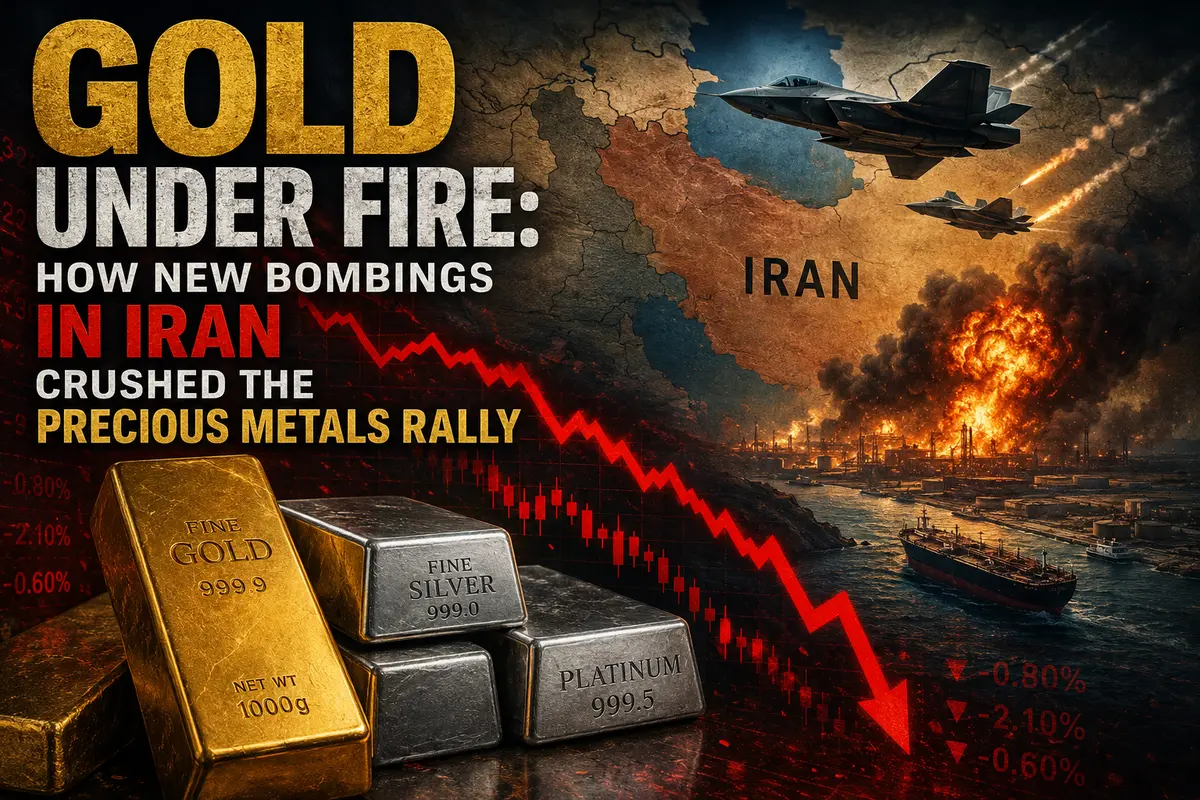
Gold Under Fire: How New Bombings in Iran Crushed the Precious Metals Rally

Gold Under Fire: How New Bombings in Iran Crushed the Precious Metals Rally

Tuesday’s Asian trading session delivered a brutal reality check to gold traders. Just yesterday, spot gold prices were confidently climbing higher amid hopes for peace with Iran, while futures painted bullish charts suggesting the rally would continue. Today, everything reversed.

Spot gold plunged 0.8% to $4,535 per ounce. Futures followed, falling by the same margin. Silver collapsed by more than 2%, while platinum lost 0.6%. Precious metals, which had celebrated a return to life on Monday, came under attack on Tuesday — both literally and figuratively. And the reason for this reversal was the very bombs the United States dropped on southern Iran.

The Paradox of War and Gold: Why Bombs Are Sinking Prices

At first glance, this seems backward. Gold is the classic safe-haven asset. When guns fire, investors usually run into gold. This rule has worked for decades and entire investment strategies are built around it.

But the current conflict with Iran has rewritten those rules. To understand why, we need to look at how this war affects gold — not directly, but through a complex chain of macroeconomic consequences.

The conflict with Iran triggered an energy crisis. The closure of the Strait of Hormuz sent oil prices soaring. Rising energy prices fueled inflation worldwide. And accelerating inflation forced the Federal Reserve and other central banks to start talking about higher interest rates.

This is where the mechanism becomes deadly for gold.

Gold generates no yield. When rates rise — or even when there is merely a threat of higher rates — holding gold becomes an expensive luxury. Investors look at a gold bar sitting idle in a vault, then compare it with Treasury bonds offering guaranteed dollar returns, and make the rational choice in favor of bonds.

That is why gold fell during the hottest phases of...

Continue reading...
0
0
Lin Brings

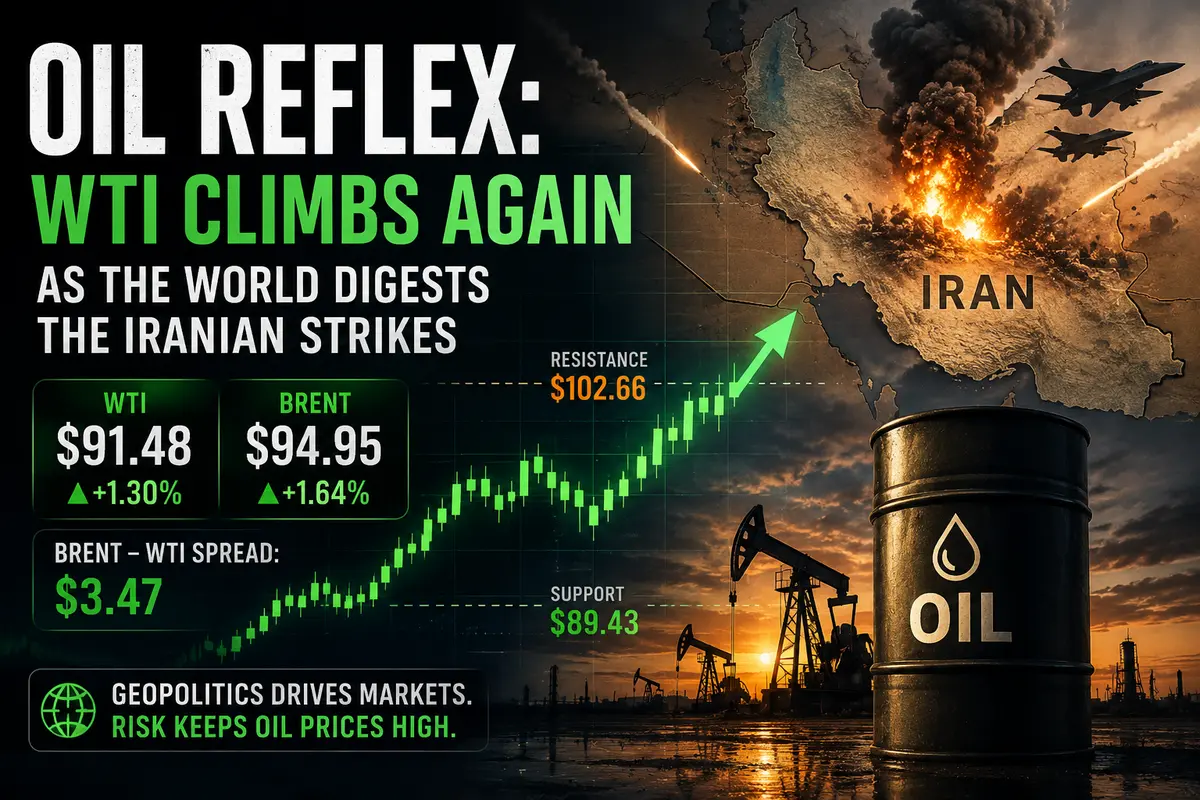
Oil Reflex: WTI Climbs Again as the World Digests the Iranian Strikes

Oil Reflex: WTI Climbs Again as the World Digests the Iranian Strikes

Tuesday’s Asian session painted oil prices firmly green. July WTI futures rose 1.3%, reaching $91.48 per barrel. The move was not explosive, but the direction was unmistakable. After Sunday’s hopes for peace and Monday’s collapse in oil below $100, the market has once again switched into “buy the fear” mode. The reason is obvious: renewed U.S. strikes on Iran on Monday forced traders to reassess their recent optimism and restore the geopolitical premium they had so eagerly removed from the price of a barrel.

Between $89 and $103: Oil Searches for Balance

The technical picture drawn by Tuesday’s WTI quotes resembles a classic rebound from support. The $89.43 level became the point where sellers ran out of momentum. Oil, which had plunged on Monday amid hopes for a peace agreement, hit that floor and bounced higher. Resistance near $102.66 looms overhead, separating the current range from the territory oil occupied during the hottest days of the conflict. This corridor — between $89 and $103 — is the zone of uncertainty in which the market will remain until the situation around Iran becomes clearer.

A 1.3% rise during the session is not panic buying. It is more a cautious digestion of the news. Traders are not rushing to buy barrels at any price as they did in the first days of the war. Instead, they are methodically pricing in higher risk. The strikes on southern Iran reported on Monday are not the beginning of a full-scale ground operation. They are targeted actions that, despite their seriousness, still leave room for diplomacy. But they also serve as a reminder that diplomacy is not a substitute for war — it is often its continuation by other means. And as long as bombs are falling, even while negotiations continue in parallel, the oil market...

Continue reading...
0
0
Tim Drening

X-Ray of a Deal: Why Asia’s Oldest Conglomerate Is Buying Australian Clinics

X-Ray of a Deal: Why Asia’s Oldest Conglomerate Is Buying Australian Clinics

Jardine Matheson is a name that, for most people, sounds like a fragment of colonial history — something from the era of sailing clippers, the Opium Wars, and British trading posts in Hong Kong. And that’s true. The conglomerate was founded in 1832, survived two world wars, decolonization, the handover of Hong Kong to China, and the digital revolution.

Now, nearly two centuries later, this patriarch of Asian capitalism is making a move that says more about its vision of the future than any annual report ever could. Jardine Matheson is acquiring I-MED Radiology Network, the largest diagnostic imaging network in Australia and New Zealand, for AUD 3.4 billion. And this deal is not simply the purchase of a healthcare business. It is a bet on the intersection of two megatrends: aging populations and artificial intelligence.

215 Clinics and 7 Million Procedures: What Jardine Is Buying

I-MED is not a garage startup. It is one of the largest providers of diagnostic imaging services in Australia and New Zealand. Two hundred and fifteen clinics spread across two countries. Seven million medical procedures annually. MRI scans, CT scans, X-rays, ultrasounds, mammography — everything that allows doctors to look inside the human body without a scalpel. This is not just a medical business; it is healthcare infrastructure embedded in the daily lives of millions of people.

When Jardine Matheson buys a network like this, it is not merely purchasing a revenue stream. It is buying predictable, growing demand. Populations in developed countries are aging. The older people become, the more diagnostic imaging they require. Cancer, cardiovascular disease, neurological disorders, injuries — all of these conditions depend on imaging. And this trend is irreversible. No recession, no crisis can change the fact that people will continue to age and get sick. Which means demand...

Continue reading...
0
0
Rose Gramit

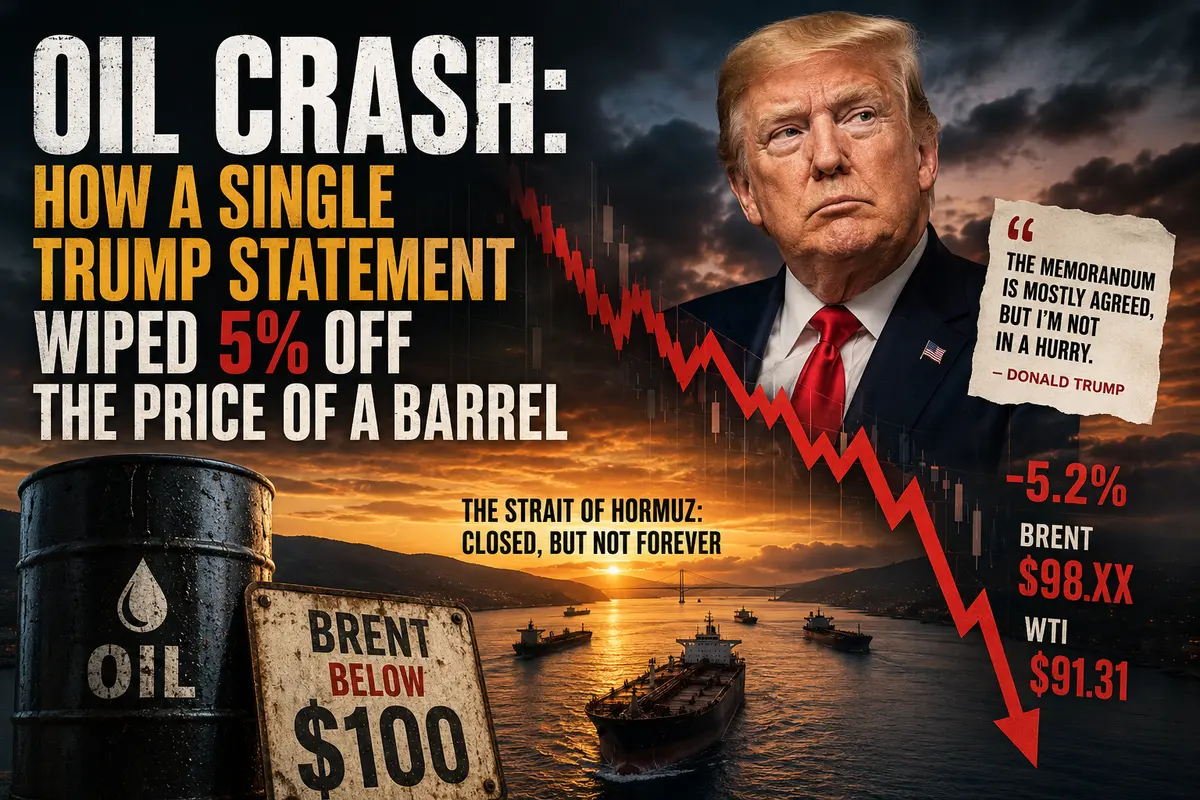
Oil Crash: How a Single Trump Statement Wiped 5% Off the Price of a Barrel

Oil Crash: How a Single Trump Statement Wiped 5% Off the Price of a Barrel

Monday morning on the oil markets began with a thunderclap out of a clear sky. But not the kind the world has grown used to over recent months — not explosions in the Strait of Hormuz, not missile strikes on tankers, not Trump’s threats to wipe Iran off the map. Quite the opposite. The thunder came from the prospect of peace. And that thunder hit oil prices with a force that neither diplomatic efforts nor market interventions had managed to achieve. Brent crude plunged below $100 per barrel, WTI broke through the $92 mark, and all of it happened within a single trading session. A five-percent drop — the kind of move usually associated with the start of a recession or the collapse of a cartel. But this time, the reason was different: hopes for the end of the most destructive oil crisis in decades.

The Psychological Threshold: $100 Falls

The $100-per-barrel mark for Brent is not just a round number. It is a psychological barrier separating “expensive but manageable oil” from “oil that kills economic growth.” The entire global infrastructure — from airlines to chemical plants, from farmers to taxi drivers — is built on the assumption that oil costs far less than $100. Once crude breaks above that level and stays there, business models begin to crack, inflation spirals accelerate, and central banks reach for loaded weapons.

Brent’s drop below $100 on Monday was not just another move on a chart. It was a signal to the market that the worst may be over. That the insane days when oil stormed past $110, $120, even $130 per barrel could be behind us. That the Strait of Hormuz, blocked by war, might reopen. That tankers stranded off the Iranian coast may finally begin moving again. That peace — fragile,...

Continue reading...
0
0
Tim Drening

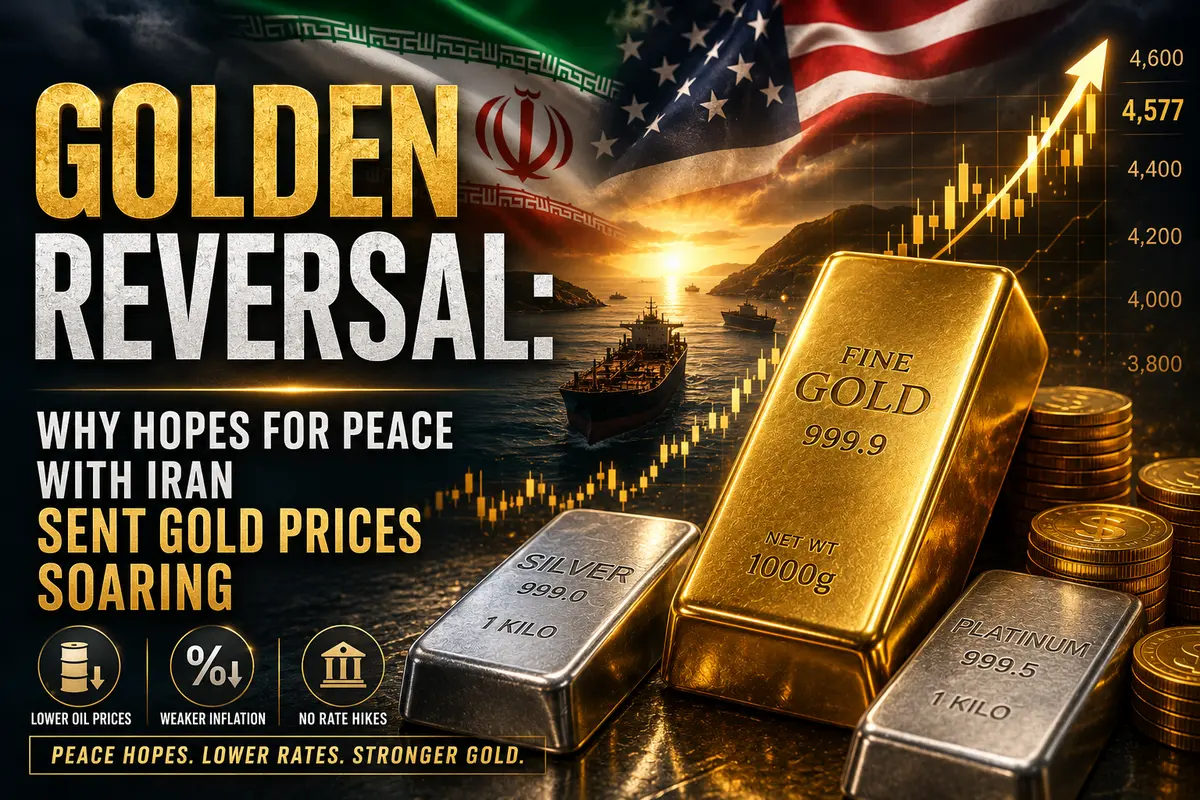
Golden Reversal: Why Hopes for Peace with Iran Sent Gold Prices Soaring

Golden Reversal: Why Hopes for Peace with Iran Sent Gold Prices Soaring

Monday’s Asian trading session delivered a surprise that many gold traders did not expect. Spot gold jumped by one and a half percent, reaching $4,577 per ounce. Futures followed, gaining 1.2% and climbing above $4,600. Silver posted an even more explosive move — up 3.8% in a single session. Platinum added 2%. The entire precious metals sector seemed to awaken from hibernation and surge higher. And the reason behind this rally was not fear or panic, but something entirely opposite — hopes for peace.

At first glance, this seems paradoxical. Gold is traditionally viewed as a safe-haven asset, a refuge during wars and crises. When the world descends into chaos, the yellow metal usually rises, and when peace appears on the horizon, it tends to fall. But today we are witnessing the opposite. The explanation lies in how the conflict with Iran has affected gold over recent months — not directly, but through a complex chain of macroeconomic consequences.

How War Suppressed Gold — and Why Peace Is Setting It Free

The war with Iran triggered an energy crisis. The disruption of shipping through the Strait of Hormuz pushed oil prices above $110 per barrel. Rising energy costs accelerated inflation worldwide. Higher inflation, in turn, forced the Federal Reserve and other major central banks to discuss raising interest rates. And it was this final link in the chain — the threat of higher rates — that became gold’s biggest enemy.

Gold does not generate income. It pays no dividends, no coupons, no interest. When interest rates rise, the opportunity cost of holding gold becomes enormous. Why hold bullion sitting in a vault when you can buy Treasury bonds and earn a guaranteed return? That logic has pressured gold for months. The war was raging, geopolitical risks were extreme, yet gold...

Continue reading...
0
0
Lin Brings

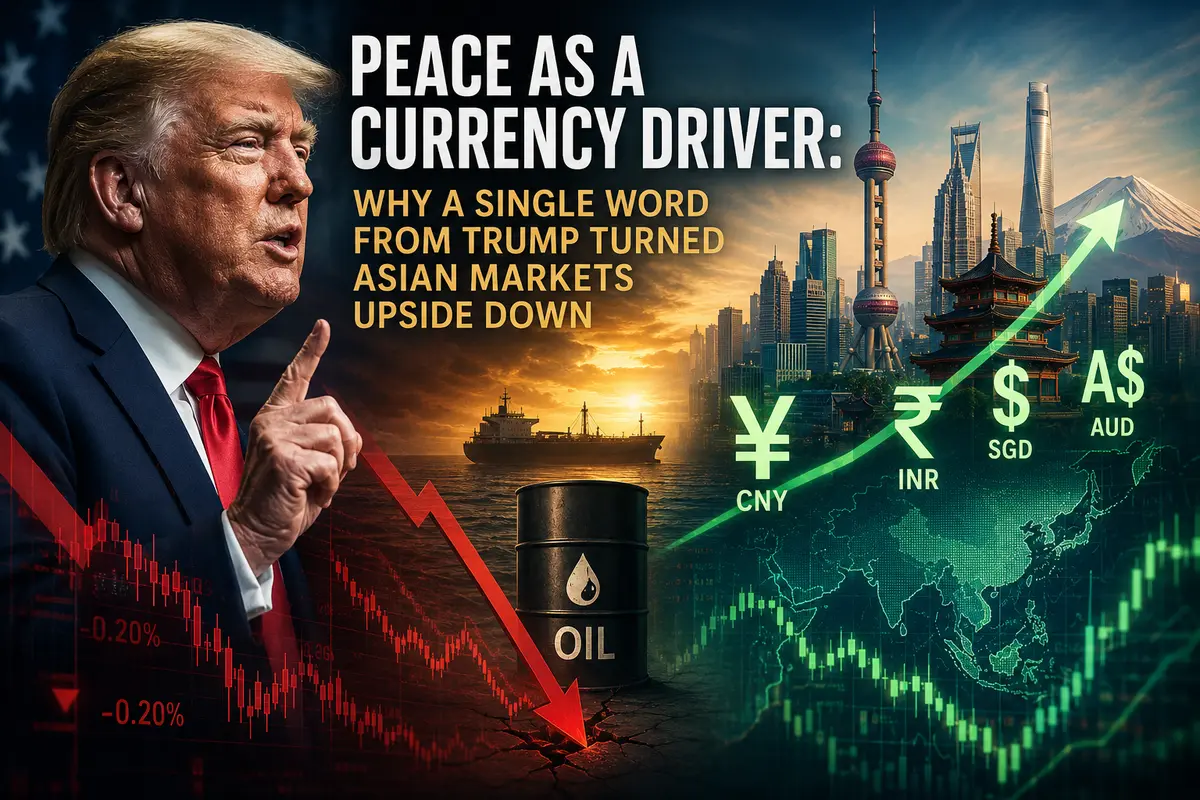
Peace as a Currency Driver: Why a Single Word from Trump Turned Asian Markets Upside Down

Peace as a Currency Driver: Why a Single Word from Trump Turned Asian Markets Upside Down

Monday on Asian currency markets began with a sight rarely seen in recent weeks — the dollar was retreating while currencies from Tokyo to Mumbai moved higher in unison. The U.S. dollar index slipped by two-tenths of a percent, and futures on the index fell by roughly the same amount. The move was modest, barely noticeable on the charts, but behind it stood a tectonic shift in sentiment. The reason was a few words spoken by Donald Trump over the weekend. Words that may have marked the beginning of the end of this year’s most destructive geopolitical crisis. And Asian currencies, being among the most sensitive barometers of global risk appetite, reacted instantly.

Trump the Peacemaker: “Largely Agreed”

Over the weekend, the U.S. president made a statement markets had been waiting months to hear. The United States and Iran had “largely agreed” on a framework deal to resolve the conflict. The key point was the resumption of shipping through the Strait of Hormuz — the very artery whose blockade had sent oil prices soaring and triggered a global chain reaction of inflation. Separate sources added further detail: Iranian and Pakistani mediators also reported progress. The picture looked almost idyllic.

But Trump would not be Trump without adding a note of uncertainty to the optimism. Almost immediately after the encouraging statement, he clarified that he was in no hurry to finalize a deal. Iran, for its part, largely rejected U.S. demands regarding the transfer of enriched uranium stockpiles — one of the most contentious points in the negotiations. Contradictory signals, mixed messages, swings between hope and skepticism. Classic Trump diplomacy, in which no one knows until the very last moment whether an agreement will be signed or another escalation will follow.

Still, markets exhausted by months of uncertainty chose to focus...

Continue reading...
0
0
Navigation menu
instaforex banner