

Silence Before the Data: The Dollar Freezes as the World Watches Iran and U.S. Inflation
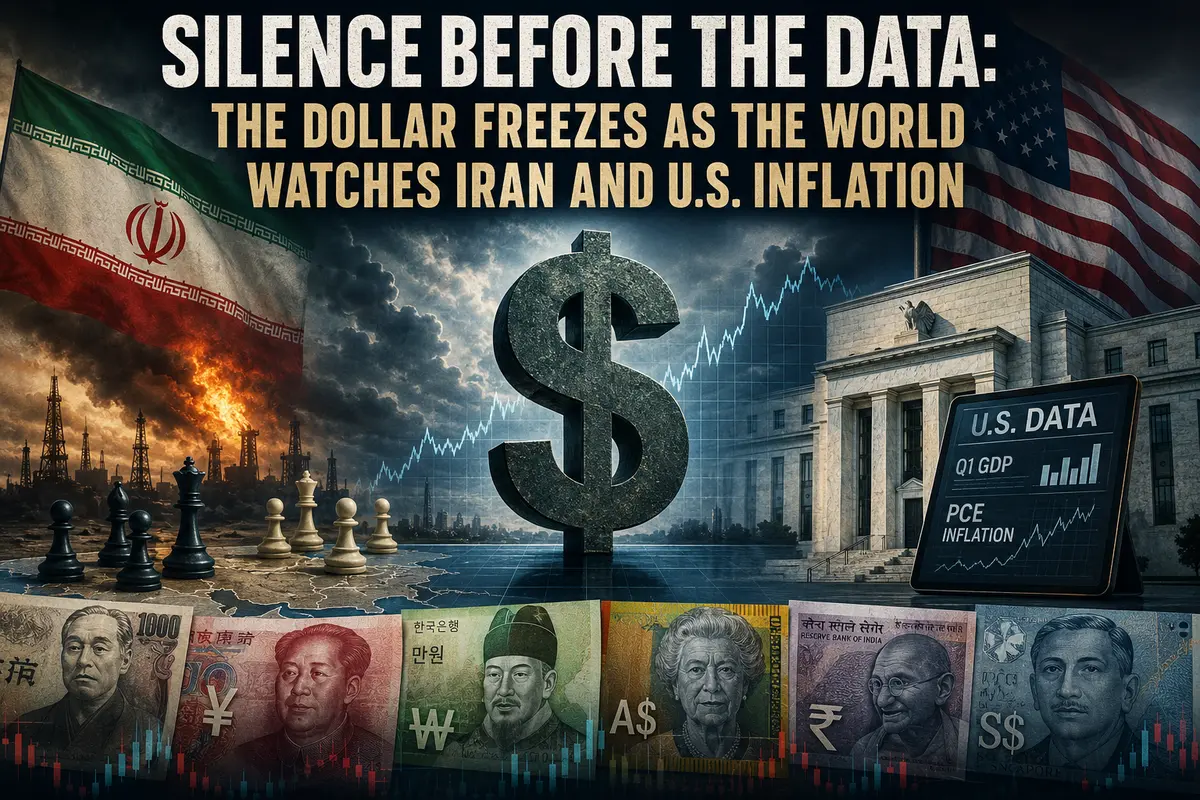
Wednesday on the currency markets was defined by anticipation. The dollar stood still, like a predator before the leap, making no sharp moves either upward or downward. The U.S. dollar index and its futures were virtually unchanged during Asian trading, stabilizing after a brief surge earlier in the week.
But this stillness is deceptive. Beneath it lies enormous tension — traders are frozen ahead of two events capable of turning the market upside down. One is geopolitical, the other macroeconomic. And both sit at a point of maximum uncertainty.
Iran Talks: Diplomacy Through a Crosshair
The main factor preventing the dollar from falling — and at the same time keeping it from rallying — is Iran.
Negotiations between the United States and Iran over de-escalating the conflict are continuing, but no one seems to fully understand their real condition. According to media reports, indirect contacts are still ongoing even after U.S. forces struck targets in southern Iran.
It is a strange, almost surreal picture: bombs are falling while diplomats continue talking. War and peace exist simultaneously, in parallel realities.
As recently as the weekend, U.S. officials sounded optimistic. Trump spoke of a memorandum that was “largely agreed upon.” Markets celebrated, oil prices fell, and the dollar weakened.
But this week Washington’s tone has become more restrained. The strikes on Iranian facilities were presented as defensive, yet the very fact they occurred suggests the negotiating process is stalling. The sides remain stuck on key issues — the fate of Iran’s enriched uranium, the timeline for reopening the Strait of Hormuz, and security guarantees.
Until those issues are resolved, the dollar will continue to receive support as a safe-haven asset.
The mechanics here are simple and ruthless. As long as there is a risk of escalation, there is a risk of disruptions to oil supplies. As long as there is a risk to oil supplies, there is a risk of inflation. And as long as inflation risks remain elevated, there is a chance the Federal Reserve will be forced to keep rates high — or even raise them further.
High rates mean a strong dollar.
That logic is keeping the U.S. currency afloat despite all the talk of peace. Traders are afraid to believe good news because they have been burned before. They prefer to hold dollars until they see a signed agreement and an open shipping lane through Hormuz.
Economic Data: A Week of Truth for the Fed
The second reason markets are frozen is the calendar.
Thursday will bring the revised estimate of U.S. first-quarter GDP. Friday will deliver the PCE price index — the Federal Reserve’s preferred inflation gauge.
These two figures could either confirm the need to maintain tight monetary policy or give the Fed room to soften its rhetoric.
PCE is especially important. Unlike the more widely known Consumer Price Index, PCE accounts for shifts in consumer behavior — people switching to cheaper goods when prices rise. In the Fed’s view, this makes it a more accurate measure of inflationary pressure.
If PCE shows slowing inflation, markets may interpret it as a signal that the Fed will refrain from further rate hikes, potentially weakening the dollar. If PCE accelerates, the dollar could receive fresh momentum.
Until the data is released, traders prefer not to make aggressive moves. The dollar is stable, trading volumes are moderate, and volatility remains low.
This is the calm before the storm that will break on Thursday and Friday. And the direction of that storm will determine not only the fate of the dollar, but also the fate of emerging-market currencies across Asia.

Yen and Yuan: Two Currencies Under Different Pressure
The Japanese yen strengthened slightly on Wednesday, with USD/JPY edging lower after the pair once again climbed above 159 yen per dollar.
The 159 level is viewed as a red line, beyond which traders suspect currency intervention could follow. Tokyo already carried out massive interventions at the end of April to support the yen, and the market remembers it well. No one wants to be caught on the wrong side of a trade if the Bank of Japan decides to act again.
Meanwhile, China’s yuan remains near a three-year low.
USD/CNY is barely moving, but this calm is misleading. The People’s Bank of China is preventing the yuan from falling further, yet pressure remains immense. Weak domestic demand, the real-estate crisis, and capital outflows are all weighing against the Chinese currency.
And if U.S. inflation data comes in strong and the dollar rallies further, the yuan will face even greater strain.
South Korean Won: New Governor, New Expectations
A separate story is unfolding in South Korea.
USD/KRW fell by half a percent ahead of Thursday’s Bank of Korea meeting. It will be the first meeting under new governor Hyun Song Shin, and markets expect a hawkish tone from him.
Hyun Song Shin is known as a supporter of tight monetary policy, and his appointment could mean the Korean central bank will keep rates elevated for longer — or even raise them further.
For the won, this is potentially positive. High rates attract capital, support the currency, and help contain inflation.
But at the same time, they suppress economic growth, hurt exporters, and increase debt-servicing costs. The new governor will have to balance on a knife’s edge. And his first decision on Thursday will likely set the tone for months ahead.
Australian Dollar: Inflation Softens, Rates in Question
The Australian dollar came under pressure on Wednesday after April inflation data was released.
Consumer prices came in below forecasts, with inflation slowing slightly compared to the previous month. This was partly driven by lower oil prices after March highs, as well as an administrative factor — the government halved one of the country’s key fees.
At first glance, this is good news. Slower inflation reduces pressure on the Reserve Bank of Australia and gives it room to leave rates unchanged.
That is exactly the conclusion drawn by analysts at Capital Economics, who say the data strengthens the case for a pause in June.
But they also warn that their base-case scenario still points to inflation accelerating again in the second half of the year. If that happens, the RBA may be forced to resume rate hikes.
The Australian dollar slipped by one tenth of a percent. It was a modest move, but one that reflects growing uncertainty.
Markets are no longer convinced the Australian central bank will continue tightening policy. And if rates stop rising, the yield differential with the United States could narrow, making the aussie less attractive.
Rupee and Singapore Dollar: Calm After the Storm
The Indian rupee stabilized after a sharp fall from record lows near 97 per dollar earlier in the week.
USD/INR paused, giving the market some breathing room. RBI Governor Sanjay Malhotra did everything he could — verbal intervention, promises to “do whatever is necessary,” and actual dollar sales.
It worked. The rupee rebounded.
But the underlying problems remain. Oil is still expensive, the import burden remains heavy, and foreign investors are nervous. The stabilization may prove temporary.
The Singapore dollar and Taiwan dollar were almost unchanged. These currencies often serve as indicators of global risk appetite. Their stillness suggests the market has chosen to pause.
No one wants to place major bets before the U.S. data is released and the situation with Iran becomes clearer.
Wednesday became a day of waiting in the currency markets.
The dollar froze. Asian currencies stood still. Traders held their breath.
The Iran negotiations continue, but nobody knows how they will end. U.S. data is about to be published, but nobody knows what it will show.
In such an atmosphere, the best strategy is to do nothing — and that is exactly what the market is doing.
But this inactivity will not last long.
Thursday and Friday will bring answers. And depending on those answers, the dollar will either surge higher or roll sharply lower.
And with it, so will the currencies of Asia, which now sit mesmerized, watching Washington and Tehran.

Comments
No comments yet. Be the first to share your thoughts!
Authentication Required
You must be logged in to post a comment.