

Bar Pipa
We pay for a post of 10$
Apple Inc.

Apple Inc.

AAPL NASDAQ

$325.89
-0.56%

Key Statistics

Market Cap
$4.79 T
Volume
38,603,904
Open
$327.88
Day Range
323.34 - 329.00
52W Range
201.50 - 334.99
Price AVG 50
$304.89

About Apple Inc.

Apple Inc. is a global technology corporation that specializes in the conceptualization, production, and sale of a diverse suite of electronic devices. Its comprehensive hardware lineup features the well-known iPhone smartphones, Mac personal computers, and versatile iPad tablets. The company also supplies a range of wearables, smart home products, and accessories, including AirPods, Apple TV, Apple Watch, items from the Beats brand, and HomePod speakers. Beyond its device offerings, Apple delivers essential support services like AppleCare and robust cloud solutions. It oversees key digital platforms, prominently the App Store, which acts as a central hub for customers to discover and download countless applications and digital content, from e-books and music to videos, games, and podcasts. The company also generates revenue via advertising, leveraging both its proprietary ad platforms and third-party licensing deals. Apple's ecosystem is further bolstered by a wide array of subscription-based services: Apple Arcade for gaming, Apple Fitness+ for personalized wellness, Apple Music for curated audio experiences and on-demand radio, Apple News+ for access to news and magazines, and Apple TV+ for exclusive original video programming. Its financial services portfolio includes the co-branded Apple Card and the mobile payment system, Apple Pay. Additionally, Apple strategically licenses its intellectual property. The company serves a broad clientele that spans individual consumers, small and medium-sized enterprises, as well as institutional clients in the education, corporate, and governmental sectors. Products are distributed through a multi-channel strategy, utilizing Apple's own physical retail locations and online storefronts, a dedicated direct sales team, and collaborations with external partners such as mobile network providers, wholesalers, general retailers, and authorized resellers. The App Store additionally functions as the primary conduit for third-party applications designed for its devices. Founded in 1976, Apple Inc. is headquartered in Cupertino, California.

Asset Type: Common Stock
Sector: Technology
Industry: Consumer Electronics

Discussion

Authentication Required

You must be logged in to post a comment.

Lin Brings

SK hynix’s American Dream: How the Korean Giant Could Take Over Intel’s Ohio Fab
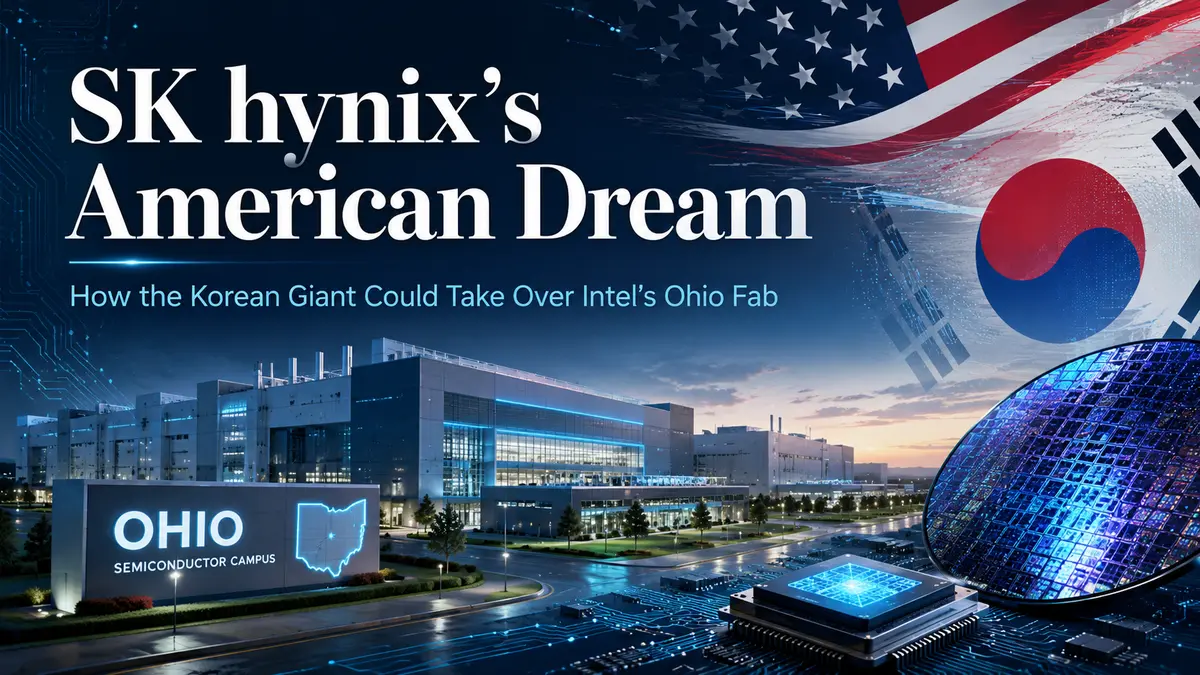
SK hynix’s American Dream: How the Korean Giant Could Take Over Intel’s Ohio Fab

Ohio Emerges as a New Hub for Korean Chips

When Intel began construction of its massive campus in New Albany, Ohio, in 2022, the project looked like the return of an iconic American manufacturer to its home soil after decades of expanding production overseas. Four hundred hectares of land, enough space for eight semiconductor fabrication plants, and promises of hundreds of billions of dollars in investment were all supposed to symbolize the revival of the American semiconductor industry. However, as often happens, reality introduced some harsh adjustments.

Today, four years later, this ambitious project is hanging by a thread, and its future may end up in the hands of a competitor: South Korea’s SK hynix. Negotiations over a possible acquisition of the Ohio campus are reportedly taking place behind closed doors. Although the potential purchase price remains closely guarded, the very possibility of such a transaction has shaken the markets and prompted analysts to reconsider the balance of power within the global semiconductor industry.

For SK hynix, this would not simply be another deal aimed at increasing production capacity. It would be a strategic move capable of completely transforming the company’s position in the US market while also satisfying growing political pressure from Washington. For several years, the US administration has urged semiconductor manufacturers to move production facilities to American soil and reduce their dependence on Asian manufacturing. SK hynix appears ready to answer that call—not by building an entirely new factory from scratch, but by purchasing infrastructure that is already close to completion.

Interestingly, the Korean company already has experience working with former Intel assets. In 2020, SK hynix agreed to acquire Intel’s NAND flash memory business for $9 billion, making it the largest transaction in the company’s history. Now, another piece of Intel’s former empire may be up...


Continue reading...

0
0

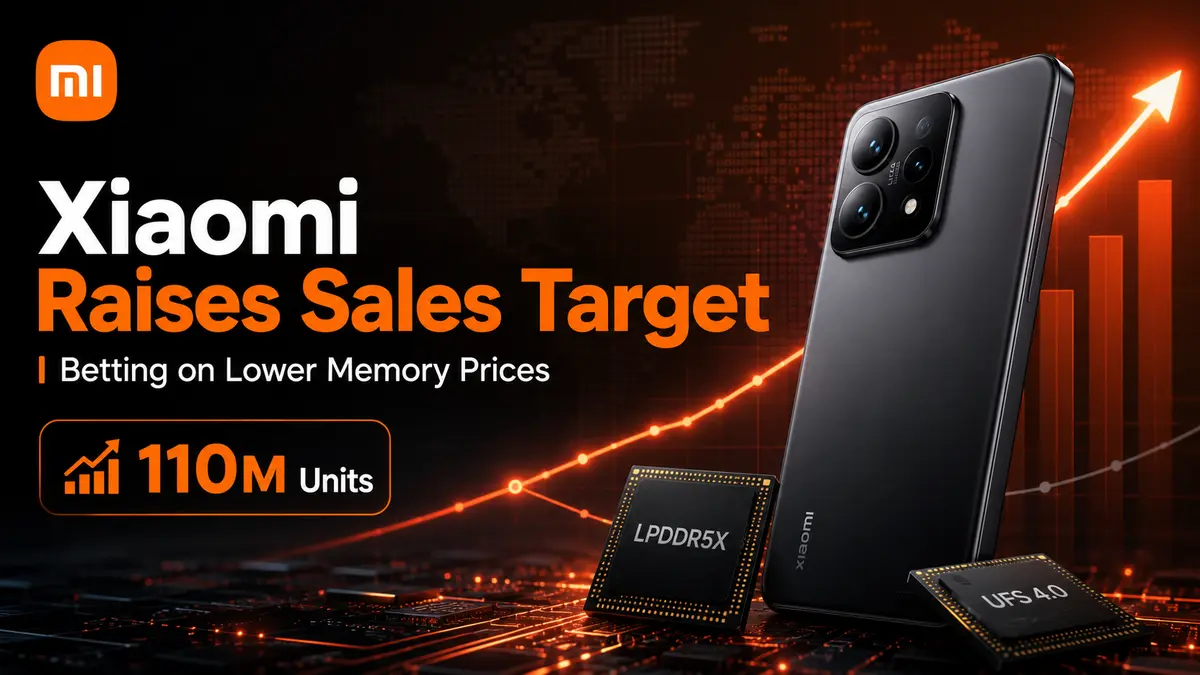
Xiaomi Raises Its Sales Target, Betting on a Reversal in Memory Prices

Xiaomi Raises Its Sales Target, Betting on a Reversal in Memory Prices

Tuesday: The Chinese Giant Surprises the Market

Chinese technology giant Xiaomi has made an unexpected move that has attracted the attention of the entire smartphone market. The company has raised its annual smartphone sales target from 90 million to 110 million units. This comes despite increasing pressure from high memory and other component prices, which have placed significant strain on manufacturers in recent months.

XIACY ... Xiaomi’s decision, reported by Chinese media outlet Jiemian News citing industry sources, appears bold. Earlier this year, the company lowered its target due to the negative impact of high memory prices. Management now believes that the worst is over and that the market is ready for a reversal.


According to the report, the higher sales target is based on Xiaomi’s internal assessment that the current rise in memory market prices is approaching its peak and could soon be followed by a decline. If this forecast proves accurate, Xiaomi will gain a double advantage: higher sales volumes and lower production costs.

Memory Prices: Drivers and Risks

The memory chip market is going through a highly volatile period. Demand for memory used in artificial intelligence applications has soared, absorbing a significant share of global production. Companies manufacturing memory chips for AI servers are generating exceptional profits, while smartphone manufacturers are being forced to compete with them for limited resources.

For Xiaomi and other smartphone manufacturers, this means higher component costs. Memory chips are among the most expensive and important components of a smartphone, and when their prices rise, manufacturers’ profit margins decline. Earlier this year, Xiaomi even lowered its shipment target for this very reason.

However, the company now believes that the situation is changing. According to Xiaomi’s estimates, the memory chip market is ready for a reversal. This may be related to several factors. First, memory...

Continue reading...
0
0

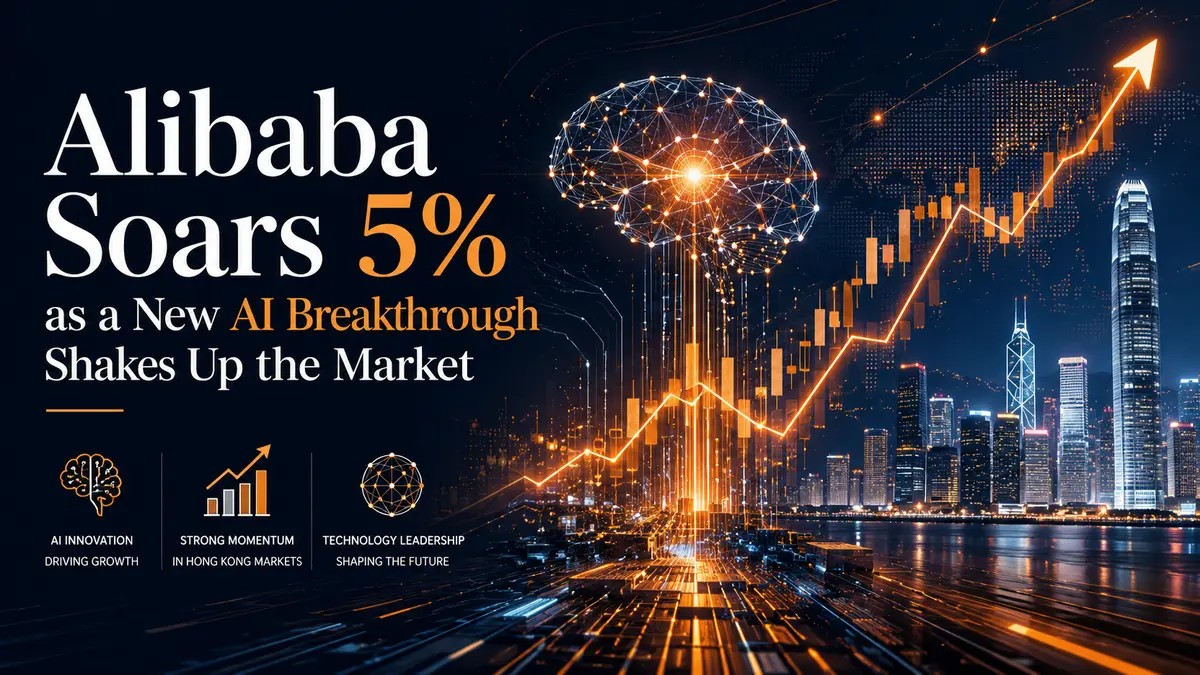
Alibaba Soars 5% as a New AI Breakthrough Shakes Up the Market

Alibaba Soars 5% as a New AI Breakthrough Shakes Up the Market

Monday’s Surge: Shares of the Chinese Giant Move Higher

The first day of the week proved triumphant for BABA ... Alibaba. The company’s shares on the Hong Kong Stock Exchange surged 5.2% to HKDUSD ... HK$118.40. The rally was not simply the result of favorable market conditions—it was driven by a specific technological breakthrough that investors immediately recognized.

On Saturday, Alibaba released a preview version of its new artificial intelligence model, Qwen3.8 Max. This is not just another routine update—it is a bold bid for leadership in the global AI race. The model contains 2.4 trillion parameters, placing it among the most powerful AI systems in the world. Alibaba claims that it is surpassed only by Anthropic’s latest flagship product, which would represent a major technological achievement.

However, what truly ignited the market was Alibaba’s promise to release the model’s weights in the near future. This is far more than a technical detail. It is a strategic move that could fundamentally strengthen Alibaba’s position in the AI industry.

Open models attract developer communities, accelerate innovation, and help create entire ecosystems around a product. The more developers who adopt Qwen, the stronger Alibaba’s competitive position is likely to become.

Qwen3.8 Max: What Kind of Beast Is It?

A model with 2.4 trillion parameters is not impressive merely because of the size of the number. It suggests that the model can process enormous volumes of data, understand complex contexts, and generate more accurate responses. Generally, the more parameters a model has, the more powerful it can be—although it also becomes more difficult and expensive to train.

Alibaba appears to have found a balance between power and efficiency. The company has not disclosed all the technical details, but it describes Qwen3.8 Max as one of the world’s most powerful AI models, reportedly ranking behind only...

Continue reading...
0
0
Big Pip

Understanding the Role of a Financial Trader

Understanding the Role of a Financial Trader

A trader is a highly specialized market participant who actively buys and sells financial instruments within the global financial markets to generate a profit. Unlike passive market participants, traders thrive on movement, capitalizing on the constant price fluctuations that occur every second across international exchanges.

Operating at the very heart of the global economy, traders can work independently from a home office as retail traders, or they can be employed by massive financial institutions — such as Wall Street investment banks (e.g., Goldman Sachs, Morgan Stanley), global hedge funds (like Citadel or Bridgewater Associates), and proprietary trading firms.

By constantly executing buy and sell orders, traders provide the essential liquidity that keeps global markets functioning smoothly. They ensure that when a pension fund wants to offload a massive block of shares, or a multinational corporation needs to hedge its currency exposure, there is someone on the other side of the trade willing to take the risk.

The Arsenal of a Modern Trader: Instruments and Strategies

Traders do not limit themselves to simply buying stocks. The global market offers a vast array of complex financial instruments, allowing traders to profit whether the broader economy is booming or crashing.

  • Equities (Stocks): Trading shares of global powerhouses like Apple AAPL ... , Tesla TSLA ... , or LVMH LVMHF ... , often attempting to capture intraday price movements driven by earnings reports or global news.

  • Derivatives (Options and Futures): These contracts allow traders to speculate on the future price of an asset without owning it. A trader might buy crude oil futures (like the West Texas Intermediate benchmark) or S&P 500 options to leverage their capital and amplify potential returns.

  • Foreign Exchange (Forex): The largest and most liquid market in the world, where traders speculate on currency pairs like the EUR/USD EURUSD ... or GBP/JPY GBPJPY ... ,...

Continue reading...
0
0

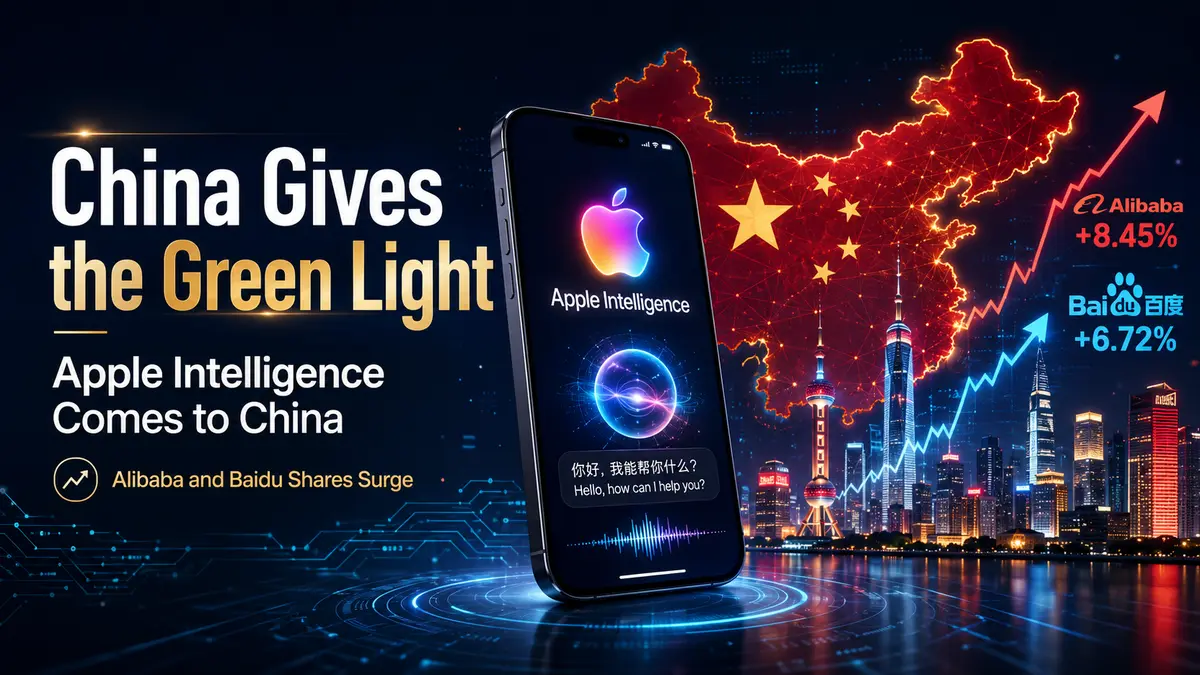
China Gives the Green Light: Apple Intelligence Is Finally Coming to the Chinese Market

China Gives the Green Light: Apple Intelligence Is Finally Coming to the Chinese Market

Thursday Morning: Alibaba and Baidu Shares Surge on the News

Thursday began on a celebratory note for China’s technology sector. Shares of Alibaba Group BABA ... traded in Hong Kong jumped nearly 5% by the middle of the trading session, while Baidu BAIDF ... gained around 4%. The reason for this widespread optimism is simple: Apple AAPL ... has finally received the long-awaited approval from Chinese regulators to launch its artificial intelligence services in the country.

The market had been waiting for this development for months, if not longer. Apple Intelligence, the company’s flagship AI platform, is already available in the United States and several other countries but has remained unavailable in China. The delay was not caused by technical difficulties but by Beijing’s strict regulatory requirements.

Chinese law requires all generative AI services to undergo mandatory registration and review before they can be offered to the general public. For Apple, this barrier proved more difficult to overcome than it was for many other companies because the Cupertino-based technology giant wanted to use its own models and proprietary approach. However, China’s main internet regulator withheld its approval for an extended period.

Now, according to information reported by the media, Apple appears to have made concessions that satisfied all parties. AI features on iPhones in China will not operate solely using Apple’s proprietary technology. Instead, they will rely on Chinese AI models—not just one, but two—from Alibaba and Baidu.

Alibaba’s Qwen and Baidu’s Technology: The Two Pillars of Apple Intelligence in China

According to Reuters sources familiar with the matter, Apple Intelligence in China will have a two-layer architecture. Its foundation will be Alibaba’s Qwen large language model, which is considered one of the most powerful and advanced AI models currently available in China.

Alibaba has officially confirmed its involvement, stating that Qwen will...

Continue reading...
0
0
Big Pip

What are Dividends: A Comprehensive Guide to Corporate Profit Sharing

What are Dividends: A Comprehensive Guide to Corporate Profit Sharing

At its core, a dividend is a tangible reward for your financial trust. It is the portion of a company's net profit distributed to its shareholders as a return on their investment. When you buy shares in a publicly traded company, you become a fractional owner. If that company generates surplus cash, the board of directors must decide whether to reinvest that money back into the business or return a portion of it directly to you. When they choose the latter, they issue a dividend.

Understanding how dividends work, the different forms they take, and what they signal about a company’s financial health is essential for navigating the global stock market.

Types of Dividends: How Companies Reward Shareholders

Not all dividends are created equal. Depending on a company’s cash flow, strategic goals, and capital structure, it may choose to distribute wealth in several different ways.

Cash Dividends: The Traditional Payout

This is the most common and universally recognized form of profit sharing. The company simply deposits cash directly into shareholders' brokerage accounts.

Cash dividends provide a predictable stream of passive income, making them highly attractive to long-term investors and retirees. For example, global consumer giants like Coca-Cola COLA.NE ... and Johnson & Johnson JNJ ... have built their reputations on paying reliable, consistently growing cash dividends every quarter, regardless of broader economic volatility.

Stock Dividends: Growing Your Share Count

Instead of paying cash, a company may issue additional shares to its existing investors, distributed proportionally based on their current holdings. Also known as a "scrip dividend," this method allows a company to reward its shareholders while conserving its cash reserves for internal projects or debt reduction. While a stock dividend increases your total number of shares, it does not immediately increase the overall value of your investment, as the company’s total market...

Continue reading...
0
0

OPENAI MOVES INTO HARDWARE: A $230 KEYBOARD AND LEGAL BATTLES WITH APPLE

OPENAI MOVES INTO HARDWARE: A $230 KEYBOARD AND LEGAL BATTLES WITH APPLE

A SMALL KEYBOARD WITH BIG AMBITIONS

OpenAI has finally taken a step that many people have been expecting for a long time: it has released its own device. The surprise, however, is that it is neither a smart speaker nor a wearable gadget with a voice assistant. It is simply a keyboard—a small, compact keyboard equipped with a joystick and a rotary dial. Its name is Codex Micro.

The device was created in partnership with Work Louder, a Canadian-Italian company known for producing mechanical keyboards for technology enthusiasts and professionals. Visually, Codex Micro resembles some of the manufacturer’s other products, such as the Creator Micro 2, which was developed in collaboration with Figma. Internally, however, it is a completely different story.

The device looks like a compact control panel featuring thirteen illuminated keys, a mini joystick, and a rotary controller. All these elements are connected to Codex, OpenAI’s proprietary AI platform for programming. The idea is simple but ambitious: instead of clicking a mouse and navigating menus on a screen, developers can control their AI agents with the press of a button.

The LED keys display the status of individual agents: white means idle, blue indicates that a task is being processed, green means the task has been completed, and red signals an error. A single click allows the user to switch between different AI assistants, while a double-click brings the selected assistant to the foreground.

The joystick can be used to launch common tasks such as reviewing code, searching for errors, or performing refactoring. The rotary dial is the most interesting element of the device. It controls the AI’s “reasoning level”—in other words, how much time and computing power the neural network will spend solving a particular task. Turn it in one direction to receive a quick response to...

Continue reading...
0
0
Big Pip

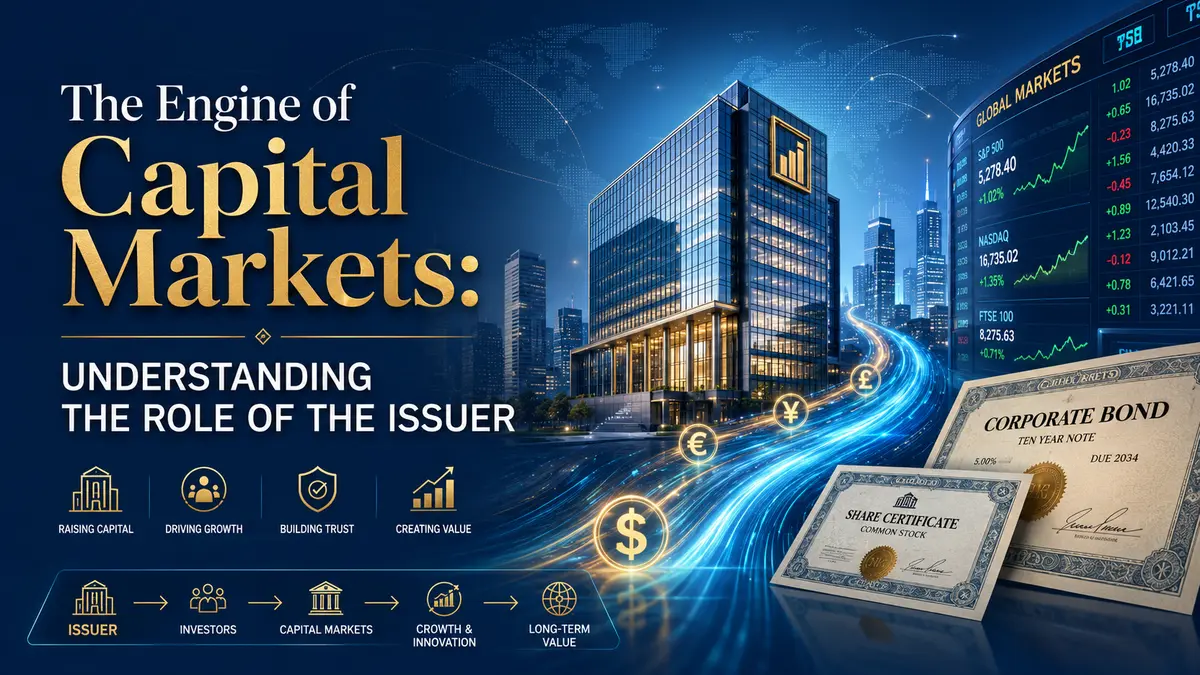
The Engine of Capital Markets: Understanding the Role of the Issuer

The Engine of Capital Markets: Understanding the Role of the Issuer

In the architecture of global finance, if capital is the lifeblood of the economy, the issuer is the beating heart that puts that capital to work. An issuer is a legal entity — which can range from a multinational corporation to a sovereign national government — that develops, registers, and sells securities to finance its operations.

Whether they are issuing equity (shares) to invite new co-owners or issuing debt (bonds and commercial paper) to borrow funds, the primary objective remains the same: raising capital. This influx of capital allows the issuer to execute ambitious business expansions, fund cutting-edge technological research, modernize infrastructure, or bridge national budget deficits. Without issuers, investors would have nowhere to deploy their wealth, and global economic growth would grind to a halt.

The Primary Categories of Global Issuers

The global financial market is vast, and the entities seeking capital are incredibly diverse. Depending on their legal structure and ultimate goals, issuers are generally classified into five distinct categories.

1. Corporate Issuers: Fueling Business Innovation

Corporate issuers are private and public companies that turn to the financial markets to fund their strategic objectives. When a private startup reaches a massive scale, it may issue shares to the public through an Initial Public Offering (IPO) on exchanges like the Nasdaq or the London Stock Exchange (LSE). By giving up a percentage of ownership, they secure billions in equity capital without the burden of paying interest. Alternatively, mature companies often issue corporate bonds. For example, even highly profitable companies like Apple AAPL ... or Microsoft MSFT ... regularly issue billions of dollars in corporate bonds. They do this because borrowing money at low institutional interest rates is often more tax-efficient and strategically advantageous than draining their own cash reserves to fund stock buybacks or global expansions.

2. Sovereign Issuers: Funding Nations

...

Continue reading...
0
0
Big Pip

Who is a Shareholder: Fundamentals of Corporate Ownership in the Global Economy

Who is a Shareholder: Fundamentals of Corporate Ownership in the Global Economy

When you purchase a stock in a company — whether it is a single share of a tech giant like Apple AAPL ... or a massive block of a consumer staple like Nestlé NSRGF ... — you are doing something much deeper than placing a financial bet. You are legally step-typing into the role of a co-owner.

A shareholder (often referred to as a stockholder) is an individual, corporation, or institution that legally owns at least one share of a company’s capital stock.

Collectively, shareholders are the bedrock of the modern capitalist economy. They provide the equity capital that businesses need to innovate, scale, and navigate global markets, and in return, they receive a claim on the company’s future prosperity.

Understanding the delicate balance of power, rights, and duties that define a shareholder is key to understanding how global corporations are governed and how wealth is generated on the world stage.

1. Shares: The Mechanics of Fractional Ownership

To fully appreciate what a shareholder is, we must first look at the financial instrument that binds them to the corporation: the share.

What Do Shares Actually Represent?

A share is a financial security that represents a fraction of ownership in a corporation. When a business incorporates, its total value is partitioned into millions — or sometimes billions — of tiny, equal pieces.

For instance, a company like Microsoft MSFT ... has billions of outstanding shares traded on the Nasdaq. When an investor buys Microsoft shares, they do not own the actual physical desks, servers, or patents of the company directly. Instead, they own a slice of the legal corporation itself, which in turn owns those assets.

This distinction is crucial because of limited liability — one of the most revolutionary concepts in economic history.

What is Limited Liability? If a public corporation goes bankrupt...

Continue reading...
0
0
Big Pip

Understanding the Investor: Roles, Strategies, Rights, and Responsibilities in Global Markets

Understanding the Investor: Roles, Strategies, Rights, and Responsibilities in Global Markets

An investor is an individual or an entity that allocates financial capital with the primary expectation of generating a future financial return. In essence, investors act as the lifeblood of the global capitalist economy. By committing funds to various assets, they provide the necessary liquidity and capital that businesses, startups, and governments need to innovate, scale, and build infrastructure.

The landscape of modern investing spans a massive spectrum of asset classes, from traditional equities and fixed-income securities to global real estate, venture capital, and digital assets. Regardless of their scale, all investors operate under a fundamental economic principle: balancing risk against potential reward.

1. The Spectrum of Investors: From Retail to Institutional Giants

Not all investors are created equal. The global financial markets are shaped by a diverse array of participants, each possessing distinct capital structures, regulatory boundaries, and investment objectives.

Retail Investors: The Power of the Individual

Retail investors are individual, non-professional market participants who invest their personal savings. Historically, retail investors were limited by high brokerage fees and information asymmetry. However, the digital revolution and the rise of zero-commission platforms like Charles Schwab, Robinhood, and eToro have democratized access to Wall Street, London, and Tokyo exchanges.

Retail investors often invest for personal milestones — such as retirement planning through accounts like a 404(b) or an IRA, funding education, or buying property.

While individual retail accounts may be small, their collective power can influence market sentiment and drive significant liquidity into popular consumer brands like Apple AAPL ... , Microsoft MSFT ... , or Nvidia NVDA ... .

Institutional Investors: The Heavyweights of Wall Street

Institutional investors are highly specialized organizations that pool massive amounts of capital from millions of individual clients or taxpayers to invest on a grand scale. Because they execute trades worth hundreds of millions of dollars, their market...

Continue reading...
0
0
Navigation menu
instaforex banner