
Bar Pipa
We pay for a post of 10$

Oil

Rose Gramit

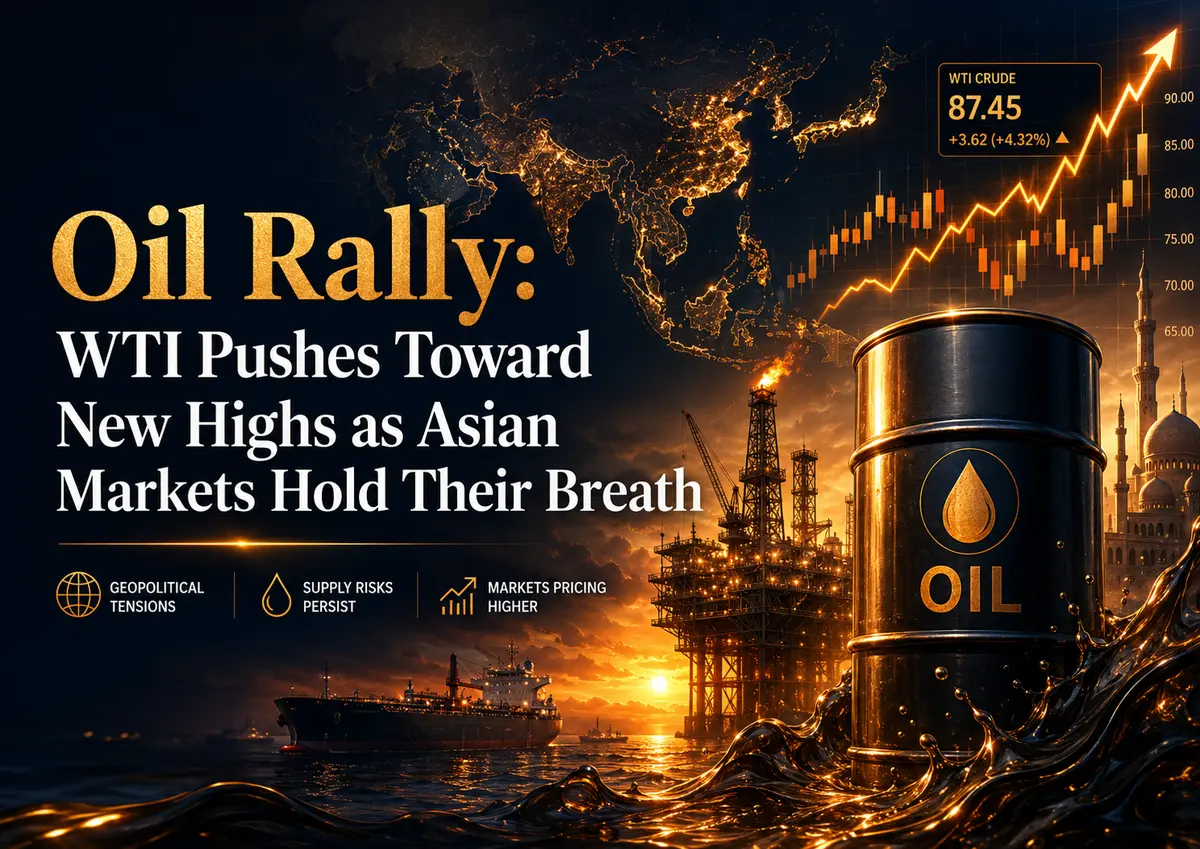
WTI Crude Oil Futures Rise in Asian Trading

WTI Crude Oil Futures Rise in Asian Trading
A Morning That Began with Hope

Friday’s Asian oil markets opened with cautious but steady gains. Futures for West Texas Intermediate (WTI) crude oil, the primary benchmark for the U.S. market and beyond, rose 0.17% to $93.20 per barrel. It is hardly a spectacular rally—just seventeen hundredths of a percent, more of a tremor than a surge. But after several days of volatile price swings, traders are willing to welcome any green number on their screens.

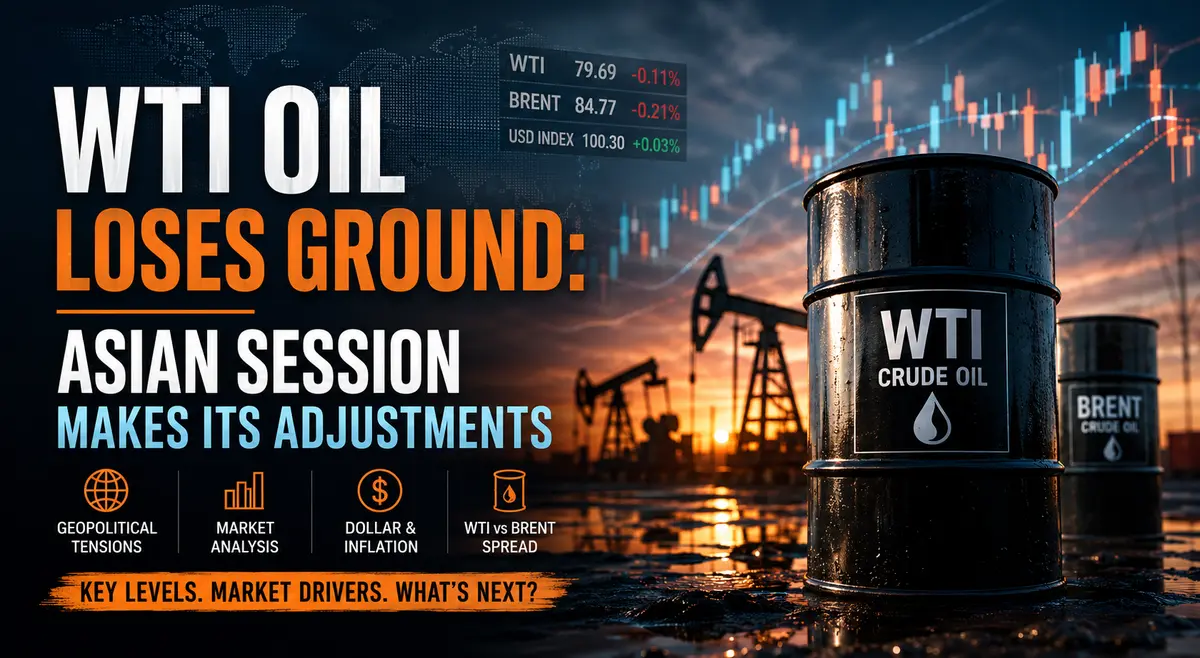
The European benchmark, Brent crude, appeared somewhat stronger. The August Brent contract gained 0.42%, climbing to $95.43 per barrel. The price spread between Brent and WTI widened to $2.23 per barrel in Brent’s favor. A week ago, the spread was narrower, below $2. The widening gap suggests that geopolitical risks concentrated around key Brent supply routes continue to weigh more heavily on Brent than on WTI, which is produced in the relatively secure environment of Texas.

The U.S. dollar, which has pressured commodity markets in recent days, weakened slightly on Friday morning. The U.S. Dollar Index futures slipped 0.01% to 99.39. The decline is tiny and almost imperceptible, but even such a modest move gives oil prices some breathing room.

The technical picture remains tense. WTI support stands at $88.45, a level sellers failed to break in recent sessions. Resistance is located at $97.00. With WTI trading at $93.20, prices sit roughly in the middle of that range, leaving traders with room for maneuver.

The key question is what will trigger the next move. Geopolitics? U.S. inventory data? Or perhaps long-awaited news regarding negotiations between Iran and the United States? As usual, Asian traders were the first to react and have already begun positioning themselves ahead of developments.

Middle East: The Calm Before the Storm

The geopolitical backdrop remains the...

Continue reading...
0
0

Gold Rises After Lebanon Ceasefire; U.S. Labor Market Data in Focus

Gold Rises After Lebanon Ceasefire; U.S. Labor Market Data in Focus
The Yellow Metal Finds a Reason to Climb

Thursday began with cautious optimism for gold. Spot gold gained just over half a percent, rising to $4,460 per ounce. Futures followed the same path, up 0.5% to $4,486. These are not record highs, but they are welcome gains—especially after Wednesday, when gold lost more than 1% under pressure from a stronger U.S. dollar.

What changed overnight? First, geopolitics. Second, expectations. Both factors worked in favor of the yellow metal.

The geopolitical backdrop remains complicated, but the first signs have emerged that the worst may be behind us. Late Wednesday, Washington announced a ceasefire agreement between Israel and Lebanon. The wording was cautious—the deal depends on Hezbollah halting hostilities—but the fact that diplomats managed to reach an agreement after talks appeared stalled only a day earlier is a meaningful signal.

Investors took notice. Oil, which had been rising this week on fears of supply disruptions, moved lower on Thursday morning. Crude prices fell after three consecutive days of gains. Lower oil prices mean lower inflation expectations. Lower inflation expectations ease pressure on central banks, reducing the need for aggressive anti-inflation measures.

Still, it is too early to relax. The Middle East conflict has not disappeared—it has merely cooled somewhat. Reports of Iranian missile strikes on Kuwait and Bahrain from Wednesday remain relevant, as do U.S. strikes on Iran’s Qeshm Island in the Strait of Hormuz. Israeli military operations in southern Lebanon also continue.

The ceasefire between Israel and Lebanon is important, but it is only one piece of a much larger puzzle. Iran remains the primary source of concern, while Hezbollah remains an unpredictable player. As a result, gold is moving higher, but without euphoria—cautiously and with one eye on the risks.

U.S. Economic Data: Two Sides of the Same...
Continue reading...
0
0

Oil Pulls Back After Rally: Middle East and U.S. Inventories in Focus

Oil Pulls Back After Rally: Middle East and U.S. Inventories in Focus
The Three-Day Holiday Is Over

Thursday began with a reality check for the oil market. After three straight days of gains—delighting bulls, frustrating bears, and forcing traders to revise their models—the market finally saw a correction. A modest one. A measured one. Almost a polite one. But a correction nonetheless.

Brent crude futures, the European benchmark, were down 0.7% on Thursday morning, trading at $97.16 per barrel. Its American counterpart, WTI, slipped slightly more, losing 0.8% to $95.30 per barrel. Prices that would have seemed extraordinary just a week ago now look like business as usual.

Still, this decline is hardly dramatic. It is simply profit-taking. Investors who entered the market last week when prices were 5–7% lower have decided it is time to take some money off the table. They sell, prices fall. Nothing personal—just business.

Yet beneath this routine profit-taking lies something more interesting: risk assessment.

The oil market today resembles a tightrope walker balancing above a canyon. On one side is geopolitical turmoil in the Middle East; on the other are the hard numbers coming from U.S. crude inventories. Both factors are pushing prices higher. But there are forces pulling in the opposite direction as well. More on those shortly.

The Middle East: War, Ceasefire, and a Nuclear Deal

Let's begin with the biggest source of oil market volatility in recent weeks: the Middle East—a region that gave the world agriculture, writing, and seemingly an endless supply of conflict.

Events unfolded at cinematic speed this week.

First came Iranian missile strikes against Kuwait and Bahrain. These small but wealthy Gulf monarchies, accustomed to life under the American security umbrella, suddenly found themselves on the front line. The missiles came from Iran—the United States' primary regional adversary, Hezbollah's main backer, and a perennial source of instability.

Then came...

Continue reading...
0
0

WTI Crude Oil Futures Rise in Asian Trading

WTI Crude Oil Futures Rise in Asian Trading
Green Light in the East

Oil traders came into Wednesday with more questions than answers. The previous few weeks had been anything but straightforward. Prices jumped on geopolitical headlines, slipped on weak economic data, then bounced back again when supply concerns resurfaced. Every trading session seemed to bring a new narrative.

But when Asian markets opened on Wednesday, the message was surprisingly clear.

WTI crude futures moved higher almost from the start of trading. The gains were not spectacular, but they were steady and broad-based. By the middle of the session, prices had climbed close to 1%, reaching $94.62 per barrel. In a market that has spent much of the year struggling to find direction, that kind of move attracts attention.

What matters most isn't the size of the gain. It's the fact that buyers are once again willing to step in.

Markets rarely move in a straight line. Oil, perhaps more than any other major commodity, is driven by a constant tug-of-war between fear and optimism. On one side are concerns about economic growth, consumer demand, and industrial activity. On the other are supply disruptions, geopolitical risks, and tightening inventories.

This week, the balance appears to be shifting in favor of the bulls.

Adding support was a slightly weaker U.S. dollar. The Dollar Index slipped to around 99.21, a modest decline that would barely register in many markets. For oil, however, currency moves matter. Crude is priced globally in dollars, so when the dollar weakens, oil becomes cheaper for buyers using euros, yen, yuan, or other currencies. That often encourages demand and provides a tailwind for prices.

Brent crude followed the same path. The global benchmark rose to $96.78 per barrel, outperforming WTI by a small margin. The spread between the two contracts widened to roughly ...

Continue reading...
0
0

Gold Falls Despite Rising Tensions in the Middle East

Gold Falls Despite Rising Tensions in the Middle East
The Safe-Haven Paradox: When War Fails to Support Gold

In finance, there are a few principles that rarely get questioned. One of them is simple: geopolitical tensions push gold prices higher. Wars, conflicts, and threats typically drive investors away from fragile paper currencies and toward the timeless, yellow, dependable metal. Gold is a safe haven. And safe havens are supposed to rise in value when bullets start flying.

Wednesday's Asian trading session politely—but firmly—challenged that assumption.

Because the Middle East was on fire. Not figuratively, but literally. Missiles were flying. Troops were moving. Negotiations were starting and stalling in equal measure. Yet against this backdrop, gold actually fell. Only slightly—about half a percent—but it fell nonetheless. Spot gold slipped to around $4,462 per ounce, while futures mirrored the move.

Was this a market mistake? A temporary lapse of judgment among traders? Or has the old safe-haven rule stopped working in today's increasingly chaotic world?

Neither.

The reality is that the world has become more complicated. A single conflict can now push gold both higher and lower at the same time. Every coin has two sides—and in the Middle East, it often has ten.

What's Happening in the Middle East?

To understand gold's behavior, we first need to understand the situation in a region that gave humanity writing but has yet to discover lasting peace.

On Wednesday, the picture was far from calm.

Israel, which in recent months has operated under the principle that "the best defense is a strong offense," continued military operations in southern Lebanon. This is an area where Hezbollah traditionally maintains significant influence—a place Israeli forces often describe as a hornet's nest, where every move provokes a response. These were not isolated retaliatory strikes but a systematic campaign aimed at degrading hostile infrastructure.

Meanwhile, Iran—widely regarded as...

Continue reading...
0
0

Oil Between Peace and War: WTI Stalls as the Market Awaits the Outcome of the Iranian Drama

Oil Between Peace and War: WTI Stalls as the Market Awaits the Outcome of the Iranian Drama

Tuesday’s Asian trading session brought another pause to the oil market. July WTI crude futures slipped by a modest 0.5% to $91.65 per barrel. Brent followed its American counterpart, falling 0.47% to $94.53 per barrel. The moves were minimal—almost statistical noise. Yet beneath this apparent calm lies a market holding its breath. Too many unresolved questions remain in the air. Too much depends on what happens in the coming days. And traders, having learned hard lessons over recent months, are reluctant to make any aggressive moves.

Between Support and Resistance: Oil Searches for Equilibrium

The technical picture for WTI resembles a classic trading range. Support at $86.35 has proven resilient during recent declines. Each time prices approached this level, buyers stepped in, preventing bears from pushing the market lower. This suggests that the underlying supply deficit in the oil market remains intact. The Strait of Hormuz is still operating under restrictions, supply chains remain disrupted, and prices have been unable to fall significantly.

Resistance at $94.74 has become the ceiling that recent rallies have failed to break. Every attempt to move higher has been met with heavy selling pressure. This indicates that the market does not believe in an unchecked upward move. Hopes for a ceasefire with Iran, however fragile, continue to cap prices from above. Few traders want to be caught in long positions if a ceasefire is announced tomorrow and the Strait reopens.

As a result, oil remains trapped in a corridor between roughly $86 and $95 per barrel for WTI. It has traded within this range for several weeks, and neither bulls nor bears have been able to force a breakout.

Brent-WTI Spread: Three Dollars of Geopolitical Premium

The price difference between Brent and WTI currently stands at $2.88 per barrel. This moderate spread reflects the remaining...

Continue reading...
0
0

Oil Back in the Fire: WTI Surges 3% After New Strikes on Iran

Oil Back in the Fire: WTI Surges 3% After New Strikes on Iran

Thursday’s Asian session opened with a powerful rally in oil prices. July WTI futures jumped 3.34%, reaching $91.64 per barrel. Brent crude followed closely behind, gaining 3.26% to settle at $95.26. This is not just another price increase — it is a strong, confident move driven by a very specific catalyst. The reason has a name: new U.S. strikes on Iranian targets, the second round in a single week. A market that was still hoping for peace earlier this week is once again pricing in a geopolitical risk premium.

Three Percent Higher: Anatomy of the Spike

A 3.3% move in a single session is not ordinary volatility — it is a major event. To understand the scale, imagine the oil market repricing the global supply-demand balance within hours by an amount comparable to what would normally take months in calmer conditions. So what happened?

In the early hours of Thursday, U.S. forces carried out strikes against targets in southern Iran. This was already the second such operation in a week, following the first strike on Monday. Washington officially describes the actions as defensive, but the market is not interested in legal wording. What matters is that bombs are still falling, which means the conflict is far from over.

Moreover, President Trump personally dismissed reports on Wednesday about the imminent reopening of the Strait of Hormuz, stating that there is no thirty-day agreement and that neither Iran nor Oman will control the passage. That statement shattered fragile hopes for de-escalation and forced traders to reassess their positions.

Oil reacted instantly. WTI, which had tested support around $87.80 earlier in the week, exploded higher. Brent broke above $95 and, judging by the momentum, does not appear ready to stop. The market is once again pricing in the risk of prolonged supply disruptions...

Continue reading...
0
0

Oil Roller Coaster: WTI Falls Again as Markets Speculate on an Iran Deal

Oil Roller Coaster: WTI Falls Again as Markets Speculate on an Iran Deal

Wednesday’s Asian oil trading session opened in negative territory. July WTI futures dropped by as much as two percent, falling to $91.99 per barrel. Brent followed the U.S. benchmark lower, declining 1.74% to $94.99. After several days of nervous swings between fear and hope, the market appears ready to believe in a positive outcome again — at least for the duration of one Asian session. Yet this decline, much like the previous rally, lacks conviction. It resembles another turn on a roller coaster where every rise is followed by a drop, and every drop by another rise. And one man seems to be operating the ride — Donald Trump, whose statements about negotiations with Iran continue to keep oil traders in a state of permanent uncertainty.

Two Percent Down: Why Oil Is Falling Today

A two-percent drop in WTI during a single session is a move worth noticing. But to understand it, context matters. The day before, oil prices climbed on reports of U.S. strikes in southern Iran, which undermined hopes for a quick peace agreement. Today prices are falling. Why? Because despite the strikes, negotiations are still ongoing. Diplomats remain at the table. Trump says progress is being made. Iranian officials, while denying that a deal is close, have not walked away from talks. And the market, which panicked over bombs on Monday, is slowly regaining faith in diplomacy on Tuesday and Wednesday.

This is largely a psychological move. Fundamentally, nothing has changed. The Strait of Hormuz remains partially closed to normal shipping. Oil supplies from the region are still disrupted. Freight insurance premiums remain elevated. But the market is tired of being afraid. Traders are looking for any excuse to justify profit-taking after the previous rally, and continued negotiations provide exactly that excuse.

It is also important that...

Continue reading...
0
0

Korean Record Amid the Ashes of War: How Asian Markets Live Between Bombs and Chips

Korean Record Amid the Ashes of War: How Asian Markets Live Between Bombs and Chips

Asian stock markets on Tuesday looked like a chessboard where the black and white squares had been mixed together without any logic. Japan declined, China fell, Australia and Singapore slipped into the red. But in the middle of this sea of red indices, like an iceberg rising above the waves, stood the KOSPI — South Korea’s benchmark index hit a new all-time high, surging above 8,131 points. Hong Kong, lifted by a rally in chipmakers, also closed higher. This market schizophrenia perfectly reflects the current moment: geopolitics is pulling markets down, technology is pushing them up, and investors are swinging between fear of Iranian bombs and greed for artificial intelligence.

Strikes on Iran: Markets Back in “Run or Freeze” Mode

New U.S. strikes on missile positions and vessels in southern Iran, revealed on Monday, hit the markets like a bucket of cold water poured over the smoldering embers of optimism. Just on Sunday, markets were celebrating hopes for peace. As recently as Monday morning, oil had fallen below $100 a barrel, Asian indices were climbing, and traders were pricing in a swift reopening of the Strait of Hormuz. Today, everything looks different. Brent is back near $98, while WTI hovers around $92. Oil prices have bounced back, reminding everyone that the war is not over — it has merely paused.

Washington describes the strikes as defensive. The wording matters: it leaves room for diplomacy. Had the attacks been labeled offensive, markets would have interpreted them as escalation and reacted far more aggressively. But even “defensive” bombings during ongoing negotiations in Doha send a message. A message that diplomacy is stalling, that the sides cannot reach an agreement, and that military force remains the primary argument. And although Trump continues to say the talks are “going well,” markets have learned to...

Continue reading...
0
0
Lin Brings

Oil Reflex: WTI Climbs Again as the World Digests the Iranian Strikes

Oil Reflex: WTI Climbs Again as the World Digests the Iranian Strikes

Tuesday’s Asian session painted oil prices firmly green. July WTI futures rose 1.3%, reaching $91.48 per barrel. The move was not explosive, but the direction was unmistakable. After Sunday’s hopes for peace and Monday’s collapse in oil below $100, the market has once again switched into “buy the fear” mode. The reason is obvious: renewed U.S. strikes on Iran on Monday forced traders to reassess their recent optimism and restore the geopolitical premium they had so eagerly removed from the price of a barrel.

Between $89 and $103: Oil Searches for Balance

The technical picture drawn by Tuesday’s WTI quotes resembles a classic rebound from support. The $89.43 level became the point where sellers ran out of momentum. Oil, which had plunged on Monday amid hopes for a peace agreement, hit that floor and bounced higher. Resistance near $102.66 looms overhead, separating the current range from the territory oil occupied during the hottest days of the conflict. This corridor — between $89 and $103 — is the zone of uncertainty in which the market will remain until the situation around Iran becomes clearer.

A 1.3% rise during the session is not panic buying. It is more a cautious digestion of the news. Traders are not rushing to buy barrels at any price as they did in the first days of the war. Instead, they are methodically pricing in higher risk. The strikes on southern Iran reported on Monday are not the beginning of a full-scale ground operation. They are targeted actions that, despite their seriousness, still leave room for diplomacy. But they also serve as a reminder that diplomacy is not a substitute for war — it is often its continuation by other means. And as long as bombs are falling, even while negotiations continue in parallel, the oil market...

Continue reading...
0
0
Navigation menu