

The Pound Under Pressure: How the Middle East Conflict Is Weakening the British Currency
Introduction: Geopolitics Takes Precedence Over Domestic Politics
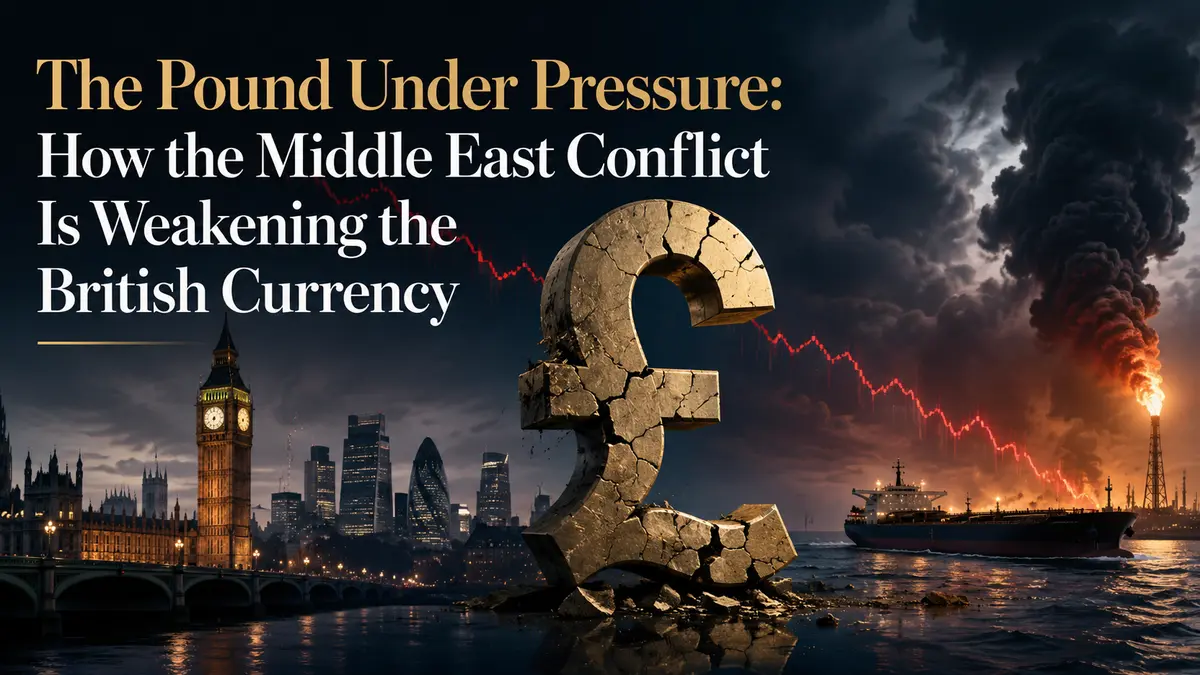
Monday became a day on the foreign exchange markets when geopolitics outweighed everything else. The pound sterling weakened despite the remarkably orderly transition of power taking place in the United Kingdom. The reason was a sharp rise in energy prices caused by renewed US strikes on Iran and concerns about shipping through the Strait of Hormuz.
Investors turned to the dollar as a safe-haven asset, and this pressure proved stronger than the domestic factors affecting the British economy. GBP/USD declined by 0.11% to 1.3392, retreating from last week’s highs. The euro, by contrast, posted a modest gain, although analysts warn that the single currency’s vulnerability may become more apparent in the coming days.
What is driving this movement? Why is the energy shock having such a strong impact on the pound? And what should investors expect this week, with inflation data, congressional hearings, and the continuing Middle East crisis on the agenda?
The Dollar as a Beneficiary of the Energy Shock
US Energy Independence
Chris Turner of ING clearly identified the main reason behind the dollar’s strengthening: US energy independence. Unlike Europe and the United Kingdom, which depend on energy imports, the United States is capable of meeting its needs using its own resources.
If Iran effectively blocks the Strait of Hormuz, it will create serious problems for oil-importing countries. For the United States, however, it could become an advantage. Rising energy prices would encourage American producers to increase output, while exports of more expensive oil would generate additional revenue.
As a result, the dollar receives support not only as a safe-haven asset but also as the currency of an energy-exporting country that benefits from higher oil prices.
Demand for High-Yielding Currencies
Turner also notes that low volatility in the foreign exchange market is creating steady demand for high-yielding currencies. The dollar, which offers relatively high interest rates, is becoming attractive to investors seeking returns.
This creates additional demand for the US currency, pushing it higher and placing pressure on the pound and other lower-yielding currencies.
The Pound: External Pressure Versus Domestic Stability
The Transition of Power Is Proceeding Smoothly
The situation within the United Kingdom remains stable. Andy Burnham is expected to be confirmed as Labour leader on Friday and officially appointed prime minister the following Monday. The political transition is proceeding in an orderly manner, and the markets have already priced it in.
The pound’s resilience during the recent period of political uncertainty indicates that investors do not see the change of government as a threat to the British economy. This is a positive signal, but it does not protect the pound from external factors.
Why the Pound’s Decline Is Not Related to Britain
The fall below the $1.34 level reflects external factors alone: oil prices, the dollar, and market sentiment. It is not connected to a deterioration in the outlook for the British economy or the domestic political situation.
The UK economy is performing relatively well. According to market expectations, the Bank of England will raise interest rates at least once this year and possibly twice. This limits the pound’s downside potential against the euro, even as it weakens against the dollar.
A Speculative Opportunity
Interestingly, the pound is declining despite positive domestic signals. This could create opportunities for investors who believe that the pressure on the currency is temporary. Should geopolitical risks ease, the pound could recover quickly.
However, as long as the conflict in the Middle East continues to escalate, external pressure will remain the dominant factor.
The Euro: Double Vulnerability
Europe’s Energy Dependence
Europe is in a worse position than the United Kingdom. On the one hand, the euro is a low-yielding currency that does not offer investors particularly attractive returns. On the other hand, the European Union is a major energy importer, meaning that rising oil and gas prices weigh heavily on its economy.
European natural gas inventories are relatively low amid a heatwave, intensifying medium-term pressure on costs. This makes the euro particularly vulnerable to any energy shock.
ING Forecasts
Chris Turner of ING forecasts that EUR/USD could decline to 1.1360 in the coming days, with the potential to test the 1.1300–1.1325 area before the end of the month. He describes this region as a likely lower boundary of the summer trading range.
For the euro, this means that its current gain of 0.17% could prove short-lived. Should the geopolitical situation deteriorate, the single currency could quickly lose its recent gains.
Lagarde Meets Warsh
On Monday, European Central Bank President Christine Lagarde is meeting Kevin Warsh in Washington. However, ING analysts do not expect the meeting to produce any signals regarding monetary policy. It will most likely be ceremonial in nature, without any market-moving statements.
The Dollar: The Path to Further Strengthening
The DXY Index Approaches 101.50
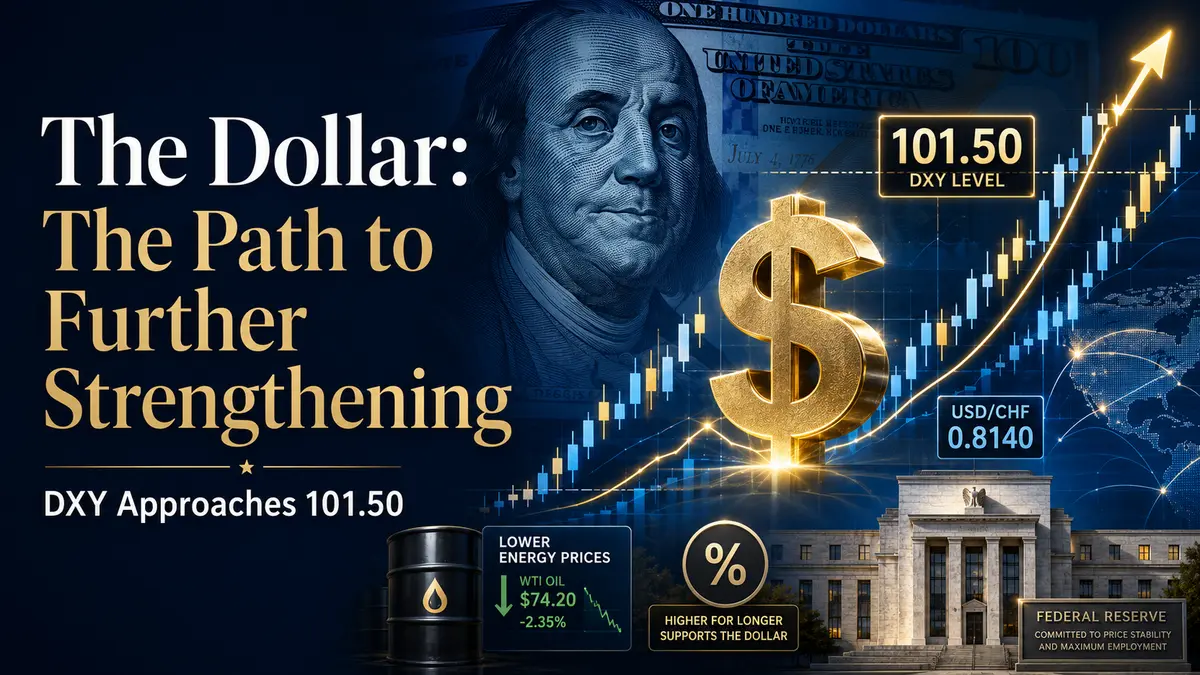
The US Dollar Index, or DXY, is moving towards the 101.50 level. This indicates that the American currency continues to strengthen against a basket of major currencies.
Additional support is coming from USD/CHF, which is retesting the 0.8140 level. The Swiss franc is traditionally regarded as a safe-haven asset, but even it is struggling to withstand the dollar’s strength.
Two Conditions Required for a Reversal
According to Turner, reversing the current demand for the dollar would require a combination of two factors: lower energy prices and a shift by the Federal Reserve away from monetary tightening. However, both scenarios appear unlikely in the short term.
This means that the dollar may continue to strengthen, at least until signs of de-escalation emerge in the Middle East or inflationary pressures begin to ease.
Key Events This Week: What Will Drive the Markets
Tuesday’s CPI Data
US Consumer Price Index data for June will be released on Tuesday. Headline inflation is expected to decline on a monthly basis, while the core index is forecast to remain at an annual rate of approximately 2.8–2.9%.
This leaves room for the Federal Reserve to tighten monetary policy further. If the data comes in above expectations, it will strengthen the dollar. If it is weaker than expected, the dollar could experience a temporary decline.
Warsh’s Testimony
New Federal Reserve Chair Kevin Warsh will begin two days of congressional hearings on Tuesday. ING analysts expect his position to be relatively noncommittal, but that does not mean the markets will not search for signals.
Any reference to the possibility of further interest-rate increases or keeping rates elevated for an extended period will be interpreted as positive for the dollar.
The Beige Book and PPI Data
The Federal Reserve’s Beige Book and Producer Price Index data will be released on Wednesday. These indicators will provide additional guidance ahead of the Federal Open Market Committee meeting on July 29.
“It appears to be too early for the market to price out another Federal Reserve interest-rate increase this year,” Turner noted. This means that the dollar retains the potential for further strengthening.
The Bank of England: What Comes Next
Interest-Rate Expectations
Markets are pricing in at least one Bank of England interest-rate increase this year and possibly a second. This limits the pound’s downside potential against the euro but does not protect it from the dollar.
The Bank of England is facing a dilemma: inflation remains high, while the economy is showing signs of slowing. Raising rates could deepen the economic downturn, but failing to act could lead to an even greater increase in inflation.
Political Stability
Domestic political stability and the orderly transition of power in the United Kingdom should support the pound over the medium term. Apart from the energy shock, the British currency has every reason to remain strong.
However, geopolitics remains the main driving force, and pressure on the pound will persist as long as the conflict in the Middle East continues.
What This Means for Investors
Short-Term Volatility
Investors should expect continued volatility in the foreign exchange markets over the coming days. The key events—CPI data, Warsh’s testimony, and the escalation of the conflict—will determine market movements.
Those trading the pound and the euro should closely monitor news from the Middle East. Any change in the geopolitical situation could trigger a sharp market move.
Long-Term Outlook
Over the longer term, much will depend on how quickly the conflict can be resolved and how persistent the rise in energy prices proves to be. If the situation normalises, the pound and the euro could recover.
However, if the conflict becomes prolonged, the dollar may continue to strengthen, placing pressure on all currencies except those of oil-exporting countries.
Conclusion: The Energy Shock as the Main Driving Force
Monday demonstrated that geopolitics can matter more than domestic economic policy in the foreign exchange markets. The pound weakened because of external factors despite the stable political situation in the United Kingdom. The euro found itself in an even more vulnerable position because of Europe’s dependence on imported energy.
The dollar is strengthening amid the energy shock, and analysts do not expect this trend to reverse in the near future. Inflation data, Warsh’s testimony, and further developments in the Middle East conflict will be the key factors driving the markets this week.
For investors, this is a period of heightened volatility that requires close attention to current events. Short-term movements may be sharp, making proper risk assessment critically important.
Over the longer term, the British economy remains stable, and the political transition is proceeding smoothly. However, as long as the conflict in the Persian Gulf continues, geopolitics will determine market sentiment.

Comments
No comments yet. Be the first to share your thoughts!
Authentication Required
You must be logged in to post a comment.