Bar Pipa
We pay for a post of 10$

Pound

Tom Maffin

The Pound Under Pressure: How the Middle East Conflict Is Weakening the British Currency
The Pound Under Pressure: How the Middle East Conflict Is Weakening the British Currency

Introduction: Geopolitics Takes Precedence Over Domestic Politics

Monday became a day on the foreign exchange markets when geopolitics outweighed everything else. The pound sterling weakened despite the remarkably orderly transition of power taking place in the United Kingdom. The reason was a sharp rise in energy prices caused by renewed US strikes on Iran and concerns about shipping through the Strait of Hormuz.

Investors turned to the dollar as a safe-haven asset, and this pressure proved stronger than the domestic factors affecting the British economy. GBP/USD declined by 0.11% to 1.3392, retreating from last week’s highs. The euro, by contrast, posted a modest gain, although analysts warn that the single currency’s vulnerability may become more apparent in the coming days.

What is driving this movement? Why is the energy shock having such a strong impact on the pound? And what should investors expect this week, with inflation data, congressional hearings, and the continuing Middle East crisis on the agenda?

The Dollar as a Beneficiary of the Energy Shock

US Energy Independence

Chris Turner of ING clearly identified the main reason behind the dollar’s strengthening: US energy independence. Unlike Europe and the United Kingdom, which depend on energy imports, the United States is capable of meeting its needs using its own resources.

If Iran effectively blocks the Strait of Hormuz, it will create serious problems for oil-importing countries. For the United States, however, it could become an advantage. Rising energy prices would encourage American producers to increase output, while exports of more expensive oil would generate additional revenue.

As a result, the dollar receives support not only as a safe-haven asset but also as the currency of an energy-exporting country that benefits from higher oil prices.

Demand for High-Yielding Currencies

Turner also notes that low volatility in the foreign exchange market...

Continue reading...
0
0
Rose Gramit

Pound and Euro Regain Ground: The Dollar Takes a Breather, but It’s Too Early to Relax

Pound and Euro Regain Ground: The Dollar Takes a Breather, but It’s Too Early to Relax

Tuesday: A Day of Consolidation

After Friday’s frenzy, when the U.S. dollar surged on the back of strong U.S. employment data and technology stocks tumbled, dragging risk assets down with them, Tuesday brought something traders call consolidation. No sharp moves, no panic, no euphoria—just a cautious recovery after the storm.

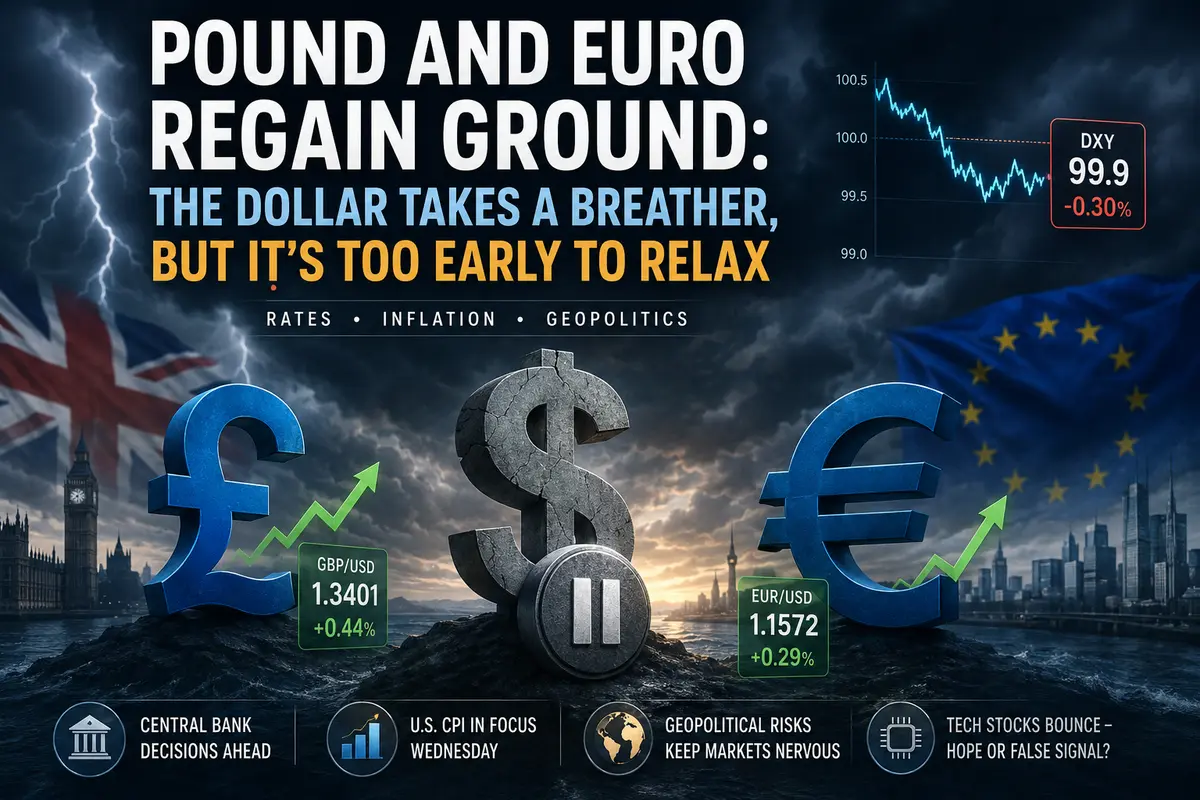
Sterling gained 0.44% against the dollar, reaching 1.3401. The euro added 0.29%, climbing to 1.1572. Both currencies recovered part of the losses suffered on Friday when the dollar strengthened to two-month highs. Yet no one is celebrating. This is not a victory—it is merely a pause.

The U.S. Dollar Index, which rose above 100.2 on Friday, retreated to 99.9 on Tuesday. Just 0.3% lower, but symbolically below the psychologically important 100 level. That number encapsulates the uncertainty of the current market environment. The dollar remains strong, but its rally has stalled. The euro and pound are trying to catch their breath, but every step higher remains difficult.

What is behind this calm?

First, the absence of fresh catalysts. Both the Federal Reserve and the European Central Bank have entered their pre-meeting blackout periods ahead of next week’s policy meetings. Policymakers are not giving speeches, granting interviews, or hinting at future actions. Markets are left alone with the data—and on Tuesday there was little data capable of changing the narrative.

Second, a partial rebound in technology stocks. South Korean chipmakers Samsung and SK Hynix, which plunged 8–10% on Monday, bounced back 5–11% on Tuesday. That helped calm investors’ nerves globally. Because the pound and euro are sensitive to global risk sentiment, the stabilization in equity markets gave them room to recover.

Third, surprisingly strong Chinese trade data. Exports rose 19.4% in May, while imports jumped 27.4%. This suggests the world’s second-largest economy may be showing signs of revival. For the...

Continue reading...
0
0
Tom Maffin

Pound Plunges Under Pressure from Political Crisis in Britain

Pound Plunges Under Pressure from Political Crisis in Britain

On Tuesday, the British pound continued its decline. The reason was growing political pressure on Prime Minister Keir Starmer, which only intensified the negative risk premium for the national currency. In parallel, global markets paused in anticipation of the release of US inflation data, which promises to be a key driver of volatility.

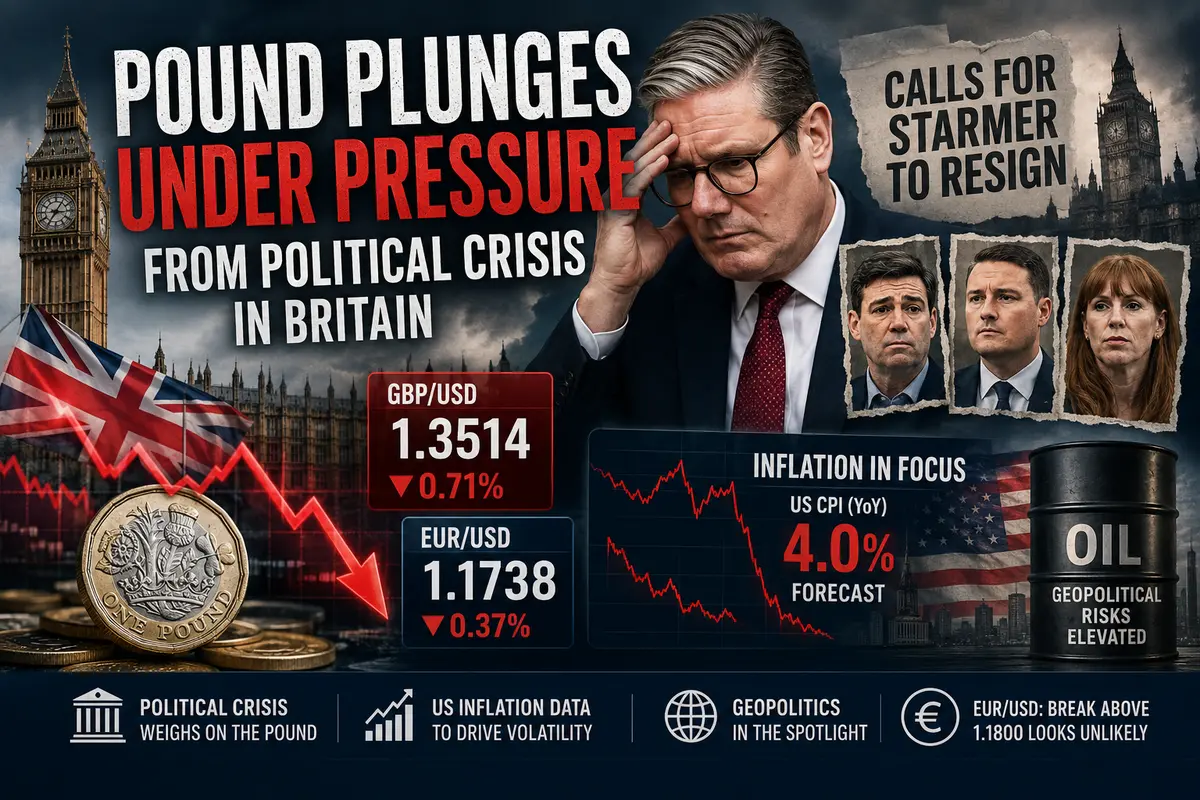
By mid-session, the GBP/USD pair was trading 0.71% lower, hovering around the 1.3514 mark. The EUR/USD pair, meanwhile, declined more modestly — by 0.37%, to 1.1738.

Pressure on the Prime Minister Reaches a Critical Point

The political situation in the UK deteriorated sharply after Home Secretary Shabana Mahmood joined more than 70 parliamentarians who publicly called on the sitting prime minister to resign. According to betting market odds, there is now a high probability that Starmer will leave his post as early as this year.

Analysts at one major bank note that investors are likely to interpret any imminent public address by the prime minister as a potential resignation statement. They emphasize that a political risk premium is clearly visible in the EUR/GBP pair for the first time in a long while.

According to their estimates, this premium is currently modest (about 0.3% of short-term mispricing), suggesting significant potential for the negative trend to deepen if political uncertainty escalates.

Who Could Replace Starmer

Andy Burnham, Wes Streeting, and Angela Rayner are named as the main potential successors to Starmer. Markets are particularly sensitive to Burnham's fiscal and economic views.

US Inflation Will Be the Main Trigger for the Dollar

Meanwhile, the main event capable of impacting the dynamics of the dollar and the entire currency market during the current session will be the release of April data on US consumer inflation. Analysts' forecasts suggest a second consecutive monthly rise of 0.9% in the headline figure. In that...

Continue reading...
0
0
Navigation menu
instaforex banner