Bar Pipa
We pay for a post of 10$

OPEC+

Oil’s Powerful Surge: WTI Targets $89 as Brent Nears $97
Oil’s Powerful Surge: WTI Targets $89 as Brent Nears $97

Asian Trading Begins with Oil and Fire

23.07.2026 Thursday’s Asian trading session began with the oil market once again reminding everyone who is in charge. September WTI ... crude oil futures on the New York Mercantile Exchange climbed confidently to $88.56 per barrel, gaining nearly 2% during the session. This is more than just an increase—it is a serious breakout attempt, especially considering that prices were trading at significantly lower levels only recently. At the time the data was recorded, WTI was up 1.99%, and this was only the beginning of what promised to be a heated trading day.

The session high, which was not specified in the initial market report, may have already touched or even exceeded the psychologically important $89 level. However, the figures appearing on trading terminals represent more than just numbers. They reflect the fear, greed, and geopolitical turmoil that have gripped the world.

$Brent crude, the global oil benchmark, is keeping pace with its American counterpart. September Brent futures rose by 2.42%, reaching $96.35 per barrel. The spread between the two benchmarks widened to $7.79—a significant signal that the market is assessing supply risks differently across regions.

Meanwhile, the U.S. Dollar Index continued its gradual decline, falling by 0.14% to 100.81. This is also supporting oil prices. When the dollar weakens, commodities denominated in the U.S. currency become more affordable for buyers using other currencies. Demand increases, and prices move higher.

However, today’s main story is not the dollar. The real story is the Middle East—tankers, missiles, and relentless strikes that are reshaping the global landscape.

A Geopolitical Storm: When Oil Becomes a Weapon

To understand why oil prices are rising so confidently, we must once again look at the epicenter of global events: the Middle East.

The U.S. military has reportedly carried out strikes against...

Continue reading...
0
0

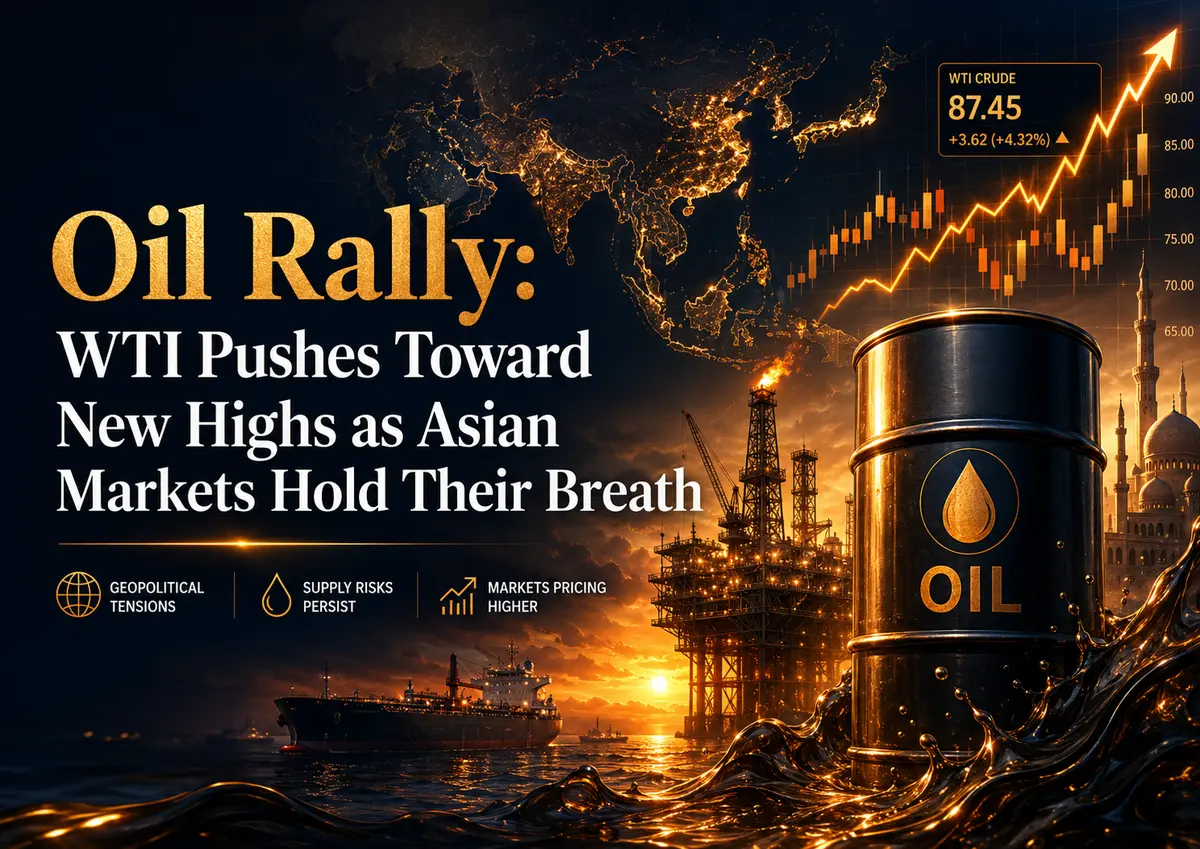
Oil Rally: WTI Pushes Toward New Highs as Asian Markets Hold Their Breath

Oil Rally: WTI Pushes Toward New Highs as Asian Markets Hold Their Breath

Morning on the Commodity Markets: The Bulls Wake Up Before Everyone Else

Asian trading opened on Wednesday with an unexpected but entirely understandable surge. WTI ... crude oil futures for September delivery confidently crossed the $85-per-barrel mark, gaining almost a full percentage point. At the time the data was recorded, the price stood at $85.17—and this was only the beginning of a trading session that promised to be intense.

The highest level reached by a barrel was not included in the initial market report, but the fact that oil found support at $77.93 while resistance awaits at $85.74 says a great deal. A range of almost $8 is not merely volatility—it is the nervous twitch of a market trying to determine which way the geopolitical wind is blowing.

Meanwhile, the US Dollar Index edged slightly lower, slipping by a few hundredths of a percentage point to 100.97. This may seem insignificant, but for oil, which is priced in US dollars, even such a microscopic weakening of the American currency matters. It makes the commodity slightly more affordable for holders of other currencies, stimulating demand.

However, investors should not be misled by this modest correction in the dollar. The main story today is not about currency fluctuations, but about events in the Middle East and the mindset of traders who are frantically recalculating their risk exposure.

BZUSD ... , the global benchmark, is keeping pace with its American counterpart. September futures rose by 1.10% to $92.01 per barrel. The spread between the two benchmarks stands at $6.84, remaining within a relatively normal range. However, the fact that both grades are rising simultaneously indicates the global nature of the current rally.

This is not a local story about US oil inventories or wildfires in Canada. It is a story about global security, tankers passing...

Continue reading...
0
0
Lin Brings

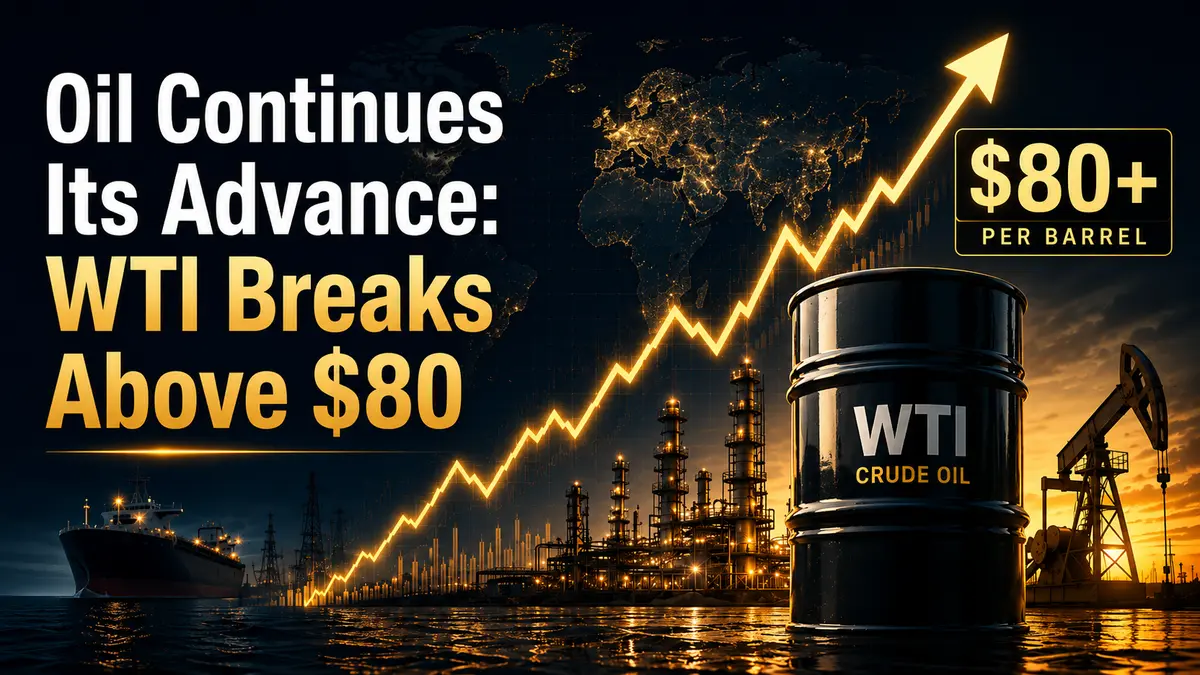
Oil Continues Its Advance: WTI Breaks Above $80

Oil Continues Its Advance: WTI Breaks Above $80

Introduction: The Third Wave of Growth

Wednesday morning brought fresh momentum to the oil market. August-delivery WTI crude oil futures rose by 1.08%, reaching $80.20 per barrel. Brent crude, meanwhile, gained 1.39% and settled at $85.91 per barrel. This move continues the rally that began last week and accelerated following the reinstatement of the blockade in the Strait of Hormuz.

What is driving the market now? Geopolitical tensions in the Middle East, a weaker US dollar, and technical factors are all working in favor of the bulls. WTI ... crude has broken through the psychologically important level of $80 per barrel, opening the door to new potential targets.

In this article, we will examine the reasons behind the current rise, the key technical levels, and the prospects for the oil market over the coming days.

Geopolitical Factors: The Strait of Hormuz Blockade Continues to Put Pressure on the Market

The Reinstatement of the Blockade and Rising Oil Prices

The reinstatement of the Strait of Hormuz blockade remains the main geopolitical factor supporting oil prices. The United States announced the restoration of its naval blockade of Iran and the introduction of a transit fee for vessels passing through the strait, raising concerns about potential supply disruptions.

Iran has not remained on the sidelines. Tehran has launched drone strikes against US facilities and targeted vessels in the region with cruise missiles. The escalation is continuing, and markets are pricing in the risk of serious supply disruptions.

The Role of the Strait of Hormuz

The Strait of Hormuz is a narrow maritime corridor through which approximately 20% of the world’s oil passes. Any threat to this region causes anxiety in the markets and pushes prices higher.

Even without actual supply disruptions, the threat of them creates speculative momentum. Traders buy oil to hedge against...

Continue reading...
0
0

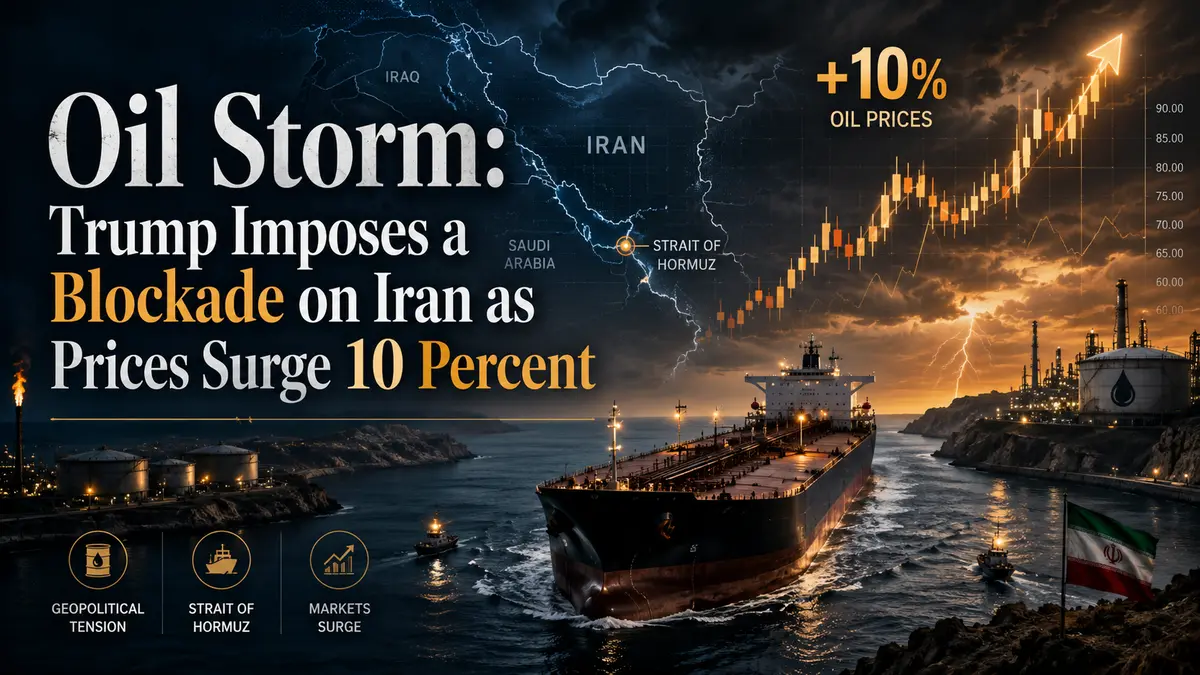
Oil Storm: Trump Imposes a Blockade on Iran as Prices Surge 10 Percent

Oil Storm: Trump Imposes a Blockade on Iran as Prices Surge 10 Percent

Introduction: An Escalation That Changes the Rules of the Game

Tuesday began with a new round of escalation in the oil markets. President Donald Trump announced the reinstatement of a naval blockade against Iran and the introduction of a 20 percent transit fee on cargo passing through the Strait of Hormuz. Oil prices reacted immediately: Brent crude rose 2.1 percent to $85.01 per barrel, while WTI gained 2.1 percent to $79.78.

However, this was merely a continuation of the rally that began on Monday, when both global benchmark grades jumped by nearly 10 percent—their largest one-day increase in several months. Tensions between the United States and Iran have reached a new level, and markets are pricing in the risk of serious disruptions to oil supplies from the Persian Gulf.

What is behind this decision? What are the consequences for the global economy? And where will prices move next? In this article, we examine every aspect of the current crisis and its impact on the oil markets.

The Blockade of Iran: Trump’s Decisive Move

The Reinstatement of the Naval Blockade

President Trump stated that the United States would reinstate its naval blockade of Iran following the resumption of military clashes with Tehran. The decision came in response to Iranian drone strikes on US facilities in Kuwait and attacks on vessels in the Strait of Hormuz.

The US Armed Forces will begin enforcing the blockade on Tuesday, targeting vessels linked to Iran. Neutral commercial vessels will still be permitted to pass through the strait. This is an important distinction, demonstrating that the United States is attempting to restrict Iranian shipments rather than completely shut down maritime traffic.

A 20 Percent Transit Fee

Trump also announced that Washington would charge a 20 percent fee on cargo passing through the Strait of Hormuz to...

Continue reading...
0
0

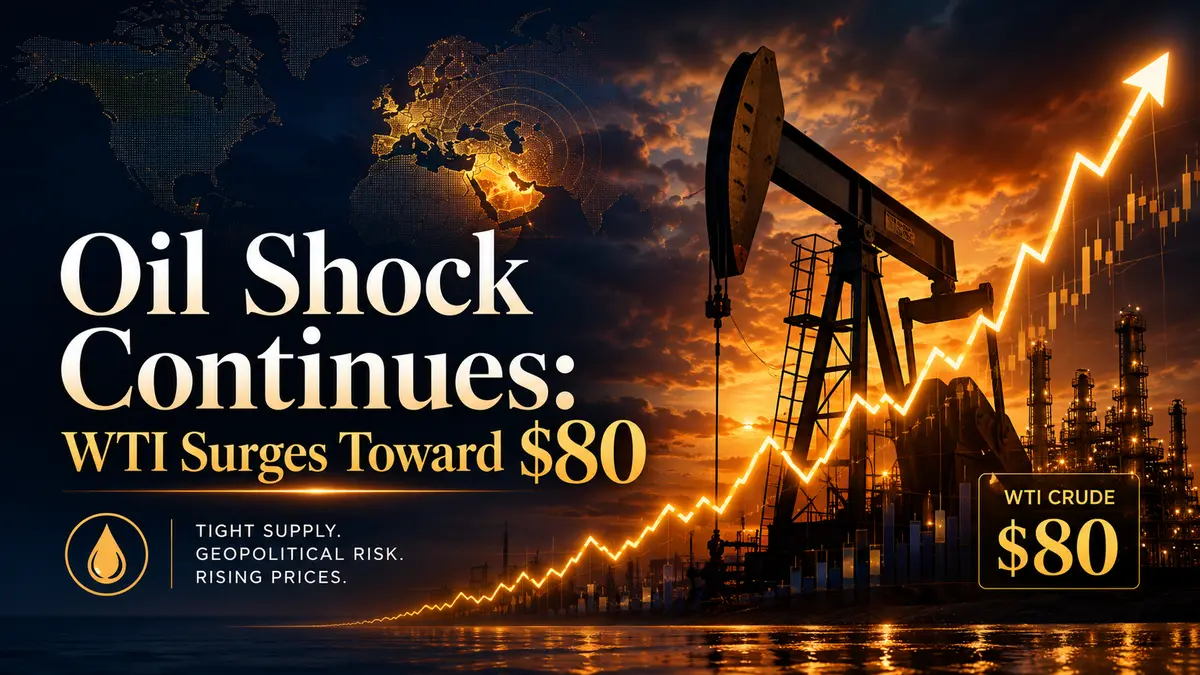
Oil Shock Continues: WTI Surges Toward $80

Oil Shock Continues: WTI Surges Toward $80

Introduction: Tuesday Brings Another Wave of Growth

Asian trading on Tuesday was marked by another surge in oil prices. August West Texas Intermediate crude oil futures rose by 2.07%, reaching $79.76 per barrel. Brent crude gained 1.66%, settling at $84.68 per barrel. This continued the rally that began last week, when prices jumped by more than 3% in a single day amid an escalation of the conflict between the United States and Iran.

What is currently driving the market? Geopolitical tensions in the Middle East, concerns about supply disruptions through the Strait of Hormuz, and a weaker US dollar are all working in favor of oil bulls. However, there are also reasons for caution: technical levels indicate that oil has approached a resistance zone, and a breakout above $80 per barrel could open the way to new highs.

In this article, we will examine the reasons behind the current rally, key technical levels, and the outlook for the oil market in the coming days.

Geopolitical Factors: Iran Returns to the Center of Attention

Conflict Escalation and Threats to the Strait of Hormuz

The renewed military conflict between the United States and Iran continues to dominate the oil market. Last week, Tehran announced the closure of the Strait of Hormuz after a commercial vessel was attacked. Although the United States disputed this statement, claiming that shipping routes remained open under the protection of the US Armed Forces, markets had already begun pricing in the risk of serious supply disruptions.

On Tuesday, President Trump said that the United States would restore its naval blockade of Iran and ensure that the Strait of Hormuz remained open. On the one hand, this statement demonstrates US determination. On the other hand, it highlights the fragility of the situation. Any further escalation could lead to actual...

Continue reading...
0
0

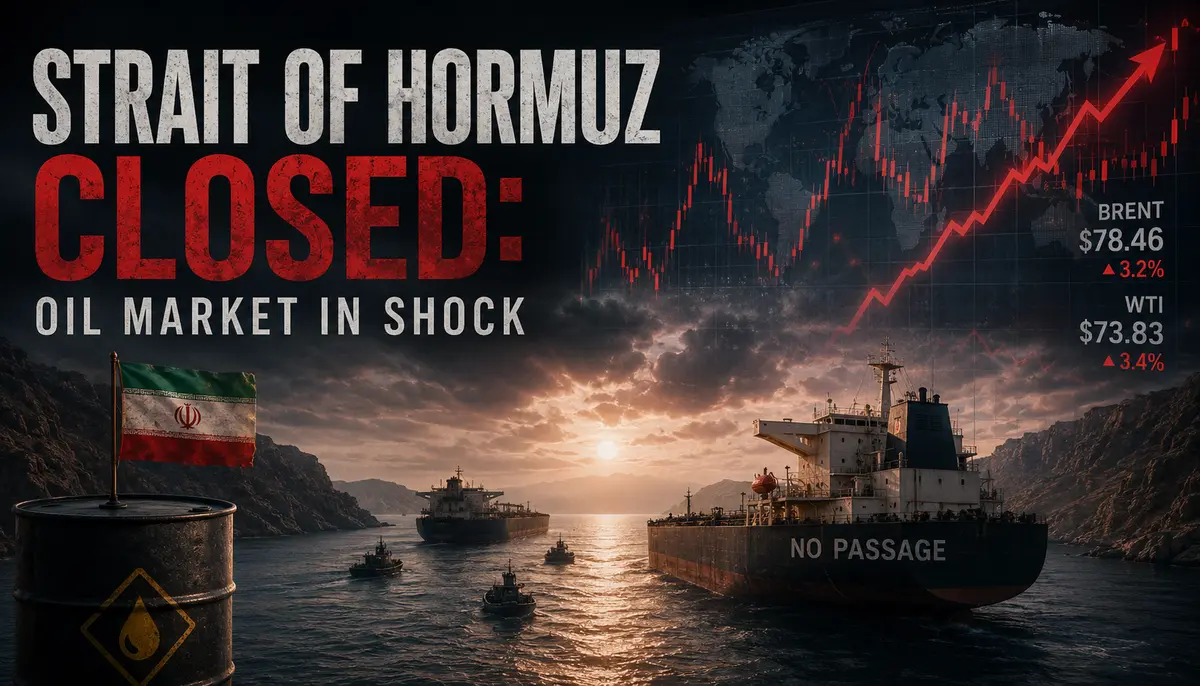
Strait of Hormuz Closed: Oil Market in Shock

Strait of Hormuz Closed: Oil Market in Shock

Introduction: The Red Line Has Been Crossed

Monday began with an explosion in the oil markets—literally. Iran expanded its missile and drone attacks against Persian Gulf countries, including Qatar and the United Arab Emirates, and then announced the closure of the Strait of Hormuz. Oil prices surged by more than three percent within hours. Brent futures climbed to $78.46 per barrel, while WTI rose to $73.83.

This is not simply another geopolitical escalation. It is a strike at the very heart of the global energy system. The Strait of Hormuz is more than just a maritime route. It is an artery through which the lifeblood of the modern economy flows. Around twenty percent of all the oil consumed worldwide passes through it. Now, according to Tehran, this channel has been closed.

What is behind this decision? Who attacked the commercial vessel? Most importantly, how long will this crisis last, and what will it mean for the global economy? In this article, we examine every aspect of a situation that transformed the oil market in a single morning and forced traders around the world to recalculate their models.

Escalation: How the Strait Came to Be Closed

From Ceasefire to War in a Matter of Days

The history of this conflict is a classic example of how fragile peace can collapse in an instant. Just a week ago, it appeared that diplomatic efforts to restore the memorandum of understanding between the United States and Iran were producing results. Negotiations were underway, mediators were working, and both sides were avoiding drastic moves.

Then everything changed. Trump announced the end of the ceasefire and intensified strikes against Iranian facilities. Tehran, which had exercised restraint for a long time, responded. Its response proved far more severe than Washington had expected. Missile attacks against Qatar and...

Continue reading...
0
0

Oil Swings: Why WTI Is Rising in Asia While the World Holds Its Breath

Oil Swings: Why WTI Is Rising in Asia While the World Holds Its Breath

Introduction: A Friday Morning on Commodity Markets

Asian trading on Friday began with a scenario that has already become familiar in recent weeks: WTI crude oil is showing moderate growth. August futures on the New York Mercantile Exchange added about 0.3%, stopping near $72.28 per barrel. At first glance, this may seem unremarkable: ordinary volatility during an ordinary trading day. But behind this routine figure lies a complex picture of geopolitical contradictions, economic fears, and the fragile balance between supply and demand.

The rise in prices is taking place against the backdrop of a weaker U.S. dollar — the dollar index fell by a quarter of a percent to 100.43 points. The connection is direct: the cheaper the dollar, the more attractive commodity contracts become for holders of other currencies. But this alone is far from enough to explain the current dynamics. Oil is now reacting to an entire set of events, each of which pulls the price either upward or downward in its own way. Let’s take a closer look at what is really happening in the black gold market.

Technical Picture: Levels That Speak

Support and Resistance Zones

Friday’s trading outlined clear technical reference points. Support settled at $67.82 — a level to which the price fell during the session, but where it repeatedly found buyers. Resistance was recorded at $76.08, although current trading is taking place significantly below this zone.

The gap between these levels is almost $9, which suggests one thing: the market is still searching for direction. A wide range is a sign of high uncertainty, when neither bears nor bulls can gain a decisive advantage. Traders are acting cautiously, reluctant to push the price toward extreme values.

Comparison with Brent: The Spread as an Indicator

The price difference between the two main crude benchmarks...

Continue reading...
0
0
Lin Brings

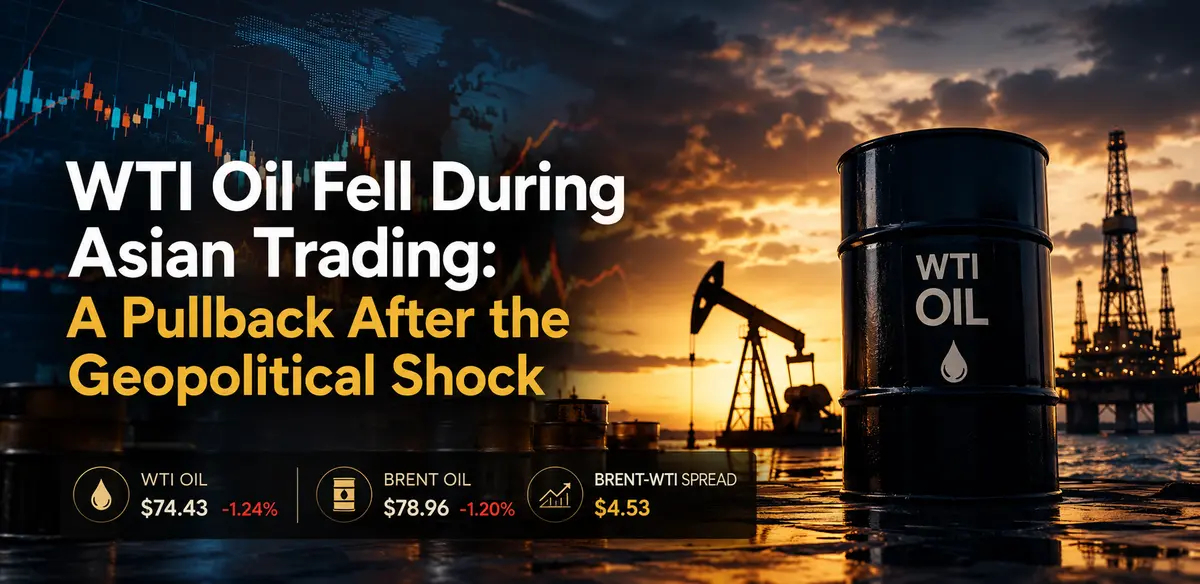
WTI Oil Fell During Asian Trading: A Pullback After the Geopolitical Shock

WTI Oil Fell During Asian Trading: A Pullback After the Geopolitical Shock

Introduction: A Thursday When Oil Cooled Down After a Hot Wednesday

Thursday, Asian trading session. Traders in Singapore, Tokyo, and Shanghai open their terminals and see WTI oil cooling down after yesterday’s geopolitical shock. August delivery futures fall to $74.43 per barrel, losing 1.24% compared with the previous close. This is not a collapse, but it is a noticeable correction after oil surged by more than 5% on Wednesday amid an escalation of the conflict between the United States and Iran.

What is happening? The market is digesting the news. On Wednesday, Iran struck U.S. military facilities, while the United States responded with military strikes on Iranian targets. Oil prices jumped to two-week highs, reflecting fears of supply disruptions. But on Thursday, the initial excitement began to fade. Traders are taking profits while assessing the real risks to supply.

Technically, WTI oil found support at $67.82 and resistance at $76.08. The current price of $74.43 is closer to the upper boundary of this range. If oil continues to decline, it may test support at $67.82. If it turns upward, resistance at $76.08 will become the next target.

The U.S. Dollar Index was virtually unchanged — 0.00% at 100.78 points. This means that oil’s movement is not connected to the currency factor, but is driven by other reasons: a correction after the rally and reassessment of geopolitical risks.

Brent oil also declined by 1.20% to $78.96 per barrel. The spread between Brent and WTI is $4.53, which is significantly above normal. This indicates localized supply issues for Brent, possibly related to the situation in the Middle East.

Let’s examine why oil is correcting after yesterday’s rise, what risks remain, and where the market is heading.

Why Oil Is Falling After Yesterday’s Rally

Profit-Taking

The main reason for the decline is profit-taking....

Continue reading...
0
0

WTI Oil Rises in Asian Trading: Geopolitics Returns

WTI Oil Rises in Asian Trading: Geopolitics Returns

Introduction: A Tuesday When Oil Woke Up

Tuesday, the Asian trading session. Traders in Singapore, Tokyo, and Shanghai open their terminals and see that WTI oil is back in the green. August futures rise to $69.02 per barrel, gaining 0.69% compared with the previous close. This is not a record-breaking increase, but it is happening against the backdrop of events that could change the dynamics of the entire oil market.

What is behind this move? Geopolitics. Iran attacked vessels in the Strait of Hormuz, immediately bringing fears of supply disruptions back to the markets. Oil prices rose, and although the increase is still modest — just under 1% — it could mark the beginning of a more serious rally if the situation escalates.

Technically, WTI oil found support at $67.04 and resistance at $69.31. The current price of $69.02 is approaching the upper boundary of this range. If oil manages to break through resistance at $69.31, it could open the way toward $70 and higher. If it pulls back, support at $67.04 will be tested again.

The dollar index remained virtually unchanged — 0.00% at 100.62 points. This means the move in oil is not related to the currency factor but is driven by other reasons. The main one is geopolitical tension.

Brent oil also rose by 0.74% to $72.52 per barrel. The spread between Brent and WTI is $3.50, which is within the normal range. Markets are moving in sync, indicating the global nature of the growth factors.

Let’s take a closer look at what is really happening in the Strait of Hormuz, why it matters for oil prices, and where the market is heading.

Geopolitical Factor: The Strait of Hormuz Back in Focus

Attack on Vessels: The Return of Fear

The main news on Tuesday was reports that...

Continue reading...
0
0

OPEC+ Increased Oil Production Quotas by 188,000 bpd in August

OPEC+ Increased Oil Production Quotas by 188,000 bpd in August

Introduction: The Oil Alliance Takes a Step Forward, but Prices Have Already Collapsed

Sunday. A video conference that changes the balance of power in the global oil market. Seven key OPEC+ participants, led by Saudi Arabia and Russia, agree on another increase in combined production quotas. In August, they will add another 188,000 barrels per day, continuing the gradual reversal of restrictions that have held back production in recent years.

At first glance, this is the kind of news that should have sent prices crashing. More oil on the market means lower prices. But oil futures have already fallen by 43% from their wartime peak, to around $72 per barrel in London. An additional 188,000 barrels per day is only 0.2% of global demand. It is not a drop in the ocean, but it is not a tsunami either.

What really matters in this decision is not so much the number itself, but the signal. OPEC+ is demonstrating that it does not intend to panic because of falling prices. It continues to follow its plan, even if the market is already oversupplied. And this creates a new context for the oil industry — a context in which the old rules of the game no longer work.

Let’s examine what really stands behind this decision, why OPEC+ continues to increase production despite falling prices, and what this means for the future of the oil market.

Figures and Context: What an Increase of 188,000 bpd Means

The Plan to Complete the Reversal of Restrictions

The decision to increase quotas by 188,000 barrels per day is not spontaneous. It is part of a plan that was developed even before the war and that OPEC+ has been consistently implementing. Since the beginning of the conflict, the alliance has increased quotas by 940,000 barrels per...

Continue reading...
0
0
Navigation menu
instaforex banner