Bar Pipa
We pay for a post of 10$

Donald Trump

Rose Gramit

WTI Crude Oil Futures Rise in Asian Trading

WTI Crude Oil Futures Rise in Asian Trading
A Morning That Began with Hope

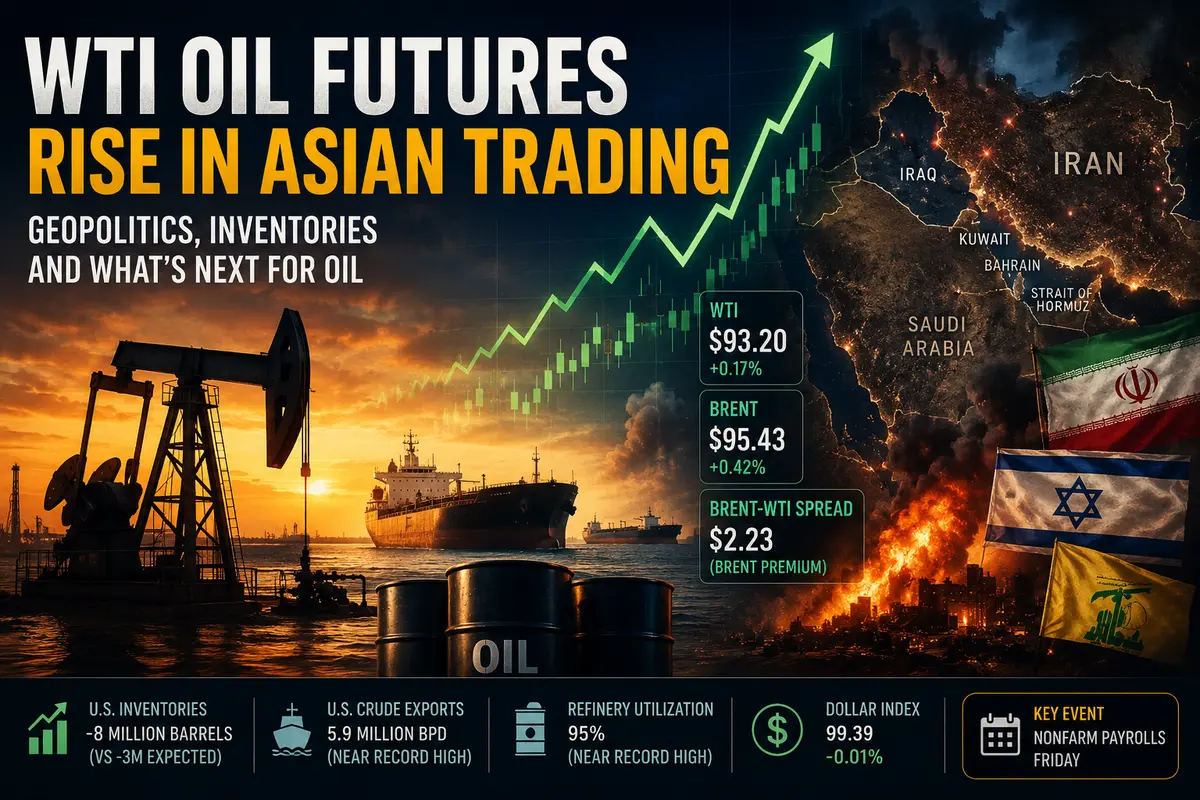
Friday’s Asian oil markets opened with cautious but steady gains. Futures for West Texas Intermediate (WTI) crude oil, the primary benchmark for the U.S. market and beyond, rose 0.17% to $93.20 per barrel. It is hardly a spectacular rally—just seventeen hundredths of a percent, more of a tremor than a surge. But after several days of volatile price swings, traders are willing to welcome any green number on their screens.

The European benchmark, Brent crude, appeared somewhat stronger. The August Brent contract gained 0.42%, climbing to $95.43 per barrel. The price spread between Brent and WTI widened to $2.23 per barrel in Brent’s favor. A week ago, the spread was narrower, below $2. The widening gap suggests that geopolitical risks concentrated around key Brent supply routes continue to weigh more heavily on Brent than on WTI, which is produced in the relatively secure environment of Texas.

The U.S. dollar, which has pressured commodity markets in recent days, weakened slightly on Friday morning. The U.S. Dollar Index futures slipped 0.01% to 99.39. The decline is tiny and almost imperceptible, but even such a modest move gives oil prices some breathing room.

The technical picture remains tense. WTI support stands at $88.45, a level sellers failed to break in recent sessions. Resistance is located at $97.00. With WTI trading at $93.20, prices sit roughly in the middle of that range, leaving traders with room for maneuver.

The key question is what will trigger the next move. Geopolitics? U.S. inventory data? Or perhaps long-awaited news regarding negotiations between Iran and the United States? As usual, Asian traders were the first to react and have already begun positioning themselves ahead of developments.

Middle East: The Calm Before the Storm

The geopolitical backdrop remains the...

Continue reading...
0
0

Oil Calm Before the Storm: WTI Pulls Back, but Tensions Remain High

Oil Calm Before the Storm: WTI Pulls Back, but Tensions Remain High

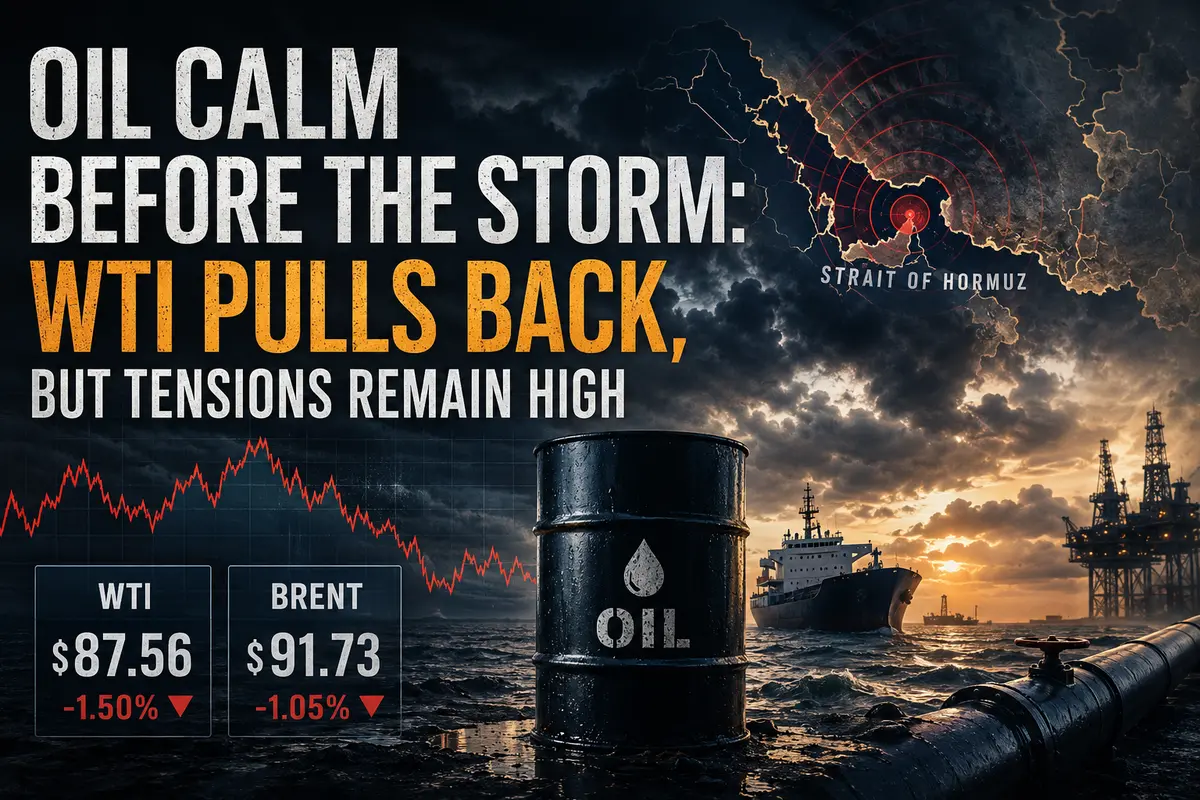
Friday’s Asian trading session brought a brief respite to the oil market. July WTI futures fell by 1.5%, dropping to $87.56 per barrel. Brent followed its U.S. counterpart lower, losing just over 1% and settling at $91.73 per barrel. At first glance, this looks like a routine correction after the sharp rally triggered by the latest strikes on Iran. But a closer look at the numbers suggests otherwise: this is not merely a pullback—it is a market holding its breath before the next move. Too much explosive risk has accumulated beneath the surface, too many unresolved questions remain, and too much depends on what unfolds over the weekend.

Down 1.5%: Profit-Taking or a Trend Reversal?

Friday’s decline in WTI fits a classic pattern. After Thursday’s surge of more than 3%, fueled by reports of strikes on Bandar Abbas and a retaliatory attack by Iran’s Islamic Revolutionary Guard Corps (IRGC), traders chose to lock in profits ahead of the weekend. Few are willing to hold long positions through Saturday and Sunday when anything could happen—from fresh military strikes to an unexpected diplomatic breakthrough. This fear of the “geopolitical weekend” is a familiar feature of every major Middle Eastern crisis.

Support at $87.27 remains intact. Prices bounced from that level, preventing bears from gaining momentum. This suggests that the underlying fundamentals have not changed: the Strait of Hormuz remains effectively disrupted, supply chains are impaired, and the global oil market remains undersupplied. A decline of 1.5% is not a trend reversal—it is simply a pause after a short sprint.

Resistance at $99.43 looms overhead, separating the current range from the triple-digit prices seen during the hottest phase of the conflict. If tensions continue to escalate, that level could be tested as early as next week. If, against all expectations, there...

Continue reading...
0
0

Bitcoin Over the Abyss: An Oil Truce Beckons, but Bond Yields Keep a Stranglehold

Bitcoin Over the Abyss: An Oil Truce Beckons, but Bond Yields Keep a Stranglehold

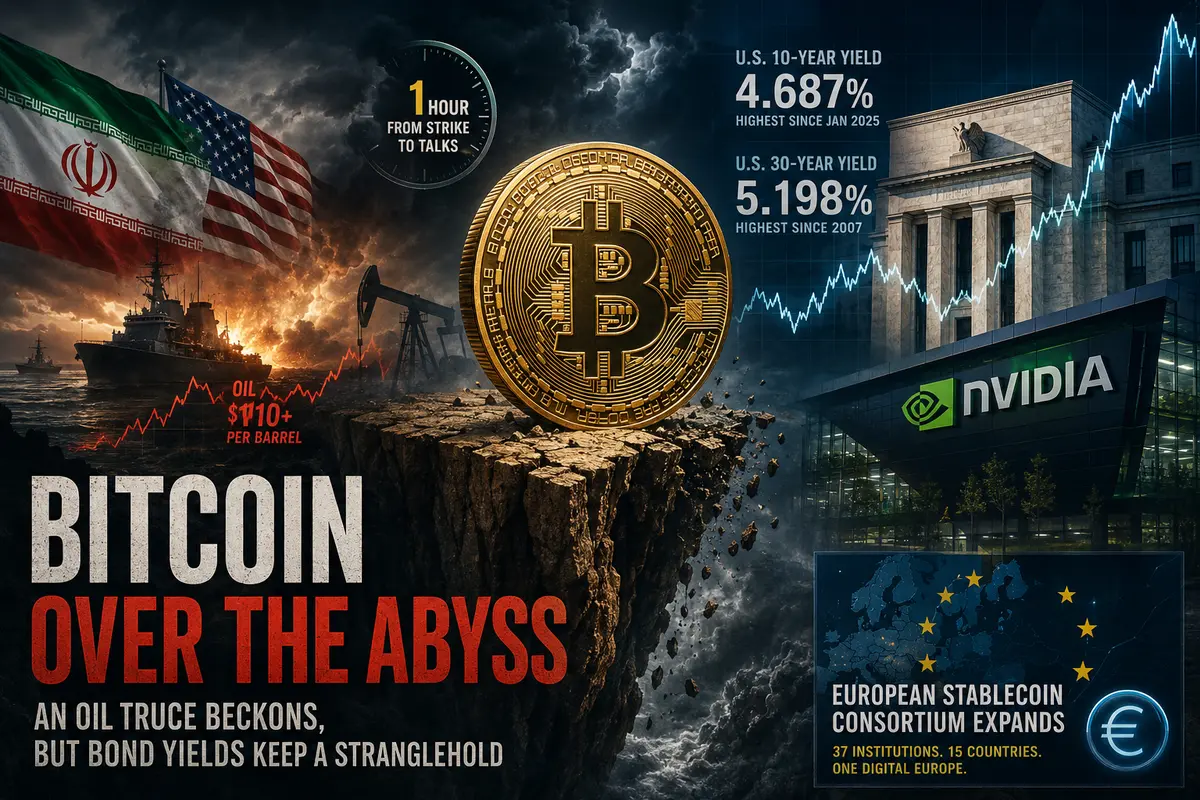
Seventy-seven thousand one hundred twenty-seven dollars. On Wednesday evening, Bitcoin hovered at that mark, gaining a symbolic four-tenths of a percent for the session. A move that, in normal times, wouldn’t even make the news feed now tells an entire story. A story about how the world’s leading cryptocurrency is trying to find solid ground after being rejected from the coveted eighty-two-thousand-dollar level and thrown back into the abyss of uncertainty. And that abyss is lined not with technical failures or regulatory fears, but with old-fashioned macroeconomic forces — Treasury yields, oil prices, and geopolitical swings orchestrated personally by Donald Trump.

The Iranian Pendulum: From Bombs to Negotiations in Sixty Minutes

Trumpian diplomacy is always theater, and the current Iranian drama is no exception. On Tuesday, the U.S. president made a statement that left traders breathless. He admitted he was “an hour away” from authorizing another military strike against Iran. One hour. Sixty minutes separated the world from another escalation in the Persian Gulf, another spike in oil prices, another wave of inflation, and, as a consequence, another collapse in risk assets, including cryptocurrencies. But the strike was postponed. Trump decided to give diplomacy one more chance.

The admission was a masterful rhetorical maneuver. At the same time, Trump portrayed himself as both a decisive leader ready to press the button and a prudent peacemaker who prefers negotiations over war. For markets, this creates an explosive mixture of hope and fear. Hope that the conflict may genuinely be moving toward resolution. Fear that the entire structure could collapse at any moment. Vice President J.D. Vance added fuel to the fire by declaring that the United States would remain “ready for combat” if negotiations fail. A double signal: we believe in peace, but our hand remains on the trigger.

For Bitcoin,...

Continue reading...
0
0

Gold at a Crossroads: Peace With Iran Beckons, but War Still Lingers

Gold at a Crossroads: Peace With Iran Beckons, but War Still Lingers

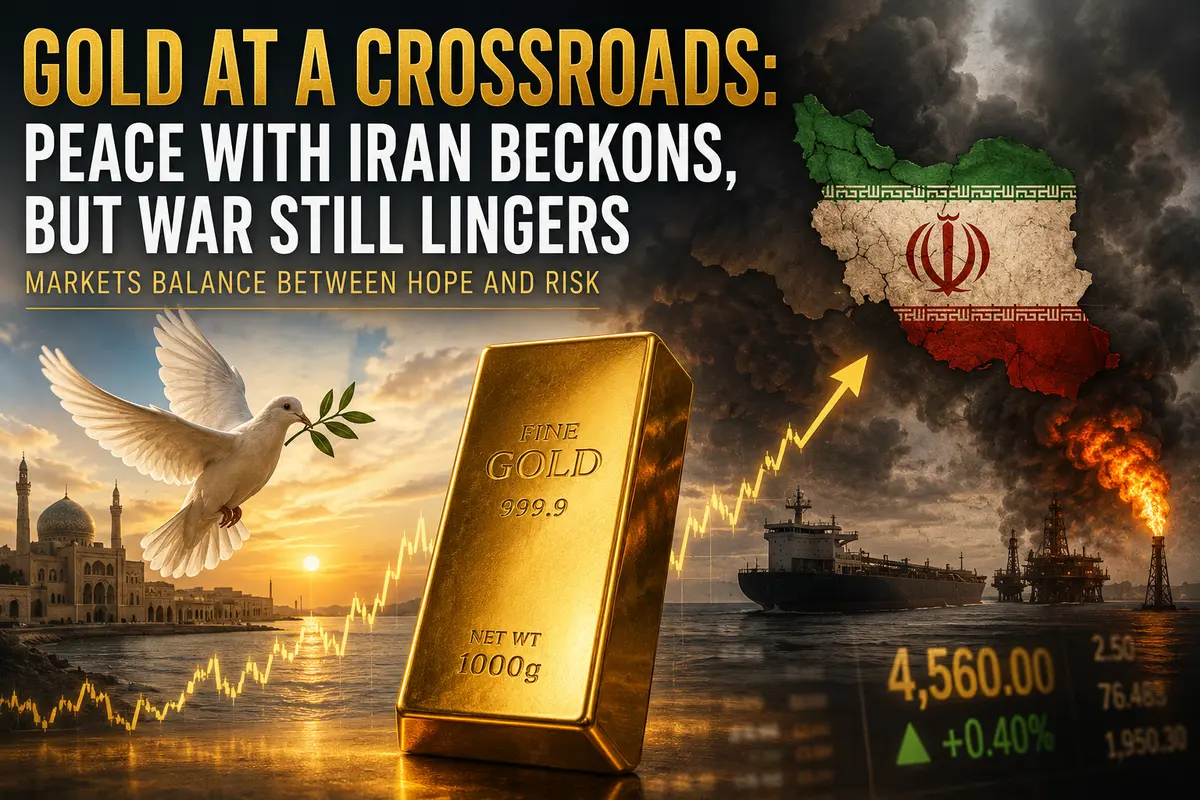
Gold is climbing again. During Thursday’s Asian trading session, prices turned green, extending a rally that seemed to begin against all logic. Spot gold rose to $4,560 per ounce, while futures reached $4,562. A gain of four-tenths of a percent for the session marked a confident recovery after recent losses. But the real mystery behind this move lies not in the numbers — it’s in what caused it. Gold, which for weeks had been suffocating under the pressure of rising rates and a strong dollar, suddenly found support where few expected it: in hopes for peace with Iran. And that paradox reflects the complex, multilayered logic of a market that no longer reacts to headlines in a straightforward way.

Peace as a Catalyst: An Unexpected Twist

At first glance, everything should have played out differently. Gold is the classic safe-haven asset. It rises when the world descends into chaos — when guns fire and diplomats throw up their hands. A war with Iran, a blocked Strait of Hormuz, oil prices soaring into the stratosphere — all of that should have sent gold flying higher. Instead, the yellow metal hovered near recent lows, unable to break resistance. And now, just as Trump speaks of the conflict entering its “final stage” and negotiations progressing successfully, gold suddenly comes alive. How can that be explained?

The answer lies in the transmission mechanism — the invisible conduit linking geopolitics to monetary policy. The conflict with Iran created an inflationary shock. Disruptions to oil supplies drove energy prices sharply higher, which in turn fueled inflation worldwide. Central banks, especially the Federal Reserve, responded with more hawkish rhetoric and threats of higher rates. High interest rates are gold’s deadliest enemy because they increase the opportunity cost of holding a non-yielding asset. That mechanism has been choking...

Continue reading...
0
0
Lin Brings

Morning Explosion in Asian Trading

Morning Explosion in Asian Trading

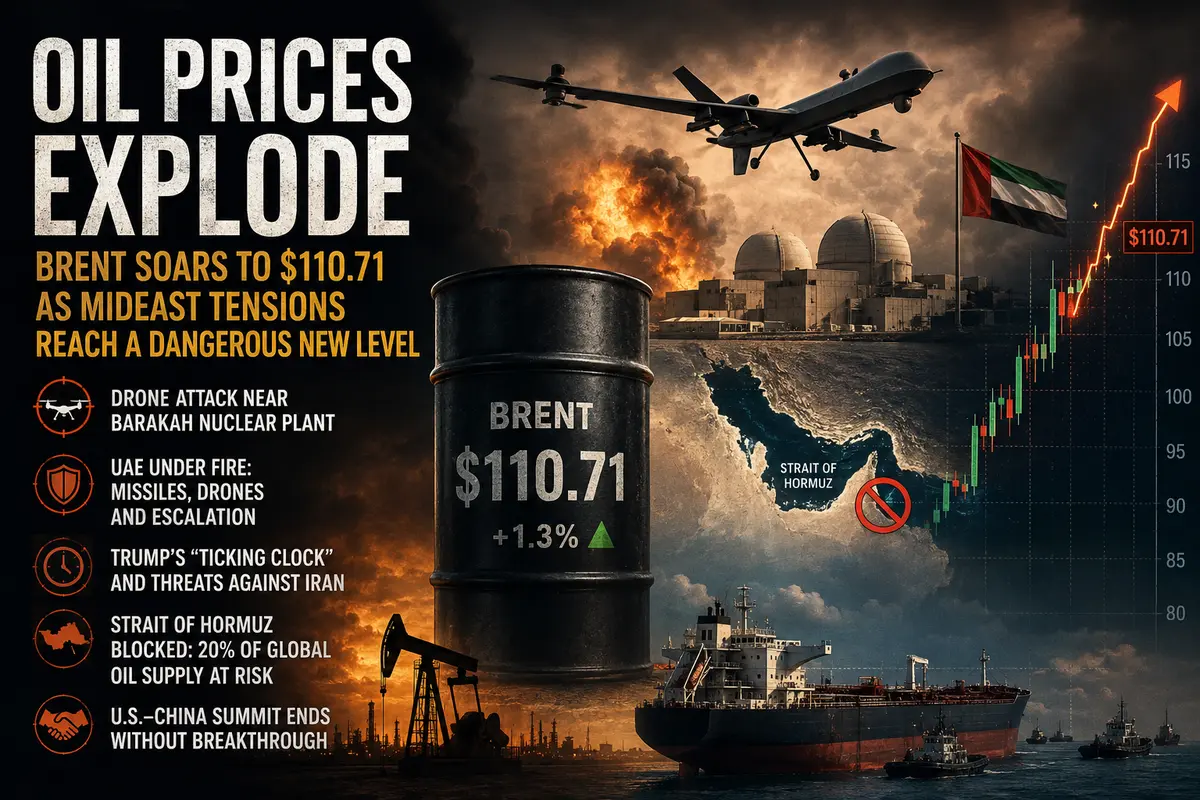
Monday began with a sharp surge in oil prices. As soon as Asian markets opened, July futures for North Sea Brent crude jumped 1.3%, reaching $110.71 per barrel. For early morning trading, when liquidity is still relatively thin, this is a highly significant move. It indicates that a buildup of news over the weekend was bound to spill over into prices.

Traders arriving at their desks in Tokyo, Singapore, and Shanghai were greeted by a troubling picture on their terminals: oil was climbing again, the geopolitical fire in the Middle East showed no signs of cooling, and diplomatic efforts had yet to produce meaningful results. While they were sipping their morning coffee, algorithmic trading systems were already pricing in a new phase of escalation.

Drone Over Barakah: An Attack That Changes the Rules

The key trigger behind the morning spike was an event that at first glance might have seemed like a local incident, but in reality carries far-reaching implications. On Sunday, drones struck a facility near the Barakah nuclear power plant in the United Arab Emirates. The fire that broke out after the attack was contained, but the aftermath left a far deeper impact than the material damage itself.

Barakah is not just a power plant. It is the first and only operational nuclear power station in the Arab world, a symbol of the UAE’s technological ambitions, and a site under close scrutiny from international nuclear safety regulators. A drone strike near such a facility represents an entirely new level of escalation. This is no longer about tankers in the Persian Gulf or oil infrastructure. It is about the potential for a nuclear catastrophe in a densely populated region, and the market reacted accordingly — as a signal that the conflict has entered a far more dangerous phase.

According...

Continue reading...
0
0
Navigation menu