

Oil Storm: Trump Imposes a Blockade on Iran as Prices Surge 10 Percent
Introduction: An Escalation That Changes the Rules of the Game
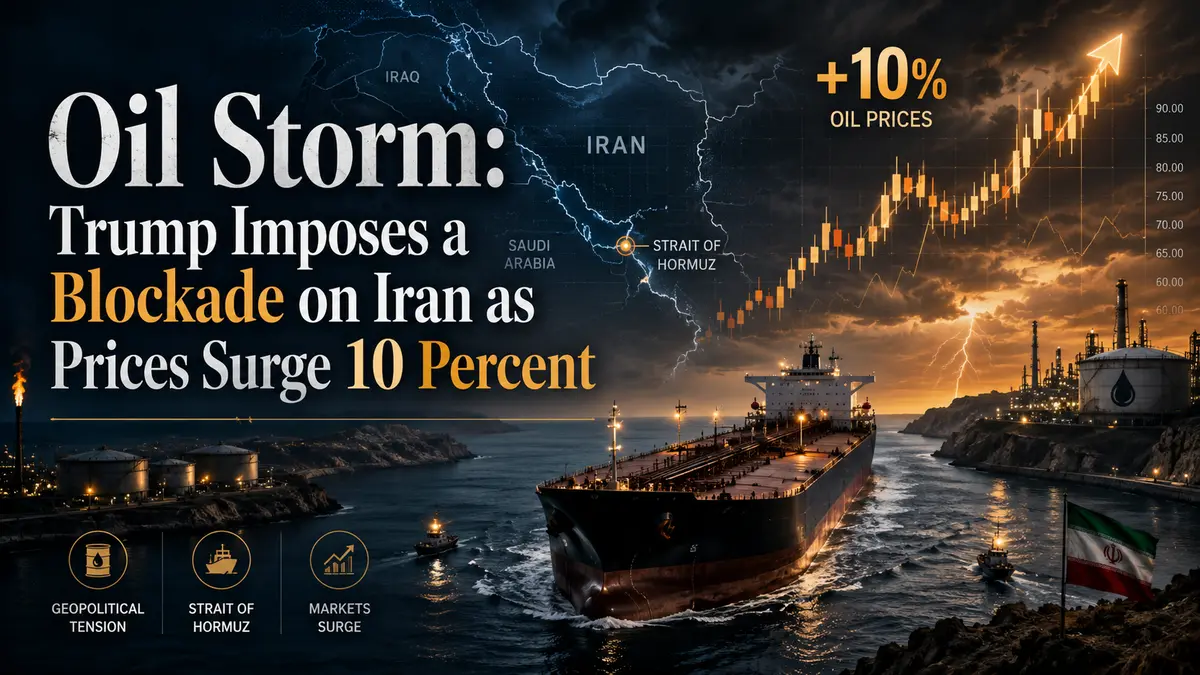
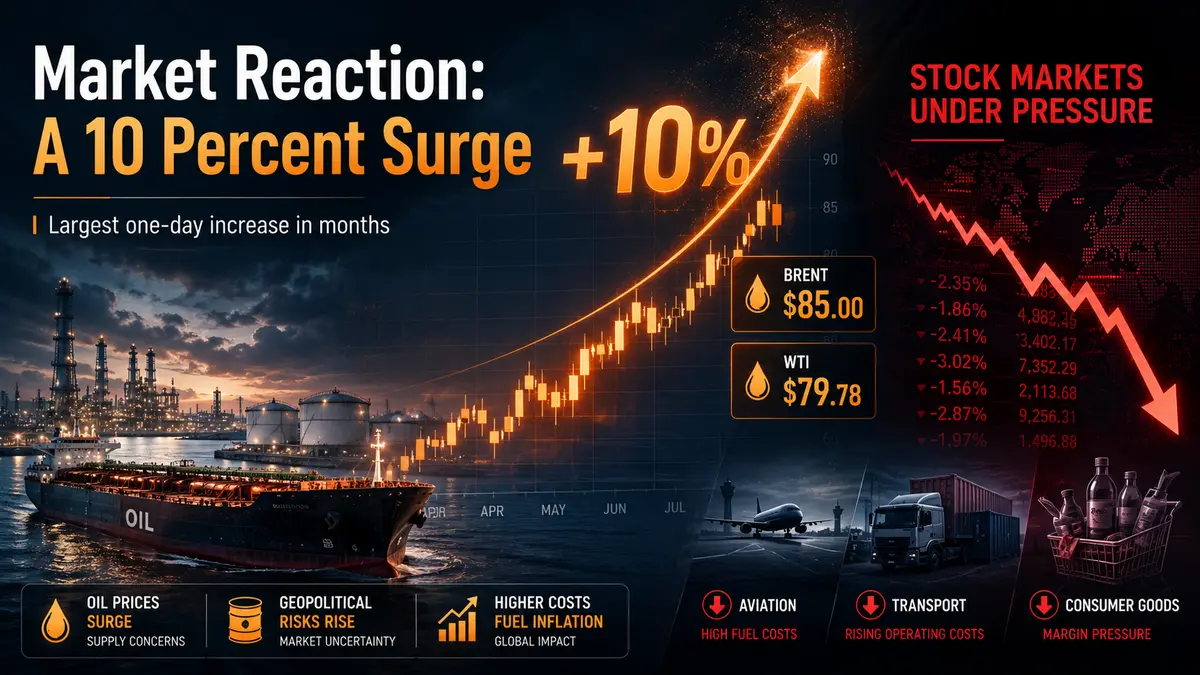
Tuesday began with a new round of escalation in the oil markets. President Donald Trump announced the reinstatement of a naval blockade against Iran and the introduction of a 20 percent transit fee on cargo passing through the Strait of Hormuz. Oil prices reacted immediately: Brent crude rose 2.1 percent to $85.01 per barrel, while WTI gained 2.1 percent to $79.78.
However, this was merely a continuation of the rally that began on Monday, when both global benchmark grades jumped by nearly 10 percent—their largest one-day increase in several months. Tensions between the United States and Iran have reached a new level, and markets are pricing in the risk of serious disruptions to oil supplies from the Persian Gulf.
What is behind this decision? What are the consequences for the global economy? And where will prices move next? In this article, we examine every aspect of the current crisis and its impact on the oil markets.
The Blockade of Iran: Trump’s Decisive Move
The Reinstatement of the Naval Blockade
President Trump stated that the United States would reinstate its naval blockade of Iran following the resumption of military clashes with Tehran. The decision came in response to Iranian drone strikes on US facilities in Kuwait and attacks on vessels in the Strait of Hormuz.
The US Armed Forces will begin enforcing the blockade on Tuesday, targeting vessels linked to Iran. Neutral commercial vessels will still be permitted to pass through the strait. This is an important distinction, demonstrating that the United States is attempting to restrict Iranian shipments rather than completely shut down maritime traffic.
A 20 Percent Transit Fee
Trump also announced that Washington would charge a 20 percent fee on cargo passing through the Strait of Hormuz to cover the costs of providing security. This unprecedented decision could have far-reaching consequences.
The fee may be viewed as a violation of international law and the principle of freedom of navigation. However, Trump appears prepared to take such measures to exert maximum pressure on Iran. Markets have already begun pricing in the cost of the fee, providing an additional boost to oil prices.
Iran Launches Retaliatory Strikes
Iran did not leave the actions unanswered. Tehran carried out drone strikes against US facilities in Kuwait and hit a vessel in the Strait of Hormuz with cruise missiles. The United Arab Emirates reported attacks on two of its tankers in Omani waters.
This demonstrates that Iran is prepared to escalate and has no intention of yielding to pressure. Tehran warned that continued US military action could trigger further attacks on the region’s energy infrastructure. These threats are becoming increasingly credible.
The Strait of Hormuz: The Heart of Global Oil Trade
Why It Is Vitally Important
The Strait of Hormuz is a narrow maritime corridor through which approximately 20 percent of the world’s oil passes. Saudi Arabia, Iraq, Kuwait, the UAE, and Qatar all export oil through the strait. Any disruption along this route could create a massive supply shortage and push prices higher.
Even the threat of disruption can cause panic in the markets. Traders begin buying oil to protect themselves against a potential shortage, creating additional upward momentum.
A Blockade Targeting Iranian Shipments
The blockade announced by Trump specifically targets vessels linked to Iran. This means that Iranian oil, which is already subject to severe sanctions, will face even greater export difficulties.
Iran has attempted to circumvent sanctions through a shadow fleet and other methods. The blockade makes these efforts riskier and more expensive. It could significantly reduce Iranian exports and deepen the shortage in the global market.
A Risk to the Entire Region
However, the blockade creates risks not only for Iran. Should the conflict spiral out of control, supplies from other Persian Gulf countries could also come under threat. Saudi Arabia, the UAE, and other producers could become targets of Iranian attacks.
Investors understand these risks and are incorporating them into oil prices. This is why the market is rising so rapidly.
Market Reaction: A 10 Percent Surge
The Largest One-Day Increase in Months
On Monday, both global oil benchmarks rose by nearly 10 percent. It was their largest one-day increase in several months. Traders aggressively increased their long positions amid fears of further escalation.
A sudden 10 percent increase in a single day is an extreme movement that reflects the exceptionally high level of uncertainty and fear in the markets.
The Rally Continues on Tuesday
Oil continued to rise on Tuesday, although at a more moderate pace. Brent reached $85 per barrel, while WTI climbed to $79.78. Investors continue to assess the consequences of the blockade and the likelihood of further escalation.
Markets are waiting for new developments that could determine the next direction. If the conflict intensifies, prices may continue to rise. If signs of de-escalation emerge, a correction could follow.
Impact on Stock Markets
The surge in oil prices placed pressure on global stock markets. Shares of companies that depend heavily on energy declined. Investors fear that elevated oil prices could trigger a recession and damage corporate earnings.
Airlines, transportation companies, and consumer goods manufacturers are particularly vulnerable. Rising energy costs reduce their profit margins and weaken their financial performance.
Inflation Expectations: A New Wave
Higher Energy Prices as an Inflationary Factor
Rising oil prices are increasing inflation expectations. Energy is one of the key components of inflation, and higher energy costs are quickly passed on through higher prices for goods and services.
Investors fear that inflation may remain elevated for an extended period, forcing central banks to maintain restrictive monetary policies. This negatively affects stock markets and places additional pressure on the economy.
The Response of Central Banks
The Federal Reserve is closely monitoring inflation risks. Rising oil prices could strengthen hawkish sentiment within the Fed and increase the likelihood of further interest-rate hikes.
This creates a difficult dilemma for policymakers: they must fight inflation without worsening an economic slowdown. Markets are currently pricing in a 43 percent probability of an interest-rate increase at the Federal Reserve’s meeting at the end of July.
Impact on Gold
For gold, rising inflation expectations are a double-edged sword. On the one hand, inflation increases the metal’s appeal as a store of value. On the other hand, it strengthens expectations of tighter monetary policy, placing pressure on gold through higher bond yields and a stronger US dollar.
This contradiction caused gold prices to fall sharply on Monday despite the geopolitical uncertainty.
OPEC+: What Will Happen to Production?
Spare Production Capacity
OPEC+ has significant spare production capacity that could be used to stabilize the market. Saudi Arabia and the UAE have the largest reserves of unused capacity and could potentially compensate for the loss of Iranian oil.
However, bringing spare capacity online requires time and political will. Moreover, OPEC+ has no interest in allowing prices to fall too sharply, as lower prices would damage the budgets of oil-exporting countries.
The Cartel’s Response
OPEC+ has so far refrained from taking active measures, preferring to monitor developments. The alliance will probably wait until the scale of the supply disruption becomes clearer before deciding whether to increase production.
Any OPEC+ decision will have serious consequences for the market. If the alliance increases production, it could cool oil prices. If it maintains its existing quotas, prices may continue to rise.
Strategic Reserves: A Buffer Against Shortages
What Is the Strategic Petroleum Reserve?
The US Strategic Petroleum Reserve is the world’s largest emergency oil stockpile, created to protect the country against major supply disruptions. It holds approximately 700 million barrels of oil.
Releasing oil from the reserve could help contain price increases in the short term. However, these stocks are limited, and their effectiveness depends on the scale of the disruption.
Potential Use of the Reserves
The United States could decide to release part of its reserves into the market to stabilize prices. However, such a decision requires political will and time. Moreover, using emergency reserves could be perceived as a sign of weakness, potentially increasing panic in the markets.
Other member countries of the International Energy Agency also maintain strategic oil reserves. Coordinated action could have a more significant effect.
What This Means for Investors
Short-Term Opportunities
The current situation creates opportunities for short-term traders. High volatility makes it possible to profit from sharp movements in either direction. However, the risks are also substantial, making careful position management essential.
Investors should closely monitor news from the Middle East and macroeconomic data. Any change in the geopolitical situation could trigger a sudden market movement.
Long-Term Prospects
Over the long term, the rise in oil prices could be limited by slowing economic growth. If prices remain elevated for an extended period, they could trigger a recession and reduce demand.
However, geopolitical uncertainty may keep oil prices high for several months or even years. Investors should take this factor into account when planning their strategies.
Conclusion: The Oil Market on the Brink
The introduction of a blockade against Iran and a transit fee for passage through the Strait of Hormuz has signaled a new escalation in the oil markets. Brent and WTI prices surged by nearly 10 percent in a single day, and the rally is continuing.
The Strait of Hormuz remains a critical route for global oil trade, and any threat to this region causes panic in the markets. Iran has already carried out strikes against US facilities and vessels, increasing the risk of further escalation.
Inflation expectations are rising, forcing investors to reconsider their strategies. The Federal Reserve may be compelled to maintain a restrictive monetary policy, which would place additional pressure on the economy.
OPEC+ and strategic petroleum reserves could help stabilize the market, but their effectiveness is limited. As long as the conflict continues, uncertainty will remain elevated.
For investors, this is a period of heightened risks and opportunities. Short-term market movements may be profitable, but they require careful risk management. The long-term outlook will depend on geopolitical developments and the response of central banks.
One thing is certain: the oil market remains one of the most volatile and unpredictable financial markets. Until the conflict in the Middle East is resolved, this volatility is likely to persist.

Comments
No comments yet. Be the first to share your thoughts!
Authentication Required
You must be logged in to post a comment.