Bar Pipa
We pay for a post of 10$
NorthRay

Why the Chart Looks Like a Christmas Tree and Why People Put Lines on It (My First Indicator — Stochastic)

Why the Chart Looks Like a Christmas Tree and Why People Put Lines on It (My First Indicator — Stochastic)

Hi, this is NorthRay.

For a long time, I looked at a clean chart. Just candles. No lines. No colorful bands. Pure simplicity.

I used to think: “Why would I need indicators? I can already see the market.”

Then I realized I wasn’t seeing everything.

Trader friends in chat rooms would say things like: “Stochastic is overbought,” “RSI shows divergence,” “The moving average got broken.”

I nodded and pretended to understand, but inside I was thinking: “What are you even talking about?”

So I decided to figure it out.🔎

What Indicators Are in Simple Terms

An indicator is a mathematical formula that draws an extra line (or histogram, or zones) on the chart to help you make decisions.

It does not predict the future. Remember that once and for all.

It simply processes past price data and displays it in a convenient form.

Here’s a simple analogy:

You look at the thermometer outside your window. It says -10°C. You think: “It’s cold outside, I should wear a jacket.”

The thermometer doesn’t predict tomorrow’s weather. It just tells you what’s happening now. The decision is yours.

An indicator is basically a thermometer for the chart. It says: “The market is overheated right now,” or “The market is too cold right now.” What you do with that information is up to you.💬

Why Use Indicators at All (If You Can Just Watch Candles)

I asked myself that question too. Here’s what I came up with.

Three reasons:

1. Indicators Help Remove Emotions

When I only look at candles, my eyes can deceive me. One candle looks huge and scary. It feels like the whole market is about to collapse.

An indicator gives an objective number. For example: “Stochastic shows 85 — this is an overbought zone. Statistically, price is more likely to...

Continue reading...
0
0

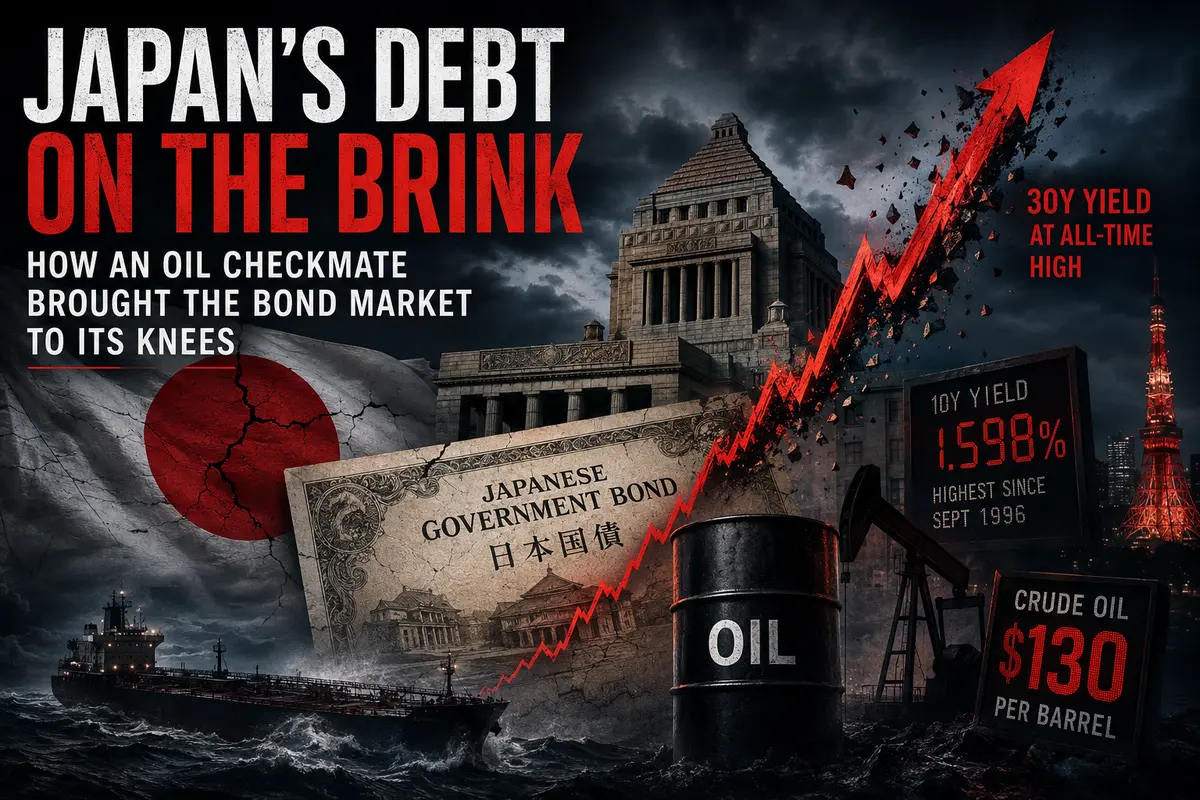
Japan’s Debt on the Brink: How an Oil Checkmate Brought the Bond Market to Its Knees

Japan’s Debt on the Brink: How an Oil Checkmate Brought the Bond Market to Its Knees

The global bond selloff, which two weeks ago looked like a chaotic stampede for the exits, has eased somewhat in recent days. But that does not mean the fire has been extinguished. Rather, the flames have spread elsewhere, and now the fiercest blaze is raging in a market that for decades was considered a bastion of stability. Japanese government bonds are facing a moment of truth. Yields on ten-year bonds have surged to levels unseen since September 1996 — an era when Bill Clinton was president of the United States and the word “smartphone” did not yet exist. Thirty-year bond yields have reached an all-time record high. And this is happening not just anywhere, but in Japan — a country that spent decades battling deflation and whose bonds seemed like a permanent refuge of calm. Now that refuge is beginning to crack.

The Reflation Trade: How a Longstanding Bet Ran Out of Steam

In recent years, Japan’s debt market has lived in a reality unlike that of other developed nations. While the Federal Reserve, the ECB, and the Bank of England fought inflation by raising interest rates, the Bank of Japan stubbornly maintained an ultra-loose monetary policy. This gave rise to the so-called “reflation trade” — investors betting that Japan would finally escape its deflationary spiral, inflation would begin to rise, and the central bank would eventually be forced to normalize policy. It was a profitable trade: Japanese bonds fell in price, yields crept higher, and traders made money.

But now, as Thomas Mathews of Capital Economics warns, that trade is nearing a critical point. “Most of the recent rise in yields has been benign,” he wrote in a recent note. In other words, the market had gradually priced in normalization, and that was considered a healthy process. But now,...

Continue reading...
0
0

X-Ray of a Deal: Why Asia’s Oldest Conglomerate Is Buying Australian Clinics

X-Ray of a Deal: Why Asia’s Oldest Conglomerate Is Buying Australian Clinics

Jardine Matheson is a name that, for most people, sounds like a fragment of colonial history — something from the era of sailing clippers, the Opium Wars, and British trading posts in Hong Kong. And that’s true. The conglomerate was founded in 1832, survived two world wars, decolonization, the handover of Hong Kong to China, and the digital revolution.

Now, nearly two centuries later, this patriarch of Asian capitalism is making a move that says more about its vision of the future than any annual report ever could. Jardine Matheson is acquiring I-MED Radiology Network, the largest diagnostic imaging network in Australia and New Zealand, for AUD 3.4 billion. And this deal is not simply the purchase of a healthcare business. It is a bet on the intersection of two megatrends: aging populations and artificial intelligence.

215 Clinics and 7 Million Procedures: What Jardine Is Buying

I-MED is not a garage startup. It is one of the largest providers of diagnostic imaging services in Australia and New Zealand. Two hundred and fifteen clinics spread across two countries. Seven million medical procedures annually. MRI scans, CT scans, X-rays, ultrasounds, mammography — everything that allows doctors to look inside the human body without a scalpel. This is not just a medical business; it is healthcare infrastructure embedded in the daily lives of millions of people.

When Jardine Matheson buys a network like this, it is not merely purchasing a revenue stream. It is buying predictable, growing demand. Populations in developed countries are aging. The older people become, the more diagnostic imaging they require. Cancer, cardiovascular disease, neurological disorders, injuries — all of these conditions depend on imaging. And this trend is irreversible. No recession, no crisis can change the fact that people will continue to age and get sick. Which means demand...

Continue reading...
0
0

Tokyo Records and an Oil Pullback: How Asian Markets Are Celebrating Hopes for Peace

Tokyo Records and an Oil Pullback: How Asian Markets Are Celebrating Hopes for Peace

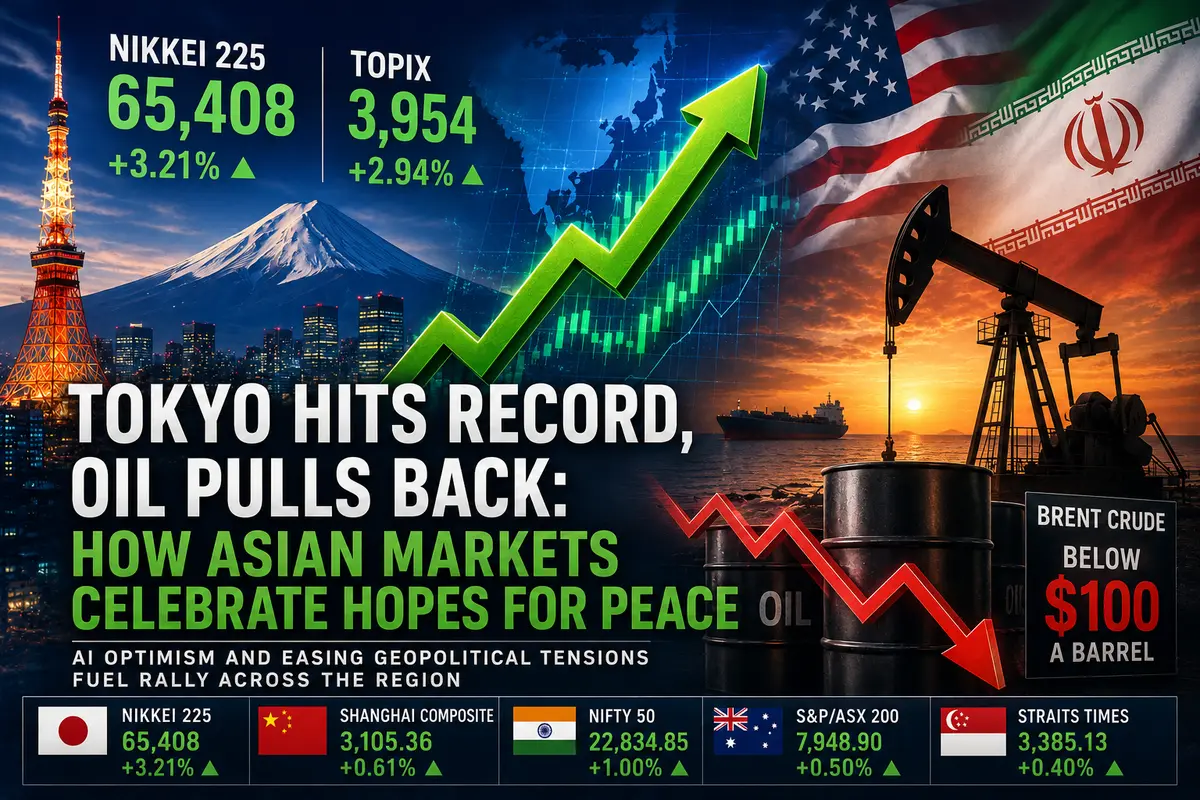
Monday began on Asian stock exchanges in a way not seen for a very long time. Japan’s Nikkei 225 soared to the skies, hitting a fresh all-time high of 65,408 points. The TOPIX followed closely behind, also rewriting the record books. Chinese indexes moved higher. Australia, Singapore, and India all painted their screens green. And all of this unfolded against the backdrop of a U.S. market holiday, with the world’s biggest players absent from their desks. Left to themselves, Asian markets staged a rally driven by the intersection of two powerful forces: renewed optimism surrounding artificial intelligence and hopes for an end to the Iran conflict.

Tokyo Records: When the Nikkei Storms the Heavens

Japan’s stock market traded on Monday as if no global crisis existed. The Nikkei 225 gained more than three percent during the session, reaching a level that would have seemed фантастical just a year ago. TOPIX, the broader gauge of Japan’s economy, climbed to nearly 3,954 points, also setting a historic record. This was not merely growth — it was a display of strength.

The driving force behind Tokyo’s rally was shares of companies tied to semiconductors and artificial intelligence. Renesas Electronics and Rohm both surged by ten percent. This was not abstract optimism but a direct spillover from Wall Street, where U.S. semiconductor companies staged their own rally late last week after upbeat earnings and forecasts. Nvidia set the tone, and now Japanese suppliers and partners have picked up the baton.

Japan, long viewed as a fading economic power trapped in deflation, has suddenly found itself in an ideal position to profit from the AI boom. Japanese firms produce critical components for chips — substrates, chemicals, and precision equipment. No TSMC or Samsung factory can operate without them. And as global demand for computing power...

Continue reading...
0
0

Oil Crash: How a Single Trump Statement Wiped 5% Off the Price of a Barrel

Oil Crash: How a Single Trump Statement Wiped 5% Off the Price of a Barrel

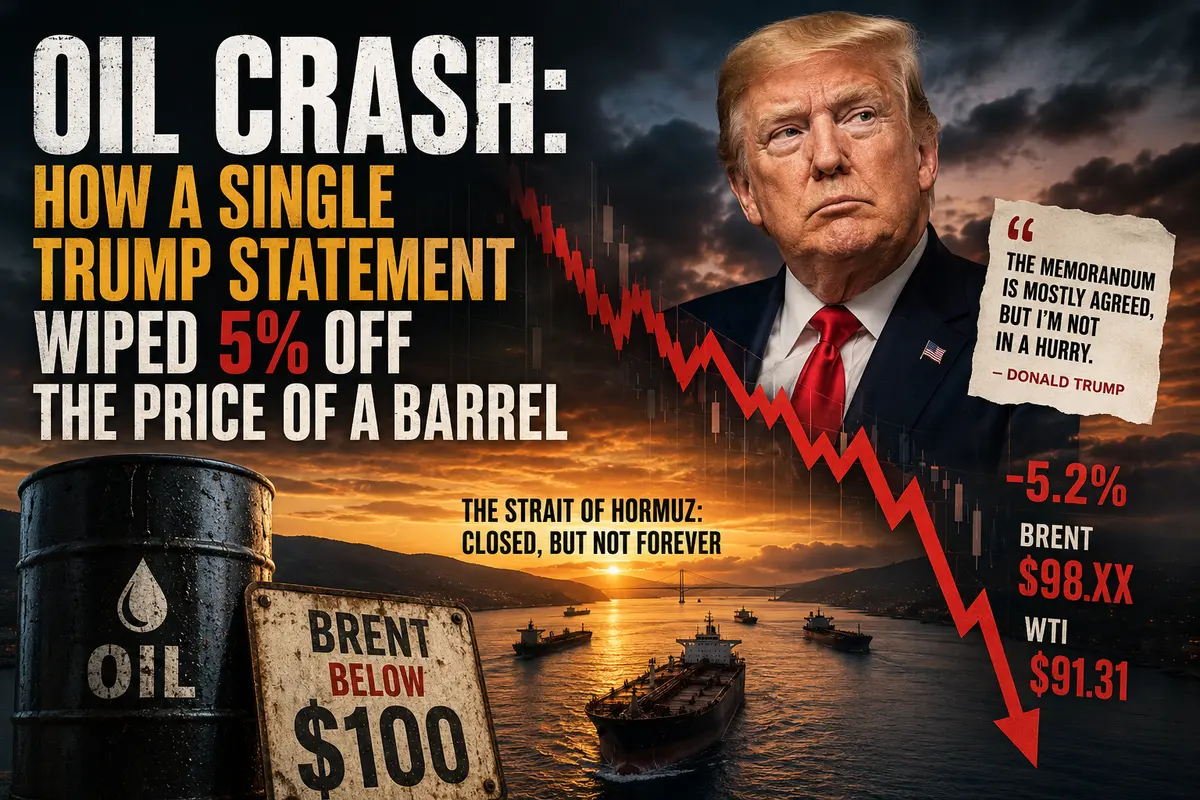
Monday morning on the oil markets began with a thunderclap out of a clear sky. But not the kind the world has grown used to over recent months — not explosions in the Strait of Hormuz, not missile strikes on tankers, not Trump’s threats to wipe Iran off the map. Quite the opposite. The thunder came from the prospect of peace. And that thunder hit oil prices with a force that neither diplomatic efforts nor market interventions had managed to achieve. Brent crude plunged below $100 per barrel, WTI broke through the $92 mark, and all of it happened within a single trading session. A five-percent drop — the kind of move usually associated with the start of a recession or the collapse of a cartel. But this time, the reason was different: hopes for the end of the most destructive oil crisis in decades.

The Psychological Threshold: $100 Falls

The $100-per-barrel mark for Brent is not just a round number. It is a psychological barrier separating “expensive but manageable oil” from “oil that kills economic growth.” The entire global infrastructure — from airlines to chemical plants, from farmers to taxi drivers — is built on the assumption that oil costs far less than $100. Once crude breaks above that level and stays there, business models begin to crack, inflation spirals accelerate, and central banks reach for loaded weapons.

Brent’s drop below $100 on Monday was not just another move on a chart. It was a signal to the market that the worst may be over. That the insane days when oil stormed past $110, $120, even $130 per barrel could be behind us. That the Strait of Hormuz, blocked by war, might reopen. That tankers stranded off the Iranian coast may finally begin moving again. That peace — fragile,...

Continue reading...
0
0

Golden Reversal: Why Hopes for Peace with Iran Sent Gold Prices Soaring

Golden Reversal: Why Hopes for Peace with Iran Sent Gold Prices Soaring

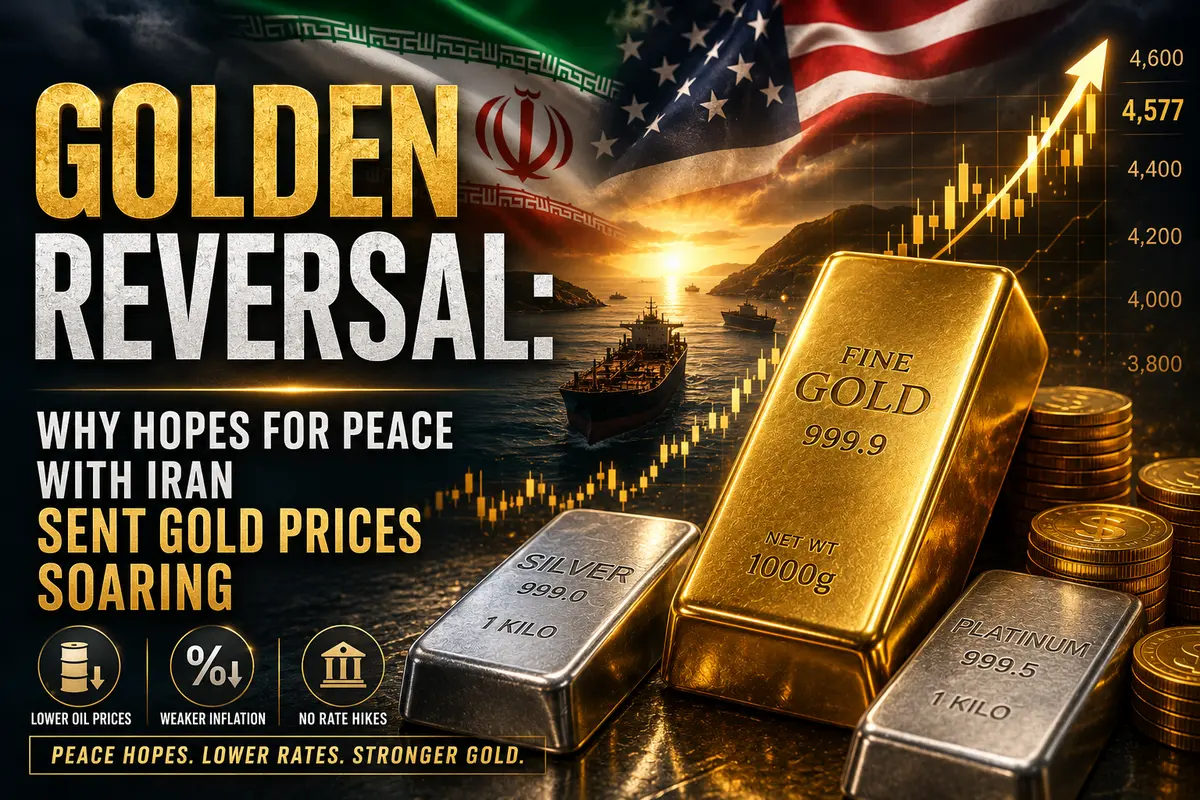
Monday’s Asian trading session delivered a surprise that many gold traders did not expect. Spot gold jumped by one and a half percent, reaching $4,577 per ounce. Futures followed, gaining 1.2% and climbing above $4,600. Silver posted an even more explosive move — up 3.8% in a single session. Platinum added 2%. The entire precious metals sector seemed to awaken from hibernation and surge higher. And the reason behind this rally was not fear or panic, but something entirely opposite — hopes for peace.

At first glance, this seems paradoxical. Gold is traditionally viewed as a safe-haven asset, a refuge during wars and crises. When the world descends into chaos, the yellow metal usually rises, and when peace appears on the horizon, it tends to fall. But today we are witnessing the opposite. The explanation lies in how the conflict with Iran has affected gold over recent months — not directly, but through a complex chain of macroeconomic consequences.

How War Suppressed Gold — and Why Peace Is Setting It Free

The war with Iran triggered an energy crisis. The disruption of shipping through the Strait of Hormuz pushed oil prices above $110 per barrel. Rising energy costs accelerated inflation worldwide. Higher inflation, in turn, forced the Federal Reserve and other major central banks to discuss raising interest rates. And it was this final link in the chain — the threat of higher rates — that became gold’s biggest enemy.

Gold does not generate income. It pays no dividends, no coupons, no interest. When interest rates rise, the opportunity cost of holding gold becomes enormous. Why hold bullion sitting in a vault when you can buy Treasury bonds and earn a guaranteed return? That logic has pressured gold for months. The war was raging, geopolitical risks were extreme, yet gold...

Continue reading...
0
0
Lin Brings

Peace as a Currency Driver: Why a Single Word from Trump Turned Asian Markets Upside Down

Peace as a Currency Driver: Why a Single Word from Trump Turned Asian Markets Upside Down

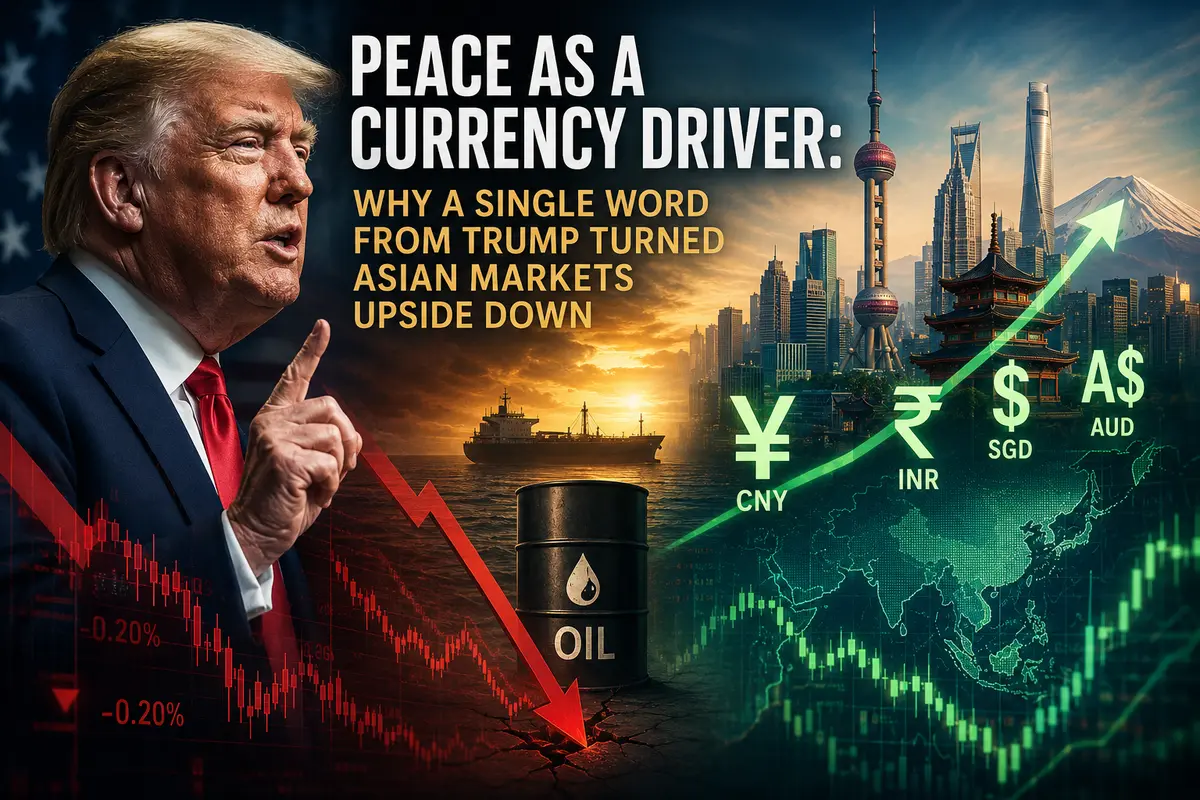
Monday on Asian currency markets began with a sight rarely seen in recent weeks — the dollar was retreating while currencies from Tokyo to Mumbai moved higher in unison. The U.S. dollar index slipped by two-tenths of a percent, and futures on the index fell by roughly the same amount. The move was modest, barely noticeable on the charts, but behind it stood a tectonic shift in sentiment. The reason was a few words spoken by Donald Trump over the weekend. Words that may have marked the beginning of the end of this year’s most destructive geopolitical crisis. And Asian currencies, being among the most sensitive barometers of global risk appetite, reacted instantly.

Trump the Peacemaker: “Largely Agreed”

Over the weekend, the U.S. president made a statement markets had been waiting months to hear. The United States and Iran had “largely agreed” on a framework deal to resolve the conflict. The key point was the resumption of shipping through the Strait of Hormuz — the very artery whose blockade had sent oil prices soaring and triggered a global chain reaction of inflation. Separate sources added further detail: Iranian and Pakistani mediators also reported progress. The picture looked almost idyllic.

But Trump would not be Trump without adding a note of uncertainty to the optimism. Almost immediately after the encouraging statement, he clarified that he was in no hurry to finalize a deal. Iran, for its part, largely rejected U.S. demands regarding the transfer of enriched uranium stockpiles — one of the most contentious points in the negotiations. Contradictory signals, mixed messages, swings between hope and skepticism. Classic Trump diplomacy, in which no one knows until the very last moment whether an agreement will be signed or another escalation will follow.

Still, markets exhausted by months of uncertainty chose to focus...

Continue reading...
0
0
Tom Maffin

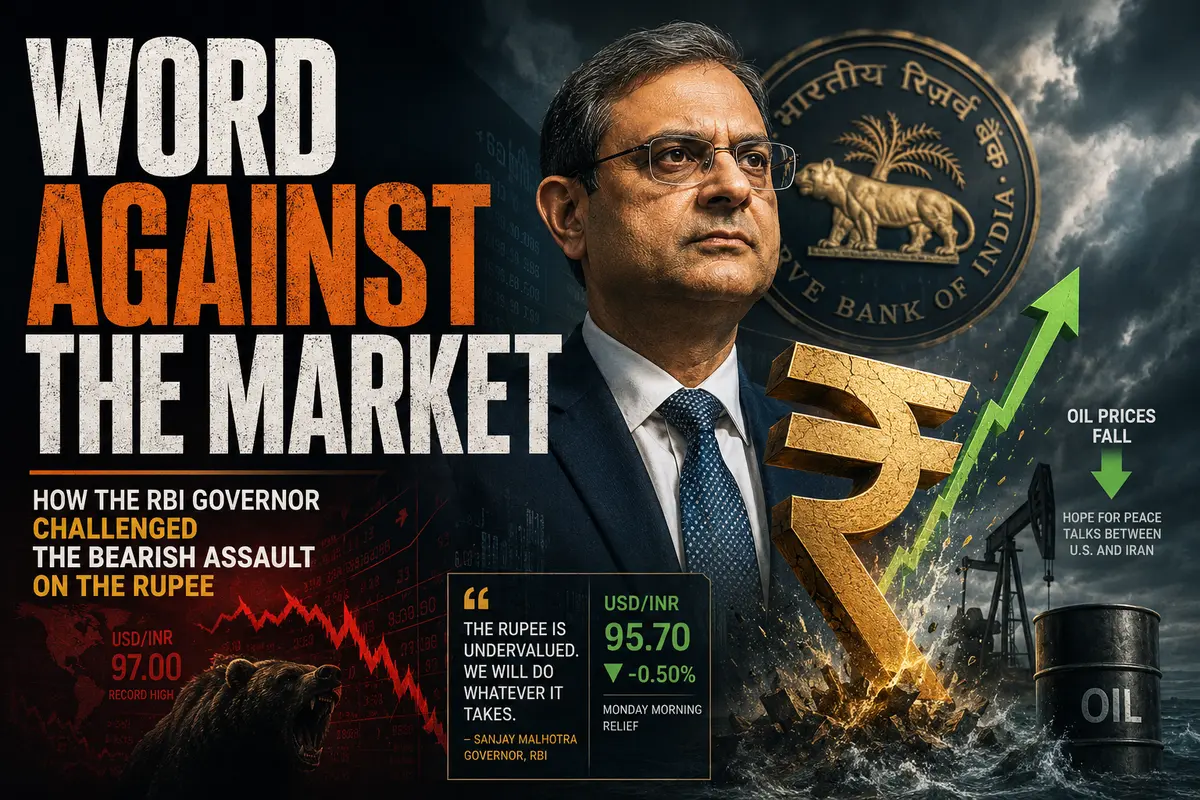
Word Against the Market: How the RBI Governor Challenged the Bearish Assault on the Rupee

Word Against the Market: How the RBI Governor Challenged the Bearish Assault on the Rupee

Monday morning on India’s currency market began with the very thing everyone — from oil importers to owners of street stalls selling imported goods — had been desperately waiting for. The rupee, which only on Friday had been staring into the abyss near the 97-per-dollar mark, suddenly reversed course and began to climb. The USD/INR pair fell by half a percent to 95.70 — a move that may seem modest after weeks of relentless decline, yet one whose psychological significance can be compared to the first breath of air for a drowning man. And the reason for this reversal was neither market forces nor global macroeconomic shifts. The reason was a man. One man who uttered a few sentences in an interview with the newspaper Mint.

Malhotra Steps Into the Ring: “The Rupee Is Undervalued, and We Will Do Whatever It Takes”

Sanjay Malhotra, governor of the Reserve Bank of India, is not known for making blunt public statements. Central bankers usually speak in shades, hints, and carefully crafted phrases whose interpretation has become a profession of its own. But this time, Malhotra seemed to cast diplomacy aside. His statement rang out like a gong: the rupee is undervalued. The RBI will do whatever is necessary to prevent further weakening of the currency.

“Whatever is necessary” is not a phrase central bankers throw around lightly. It is a signal that traders call a verbal intervention. And when it comes from the man controlling the foreign exchange reserves of the world’s seventh-largest economy, the market has no choice but to listen. Because words may be followed by action. And judging by recent developments, they already have been — last week the RBI actively intervened, steering USD/INR away from record highs. Malhotra made it clear these interventions were not a one-off operation,...

Continue reading...
0
0
NorthRay

I Tried to Buy Apple at 3 AM… and Learned the Stock Market Isn’t Open 24/7 (That’s Why I Opened SPX Instead)

I Tried to Buy Apple at 3 AM… and Learned the Stock Market Isn’t Open 24/7 (That’s Why I Opened SPX Instead)

Hey, this is NorthRay.💪

Remember how I said I was going to open a trade on Apple?

Well… I tried. Honestly.

I spent the evening watching the AAPL chart, preparing, analyzing everything. But I decided to wait until morning so I’d be fresh.

I wake up at 8 AM Moscow time. Open the terminal. Click on Apple.

…Nothing.

The chart is frozen. The price isn’t moving. The Buy and Sell buttons are greyed out.

My first thought was: “That’s it. I got blocked. The broker is dead. The internet broke.”

And then it hit me.

The U.S. stock market was asleep.

At 8 AM Moscow time, it’s still the middle of the night on Wall Street. The exchange wouldn’t open for several more hours.

That’s how I learned markets operate on different schedules.🤐

My New Trade: SPX Sell

I had to postpone Apple. But I couldn’t just sit there doing nothing.

So I checked which instruments were available at that moment. I saw SPX (the S&P 500 index — basically a basket of 500 major U.S. companies).

Unlike Apple, SPX is available for trading almost 24 hours a day with many brokers (through CFDs — contracts for difference). So I was able to open a trade in the morning.🤥

What I did:

Instrument: SPX (S&P 500 Index)

Type: Sell

Volume: 0.10 lot

Stop-loss and take-profit: Set (of course)

Why Sell: The market looked overbought to me, and after yesterday’s rally I expected a pullback

The trade is still open. No result yet. We’ll see what happens.

The Biggest Lesson This Week: Markets Operate on Different Schedules

I used to think trading was basically 24/7. Sit down whenever you want and trade.

Turns out… not exactly.🧐

Forex (Currency Pairs) — Almost 24 Hours

The Forex market operates 24 hours a day,...

Continue reading...
0
0

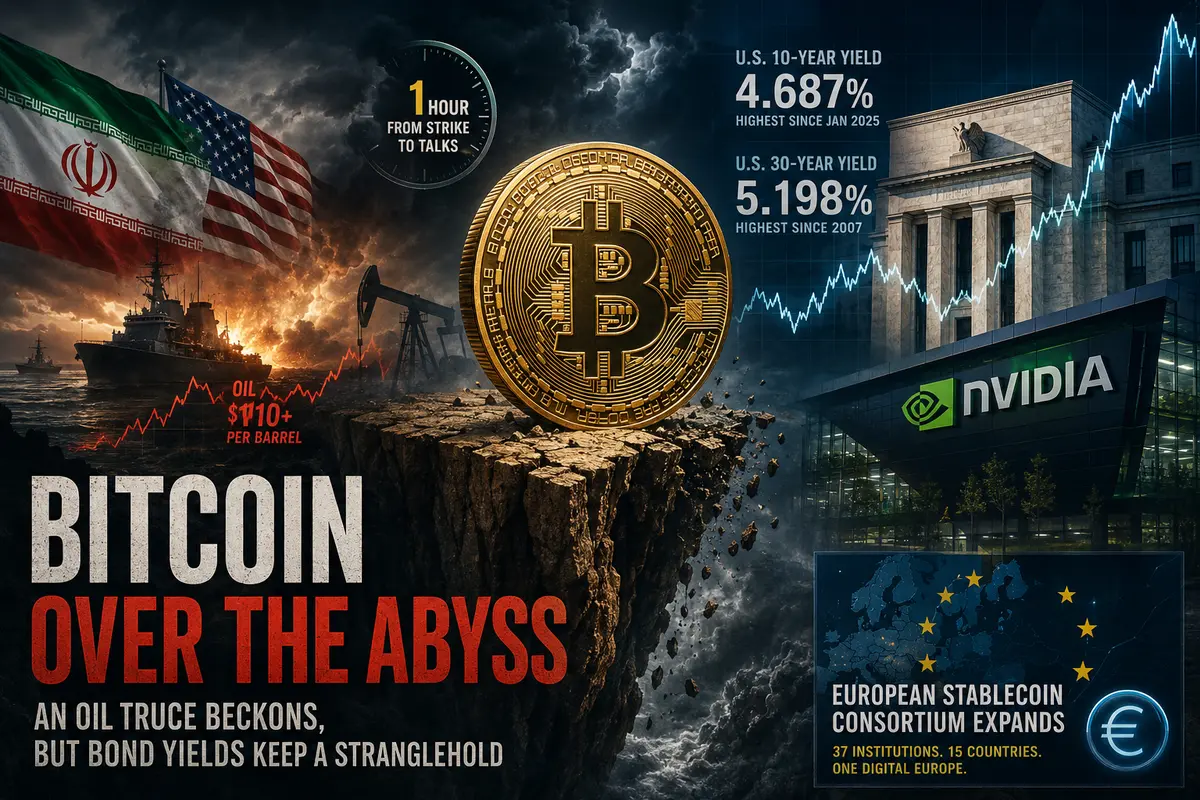
Bitcoin Over the Abyss: An Oil Truce Beckons, but Bond Yields Keep a Stranglehold

Bitcoin Over the Abyss: An Oil Truce Beckons, but Bond Yields Keep a Stranglehold

Seventy-seven thousand one hundred twenty-seven dollars. On Wednesday evening, Bitcoin hovered at that mark, gaining a symbolic four-tenths of a percent for the session. A move that, in normal times, wouldn’t even make the news feed now tells an entire story. A story about how the world’s leading cryptocurrency is trying to find solid ground after being rejected from the coveted eighty-two-thousand-dollar level and thrown back into the abyss of uncertainty. And that abyss is lined not with technical failures or regulatory fears, but with old-fashioned macroeconomic forces — Treasury yields, oil prices, and geopolitical swings orchestrated personally by Donald Trump.

The Iranian Pendulum: From Bombs to Negotiations in Sixty Minutes

Trumpian diplomacy is always theater, and the current Iranian drama is no exception. On Tuesday, the U.S. president made a statement that left traders breathless. He admitted he was “an hour away” from authorizing another military strike against Iran. One hour. Sixty minutes separated the world from another escalation in the Persian Gulf, another spike in oil prices, another wave of inflation, and, as a consequence, another collapse in risk assets, including cryptocurrencies. But the strike was postponed. Trump decided to give diplomacy one more chance.

The admission was a masterful rhetorical maneuver. At the same time, Trump portrayed himself as both a decisive leader ready to press the button and a prudent peacemaker who prefers negotiations over war. For markets, this creates an explosive mixture of hope and fear. Hope that the conflict may genuinely be moving toward resolution. Fear that the entire structure could collapse at any moment. Vice President J.D. Vance added fuel to the fire by declaring that the United States would remain “ready for combat” if negotiations fail. A double signal: we believe in peace, but our hand remains on the trigger.

For Bitcoin,...

Continue reading...
0
0
Navigation menu
instaforex banner