
Japan’s Debt on the Brink: How an Oil Checkmate Brought the Bond Market to Its Knees
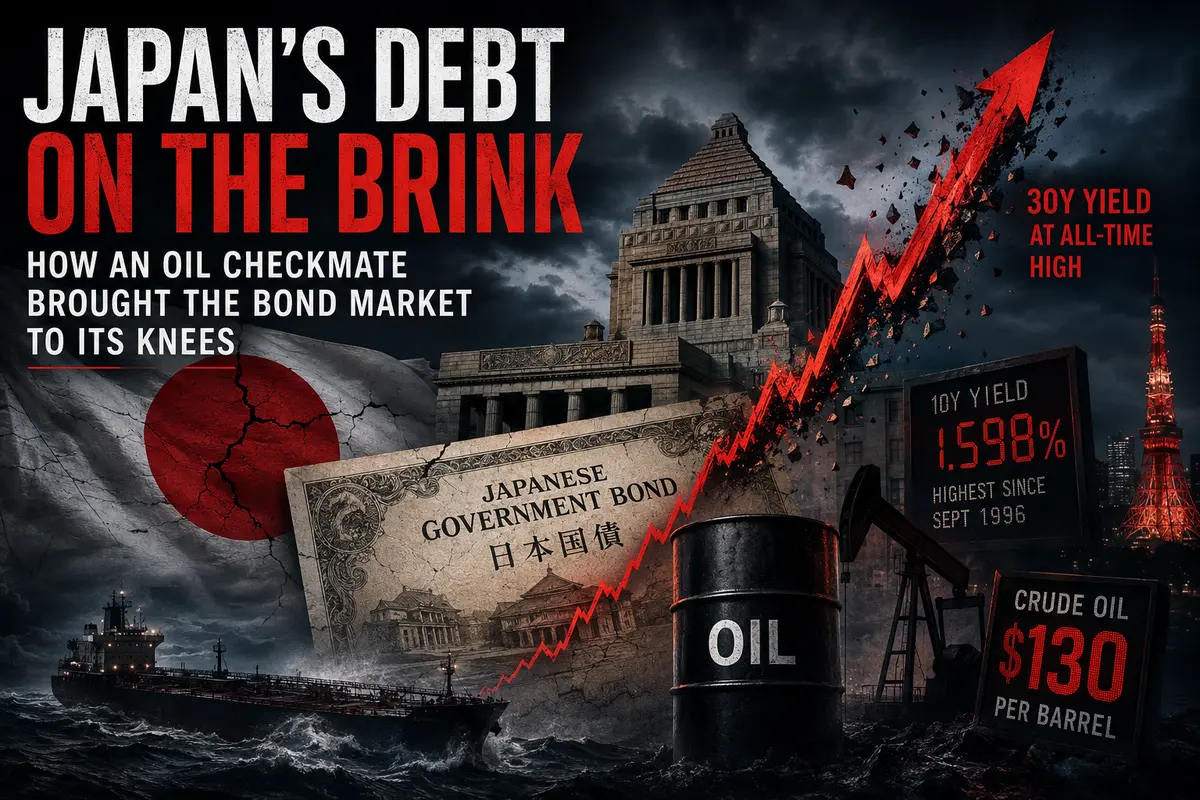
The global bond selloff, which two weeks ago looked like a chaotic stampede for the exits, has eased somewhat in recent days. But that does not mean the fire has been extinguished. Rather, the flames have spread elsewhere, and now the fiercest blaze is raging in a market that for decades was considered a bastion of stability. Japanese government bonds are facing a moment of truth. Yields on ten-year bonds have surged to levels unseen since September 1996 — an era when Bill Clinton was president of the United States and the word “smartphone” did not yet exist. Thirty-year bond yields have reached an all-time record high. And this is happening not just anywhere, but in Japan — a country that spent decades battling deflation and whose bonds seemed like a permanent refuge of calm. Now that refuge is beginning to crack.
The Reflation Trade: How a Longstanding Bet Ran Out of Steam
In recent years, Japan’s debt market has lived in a reality unlike that of other developed nations. While the Federal Reserve, the ECB, and the Bank of England fought inflation by raising interest rates, the Bank of Japan stubbornly maintained an ultra-loose monetary policy. This gave rise to the so-called “reflation trade” — investors betting that Japan would finally escape its deflationary spiral, inflation would begin to rise, and the central bank would eventually be forced to normalize policy. It was a profitable trade: Japanese bonds fell in price, yields crept higher, and traders made money.
But now, as Thomas Mathews of Capital Economics warns, that trade is nearing a critical point. “Most of the recent rise in yields has been benign,” he wrote in a recent note. In other words, the market had gradually priced in normalization, and that was considered a healthy process. But now,...