Bar Pipa
We pay for a post of 10$

United States

The Euro’s Role in the World Remains Stable Despite Uncertainty

The Euro’s Role in the World Remains Stable Despite Uncertainty
The Alternative That Never Became an Alternative

There was something almost tragicomic about it. Throughout 2024, analysts, economists, and geopolitical observers kept wondering: surely this is the moment when the euro finally makes its move.

The United States pursued such an unpredictable economic policy that even its own allies were left bewildered. Trade wars, abrupt policy reversals, public disputes within the administration—a perfect storm that should have pushed the world to look for an alternative to the dollar.

And that alternative already had a name: the euro. The world’s second-largest reserve currency. The natural contender for the throne.

But the world, as it often does, refused to behave as experts expected. It did not rush into the arms of the euro. In fact, it did not rush toward any single currency at all. Instead, investors, central banks, and major funds cast their votes for something else entirely: gold—and the currencies of small, often overlooked countries.

The euro remained roughly where it had always been, holding a share of about 20% of the global market.

These are not rumors or speculation. The figures were published on Tuesday by the European Central Bank (ECB) in its latest report. And, frankly, the numbers make for rather disappointing reading from a European policymaker’s perspective.

Because 20% is not bad. But it is not progress either. It is stagnation. And perhaps most frustrating of all, the euro’s current share remains below the level it enjoyed twenty years ago, in the early years of its existence.

Numbers That Don’t Lie

Let’s dispense with euphemisms. Twenty percent is not a commanding second place. It is a frozen picture.

The euro is neither growing nor shrinking. It is holding the line.

At first glance, given reports that the dollar is also losing ground, this could be framed as...

Continue reading...
0
0
Lin Brings

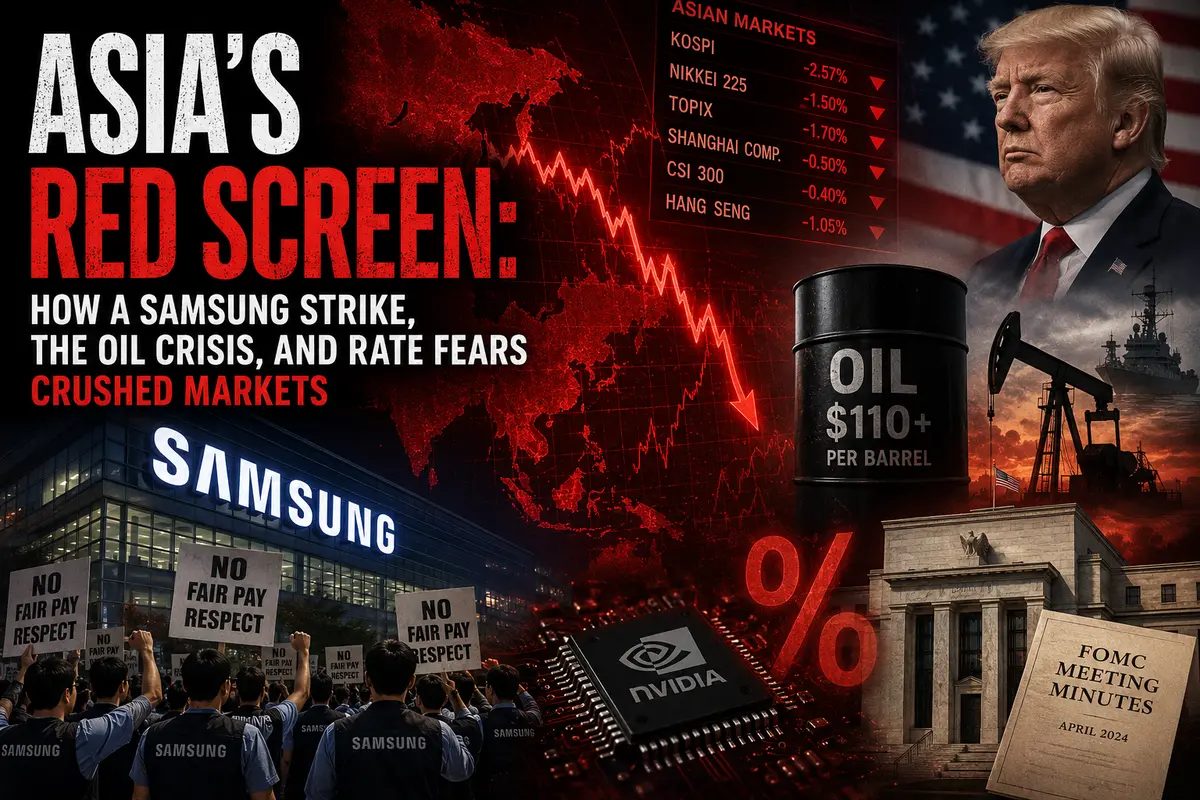
Asia’s Red Screen: How a Samsung Strike, the Oil Crisis, and Rate Fears Crushed Markets

Asia’s Red Screen: How a Samsung Strike, the Oil Crisis, and Rate Fears Crushed Markets

Asian markets were painted deep red on Wednesday — and this was no mild correction. It was a full-scale selloff, triggered by a wave from Wall Street and intensified by local disasters. Three consecutive sessions of declines in U.S. indexes, a collapsing tech sector dragging everything else down with it, and South Korea’s KOSPI plunging more than two and a half percent to lead regional losses. This is what happens when several storms converge at one point: geopolitics pushes oil higher, oil fuels inflation, inflation drives interest rates up, and higher rates crush technology stocks. And in the middle of all this sits Samsung’s own drama, adding another canister of fuel to an already raging fire.

KOSPI and Samsung: When a Labor Dispute Becomes a Systemic Risk

South Korea’s KOSPI didn’t just fall — it collapsed, and the main culprit was the company that for decades symbolized national pride. Shares of Samsung Electronics, which erased early gains and plunged more than four percent, dragged the entire index down with them. The breakdown of negotiations with the labor union, reported by Yonhap, became exactly the trigger the market feared but hoped until the last moment to avoid.

The strike scheduled for Thursday, May 21, now looks almost inevitable. Forty-eight thousand workers, eighteen days of potential shutdowns, and no sign that the two sides will reach an agreement in time. For investors, this means an immediate repricing of risk. Samsung is not just another stock in the index — it is the pillar supporting a substantial portion of the Korean market’s capitalization. When that pillar shakes, the whole building trembles. The KOSPI’s drop of more than two and a half percent reflects growing recognition that Samsung’s problems may not be a short-term incident, but the beginning of a prolonged conflict with unpredictable...

Continue reading...
0
0
Navigation menu