

Bar Pipa
We pay for a post of 10$
Vanguard PRIMECAP Core Fund

Vanguard PRIMECAP Core Fund

VPCCX NASDAQ

$46.80
-0.49%

Key Statistics

Market Cap
$18.47 B
Open
$46.80
Day Range
46.80 - 46.80
52W Range
36.05 - 50.00
Price AVG 50
$47.18
Prev Close
$47.03

About Vanguard PRIMECAP Core Fund

The Vanguard PRIMECAP Core Fund operates with a long-term vision, remarkably low portfolio turnover, and a consistently applied investment methodology, echoing the philosophy of its sister fund, PRIMECAP. Where it diverges from its sibling PRIMECAP, which exclusively seeks growth stocks, is its balanced approach, investing in companies that display both value and growth characteristics. Investors should be aware of a potential concentration risk, as the fund may heavily weight its portfolio in particular sectors, notably technology and healthcare. This concentrated exposure can lead to short-term performance volatility, particularly when these key sectors are either booming or lagging. For long-term investors seeking to enhance an already diversified portfolio, this fund could be an ideal complementary holding.

Asset Type: Common Stock
Sector: Financial Services
Industry: Asset Management

Discussion

Authentication Required

You must be logged in to post a comment.

Big Pip

Who is a Shareholder: Fundamentals of Corporate Ownership in the Global Economy
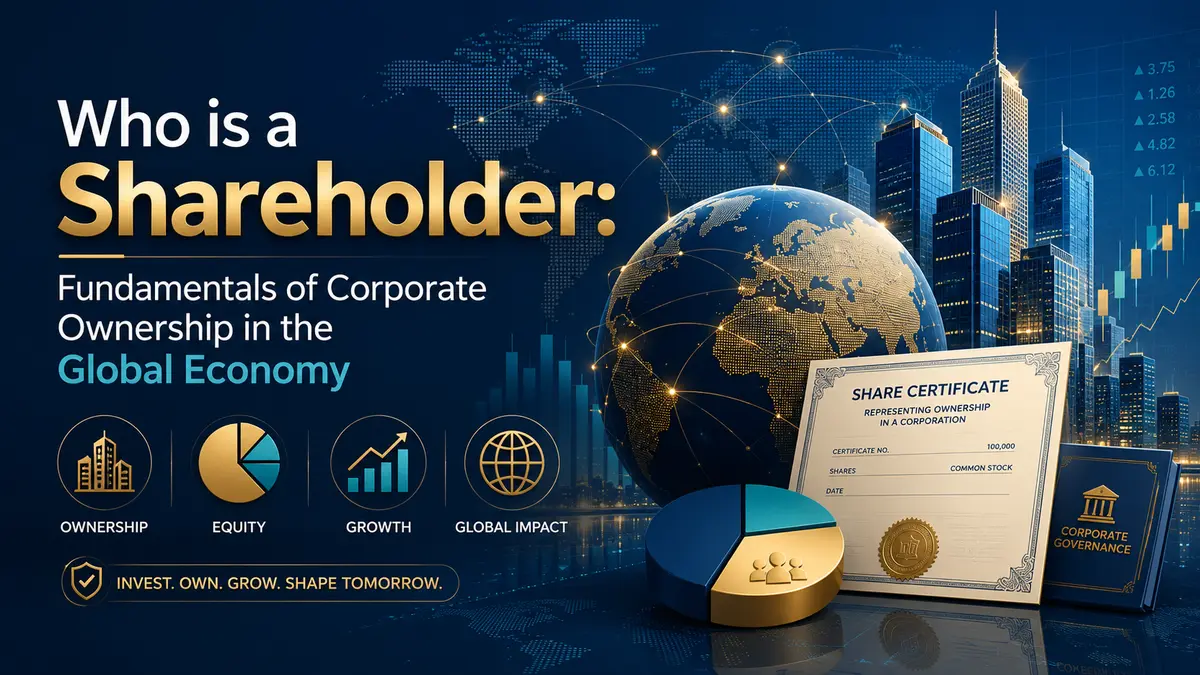
Who is a Shareholder: Fundamentals of Corporate Ownership in the Global Economy

When you purchase a stock in a company — whether it is a single share of a tech giant like Apple AAPL ... or a massive block of a consumer staple like Nestlé NSRGF ... — you are doing something much deeper than placing a financial bet. You are legally step-typing into the role of a co-owner.

A shareholder (often referred to as a stockholder) is an individual, corporation, or institution that legally owns at least one share of a company’s capital stock.

Collectively, shareholders are the bedrock of the modern capitalist economy. They provide the equity capital that businesses need to innovate, scale, and navigate global markets, and in return, they receive a claim on the company’s future prosperity.

Understanding the delicate balance of power, rights, and duties that define a shareholder is key to understanding how global corporations are governed and how wealth is generated on the world stage.

1. Shares: The Mechanics of Fractional Ownership

To fully appreciate what a shareholder is, we must first look at the financial instrument that binds them to the corporation: the share.

What Do Shares Actually Represent?

A share is a financial security that represents a fraction of ownership in a corporation. When a business incorporates, its total value is partitioned into millions — or sometimes billions — of tiny, equal pieces.

For instance, a company like Microsoft MSFT ... has billions of outstanding shares traded on the Nasdaq. When an investor buys Microsoft shares, they do not own the actual physical desks, servers, or patents of the company directly. Instead, they own a slice of the legal corporation itself, which in turn owns those assets.

This distinction is crucial because of limited liability — one of the most revolutionary concepts in economic history.

What is Limited Liability? If a public corporation goes bankrupt...

Continue reading...
0
0
Big Pip

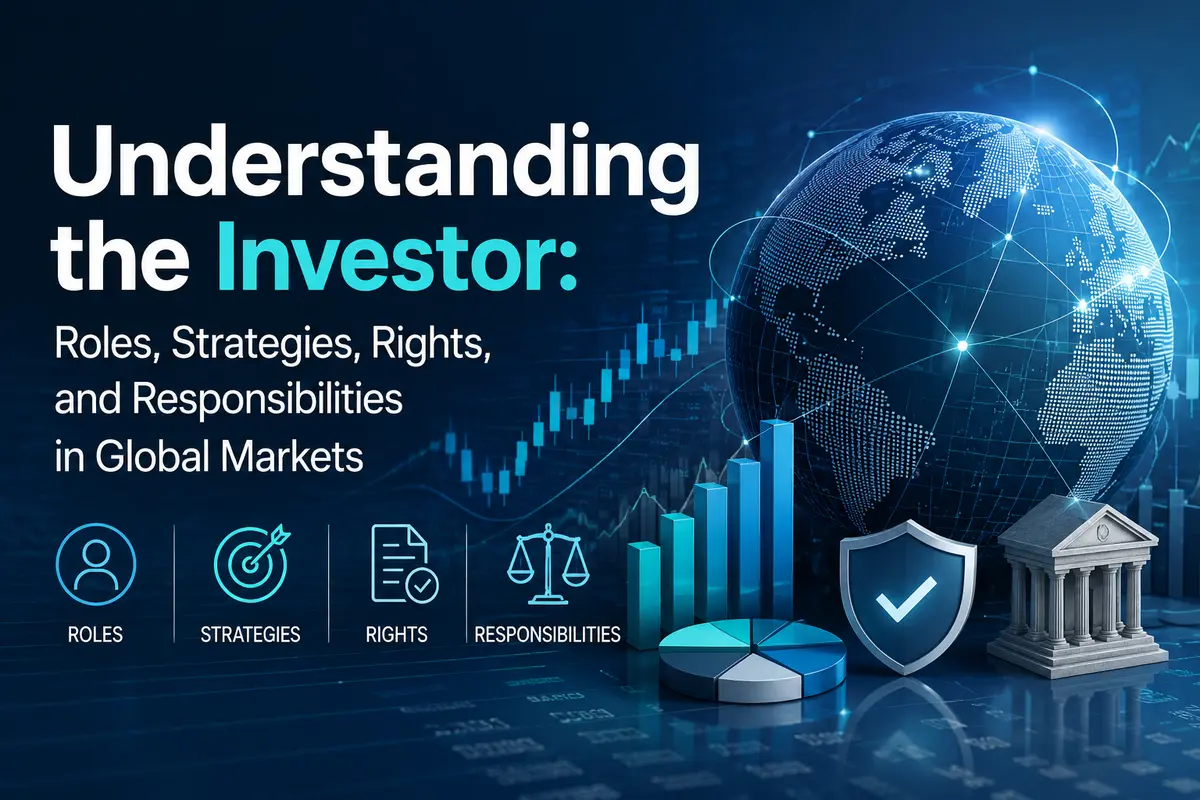
Understanding the Investor: Roles, Strategies, Rights, and Responsibilities in Global Markets

Understanding the Investor: Roles, Strategies, Rights, and Responsibilities in Global Markets

An investor is an individual or an entity that allocates financial capital with the primary expectation of generating a future financial return. In essence, investors act as the lifeblood of the global capitalist economy. By committing funds to various assets, they provide the necessary liquidity and capital that businesses, startups, and governments need to innovate, scale, and build infrastructure.

The landscape of modern investing spans a massive spectrum of asset classes, from traditional equities and fixed-income securities to global real estate, venture capital, and digital assets. Regardless of their scale, all investors operate under a fundamental economic principle: balancing risk against potential reward.

1. The Spectrum of Investors: From Retail to Institutional Giants

Not all investors are created equal. The global financial markets are shaped by a diverse array of participants, each possessing distinct capital structures, regulatory boundaries, and investment objectives.

Retail Investors: The Power of the Individual

Retail investors are individual, non-professional market participants who invest their personal savings. Historically, retail investors were limited by high brokerage fees and information asymmetry. However, the digital revolution and the rise of zero-commission platforms like Charles Schwab, Robinhood, and eToro have democratized access to Wall Street, London, and Tokyo exchanges.

Retail investors often invest for personal milestones — such as retirement planning through accounts like a 404(b) or an IRA, funding education, or buying property.

While individual retail accounts may be small, their collective power can influence market sentiment and drive significant liquidity into popular consumer brands like Apple AAPL ... , Microsoft MSFT ... , or Nvidia NVDA ... .

Institutional Investors: The Heavyweights of Wall Street

Institutional investors are highly specialized organizations that pool massive amounts of capital from millions of individual clients or taxpayers to invest on a grand scale. Because they execute trades worth hundreds of millions of dollars, their market...

Continue reading...
0
0
Big Pip

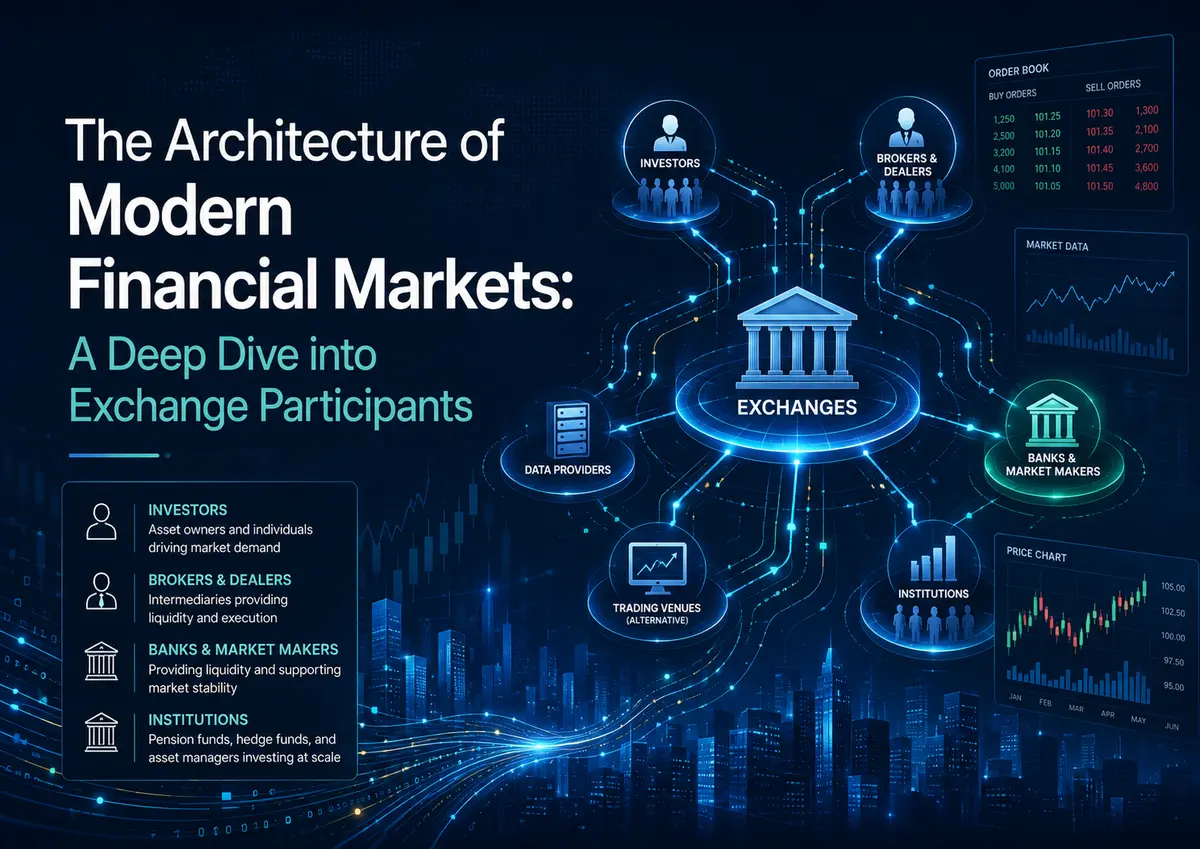
The Architecture of Modern Financial Markets: A Deep Dive into Exchange Participants

The Architecture of Modern Financial Markets: A Deep Dive into Exchange Participants

In its simplest terms, a financial exchange is not just a digital platform or a physical building in New York, London, or Tokyo. It is a highly regulated, living ecosystem where trillions of dollars change hands daily. For this ecosystem to function seamlessly, several distinct groups of participants must interact with one another.

Each player — from the individual trading on their smartphone to massive sovereign wealth funds — has a unique role, risk tolerance, and objective.

Understanding who these participants are and how they collaborate is the first step to understanding how the global economy allocates resources and prices risk.

1. Investors: The Providers of Capital

At the very heart of any exchange are the investors. These are the individuals and entities who supply the capital that fuels global business. Their primary objective is simple: to preserve and grow their wealth over time. However, their strategies, timelines, and scale vary drastically.

Retail Investors: The Democratization of Finance

Retail investors are individual, everyday people investing their personal savings. In the past, high brokerage fees and complex systems kept retail investors on the sidelines of global markets. Today, the rise of digital trading platforms like Robinhood in the US, eToro in Europe, and Tiger Brokers in Asia has democratized access to the markets.

Retail investors often focus on long-term wealth accumulation — such as saving for retirement or a child's education — though a subset engages in active daily trading. They typically invest in familiar global brands like AAPL ... , MSFT ... , or TSLA ... , and use user-friendly instruments like fractional shares (buying a portion of a high-priced stock).

Institutional Investors: The Market Heavyweights

Institutional investors are the massive organizations that pool money from millions of people to invest on a grand scale. Because of the sheer volume of capital they...

Continue reading...
0
0
Big Pip

The Global Brokerage Landscape: A Comprehensive Guide to Market Intermediaries

The Global Brokerage Landscape: A Comprehensive Guide to Market Intermediaries

Introduction to Brokerage Services

Defining the Modern Broker

In the contemporary global financial ecosystem, a broker serves as an indispensable intermediary, executing transactions and providing critical infrastructure for clients across diverse asset classes. Historically operating on physical trading floors with chaotic hand signals, the modern broker has evolved into a highly sophisticated technological enterprise. Today's brokerage firms leverage high-frequency data feeds, complex algorithmic routing networks, and intuitive user interfaces to bridge the gap between individual or institutional investors and centralized marketplaces. Whether operating as an independent digital entity or as a specialized division within an international banking conglomerate, the fundamental mandate of a broker remains unchanged: to facilitate the efficient transfer of assets, risk, and capital under strict regulatory compliance.

The Importance of Intermediaries in Global Finance

Market intermediaries are foundational to the liquidity and efficiency of international capital markets. Without brokers, the search costs for finding a counterparty to buy or sell a specific asset would be prohibitively high, stalling economic activity. By pooling thousands of orders, brokers create deep reservoirs of liquidity, which in turn narrows bid-ask spreads and minimizes transaction costs for all market participants. Furthermore, brokers assume significant operational and counterparty risks, ensuring that transactions clear and settle smoothly according to standardized global protocols. In an interconnected global economy, they act as the gatekeepers of financial integrity, enforcing strict Anti-Money Laundering (AML) and Know Your Customer (KYC) regulations to prevent illicit capital flows and maintain systemic stability.

Stock and Exchange Brokers (Equity and Commodity Intermediaries)

Core Functions and Order Execution

Stock and exchange brokers operate directly within organized public exchanges such as the New York Stock Exchange NYSX ... , NASDAQ, the London Stock Exchange LSEGY ... , and the Tokyo Stock Exchange (TSE). Their primary duty is the precise, rapid execution of client orders — ranging from...

Continue reading...
0
0
Navigation menu
instaforex banner