Bar Pipa
We pay for a post of 10$

Stock Exchange

John Madnes

The Collapse of a Sneaker Empire: How Topsports Lost Nike and Half a Billion in Market Value in a Single Day
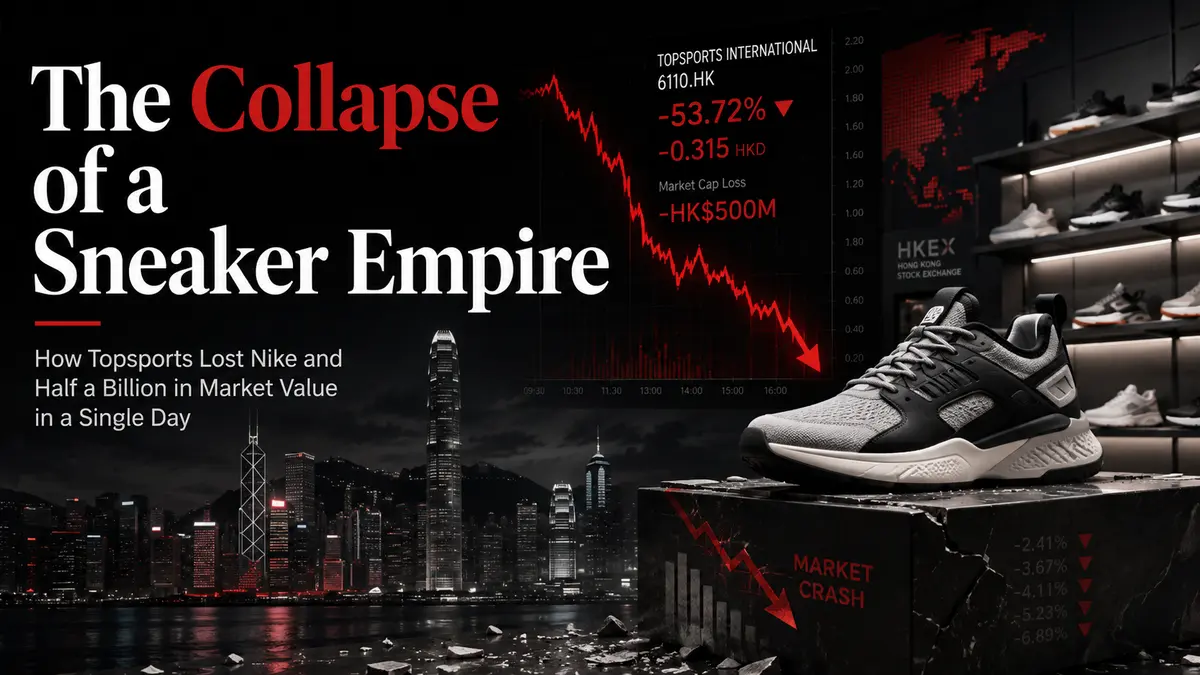
The Collapse of a Sneaker Empire: How Topsports Lost Nike and Half a Billion in Market Value in a Single Day

The Plunge That Shook the Hong Kong Stock Exchange

When trading opened in Hong Kong on 22.07.2026 Wednesday morning, no one expected such a nightmare. Shares of TPSRF ... International, one of China’s largest sportswear retailers, plunged 26.2% almost instantly, reaching an all-time low of HKDUSD ... HK$1.41.

This was not merely a market correction. It was a collapse that wiped out nearly a quarter of the company’s market capitalization within minutes. By the time the figures were recorded, the shares had recovered slightly but were still deeply in negative territory, down approximately 23.6% at HK$1.46. Traders stared at their screens in disbelief, repeatedly checking the data and wondering whether what they were seeing was real.

The reason for the collapse was as sudden as a lightning strike and as destructive as a tsunami. The previous evening, after the main trading session had closed, Topsports received an official notice from American sportswear giant NKE ... . Beginning on January 1, 2027, their long-standing partnership covering online sales in mainland China would be terminated completely.

Nike—the iconic Swoosh brand that had supported Topsports’ business for many years—had decided to sever its digital relationship with the retailer. A decision made quietly in corporate offices at Nike’s Oregon headquarters triggered a financial earthquake thousands of miles away in Hong Kong.

To understand the scale of the problem, online sales of Nike products accounted for approximately 22% of Topsports’ total revenue in the financial year that ended on February 28, 2026. This was not a small slice of the pie. It represented almost a quarter of the entire business.

Imagine that your primary supplier, responsible for nearly one in every four of your customers, suddenly tells you: “Starting next year, we will no longer work together in the same way.” News like that can destroy almost any...


Continue reading...
0
0

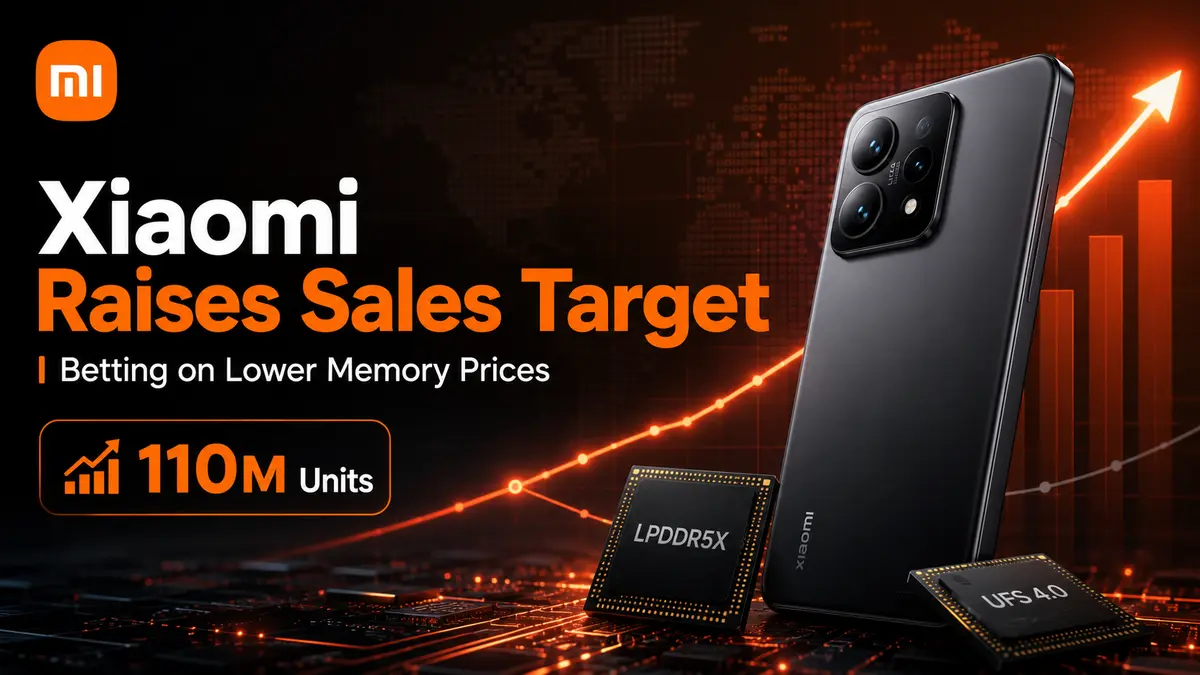
Xiaomi Raises Its Sales Target, Betting on a Reversal in Memory Prices

Xiaomi Raises Its Sales Target, Betting on a Reversal in Memory Prices

Tuesday: The Chinese Giant Surprises the Market

Chinese technology giant Xiaomi has made an unexpected move that has attracted the attention of the entire smartphone market. The company has raised its annual smartphone sales target from 90 million to 110 million units. This comes despite increasing pressure from high memory and other component prices, which have placed significant strain on manufacturers in recent months.

XIACY ... Xiaomi’s decision, reported by Chinese media outlet Jiemian News citing industry sources, appears bold. Earlier this year, the company lowered its target due to the negative impact of high memory prices. Management now believes that the worst is over and that the market is ready for a reversal.

According to the report, the higher sales target is based on Xiaomi’s internal assessment that the current rise in memory market prices is approaching its peak and could soon be followed by a decline. If this forecast proves accurate, Xiaomi will gain a double advantage: higher sales volumes and lower production costs.

Memory Prices: Drivers and Risks

The memory chip market is going through a highly volatile period. Demand for memory used in artificial intelligence applications has soared, absorbing a significant share of global production. Companies manufacturing memory chips for AI servers are generating exceptional profits, while smartphone manufacturers are being forced to compete with them for limited resources.

For Xiaomi and other smartphone manufacturers, this means higher component costs. Memory chips are among the most expensive and important components of a smartphone, and when their prices rise, manufacturers’ profit margins decline. Earlier this year, Xiaomi even lowered its shipment target for this very reason.

However, the company now believes that the situation is changing. According to Xiaomi’s estimates, the memory chip market is ready for a reversal. This may be related to several factors. First, memory...

Continue reading...
0
0

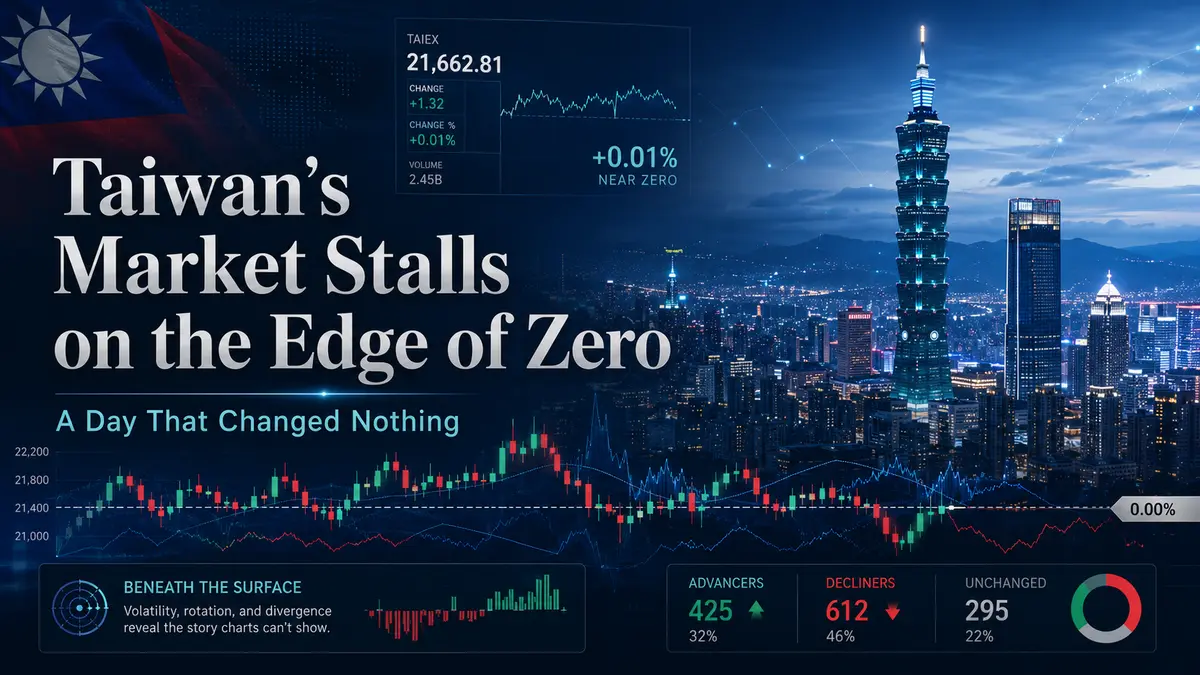
Taiwan’s Market Stalls on the Edge of Zero: A Day That Changed Nothing

Taiwan’s Market Stalls on the Edge of Zero: A Day That Changed Nothing

Friday on the Taiwan Stock Exchange: A Decline of Just Hundredths of a Percent

Taiwan’s stock market ended Friday’s trading session with an almost imperceptible move lower. The Taiwan Weighted Index lost just 0.01%—such an insignificant amount that it could easily be dismissed as a rounding error, were it not for the drama concealed behind it. This microscopic decline masked major sectoral shifts, record-breaking rallies in some stocks, and plunges to historic lows in others. In other words, it was a day when the market as a whole went nowhere, even though almost everything imaginable was happening beneath the surface.

Trading presented a classic picture of opposing forces. Shares in the glass manufacturing and plastics sectors dragged the market lower, while other industries attempted to keep it afloat. The battle ultimately ended in a draw, with the index remaining virtually unchanged. Yet behind this statistical tie was genuine chaos, as some companies soared while others plunged into the abyss. That was perhaps the most interesting feature of the day’s trading session.

The Top Three Performers: Who Pulled Ahead?

Against the backdrop of overall index stagnation, three companies posted impressive gains, with all three rising by exactly 10%. This may not have been a simple coincidence. Such synchronized performance suggests that common market factors were at work, or that the stocks simply reached their daily price increase limits at the same time.

Lee Chi Enterprises, a manufacturer of bicycle components, gained 1.10 points to close at 12.10. This 10% increase pushed the shares to new levels. The company, which specializes in producing bicycle parts, may have benefited from growing interest in green mobility or from the announcement of new contracts.

Giant Manufacturing, the internationally renowned bicycle producer, delivered an even more impressive move. Its shares climbed 8 points to 88.00, also...

Continue reading...
0
0

Rentokil Rises After Goldman Sachs Upgrade

Rentokil Rises After Goldman Sachs Upgrade

Introduction: The Tuesday When the Rats Retreated

Tuesday, London Stock Exchange. Shares of Rentokil Initial PLC, a company known across Britain — from housewives to restaurant owners — unexpectedly came back to life. While the FTSE 100 index remained almost unchanged, Rentokil rose by 2.1%, climbing to 453.5 pence per share. The reason behind the move was an upgrade from Goldman Sachs.

Goldman Sachs, one of the world’s leading investment banks, upgraded Rentokil to “Buy” from “Neutral” and raised its 12-month price target to 590 pence from 515 pence. This implies around 33% upside potential compared with the previous closing price. For investors, this is a signal that the pest control company, which has gone through a difficult period after acquiring Terminix, is finally beginning to recover.

So what has changed? The main factor is improving operating performance in North America, Rentokil’s largest market. After several years of instability related to the integration of Terminix, the company has begun to steadily restore organic growth. Goldman Sachs expects the business to return to mid-single-digit organic growth by 2027, narrowing the performance gap with industry rival Rollins.

The broker also noted that the suspension of the main Terminix integration work reduced operational disruptions, allowing management to focus on improving execution while gradually expanding margins. The group’s EBITA margin is expected to rise to 17.1% in 2027.

Let’s take a closer look at what is really happening with Rentokil, why Goldman Sachs upgraded the stock, and what this means for investors.

What Is Rentokil Initial and Why Does It Matter?

Pest Control and More

Rentokil Initial is not just a company that eliminates rats and cockroaches. It is a global giant in the hygiene and sanitation services sector, operating in dozens of countries around the world. Its services include pest control, workplace hygiene,...

Continue reading...
0
0
Lin Brings

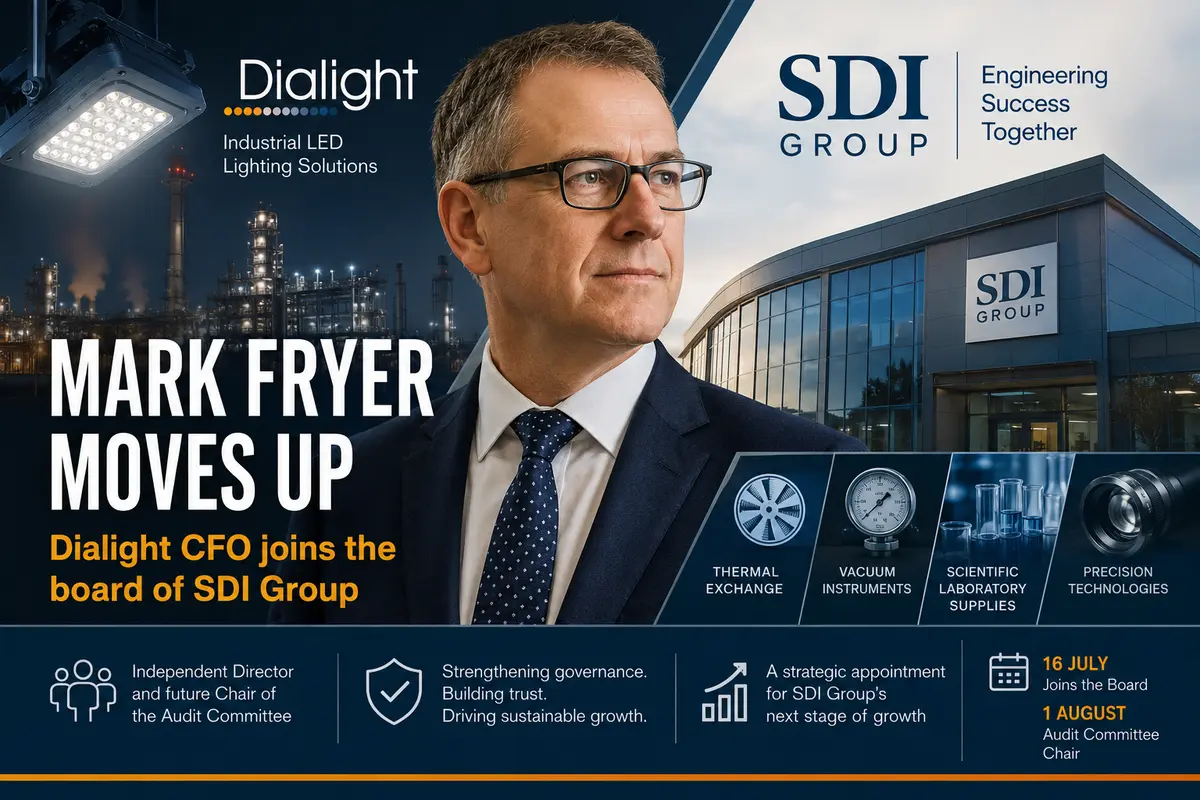
Mark Fryer Moves Up: Dialight CFO Joins the Board of SDI Group

Mark Fryer Moves Up: Dialight CFO Joins the Board of SDI Group

A Quiet Announcement That Speaks Volumes

In the world of finance and public companies, some headlines send stock terminals flashing and social media channels into overdrive. Others appear quietly in regulatory filings on a Friday evening or just before a long holiday weekend. Only those paying close attention understand that important developments often hide behind such silence.

The news that Mark Fryer, Chief Financial Officer of Dialight, will join the board of SDI Group belongs firmly in the second category. On the surface, it looks like a routine corporate appointment: a finance executive from one company joins the board of another. Such moves happen every day. But a closer look reveals a broader story about the state of British industry, the mechanics of corporate governance, and the way experienced executives move between companies, creating invisible networks of expertise and influence.

Dialight manufactures LED lighting systems for factories, oil platforms, airports, and ports. SDI Group is a holding company that owns several technology businesses producing scientific and industrial equipment. At first glance, they appear unrelated. Yet both operate in complex industrial environments, depend on global supply chains, face fluctuating raw-material costs, and require constant attention to operational efficiency. Mark Fryer has spent years navigating precisely these challenges at Dialight.

To understand why this appointment matters, it is worth examining who Fryer is, what the move means for both companies, and why investors should pay attention.

Who Is Mark Fryer, and Why Does SDI Group Want Him?

Mark Fryer is not a public celebrity executive. You are unlikely to find viral LinkedIn posts or newspaper interviews featuring him. He belongs to the type of finance professionals who prefer to speak through numbers rather than headlines. Yet these are often the people who keep companies afloat during difficult periods.

Fryer joined Dialight several...

Continue reading...
0
0
Lin Brings

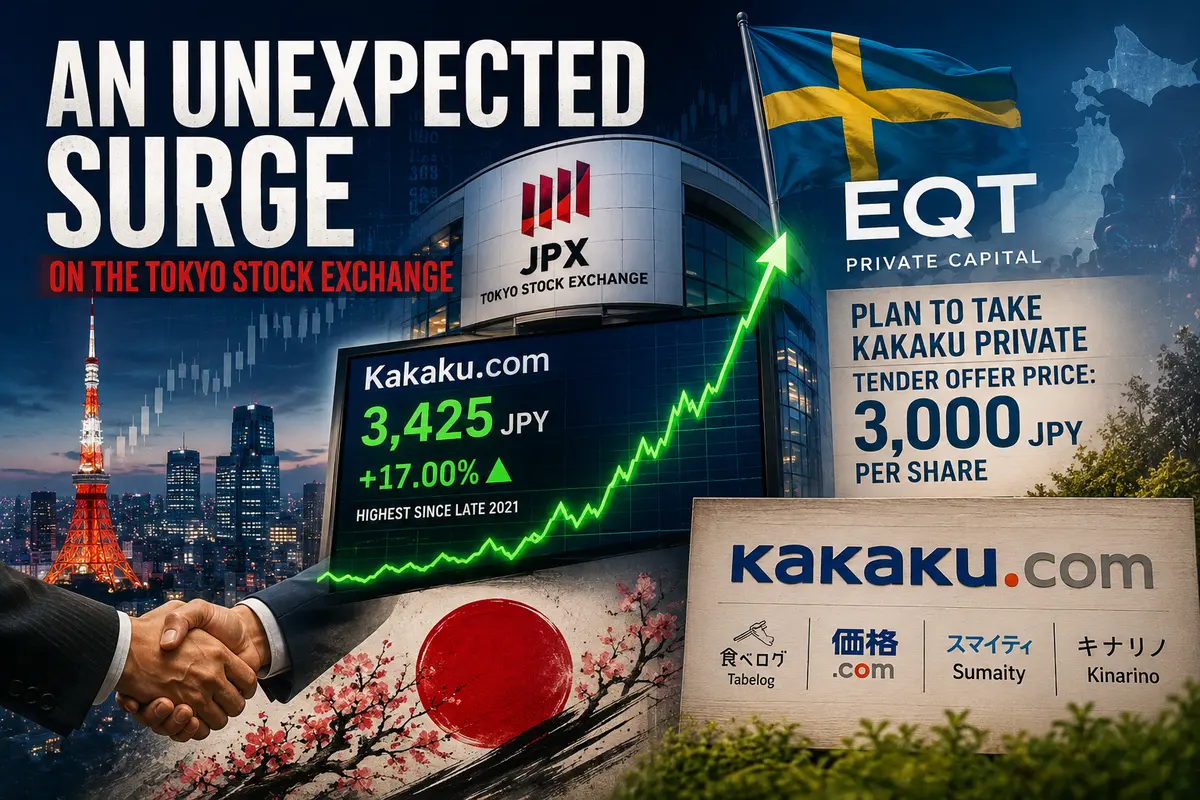
An Unexpected Surge on the Tokyo Stock Exchange

An Unexpected Surge on the Tokyo Stock Exchange

On Wednesday, shares of the Japanese company KakakuCom Inc made a real leap that caught many market watchers off guard. The stock soared by seventeen percent to hit 3,425 yen per share. Prices haven't climbed this high since late 2021 — nearly three and a half years ago. For the market, it was a glaring signal: something serious is happening, and investors are rushing to buy shares before the price runs even higher.

The reason behind such a fierce rally came all the way from Sweden. That's where the investment firm EQT is based — the company that became the headline act of the day by announcing its designs on a Japanese business. When a major player like that publicly states it's ready to buy out an entire company, the market reacts instantly. A seventeen percent single-day jump speaks for itself.

The Swedish Giant's Plan: Taking the Company Private

EQT laid out its intentions with crystal clarity: the investment group plans to launch a tender offer to fully acquire Kakaku from the public market and take it private. Simply put, the Swedes want the entire Japanese service for themselves, delisting it from the exchange.

The price tag is impressive — the whole business is valued at roughly 593.5 billion yen, which in dollar terms comes to about 3.76 billion. For each individual share, EQT is ready to pay exactly 3,000 yen. That's the very number that fueled the frenzy: at the time of the announcement, the stock was trading noticeably cheaper, so traders rushed to buy it hoping to pocket the difference as the price climbs toward the offer.

Taking a publicly listed company private is a classic investment fund maneuver. The point is to gain full control, stop worrying about quarterly filings with the exchange, and calmly — away...

Continue reading...
0
0
Navigation menu
instaforex banner