


The Engine of Capital Markets: Understanding the Role of the Issuer
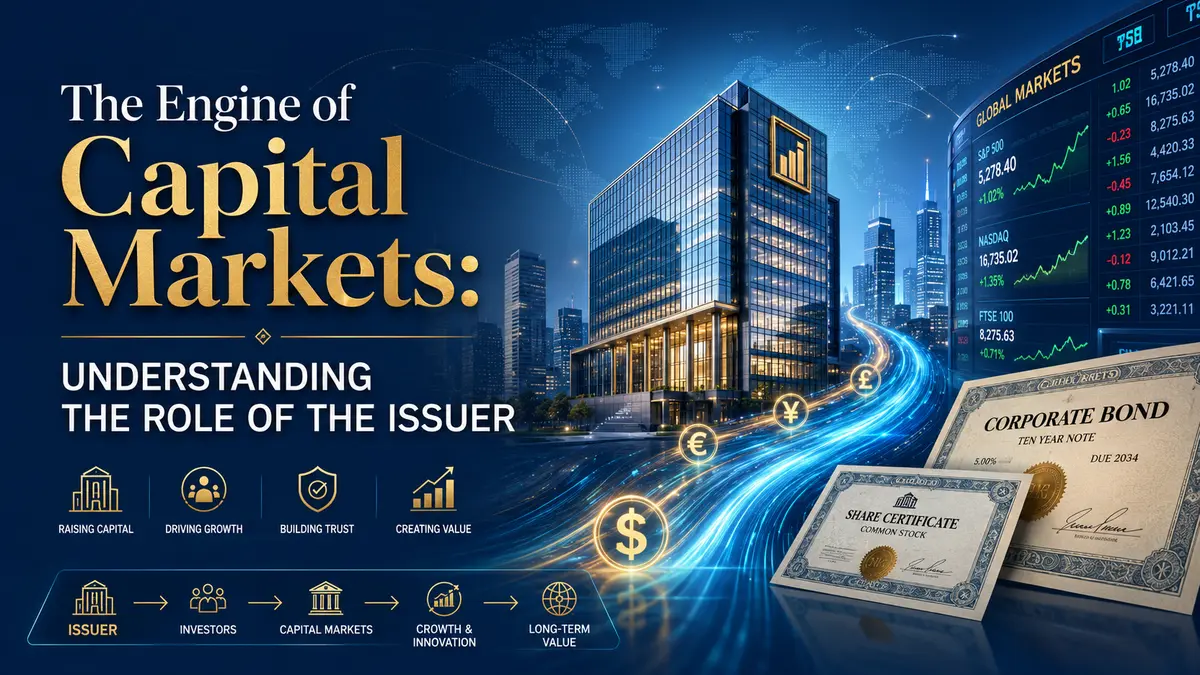
In the architecture of global finance, if capital is the lifeblood of the economy, the issuer is the beating heart that puts that capital to work. An issuer is a legal entity — which can range from a multinational corporation to a sovereign national government — that develops, registers, and sells securities to finance its operations.
Whether they are issuing equity (shares) to invite new co-owners or issuing debt (bonds and commercial paper) to borrow funds, the primary objective remains the same: raising capital. This influx of capital allows the issuer to execute ambitious business expansions, fund cutting-edge technological research, modernize infrastructure, or bridge national budget deficits. Without issuers, investors would have nowhere to deploy their wealth, and global economic growth would grind to a halt.
The Primary Categories of Global Issuers
The global financial market is vast, and the entities seeking capital are incredibly diverse. Depending on their legal structure and ultimate goals, issuers are generally classified into five distinct categories.
1. Corporate Issuers: Fueling Business Innovation
Corporate issuers are private and public companies that turn to the financial markets to fund their strategic objectives. When a private startup reaches a massive scale, it may issue shares to the public through an Initial Public Offering (IPO) on exchanges like the Nasdaq or the London Stock Exchange (LSE). By giving up a percentage of ownership, they secure billions in equity capital without the burden of paying interest. Alternatively, mature companies often issue corporate bonds. For example, even highly profitable companies like Apple AAPL ... or Microsoft MSFT ... regularly issue billions of dollars in corporate bonds. They do this because borrowing money at low institutional interest rates is often more tax-efficient and strategically advantageous than draining their own cash reserves to fund stock buybacks or global expansions.
2. Sovereign Issuers: Funding Nations
...