

Bar Pipa
We pay for a post of 10$
Nestlé S.A.

Nestlé S.A.

NSRGF OTC

$104.51
+0.98%

Key Statistics

Market Cap
$268.82 B
Volume
800
Open
$105.03
Day Range
104.51 - 107.88
52W Range
85.00 - 109.37
Price AVG 50
$100.34

About Nestlé S.A.

Nestlé S.A., a major global company operating through its various subsidiaries, specializes in the food and beverage industry. Its operations are geographically structured into key divisions: Europe, the Middle East, and North Africa; the Americas; and Asia, Oceania, and sub-Saharan Africa. Nestlé's extensive product portfolio encompasses numerous categories, each boasting a wide array of well-known brands. These include baby food options such as Cerelac, Gerber, Nido, and NaturNes; popular bottled water labels like Nestlé Pure Life, Perrier, and S.Pellegrino; and breakfast cereals, represented by Fitness, Nesquik, Cheerios, and Lion Cereals. The company also offers a vast selection of chocolates and confectionery, featuring iconic names like KitKat, Nestlé L'atelier, Nestlé Toll House, Milkybar, Smarties, Quality Street, Aero, Garoto, Orion, and Cailler. Its diverse coffee offerings span Nescafé, Nespresso, Nescafé Dolce Gusto, Starbucks Coffee At Home, and Blue Bottle Coffee. Furthermore, Nestlé provides prepared meals and culinary solutions, spanning chilled and frozen categories, with brands such as Maggi, Hot Pockets, Stouffer's, Thomy, Jacks, TombStone, Herta, Buitoni, DiGiorno, and Lean Cuisine. Various dairy items include Carnation, Nido, Coffee-Mate, and La Laitière, alongside popular beverages like Nesquik, Nestea, Nescafé, and Milo. Beyond consumer products, Nestlé supplies the foodservice industry with goods under brand names including Milo, Nescafé, Maggi, Chef, Nestea, Stouffer's, Chef-Mate, Sjora, Minor's, and Lean Cuisine. The company also manufactures specialized healthcare nutrition items like Boost, Peptamen, Resource, Optifast, and Nutren Junior. For dessert enthusiasts, there's a tempting array of ice creams, such as Dreyer's, Mövenpick, Häagen-Dazs, Nestlé Ice Cream, and Extrême. Lastly, a significant pet care segment features prominent brands like Purina, ONE, Alpo, Felix, Pro Plan, Cat Chow, Fancy Feast, Bakers, Friskies, Dog Chow, Beneful, and Gourmet. Established in 1866, Nestlé maintains its global headquarters in Vevey, Switzerland.

Asset Type: Common Stock
Sector: Consumer Defensive
Industry: Packaged Foods

Discussion

Authentication Required

You must be logged in to post a comment.

Big Pip

What are Dividends: A Comprehensive Guide to Corporate Profit Sharing
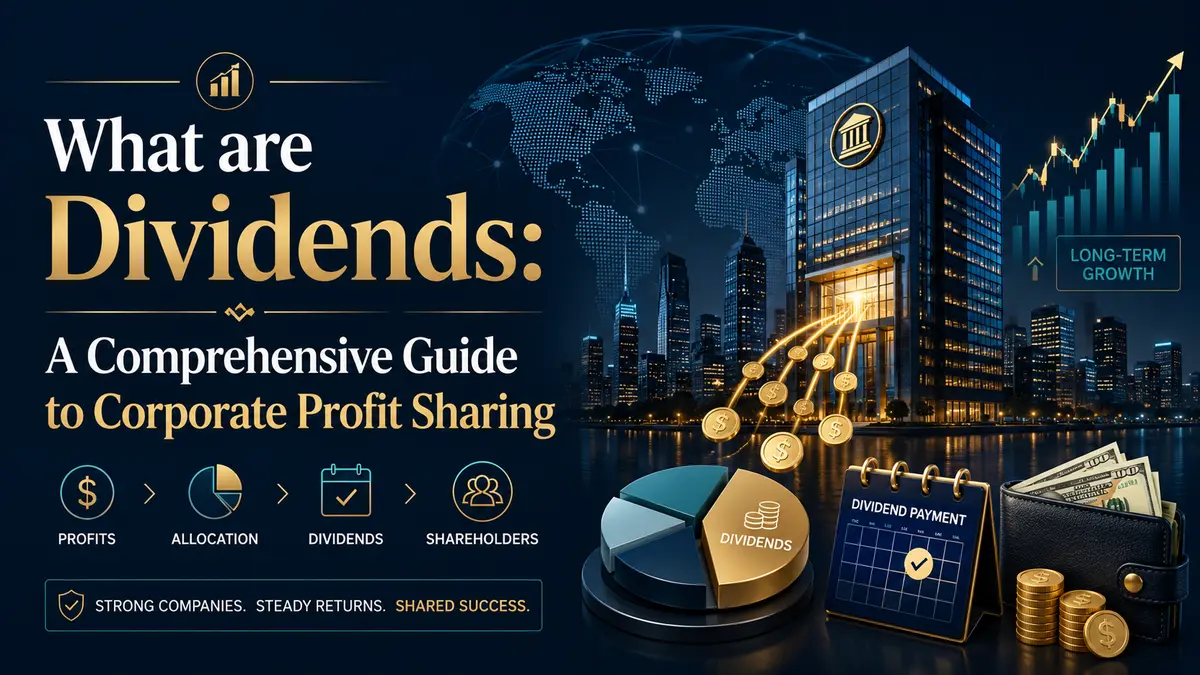
What are Dividends: A Comprehensive Guide to Corporate Profit Sharing

At its core, a dividend is a tangible reward for your financial trust. It is the portion of a company's net profit distributed to its shareholders as a return on their investment. When you buy shares in a publicly traded company, you become a fractional owner. If that company generates surplus cash, the board of directors must decide whether to reinvest that money back into the business or return a portion of it directly to you. When they choose the latter, they issue a dividend.

Understanding how dividends work, the different forms they take, and what they signal about a company’s financial health is essential for navigating the global stock market.

Types of Dividends: How Companies Reward Shareholders

Not all dividends are created equal. Depending on a company’s cash flow, strategic goals, and capital structure, it may choose to distribute wealth in several different ways.

Cash Dividends: The Traditional Payout

This is the most common and universally recognized form of profit sharing. The company simply deposits cash directly into shareholders' brokerage accounts.

Cash dividends provide a predictable stream of passive income, making them highly attractive to long-term investors and retirees. For example, global consumer giants like Coca-Cola COLA.NE ... and Johnson & Johnson JNJ ... have built their reputations on paying reliable, consistently growing cash dividends every quarter, regardless of broader economic volatility.

Stock Dividends: Growing Your Share Count

Instead of paying cash, a company may issue additional shares to its existing investors, distributed proportionally based on their current holdings. Also known as a "scrip dividend," this method allows a company to reward its shareholders while conserving its cash reserves for internal projects or debt reduction. While a stock dividend increases your total number of shares, it does not immediately increase the overall value of your investment, as the company’s total market...

Continue reading...
0
0
Big Pip

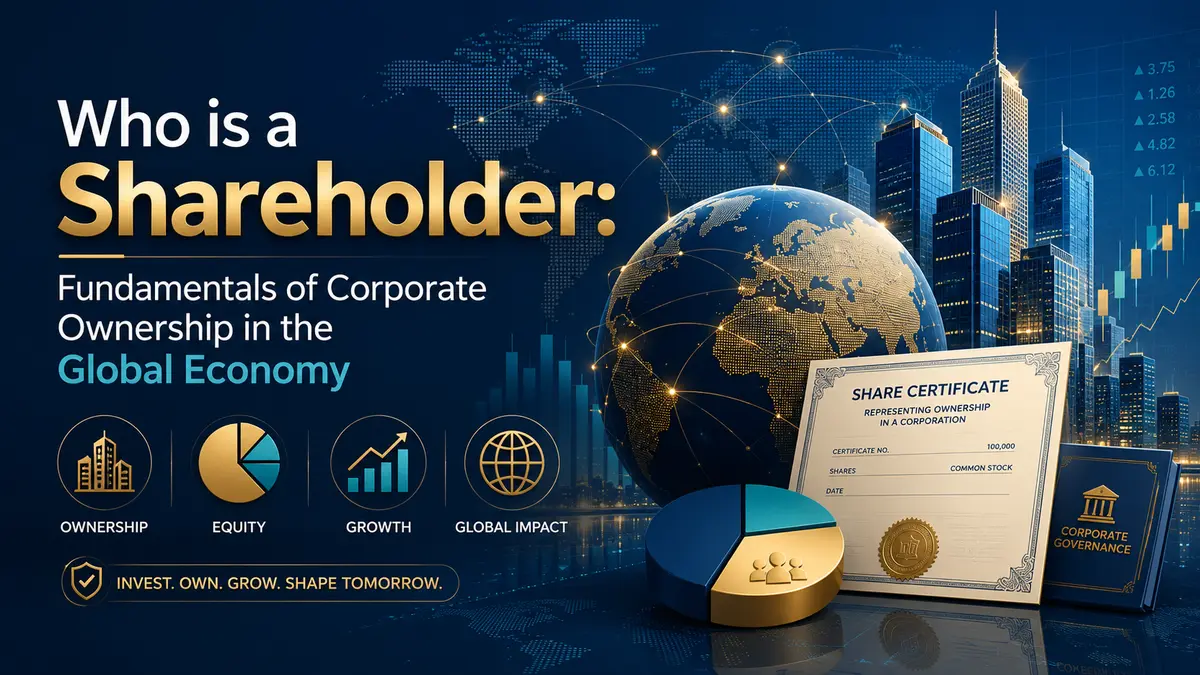
Who is a Shareholder: Fundamentals of Corporate Ownership in the Global Economy

Who is a Shareholder: Fundamentals of Corporate Ownership in the Global Economy

When you purchase a stock in a company — whether it is a single share of a tech giant like Apple AAPL ... or a massive block of a consumer staple like Nestlé NSRGF ... — you are doing something much deeper than placing a financial bet. You are legally step-typing into the role of a co-owner.

A shareholder (often referred to as a stockholder) is an individual, corporation, or institution that legally owns at least one share of a company’s capital stock.

Collectively, shareholders are the bedrock of the modern capitalist economy. They provide the equity capital that businesses need to innovate, scale, and navigate global markets, and in return, they receive a claim on the company’s future prosperity.

Understanding the delicate balance of power, rights, and duties that define a shareholder is key to understanding how global corporations are governed and how wealth is generated on the world stage.

1. Shares: The Mechanics of Fractional Ownership

To fully appreciate what a shareholder is, we must first look at the financial instrument that binds them to the corporation: the share.

What Do Shares Actually Represent?

A share is a financial security that represents a fraction of ownership in a corporation. When a business incorporates, its total value is partitioned into millions — or sometimes billions — of tiny, equal pieces.

For instance, a company like Microsoft MSFT ... has billions of outstanding shares traded on the Nasdaq. When an investor buys Microsoft shares, they do not own the actual physical desks, servers, or patents of the company directly. Instead, they own a slice of the legal corporation itself, which in turn owns those assets.

This distinction is crucial because of limited liability — one of the most revolutionary concepts in economic history.

What is Limited Liability? If a public corporation goes bankrupt...

Continue reading...
0
0
Navigation menu
instaforex banner