Bar Pipa
We pay for a post of 10$

Apple

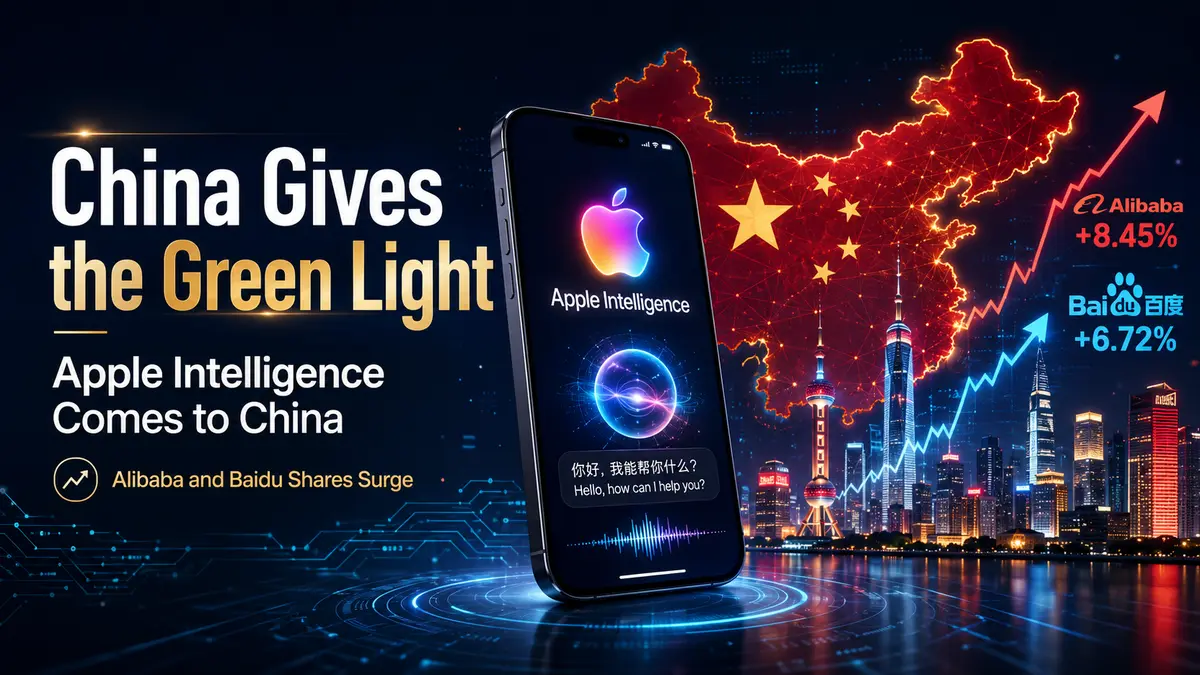
China Gives the Green Light: Apple Intelligence Is Finally Coming to the Chinese Market
China Gives the Green Light: Apple Intelligence Is Finally Coming to the Chinese Market

Thursday Morning: Alibaba and Baidu Shares Surge on the News

Thursday began on a celebratory note for China’s technology sector. Shares of Alibaba Group BABA ... traded in Hong Kong jumped nearly 5% by the middle of the trading session, while Baidu BAIDF ... gained around 4%. The reason for this widespread optimism is simple: Apple AAPL ... has finally received the long-awaited approval from Chinese regulators to launch its artificial intelligence services in the country.

The market had been waiting for this development for months, if not longer. Apple Intelligence, the company’s flagship AI platform, is already available in the United States and several other countries but has remained unavailable in China. The delay was not caused by technical difficulties but by Beijing’s strict regulatory requirements.

Chinese law requires all generative AI services to undergo mandatory registration and review before they can be offered to the general public. For Apple, this barrier proved more difficult to overcome than it was for many other companies because the Cupertino-based technology giant wanted to use its own models and proprietary approach. However, China’s main internet regulator withheld its approval for an extended period.

Now, according to information reported by the media, Apple appears to have made concessions that satisfied all parties. AI features on iPhones in China will not operate solely using Apple’s proprietary technology. Instead, they will rely on Chinese AI models—not just one, but two—from Alibaba and Baidu.

Alibaba’s Qwen and Baidu’s Technology: The Two Pillars of Apple Intelligence in China

According to Reuters sources familiar with the matter, Apple Intelligence in China will have a two-layer architecture. Its foundation will be Alibaba’s Qwen large language model, which is considered one of the most powerful and advanced AI models currently available in China.

Alibaba has officially confirmed its involvement, stating that Qwen will...

Continue reading...
0
0

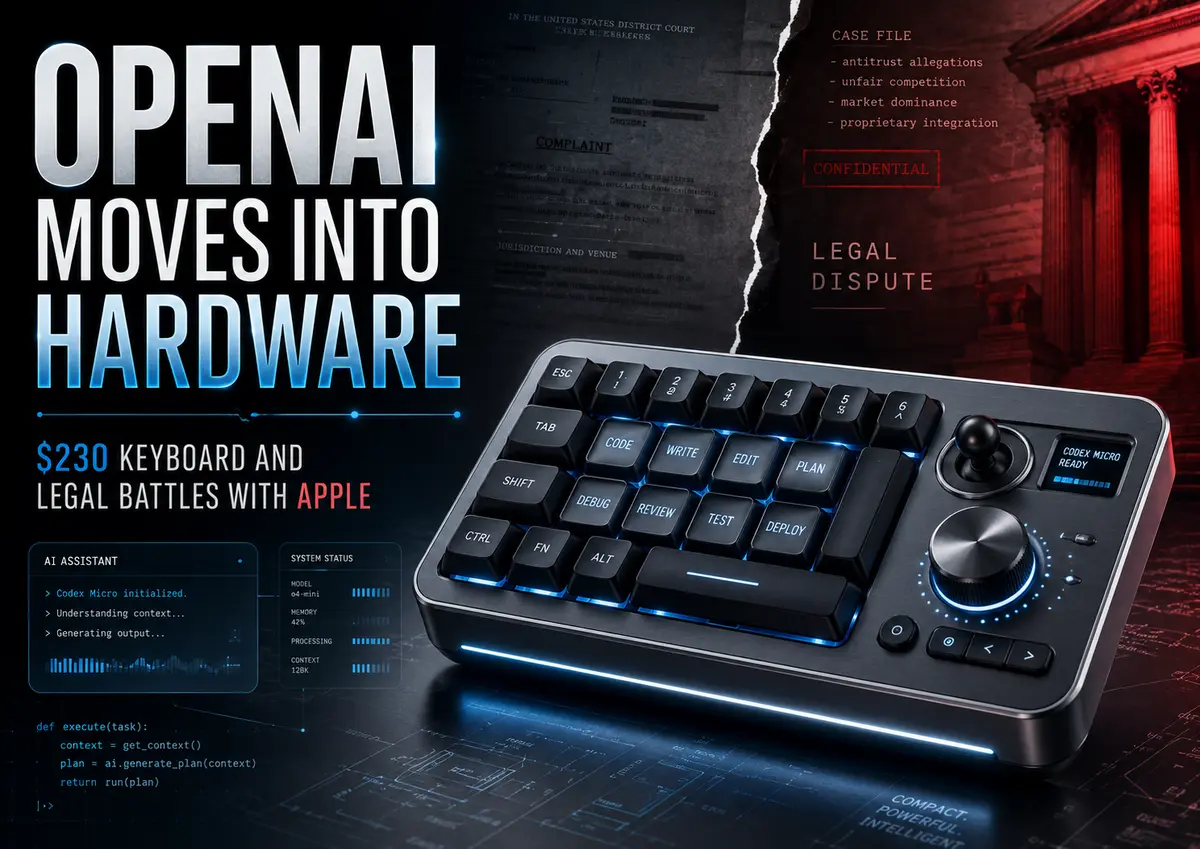
OPENAI MOVES INTO HARDWARE: A $230 KEYBOARD AND LEGAL BATTLES WITH APPLE

OPENAI MOVES INTO HARDWARE: A $230 KEYBOARD AND LEGAL BATTLES WITH APPLE

A SMALL KEYBOARD WITH BIG AMBITIONS

OpenAI has finally taken a step that many people have been expecting for a long time: it has released its own device. The surprise, however, is that it is neither a smart speaker nor a wearable gadget with a voice assistant. It is simply a keyboard—a small, compact keyboard equipped with a joystick and a rotary dial. Its name is Codex Micro.

The device was created in partnership with Work Louder, a Canadian-Italian company known for producing mechanical keyboards for technology enthusiasts and professionals. Visually, Codex Micro resembles some of the manufacturer’s other products, such as the Creator Micro 2, which was developed in collaboration with Figma. Internally, however, it is a completely different story.

The device looks like a compact control panel featuring thirteen illuminated keys, a mini joystick, and a rotary controller. All these elements are connected to Codex, OpenAI’s proprietary AI platform for programming. The idea is simple but ambitious: instead of clicking a mouse and navigating menus on a screen, developers can control their AI agents with the press of a button.

The LED keys display the status of individual agents: white means idle, blue indicates that a task is being processed, green means the task has been completed, and red signals an error. A single click allows the user to switch between different AI assistants, while a double-click brings the selected assistant to the foreground.

The joystick can be used to launch common tasks such as reviewing code, searching for errors, or performing refactoring. The rotary dial is the most interesting element of the device. It controls the AI’s “reasoning level”—in other words, how much time and computing power the neural network will spend solving a particular task. Turn it in one direction to receive a quick response to...

Continue reading...
0
0

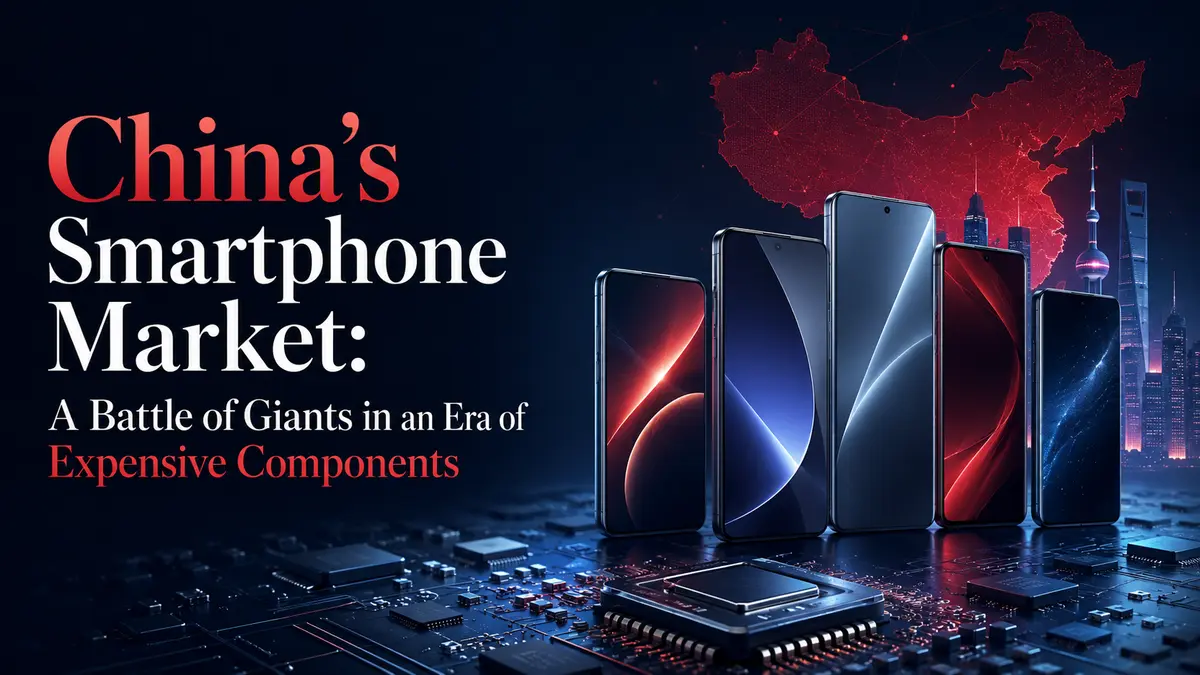
China’s Smartphone Market: A Battle of Giants in an Era of Expensive Components

China’s Smartphone Market: A Battle of Giants in an Era of Expensive Components

Introduction: The Market Is Declining, but the Leaders Are Growing

The second quarter of 2026 was a period of sharp contrasts for China’s smartphone market. Total shipments fell by 4.3% to 66 million units. This decline was driven by rising prices for memory chips and other components, which forced many manufacturers to increase the prices of their finished products. Under these conditions, consumers became more cautious, choosing either to postpone purchases or switch to cheaper alternatives.

However, there were two bright spots in this otherwise gloomy picture. Apple and Huawei were the only manufacturers that managed to increase their shipments. Huawei’s sales rose by 20%, while Apple’s increased by 25%. Both companies maintained strong positions in the upper end of the market, while their competitors struggled with weakening demand.

In this article, we will examine the reasons behind Huawei’s and Apple’s success, assess the impact of rising component prices, and explore what may lie ahead for China’s smartphone market in the second half of 2026.

The Overall Picture: The Market Declines by 4.3%

Reasons for the Downturn

The main reason for the market decline was the rising cost of memory chips and other components. Demand from the artificial intelligence industry led to supply shortages and higher component prices. This, in turn, increased production costs, which manufacturers passed on to consumers.

Higher smartphone prices, particularly in the mid-range and budget segments, discouraged some buyers. Amid economic uncertainty, consumers became more price-sensitive and began postponing purchases.

Regional Characteristics

China’s smartphone market is the largest in the world, and its performance influences global trends. A decline in shipments in China may signal a broader slowdown in the global smartphone market.

Nevertheless, China remains a critical market for every major manufacturer, and success or failure there has a significant impact on their global positions.

...

Continue reading...
0
0
John Madnes

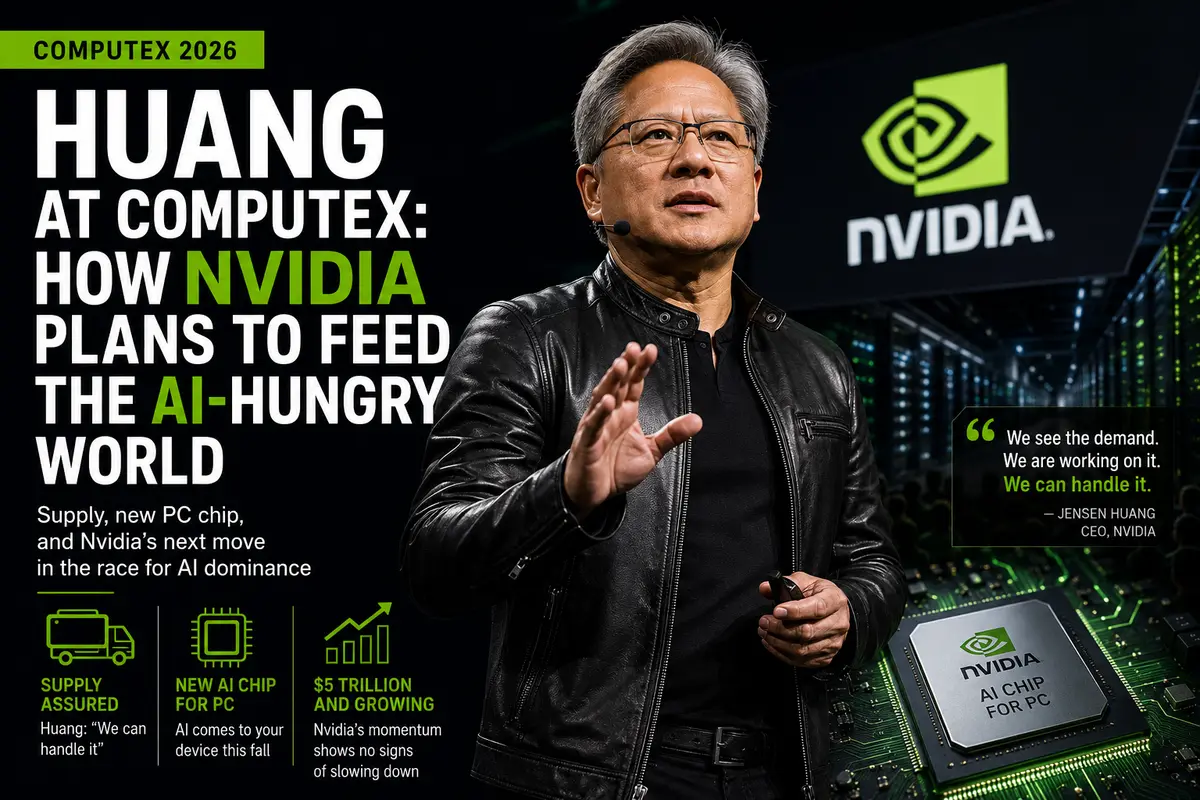
Huang at Computex: How Nvidia Plans to Feed the AI-Hungry World

Huang at Computex: How Nvidia Plans to Feed the AI-Hungry World

Taipei, Computex 2026. The hall is packed to capacity as journalists and analysts from around the world hang on every word of a man who, over the past few years, has transformed from the head of a gaming graphics card manufacturer into one of the most influential figures on the planet. Jensen Huang, Nvidia’s founder and longtime CEO, steps up to the microphone. He is wearing his trademark leather jacket—a signature look that has become as recognizable as Steve Jobs’ black turtleneck. But today, he is not talking about new products; he covered those the day before. Today, he is addressing what concerns markets most: supply. Specifically, whether Nvidia can physically manufacture enough chips to satisfy a world obsessed with artificial intelligence.

“We Can Handle It”: Three Words the Market Was Waiting to Hear

Huang did not mince words. He acknowledged what the market has been whispering about for months: supply constraints remain a real issue. Nvidia, the company powering data centers around the globe with its semiconductor technology, is facing an enormous imbalance between supply and demand. Every new data center, every new large language model, and every AI startup wants Nvidia accelerators. Demand is growing exponentially, outpacing the production capacity of even a giant like Nvidia.

Yet Huang stated that the company has secured sufficient supply to support continued production growth. This was more than just an optimistic remark. It was a signal to investors who had become increasingly anxious about reports of chip shortages and shipment delays. Nvidia’s CEO was effectively saying: we see the problem, we are working on it, and we have addressed it to the extent necessary to keep growing.

Behind those words lies an immense effort. Nvidia does not manufacture chips itself—it designs them and relies on Taiwan’s TSMC and, to a...

Continue reading...
0
0
NorthRay

Gold Said “Yes.” My First XAU/USD Trade Made Me $42.70. And Now — Apple and an Index.

Gold Said “Yes.” My First XAU/USD Trade Made Me $42.70. And Now — Apple and an Index.

Hi, this is NorthRay.

Remember how last time I said I wanted to try commodities and stocks?

Well, I didn’t waste any time.

I opened my very first gold trade (XAU/USD).

And you know what? It didn’t bite me. Quite the opposite — it gave me the biggest profit of my entire demo trading journey so far.

$42.70.

From a single trade.

For someone who was celebrating 24 cents not long ago — this feels like a holiday.


How It Happened

I spent a long time staring at the gold chart.

Honestly? At first, it scared me.

The price moves like crazy. Long candles. Swings of $10–20 within an hour.

I kept thinking:
“This isn’t for beginners. You could lose everything in five minutes here.”

But then I remembered my rule: small steps.

I didn’t use 1 lot. Not even 0.50.

I opened just 0.10 lot.

Ten times smaller than my last EUR/USD trade.

Why?

Because gold is a different beast. You don’t dive headfirst into an unfamiliar river. First, you test the water with your finger.


The Numbers That Surprised Me

Lot size: 0.10 XAU/USD
Take-profit: set at a reasonable distance
Stop-loss: mandatory (I no longer trade without one)

A few hours later, I checked the terminal.

The trade was closed.

Take-profit hit.

Profit: $42.70.

I rubbed my eyes.

Sure, it’s demo money. But the number still looks serious.

For comparison:
My best EUR/USD trade on a 1-lot position made me $23.50.

Here?
0.10 lot — and $42.70.

Gold is incredibly volatile. It covers huge distances in a short amount of time.

That’s both good and bad.

The good:
You can make more money.

The bad:
You can lose money much faster too.

But this time, I was in profit. And it felt good.


What I...

Continue reading...
0
0
Navigation menu
instaforex banner